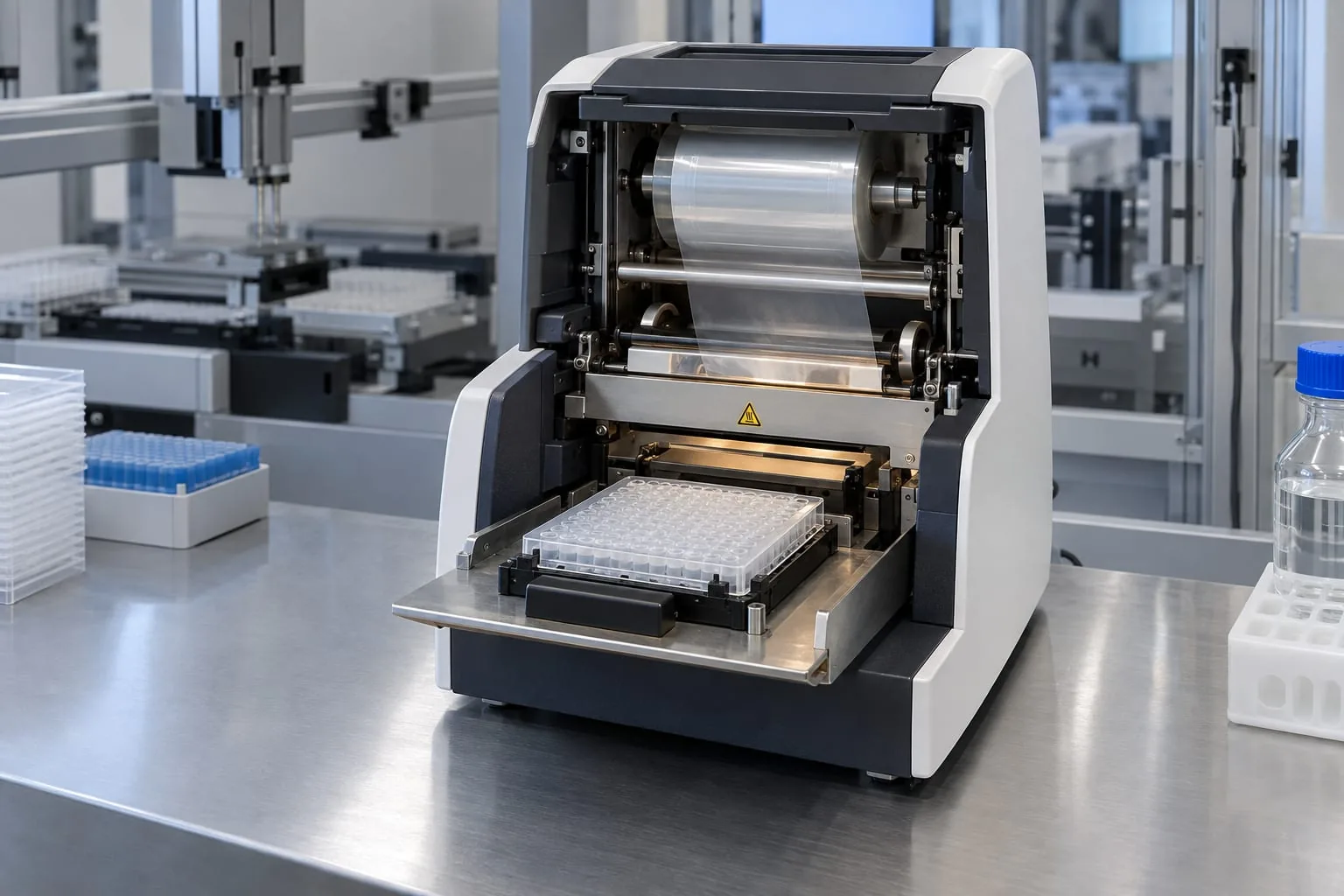
The A4S is a laboratory roll heat sealer used to apply heat-seal film to microplates. Older equipment and records may call it the a4S, while Azenta now presents the unit as the Automated Roll Heat Sealer, formerly a4S. That naming difference matters when you search for manuals, adapters or replacement parts.
This guide focuses on the sealing interface around the machine. It explains what to identify before ordering a component, how to check roll and plate compatibility, and how to plan safe maintenance. Heat Seal Components supplies heat-seal components and technical guidance. It does not sell complete A4S machines.
What the A4S automatic roll heat sealer actually does
A laboratory plate sealer, not a general packaging machine
The A4S applies a roll of heat-seal material across a plate held in a carrier or adapter. It is intended for microplates, PCR plates, assay plates and storage plates used in laboratory workflows. It is not the same application as a pouch sealer, VFFS machine, flow-wrapper or food bag sealer.
The machine context changes the replacement question. Instead of asking only for a heater or film by name, identify the plate format, carrier, foil path, sealing head, contact surface and control settings. Each part must work with the rest of that interface.
Use the current specification as a starting point
Azenta’s current product specification describes a unit that can operate as a stand-alone bench instrument or as part of an automated workcell. It lists USB and RS-232 connectivity, a sealing temperature range of 100–195 °C, a sealing time range of 0.1–10 seconds and roll widths between 75 and 85 mm. Treat these as the manufacturer’s stated machine values, not as a replacement-part specification.
The same page describes plate heights from 3 to 60 mm, while the available operation manual describes a 4 to 53 mm range. That difference is a useful warning: confirm the exact machine version, adapter and manual before ordering a component or setting a process.
Identify the sealing path before ordering a component
The roll, head, adapter and plate form one interface
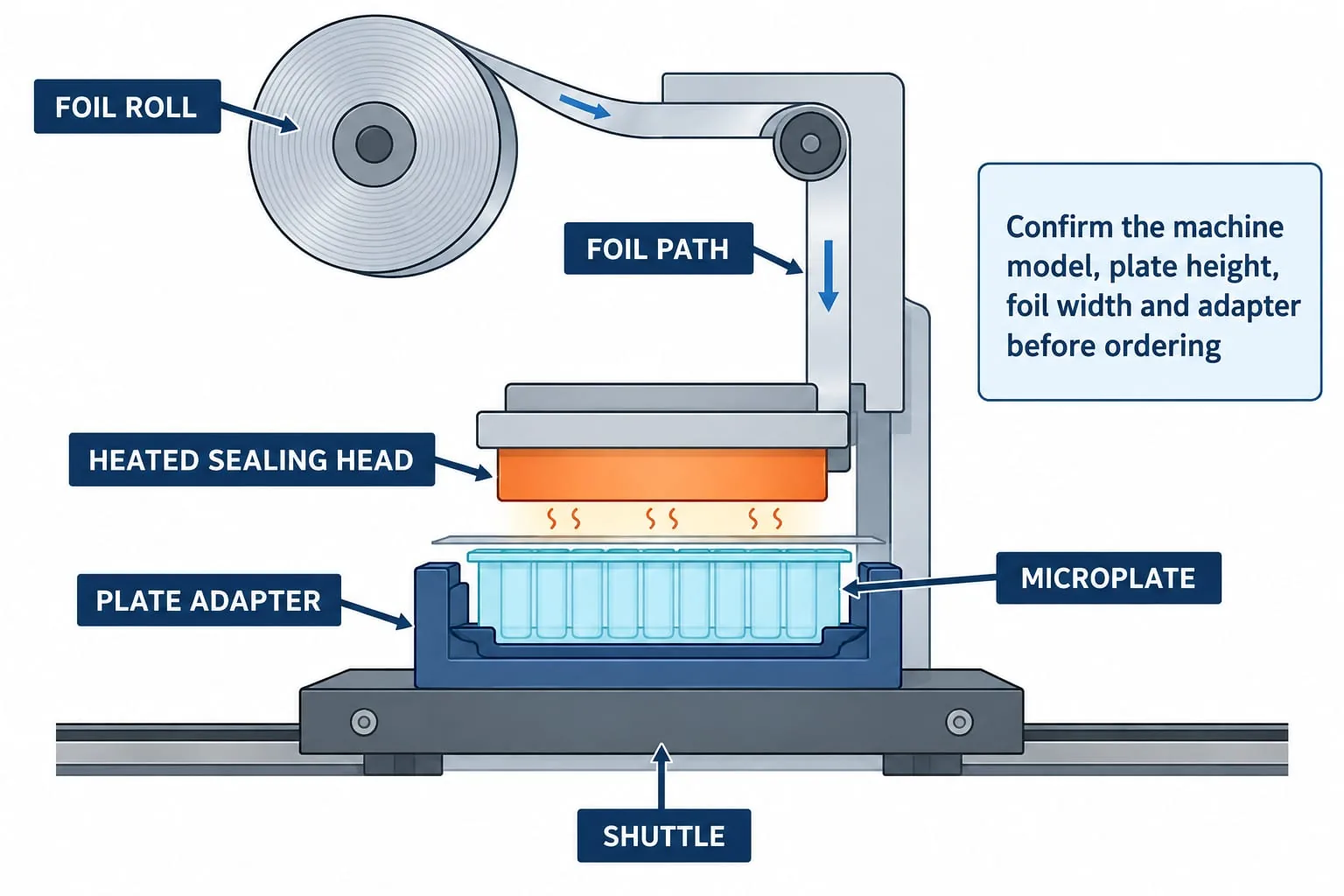
The roll feeds the seal material towards the heated sealing head. The plate sits in a carrier or adapter so the seal area is presented at the intended height. A replacement part that fits one point in the path can still be wrong if the roll width, plate height, carrier or contact surface does not match.
Use the diagram as an identification aid, not as a drawing of every A4S revision. The safest record combines the machine label, the installed assembly, the product manual and photographs of the actual interface.
Separate machine facts from component assumptions
The manufacturer confirms the machine family and operating ranges. It does not mean that every foil roll, adapter or heating component is interchangeable. Avoid calling a third-party roll universally compatible. Use wording such as compatible with a named machine and format only when the supplier’s data supports it.
Compatibility checks for the A4S application
Confirm the plate format and height
Record the plate family, well format, footprint and height range used on the machine. Azenta describes compatibility with common SBS-format plates and several well counts, but the carrier and adapter still determine whether the plate sits correctly under the sealing head.
Check the actual adapter, not just the plate catalogue number. A height change can affect contact, pressure and the position of the foil over the seal area. If an adaptor is used for a different plate height, record its identity and keep it with the machine configuration.
Check the foil roll and seal construction
Seal material is part of the process. The Azenta foil data sheet for a polystyrene heat seal lists a 78 mm roll and a 1,000-seal format for the Automated Roll Heat Sealer with the relevant option. Other materials and roll constructions have different sealing behaviour. A product page or a reseller’s phrase such as generally compatible is not enough for a controlled order.
USA Scientific’s roll guidance lists a 77.5 mm by 610 m portrait roll as generally compatible with Azenta a4S equipment and also says to check the manufacturer’s specifications before ordering. Use such information as a lead, then confirm the machine revision, roll position, material and intended plate.
Keep heat, time and contact together
Do not treat temperature or dwell time as a universal recipe. Seal performance depends on the plate material, seal construction, contact condition and machine settings. Record the material reference and the approved process window alongside the component record.
Record the component data before requesting a replacement
Capture the evidence before you order
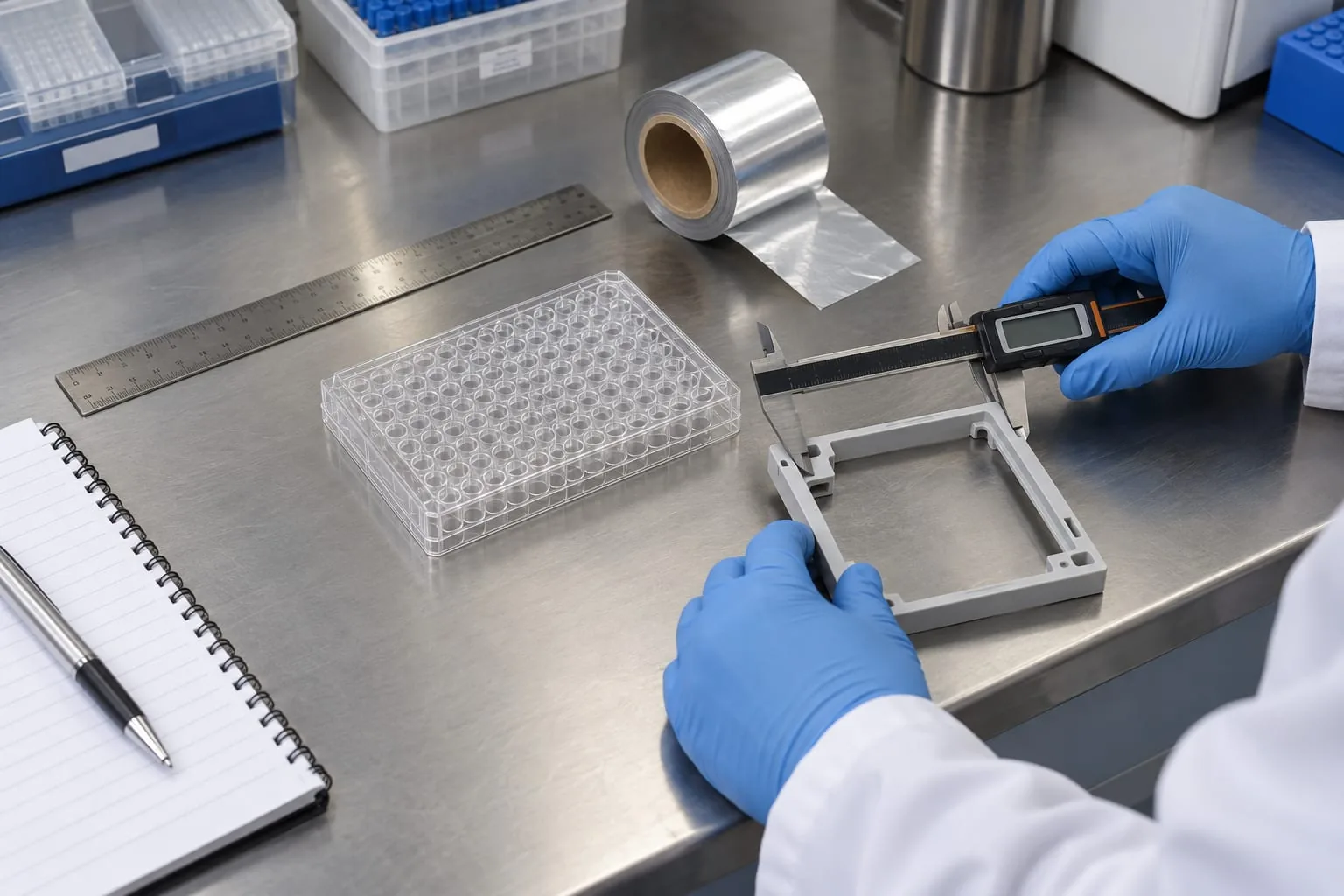
A4S enquiries are easier to check when the evidence is captured before the old part is removed. Photograph the complete machine, the machine label, the roll position, the carrier or adapter and the sealing head. Include a ruler or another scale where it helps show the relevant dimensions.
Keep the following details together:
- Machine maker, model, serial information and software or control revision if shown
- Plate format, plate height, carrier or adapter identity and orientation
- Foil or seal material reference, roll width, core and loading position
- Visible heating surface, cover material, mounting points, terminals and cable route
- Failure symptom, last known settings, material tested and the result of the last good seal
Use measured evidence instead of a guessed equivalent
The A4S model name is useful, but it cannot replace an interface check. Compare any proposed replacement against the installed part, the manual and the measured assembly. If a dimension or electrical detail is unknown, keep that uncertainty visible in the enquiry rather than filling it with a guess.
Maintenance and safe intervention
Inspect the contact surfaces
Keep the sealing head and contact surfaces clean and free from residue that could change contact or transfer heat unevenly. Inspect the foil path, rollers, carrier, adapter, heated surface and any release covering for wear, scratches, distortion or contamination. Do not use a metal tool or an unapproved solvent on a coated surface.
Heat Seal Components can review suitable PTFE surface protection through its PTFE heat-seal tape service, but the correct tape, thickness and application still depend on the assembly. A new cover does not correct a bent support, poor alignment or a damaged heated surface.
Isolate before cleaning or opening
HSE maintenance guidance says to follow the manufacturer’s procedures and isolate work equipment before maintenance, cleaning or adjustment. Switch off the A4S, use the site’s isolation procedure, prevent unexpected re-energisation and allow hot parts to cool before touching the sealing path. Only a competent person should carry out electrical tests or intrusive work.
Keep guards, covers and interlocks in their intended condition. After maintenance, check that people are clear and that the machine returns to a controlled operating state before testing.
Keep a simple change record
Record the date, component or consumable identity, machine configuration, measured details, reason for the change and the result of the first controlled seals. This prevents a future buyer from repeating the same compatibility investigation from scratch.
Commission the machine after a component change
Run a controlled trial
Do not return the machine to routine work from a visual fit check alone. Use the intended plate and seal material, confirm the carrier and roll path, and run a controlled sample using the approved procedure. Make one change at a time so the result can be traced.
Check the start, middle and end of the seal where the process allows. Look for incomplete coverage, wrinkles, film movement, sticking, scorching or a seal that changes across the plate. If the result is inconsistent, investigate contact, alignment, pressure, material and settings before replacing another part.
Keep the acceptance evidence
Save the sample result with the component record and the machine configuration. If a supplier needs to review the problem, send the photographs, measurements, material reference, settings and failure description together.
What Heat Seal Components can review
Heat Seal Components can review heat-seal elements, heating elements, PTFE heat-seal tape, sealing jaws and bars, and custom component requirements against the information you provide. Those services support component selection. They are not a claim that the company supplies complete laboratory plate sealers, A4S machines or every third-party foil roll.
For a compatibility enquiry, send the A4S model and revision, plate and adapter details, foil roll information, photographs, measured interface data and the problem you are trying to solve. If the required component is non-standard, ask about custom impulse heat-seal elements before ordering.
For a practical review of your component data, contact Heat Seal Components with the machine and seal information. A clear record helps the team decide whether the request matches a standard component, a custom element, PTFE protection or a sealing jaw or bar review.