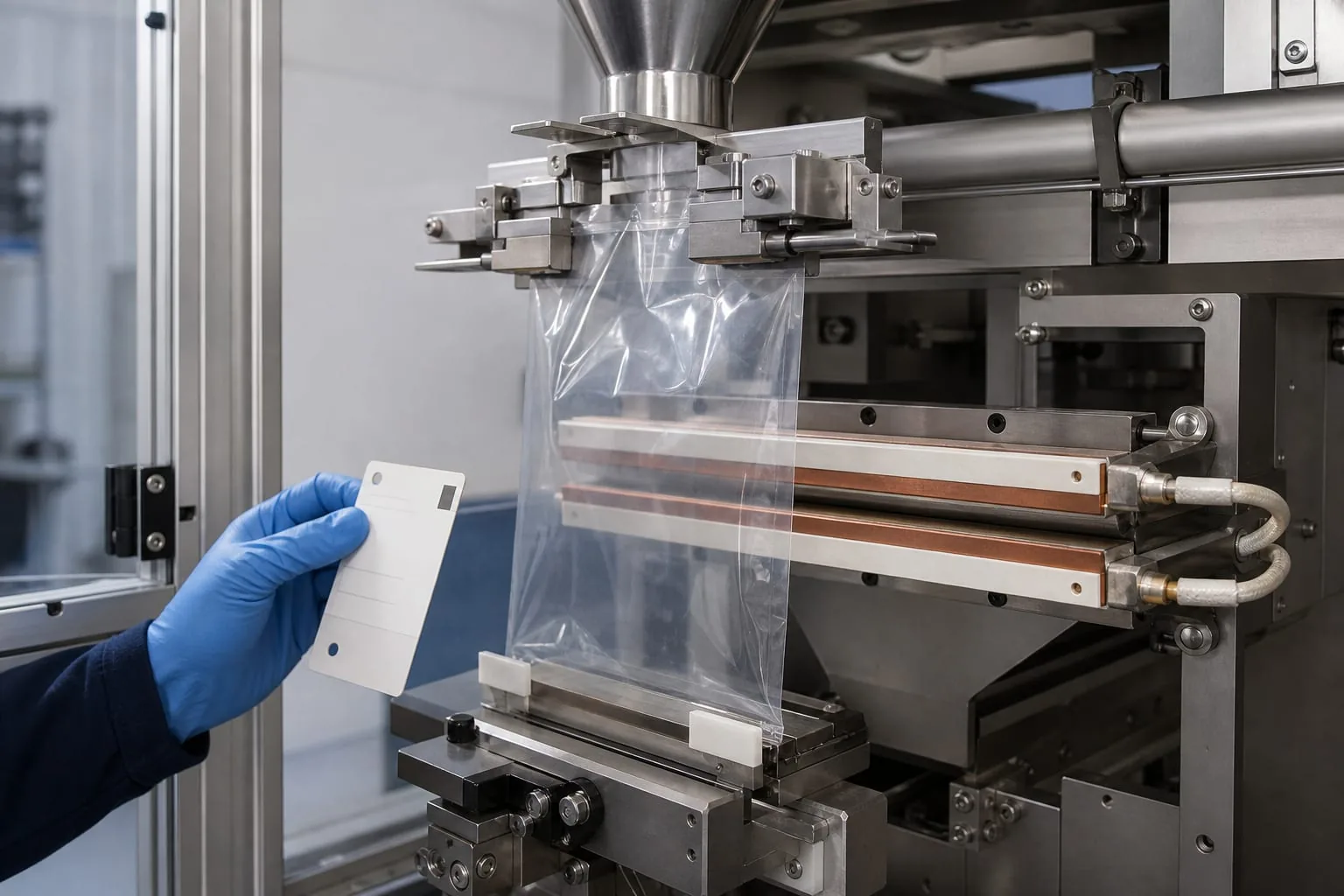
Automatic bagging equipment can bring bag presentation, filling and sealing into one line. The part that closes the bag may be only one short section of that line, but a wrong element, cover or support can stop a good machine from producing a reliable seal.
Heat Seal Components supplies heat-seal elements and wires, custom heating elements, PTFE coating and heat-seal tape, sealing jaws and bars, and compatibility support. This guide explains the details to capture when sourcing a replacement component. It does not describe a machine purchase or promise universal fit.
The phrase can describe several formats, including an automatic plastic bag sealing machine, an automatic packing and sealing machine or an automatic bag filling and sealing machine. Those labels describe the application, but they do not identify the element profile, jaw geometry or control arrangement.
How an automatic bagging and sealing line is arranged
Automatic bagging systems differ. Furukawa’s FF-220NIII(-L) product information describes touch-panel settings, adjustable gripper width, a heater-element alarm and links to weighing or feeding equipment. Sealed Air’s AUTOBAG Brand 500 overview describes integration with counters, scales and infeeds, plus modular components and on-board diagnostics. These are examples from specific models, not universal specifications.
Bag presentation and filling
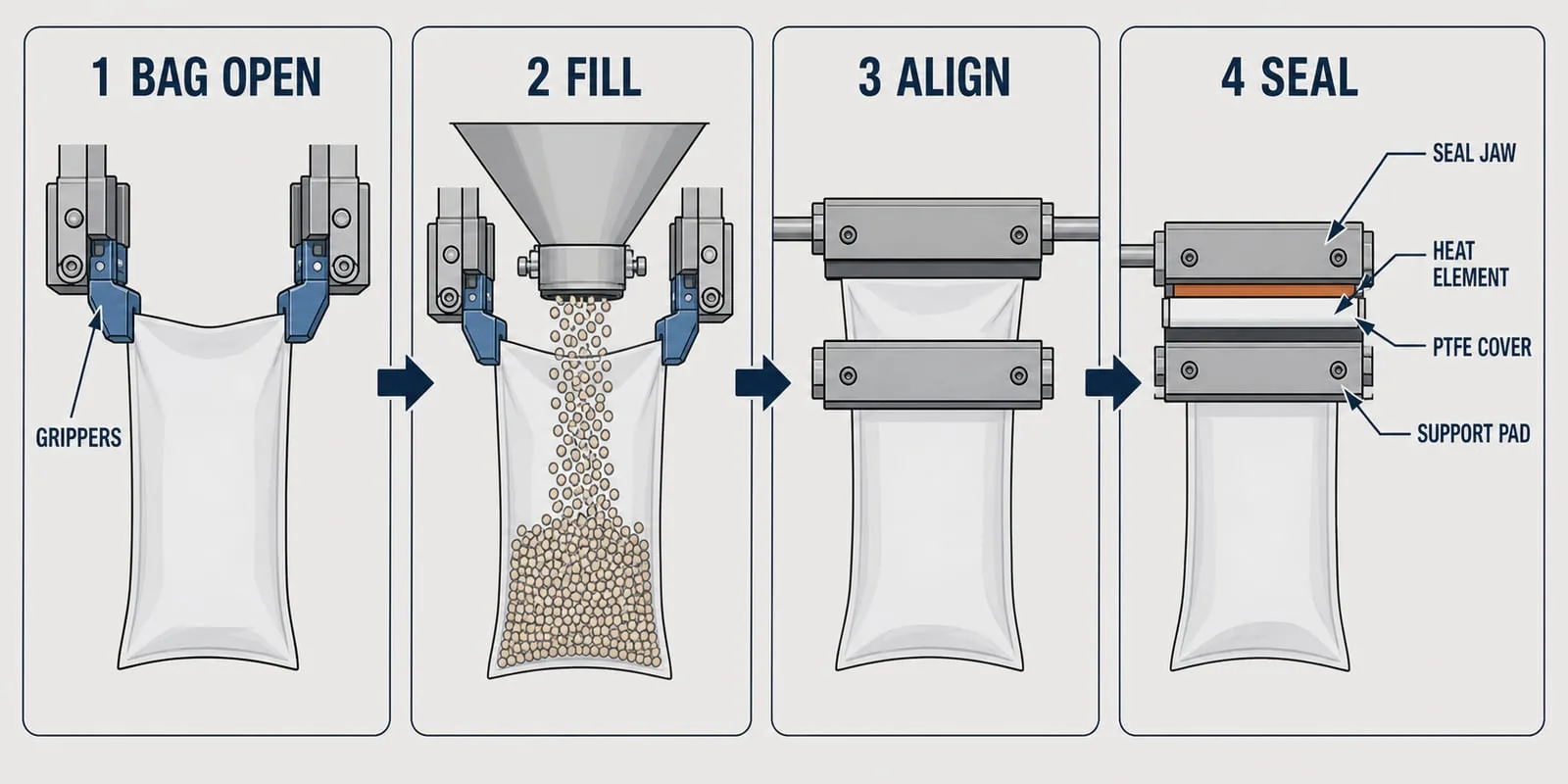
Grippers hold the bag in position while the product is loaded. Depending on the equipment, the bag may be pre-opened, supplied from a roll or presented by a separate feeding station. The filling and handling arrangement affects the height, tension and position available at the sealing station.
Where the heat-seal assembly sits
The sealing jaws or bars bring the bag layers together at the closing point. A heated wire, ribbon or formed element may sit on one side of the assembly, with a PTFE cover, support pad and the opposite jaw providing the contact arrangement. A line can contain more than one sealing station, so identify the exact position before ordering.
Which sealing components need to match
Heat-seal element or wire
A heat-seal element is a resistance component that produces heat when the machine’s control system supplies current. It may be a round wire, flat ribbon or formed part. The correct choice depends on the original profile, heated length, cross-section, terminals, mounting and electrical arrangement.
Do not replace a component because it looks similar. Record the active heated length separately from the overall length. Also record the wire or ribbon width and thickness, terminal centres, fixing points, tensioning method and any insulation or support material. Use the heat-seal elements service only after the required information has been checked.
PTFE cover, support pad and terminals
The surface above the element may be a replaceable PTFE cover or part of a coated component. A cover can help reduce sticking, but its width, thickness, backing, adhesive and position still need to suit the sealing assembly. The PTFE heat-seal tape service is relevant where the equipment is designed for a replaceable cover. A coated surface may need a different supply and preparation route.
The support pad, terminals and insulation matter as much as the heated strip. A loose terminal can change the electrical connection. An uneven or contaminated support can change contact across the seal. Check the complete assembly, including the sealing jaws and bars, before deciding which part to replace.
Record compatibility before ordering
Start with the machine and sealing station
Write down the machine manufacturer, model, serial number if available, sealing station, orientation and the product or bag material. Add photographs of the complete assembly, the working face, both ends, terminals, supports and the surrounding mounting points.
A model name narrows the search, but it does not prove that a replacement will fit. Assemblies can vary with machine age, production changes, modified jaws and earlier repairs. Identify whether the part is used in an impulse, constant-heat, VFFS or flow-wrap application, then describe the exact station.
Check electrical and mechanical details
Measure the removed part while it is relaxed, disconnected and cool. Record overall length, heated length, wire or ribbon size, terminal position, hole or slot dimensions, fixing centres, support details and the location of any PTFE cover. If the part is broken, measure the jaw or bar as an additional reference and make a dimensioned sketch.
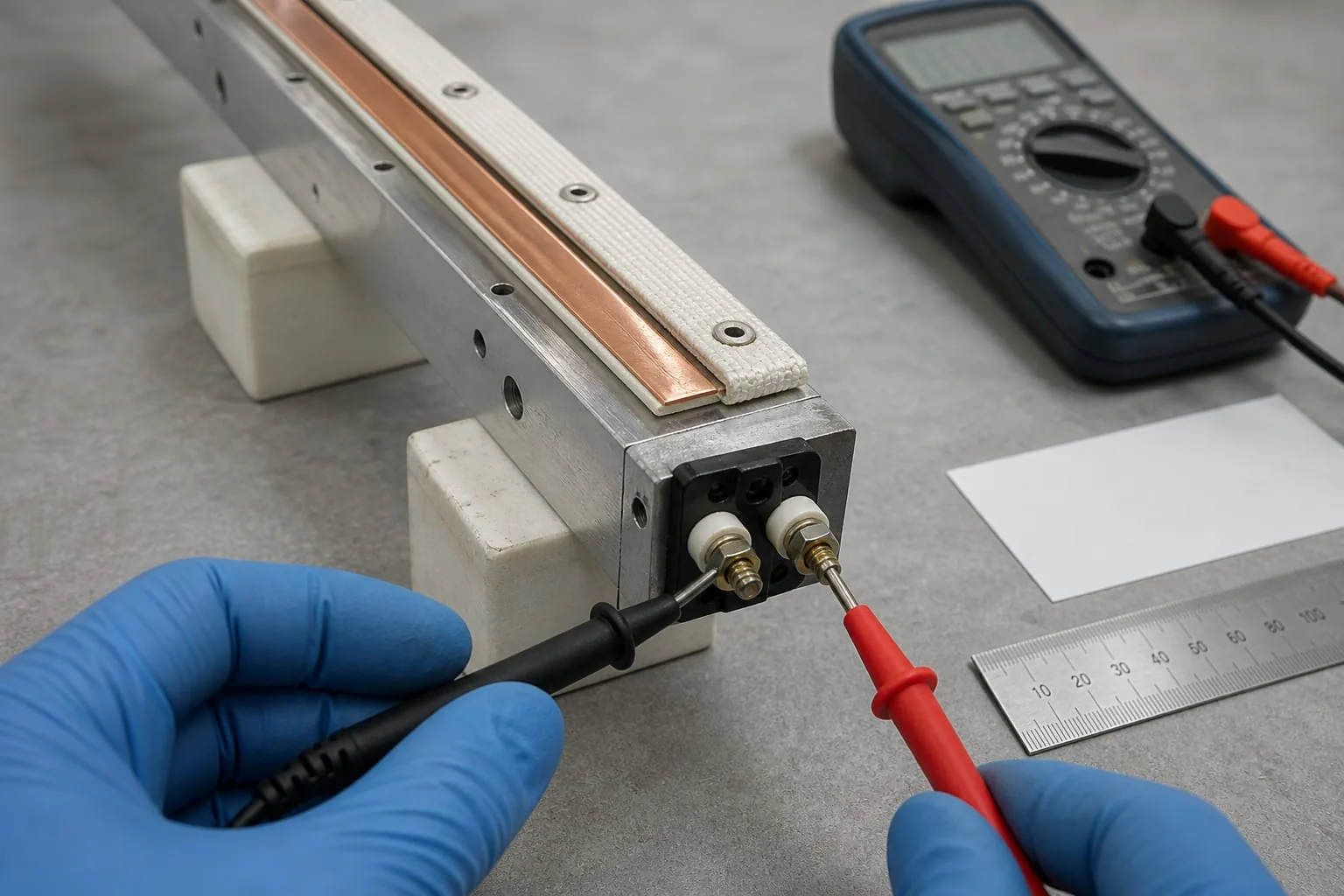
A continuity or resistance check can help confirm the condition of a disconnected element, but it does not establish a universal replacement value. Use the machine maker’s procedure and suitable test equipment. A component must also fit mechanically and suit the control system, not just produce a reading.
Send a complete information pack
- - Machine manufacturer, model, serial number and sealing-station position, if known
- - Clear photographs of the installed part, removed part, terminals and support surfaces
- - Overall length, heated length, profile, width, thickness and fixing measurements
- - Terminal style, connection arrangement, insulation and tensioning method
- - Bag or film construction and any known machine-maker settings
- - The fault pattern, such as broken wire, sticking, uneven seal or repeated adjustment
- - A dimensioned drawing or sample when the component is formed, unusual or no longer identifiable
Set the sealing process against the material
DuPont’s heat-sealing guidance explains that seal strength depends on dwell time, temperature, pressure, sealant characteristics and the test method. It also notes that these factors interact, that the actual pressure on the material may differ from a machine setpoint, and that uneven contact or material thickness variation can affect the result.
Use the machine maker’s instructions and the bag or film supplier’s guidance as the starting point. Then:
- - Record the current settings and the material used before making a change
- - Change one controlled variable at a time and record the seal result
- - Check whether the displayed cycle time includes the final contact time, not only jaw movement
- - Inspect for hot or cold areas, uneven contact, contamination and misalignment
- - Do not copy a temperature, pressure or dwell value from another machine
Maintenance and quality checks
Make the equipment safe first
The HSE maintenance guidance says plant should be made safe before maintenance starts. Moving plant should stop, electrical and other power supplies should be isolated where required, accidental reconnection should be prevented, stored energy should be released and hot components should be allowed to cool. Maintenance should be planned and carried out by people who are competent for the task.
Follow the machine manufacturer’s procedure and your site’s risk assessment. Do not reach into a moving or hot sealing station to correct a bag, remove residue or adjust a component.
Inspect components during planned maintenance
- - Look for a stretched, broken, scorched, discoloured or damaged element
- - Check whether PTFE cover edges lift, wrinkle, bubble, split or move from position
- - Inspect the support pad for compression, residue, cuts and uneven contact
- - Check terminals, fasteners, insulation and tensioning parts for looseness or damage
- - Check the jaw or bar for dirt, burrs, distortion and alignment changes
- - Record the defect and the operating conditions before fitting a replacement
Replacing the heated part may not correct a misaligned jaw, damaged support, poor contact or unsuitable material. Inspect the parts around it and confirm the cause before returning the line to normal production.
Test the finished seal consistently
A visual inspection is useful, but a repeatable test is stronger evidence. ASTM F88/F88M describes a method for measuring the force needed to separate a strip containing a flexible-package seal and for identifying the failure mode. The current method, sample preparation and acceptance criteria must suit your product and quality system.
Use the same sample location, test direction and reporting method when comparing a change. Keep the result with the component specification, material reference and machine settings so a future replacement can be assessed against a known baseline.
When the model number is not enough
An automatic bagging line may combine grippers, feeders, a filling device, a sealing station and controls from different parts of the system. A machine maker may offer different jaw lengths, terminal arrangements, cover materials or sealing positions within one equipment family. Do not assume that a part advertised for a related model is interchangeable.
If the existing part is obsolete, modified or badly damaged, send the sample or a dimensioned drawing. The custom impulse heat-seal elements service can be considered where a standard straight part does not match the original shape. If the complete jaw or bar needs review, include the mounting details and ask about sealing jaws and bars as part of the same enquiry.
Request a component compatibility review
Send the machine details, component measurements, photographs, bag or film information and the fault description to Heat Seal Components. The team can review custom heating elements and related heat-seal components against the information supplied. For a quote, contact Heat Seal Components with the part and machine details before ordering.
The company supplies replacement components and related surface-protection work. It does not sell complete bagging machines, packaging bags or general machine repair services.