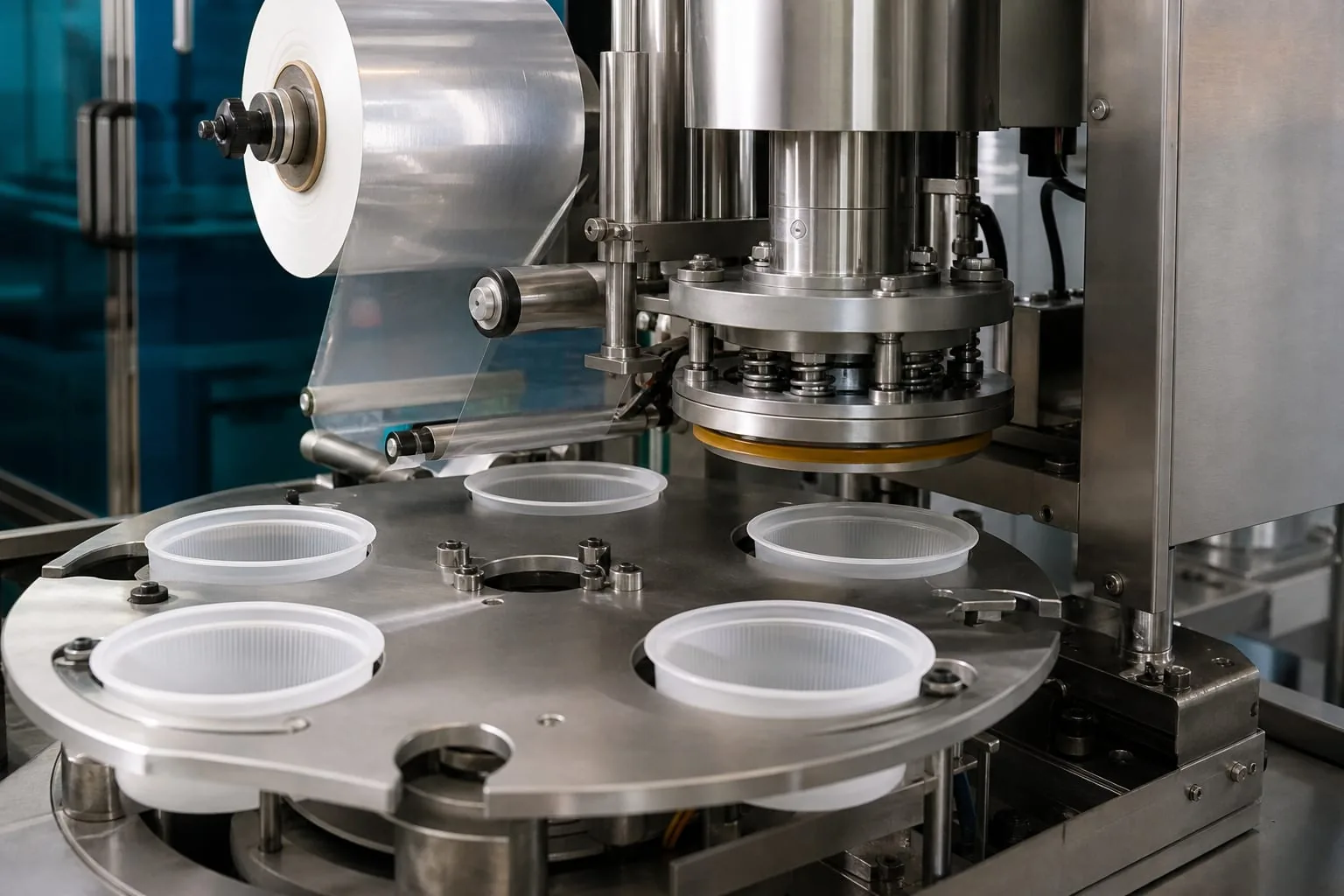
If you maintain an automatic cup sealing machine, many sealing faults begin at the sealing station rather than in the filling process. The heated tool, lidding film, cup flange and supporting parts must work together with the correct pressure and contact time. When a seal becomes weak, uneven or difficult to release, a controlled component and compatibility check is usually more useful than changing several settings at once.
Heat Seal Components supplies replacement heat-seal elements, wires, PTFE products, sealing jaws and bars, plus compatibility guidance for packaging equipment. This guide explains what to check around an automatic cup sealing application and what information to send when a replacement part needs review.
What an Automatic Cup Sealing Machine Needs at the Seal
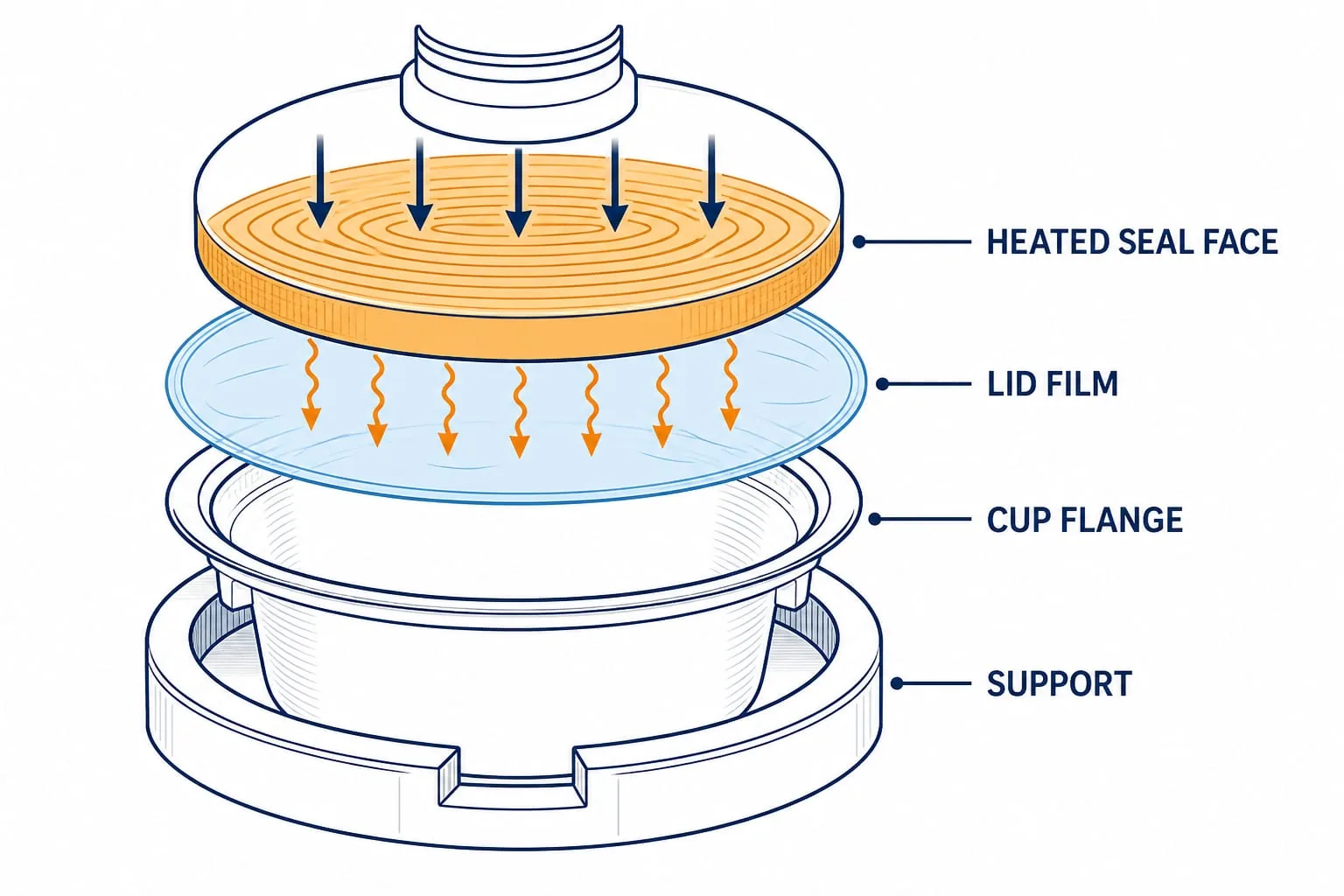
A reliable cup seal depends on the relationship between the cup flange, lidding film and heated sealing tool. Temperature is only one part of that relationship. Contact time, pressure, tool alignment, surface cleanliness and the condition of the wear parts all affect the result.
The sealing tool and heat source
The tool must apply heat and pressure evenly around the cup flange while the film and cup material are held in the intended position. Proseal’s heat-seal guidance notes that contact time and temperature can vary with tray material, and that tool design and housekeeping also influence seal quality. Fuji’s heat-plate sealer explanation describes the heater inside the sealing blade and the role of temperature control. These principles are useful when investigating a cup sealing station, but they do not replace the machine maker’s operating instructions.
The lidding film also matters. A film may be designed for a particular cup material, coating or sealing temperature range, so a change of film can alter the seal without any component fault. Record the film construction and the cup material before deciding that the heating element is the cause.
The wear parts around the heated area
Around the sealing face, the parts most often worth checking are the heat-seal element or wire, the PTFE cover or tape, the sealing jaw or bar, and the supports or fixings that keep the heated part in position. Heat Seal Components’ service information covers heat-seal elements and sealing jaws and bars, while its PTFE heat-seal tape guidance explains the role of tape supplied for sealing applications.
A replacement should match the actual tool and termination arrangement. Do not assume that a part is suitable because it has the same general shape or because it is described for a similar machine. Fuji’s element guidance is one example of a manufacturer warning that a consumable can be suitable for some models and not for older models. The correct review may require the old part, dimensions, photographs and details of the tool that holds it.
Match the Component to the Machine and Tooling
The machine name is a starting point, not a complete specification. Automatic cup sealing equipment can use different tool diameters, cavity layouts, film paths, heating arrangements and fixing methods. Even two machines from the same manufacturer can require different element lengths, profiles or terminal details.
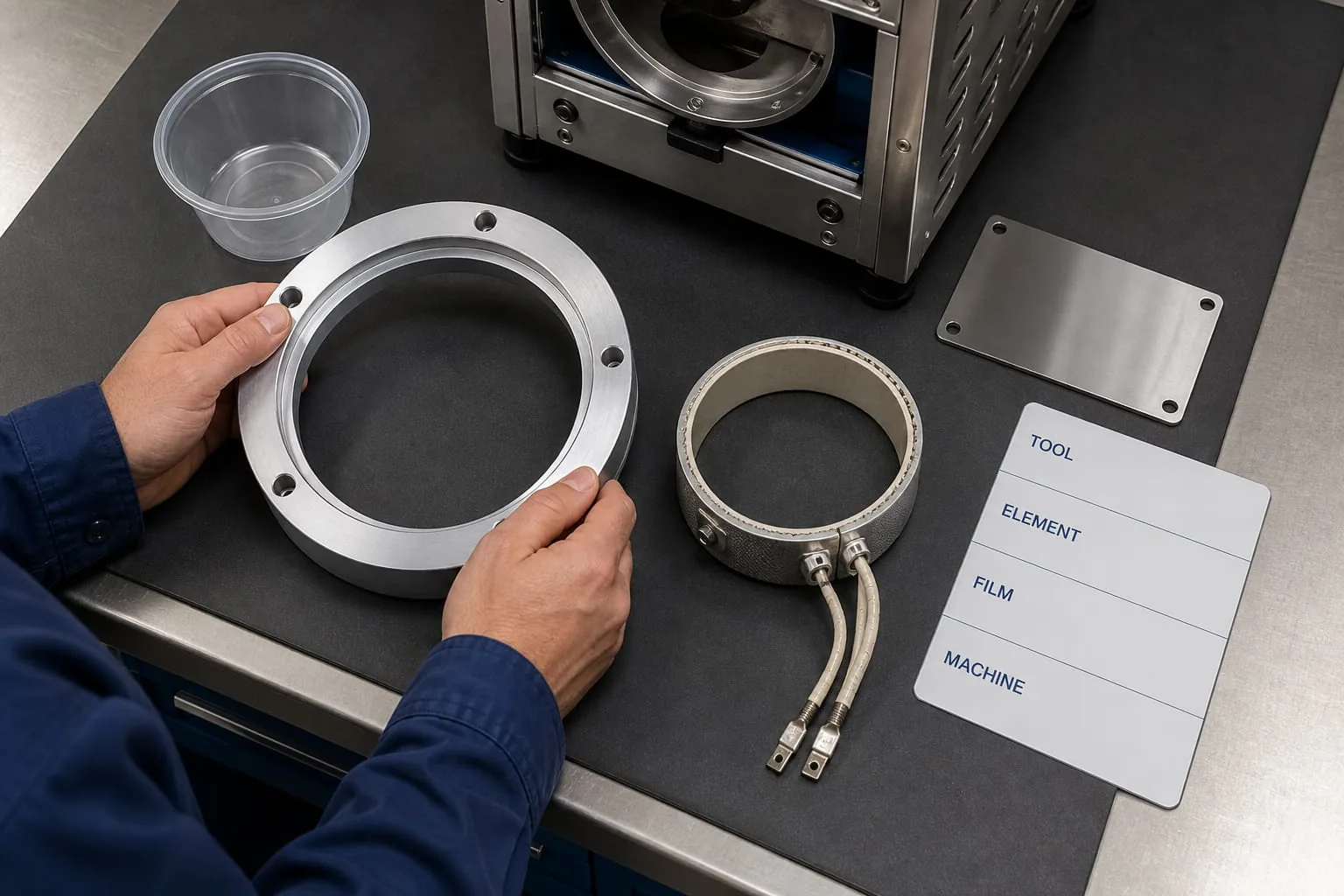
Before ordering, compare the component with the tool in front of you. Check how the part is retained, where the terminals sit, how the PTFE cover is held, and whether the sealing face is circular, segmented or otherwise profiled. The number and arrangement of cup cavities can also change the component layout.
What to record before ordering
A clear information pack reduces the risk of sending the wrong part and helps a supplier assess a non-standard replacement.
- Machine manufacturer, model and any serial or asset reference.
- Tool or sealing-head identification, cup diameter, cavity count and photographs from above and below.
- The old element or wire, including its overall length, heated length, profile, terminals and fixing points where these can be measured safely.
- Cup material, lidding-film description and the exact seal fault, such as an incomplete ring, film tear, sticking or uneven release.
- Required quantity, delivery timing and whether the part is a like-for-like replacement or a proposed modification.
Use the manufacturer’s instructions for any dimensions that require access to a guarded or heated area. If the element is difficult to identify, include clear photographs of the installed part, connector area and complete sealing tool. A compatibility check based on evidence is safer than ordering from a broad machine category.
Maintenance Checks That Protect Seal Quality
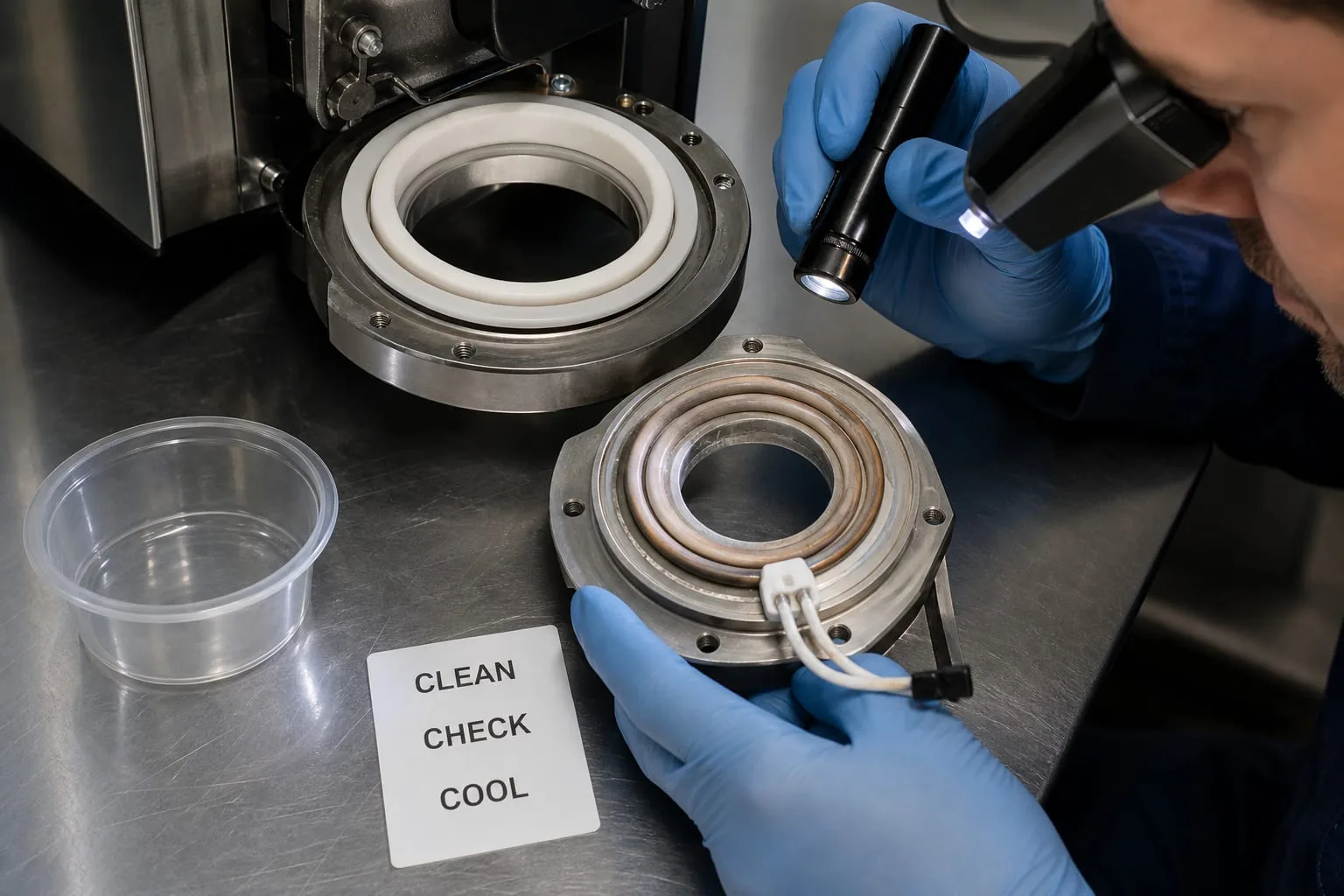
Maintenance should start with the condition of the complete sealing area. Film residue, product contamination, a damaged PTFE surface, a distorted element or uneven tool contact can each change the seal. Keep a simple record of the check, the part changed and the result of the next controlled test.
Inspect before adjustment
Inspect the sealing face for contamination, scoring, lifted tape, loose fixings and visible distortion. Check that the element sits correctly and that the tool closes evenly. If a seal fault is limited to one area of the cup, compare that area with the corresponding part of the tool rather than increasing the overall heat setting immediately.
The HSE maintenance guidance recommends planned maintenance and competent people for work equipment. Its PUWER overview also highlights the need for equipment to be suitable, maintained, inspected where necessary and used by trained people. Those requirements are relevant to the machine owner’s maintenance system, while the component supplier should be given enough information to identify the replacement part accurately.
Isolate before replacing a sealing part
Before opening a sealing head or removing a heated component, follow the site’s isolation and lock-off procedure. Isolate the electrical supply, release pneumatic or other stored energy, prevent unexpected movement and allow hot parts to cool. HSE maintenance guidance specifically stresses isolation, lock-off and the release of stored energy. Only a competent person with the required access and training should carry out the work.
Test one change at a time
After a component replacement or adjustment, use the approved cup and film combination and run a controlled trial. Check the seal ring for continuity, contamination, tearing, incomplete contact and uneven release. Keep the trial conditions recorded, change one main variable at a time and follow the equipment maker’s acceptance checks. This makes it easier to separate a component issue from a film, tool alignment or process issue.
When a Custom Replacement Is Safer
A custom replacement may be appropriate when the original element has an unusual profile, non-standard terminals, a specific mounting arrangement, several heated lengths or an obsolete part reference. It may also be the better route when the existing component has been modified and a generic part cannot be verified against the tool.
Heat Seal Components can review custom impulse elements and related component requirements when you provide the machine details, old part photographs and available measurements. The review should confirm what is known, identify what still needs checking and avoid making a compatibility claim that the evidence does not support.
How to Request a Compatibility Review
Send a concise request with the machine make and model, the sealing-tool photographs, the old element or wire, the cup and film information, and a description of the fault. Include measurements only when they have been taken safely and identify which dimensions are measured and which are estimated. If you have a part number, include it with a photograph because part references can vary between machine versions.
A useful request also states whether you need a heat-seal element, wire, PTFE tape, a sealing jaw or bar, or help identifying the correct component. If the machine application is unclear, contact Heat Seal Components before ordering so the available evidence can be reviewed against the component requirement.
Frequently Asked Questions
Does Heat Seal Components sell complete cup sealing machines?
No. Heat Seal Components focuses on replacement heat-seal elements and wires, endless bands, custom heating elements, PTFE coating and heat-seal tape, sealing jaws and bars, and component compatibility guidance. The company does not present itself as a supplier of complete cup sealing machines.
Can I order by machine name alone?
Usually, the machine name alone is not enough to confirm a replacement. Tool dimensions, cavity layout, terminal arrangement, part photographs and the old component give a much stronger basis for checking compatibility.
What should I do if seals vary after a changeover?
Check the cup and film combination, tool cleanliness, PTFE condition, element seating, tool alignment, pressure and contact time against the approved process. Record the observations and make one controlled change at a time. If the component is in doubt, send the evidence for a compatibility review rather than continuing to change settings without a clear baseline.
For a component review, send the machine and tool details, photographs, safe measurements and the seal fault through the Heat Seal Components contact page. This gives the team a practical basis for identifying the right element, wire, PTFE product, jaw or bar for the application.