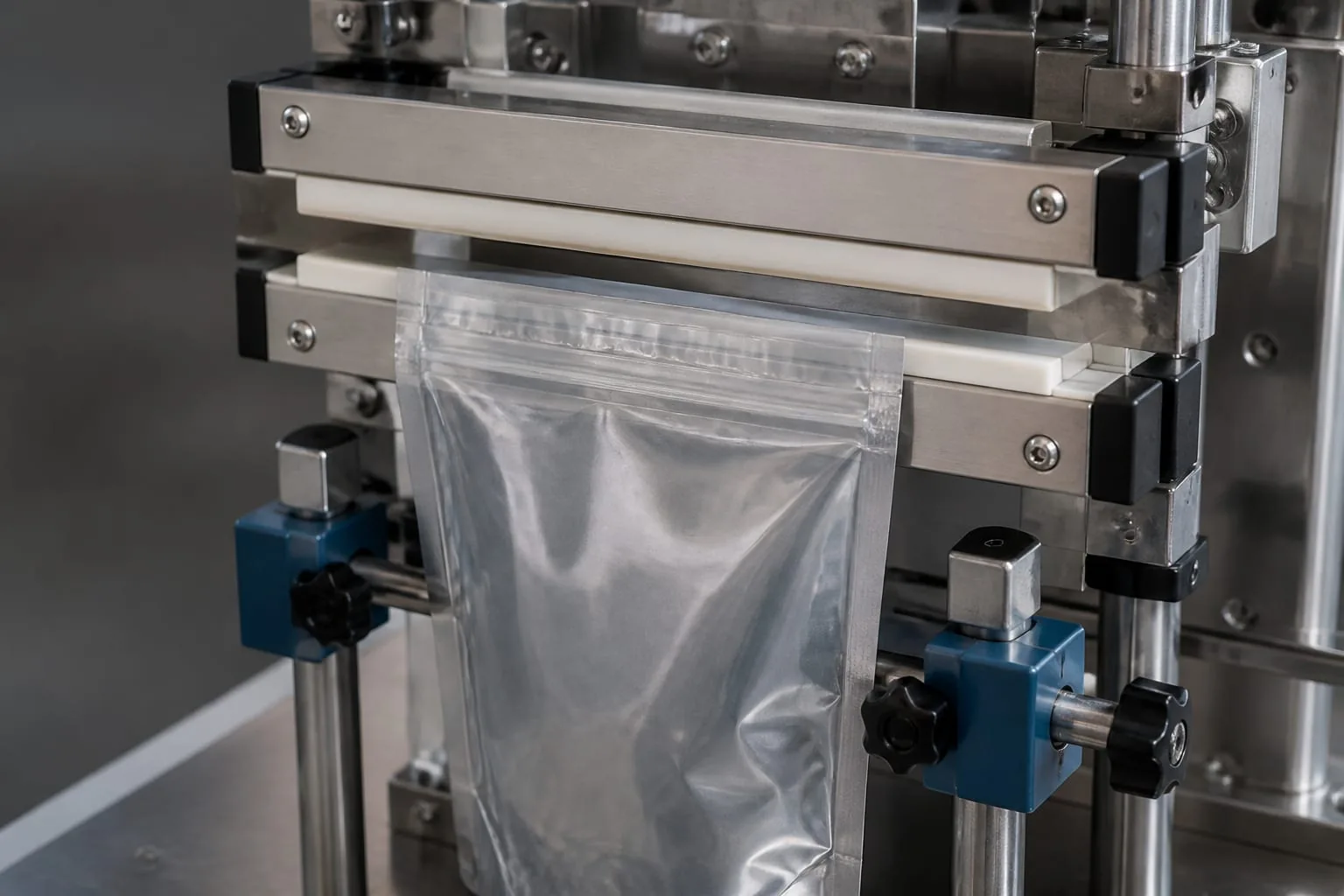
Automatic pouch filling and sealing machine searches usually come from a team trying to keep a packaging line producing consistent packs. The machine may open a pre-made pouch, receive a product, close the mouth and apply a top seal. The replacement part must match the sealing station, pouch format and electrical arrangement. A machine name on its own is not enough.
This guide covers the components and checks around that final sealing operation. Heat Seal Components supplies replacement heat-seal elements and wires, PTFE cover tape, sealing jaws and bars, and custom components for compatible packaging equipment. It does not supply complete pouch filling machines.
For a quote, record the machine make and model, pouch style, sealing length, old part dimensions and clear photographs. That information gives an engineer something concrete to check before a replacement is made.
What this machine phrase means for component buyers
A pre-made pouch system is an application, not one universal sealing design. The same search may also describe an automatic pouch sealing machine or an automatic sachet filling and sealing machine, but the component selection remains specific to the real sealing station. Current manufacturer descriptions show the work divided into pouch feeding, opening, filling, top sealing and discharge. For a useful overview of that sequence, see TAM’s pre-made pouch description and Auger’s pick-fill-seal overview.
The sealing part of the process begins after the pouch has been positioned and filled. The jaws or bars must bring the correct area of the pouch mouth together, apply the required heat and pressure, then release without dragging the film. The component geometry and the pouch material both affect the result.
Pre-made pouches are not one universal format
Pouches can be flat, stand-up, gusseted, spouted or fitted with a zipper. Some have a narrow clear area above the product. Others have a wider mouth, a shaped top or extra layers around a closure. These differences affect jaw clearance, seal length and the space available for a heating element.
Do not use a pouch description as a substitute for a machine specification. A stand-up pouch may be handled by different feeding and clamping arrangements. A zipper or spout may also change where the top seal can be placed. Confirm the actual sealing station and the original component before ordering.
The final seal is a component assembly
The heated element is only one part of the sealing interface. The jaw or bar provides the mechanical position and force. A PTFE cover or tape can provide the non-stick contact surface. Terminations, insulation, supports, springs and clamps keep the heated part in the correct position.
A fault in one part can look like a fault in another. A poor seal may come from a damaged element, uneven contact, worn PTFE, contamination in the seal area, a loose termination or a pouch that is not correctly aligned. Replace the failed component only after checking the surrounding assembly.
Which components matter at the sealing head?
The sealing head should be treated as a matched set of mechanical, electrical and surface parts. Before selecting a replacement, identify which part is actually worn or damaged.
Heating element or wire
A pouch top seal may use a straight ribbon, round wire or a formed element. The heated length, profile, cross-section, terminations and resistance all affect how the part fits and heats. The element must also suit the control system and the way the jaw closes.
A longer or different profile is not automatically a stronger replacement. It can change electrical demand and heat distribution. Use the original part, a dimensioned drawing or an engineer’s measured record as the starting point.
Heat Seal Components’ heat seal elements are made to the required dimensions for compatible equipment. Send the old part or the measurements rather than ordering from the machine name alone.
PTFE cover tape and non-stick faces
A cover tape or PTFE face sits between the heated component and the pouch film. Its job depends on the design of the sealing head. It may help prevent sticking and protect the active component from direct contact with the film.
Check for cuts, lifting edges, wrinkling, thinning, discolouration and residue. A damaged cover can change contact with the pouch. It can also make a good element appear to be overheating or failing.
If the sealing head uses a replaceable cover, match the width, fixing method and surface arrangement. The PTFE heat-seal tape page is a useful starting point when the cover needs to be specified with the element below it.
Sealing jaws, bars, supports and terminations
The jaw or bar holds the seal components in the correct position. It should close evenly across the pouch mouth, with no obvious twist, gap, burr or movement. Check the support face, insulation, springs, clamps and terminals before fitting a new heated part.
Heat Seal Components supplies parts for sealing jaws and bars, including elements, covers and related components. Its sealing jaws and bars service page also explains when a worn PTFE face or recoating requirement should be considered. Confirm the scope of the quotation. A replacement element is not the same as a complete machine assembly.
How the pouch mouth and top seal relate
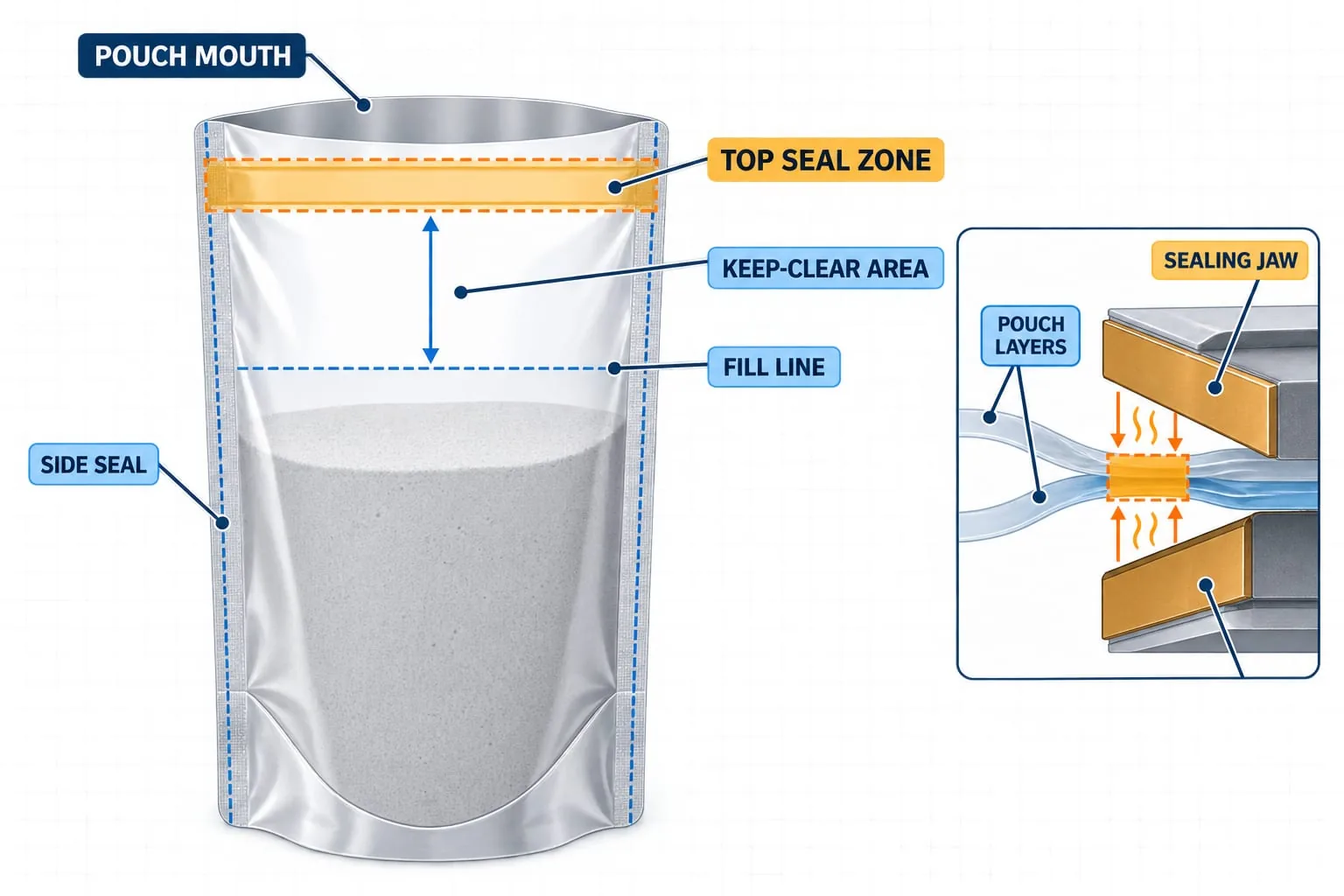
The pouch mouth must be open enough for filling but clear enough for the final seal. Product, powder, liquid or folds in the top-seal area can interrupt contact and create a weak or incomplete closure. The sealing jaw should meet the intended top seal zone rather than the filled portion of the pouch.
Treat the illustration as a simple explanation, not as a scale drawing for a specific pouch. Measure the actual pouch and sealing station. Record where the fill level, zipper, spout or gusset sits in relation to the top seal.
Match the replacement to the pouch machine application
The same search term can describe different equipment arrangements. The replacement part should be selected from the real station, not from a generic image or catalogue phrase.
Pre-made pouch systems
A pre-made pouch machine normally receives an already formed pouch, opens it, fills it and seals the top. The sealing unit may use paired jaws or bars with a defined length, profile and support arrangement. A model can help an engineer identify the equipment family, but it does not confirm the element shape or terminal position.
Ask for the pouch type and the sealing station. Include whether the pouch is flat, stand-up, gusseted, zipped or fitted with another feature near the top. Mention whether the fault is sticking, incomplete sealing, wrinkles, scorch marks, a short seal or a part that has physically broken.
VFFS and flow-wrap are different stations
VFFS and flow-wrap equipment may form or move film continuously through a sealing area. The machine can use a different jaw, band, wire or formed element from a pre-made pouch unit. A replacement for one system should not be assumed to fit the other.
If the line is a VFFS or flow-wrap application, identify whether the part belongs to a transverse seal, longitudinal seal, fin seal or lap seal. Heat Seal Components also covers compatible components for these applications, but the sealing path and original part still need to be checked.
Keep the machine model as a clue, not the specification
Production changes, machine age, modified jaws and previous repairs can alter the component installed today. Two machines with the same family name may have different sealing lengths or connections.
Use the model as a cross-check. The primary evidence should be the old component, the jaw or bar, the machine position and the measurements. If the original part is broken, photograph the mounting points and measure the assembly around it.
Record these details before ordering a replacement
Good replacement work starts with a complete record. Measure only when the equipment is isolated, cool and safe to access.
Mechanical measurements
Record the details that define the physical fit:
- Pouch width at the sealing area.
- Usable sealing length across the pouch mouth.
- Jaw or bar face width and the available clearance.
- Element type: wire, flat ribbon or formed profile.
- Element width, thickness or wire diameter.
- Overall length and heated length.
- Terminal shape, hole size and centre-to-centre spacing.
- Fixing points, spring positions, clamps and insulation.
- PTFE cover width, thickness if known, and fixing arrangement.
- Any bend, notch, cut-out or shaped end.
Use millimetres and write down the reference point for every measurement. Do not stretch a wire or straighten a formed element to make it easier to measure. If the part has failed, measure the jaw and support points as well as the loose component.
Electrical and control information
Add the electrical information available from the machine record:
- Supply voltage and phase, if confirmed.
- Known resistance or power information from the original part.
- Single-sided or two-sided heating, if known.
- Connection and termination arrangement.
- Temperature, dwell or pressure values recorded during a known-good run.
- Any controller alarm, loose connection or visible hot spot.
Do not invent a resistance, temperature or dwell time. DuPont’s heat-sealing guidance describes dwell time, temperature and pressure as interacting factors. It also warns that a machine setpoint may not equal the pressure or contact conditions at the material.
Photos that make compatibility easier
Take photographs before dismantling where it is safe to do so:
- The complete machine area around the pouch sealing station.
- The jaw or bar open, showing the full sealing face.
- Both ends of the element, including terminals and fixing points.
- The PTFE cover, support and insulation.
- The pouch mouth, top seal and any zipper, spout or gusset.
- Any wear, scorch, sticking, wrinkling or contamination.
- A scale or ruler beside a removed part, without hiding its shape.
- The machine data plate and model information, if available.
A clear photograph does not replace a measurement, but it can show orientation and surrounding parts that a single dimension misses.
Commission and maintain the sealing parts safely
A replacement is only part of the process. The station still needs a controlled check under the actual pouch and product conditions.
Set the process by test, not assumption
Do not copy a temperature from a different pouch or machine and treat it as a confirmed setting. Sealant layers, pouch construction, jaw contact, dwell time and pressure interact. Start from the equipment maker’s instructions and use a controlled test plan for the actual material.
Change one known factor at a time where practical. Record the pouch type, component fitted, settings, sample result and reason for accepting or rejecting the seal. Look for a repeatable seal across the intended length, not one good sample.
A new element may not correct an uneven jaw, poor support or contamination. Check the whole contact area before increasing heat or dwell.
Inspect the finished seal
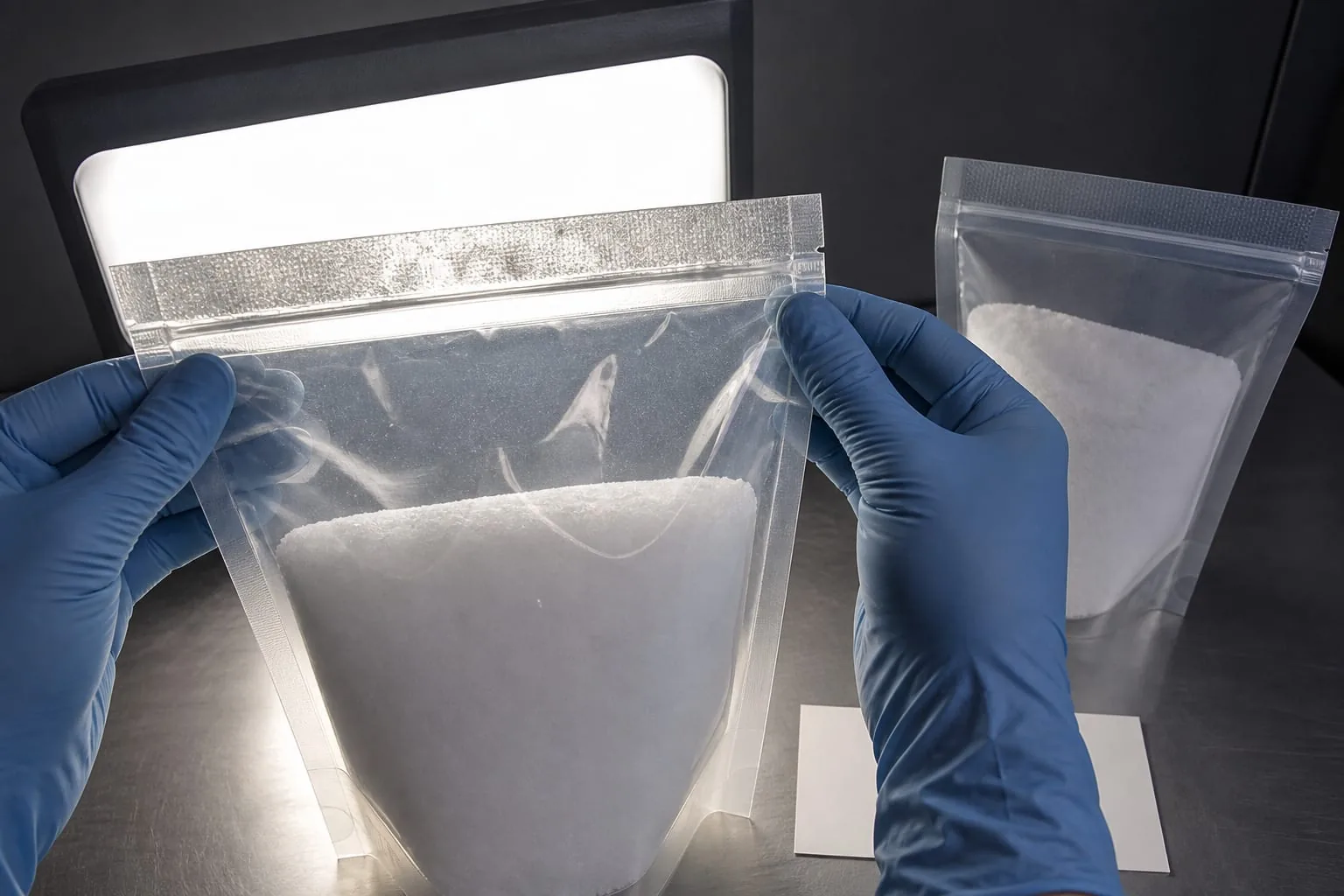
The finished pouch should be checked for a continuous, correctly positioned seal. Look at the full width, corners and any junction with a side seal. Check for wrinkles, non-bonding, seal creep, flex cracking, holes and product in the seal area.
The FDA’s flexible-pouch integrity procedures recommend evaluating the package design and the manufacturer’s own test method. Its guidance discusses checking seal width, corners, smooth contact, product contamination, nonbonding and other visible defects. Use the test method approved for your product and packaging process.
Isolate before cleaning or replacement
Follow the machine maker’s procedure and your site’s safe system of work. HSE guidance says equipment must be made safe before maintenance starts. In practice, the competent person should:
- Stop movement and isolate electrical and other power supplies.
- Lock off the machine where accidental reconnection is possible.
- Release stored energy, including pneumatic or hydraulic pressure that could move the station.
- Allow hot components to cool before access.
- Support parts that could fall or move.
- Keep people clear and replace guards before a controlled restart.
HSE’s maintenance guidance also stresses competence, planned maintenance, fault reporting and the use of suitable tools. Do not bypass a guard or reach into a live sealing station to diagnose a seal fault.
When to ask for a compatibility review
Ask for a compatibility review before ordering when:
- The machine model is known but the element profile is not.
- The original part has broken, stretched or been modified.
- The pouch format has changed.
- The jaw has been recoated, repaired or altered.
- The replacement needs a different termination.
- The seal is uneven after a part change.
- The line uses a specialist pouch with a zipper, spout or gusset.
Send the machine details, measured part, sealing-station photographs and the reason for replacement. If the component is non-standard, add a sketch with dimensions and mark each feature from a fixed reference point.
Heat Seal Components can review the information and quote compatible heat-seal elements, wires, PTFE cover tape, sealing jaws, bars or custom impulse components. Use the contact page to submit the enquiry.
Frequently asked questions
Does Heat Seal Components supply the complete pouch filling machine?
No. The business supplies heat-seal components and compatibility guidance for packaging equipment. It does not supply complete pouch filling machines. The enquiry should identify the replacement element, wire, cover, jaw or bar part needed for the sealing station.
Can I order a replacement by pouch size alone?
No. Pouch width and length are useful, but they do not define the machine interface. Add the sealing length, jaw details, element dimensions, terminals, support arrangement and machine information.
Is a pouch sealing station the same as a VFFS sealing station?
Not necessarily. A pre-made pouch unit seals a pouch that has already been formed. VFFS and flow-wrap stations may handle moving film or a different sealing path. Confirm the application and component arrangement before choosing a replacement.
What should I send with a quote request?
Send the machine make and model, station photographs, old component photographs, measured dimensions, pouch format, known electrical information and the fault description. A sample part or dimensioned sketch is useful when the original is damaged.
Can PTFE tape fix every poor seal?
No. PTFE cover tape can be part of the sealing interface, but it cannot correct every fault. Check the element, jaw alignment, support, connections, pouch position, contamination and process settings before deciding which part to replace.
If the sealing component is custom, what is the best starting point?
Send the old component if it is available. Otherwise send a dimensioned drawing, clear photographs, the jaw or bar measurements and the machine details. This gives the manufacturer enough evidence to review the required profile and terminations.
If you need a replacement for an automatic pouch filling and sealing machine application, send the old part, the machine information and the measurements through the Heat Seal Components contact page. The team can review the sealing station and advise on a compatible component before quoting.