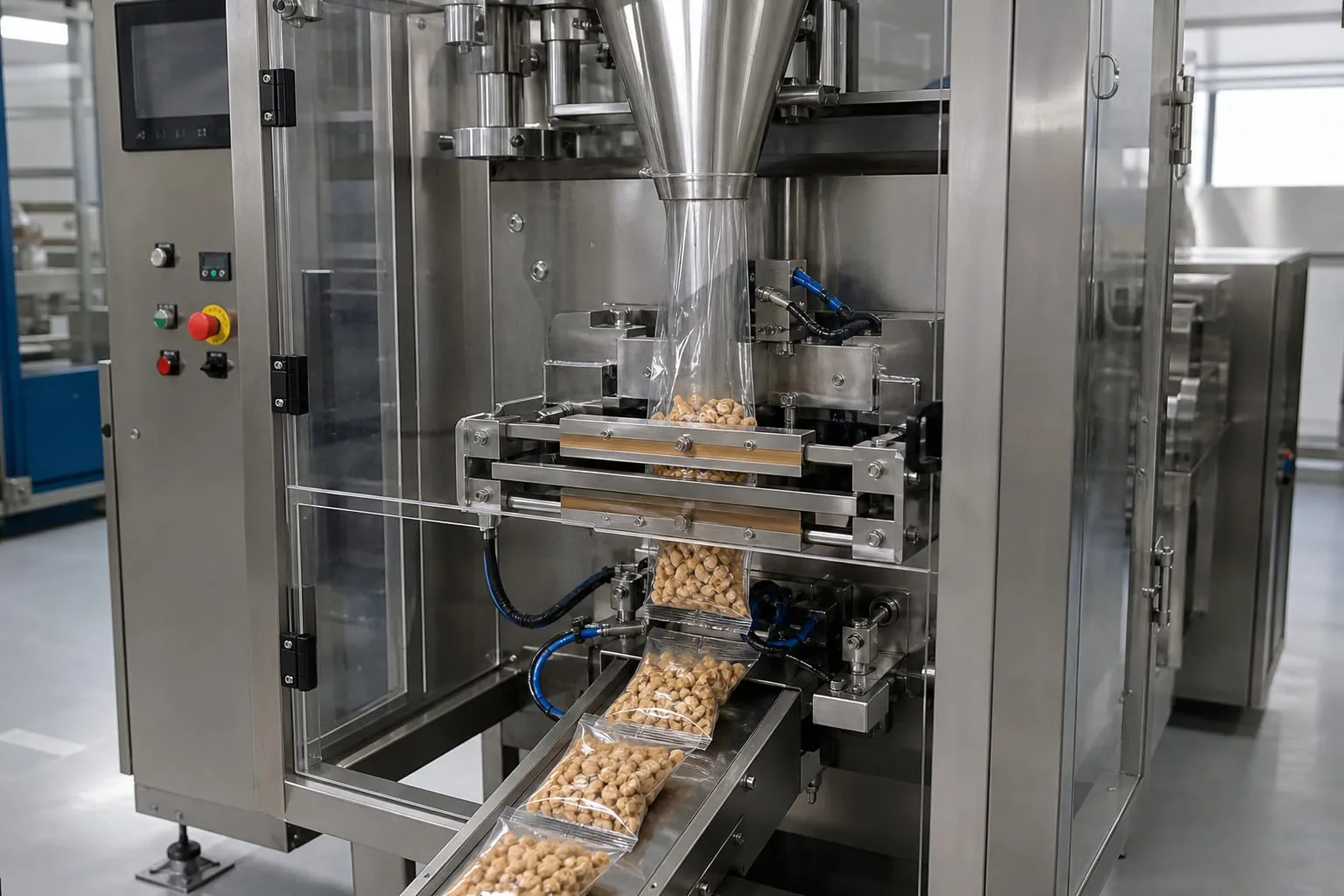
An automatic sealing machine can produce consistent packs only when its sealing station, film path and control settings work together. For maintenance and procurement teams, the replacement part must match the machine’s sealing method and the installed assembly.
Heat Seal Components supplies heat-seal elements, wires, bands, PTFE coating and heat-seal tape, sealing jaws and bars, plus custom component support. This guide explains what to check before ordering a replacement and how to plan safe inspection work. It does not replace the machine manual or a site risk assessment.
What an Automatic Sealing Machine Does
The sealing cycle
Most automatic packaging lines move film or a filled pack into a sealing station. The jaws or bars close on the intended seal area, apply the approved heat and pressure, hold for the required cycle, then open so the pack can advance. The exact temperature, dwell time, pressure and speed depend on the machine, film structure and product.
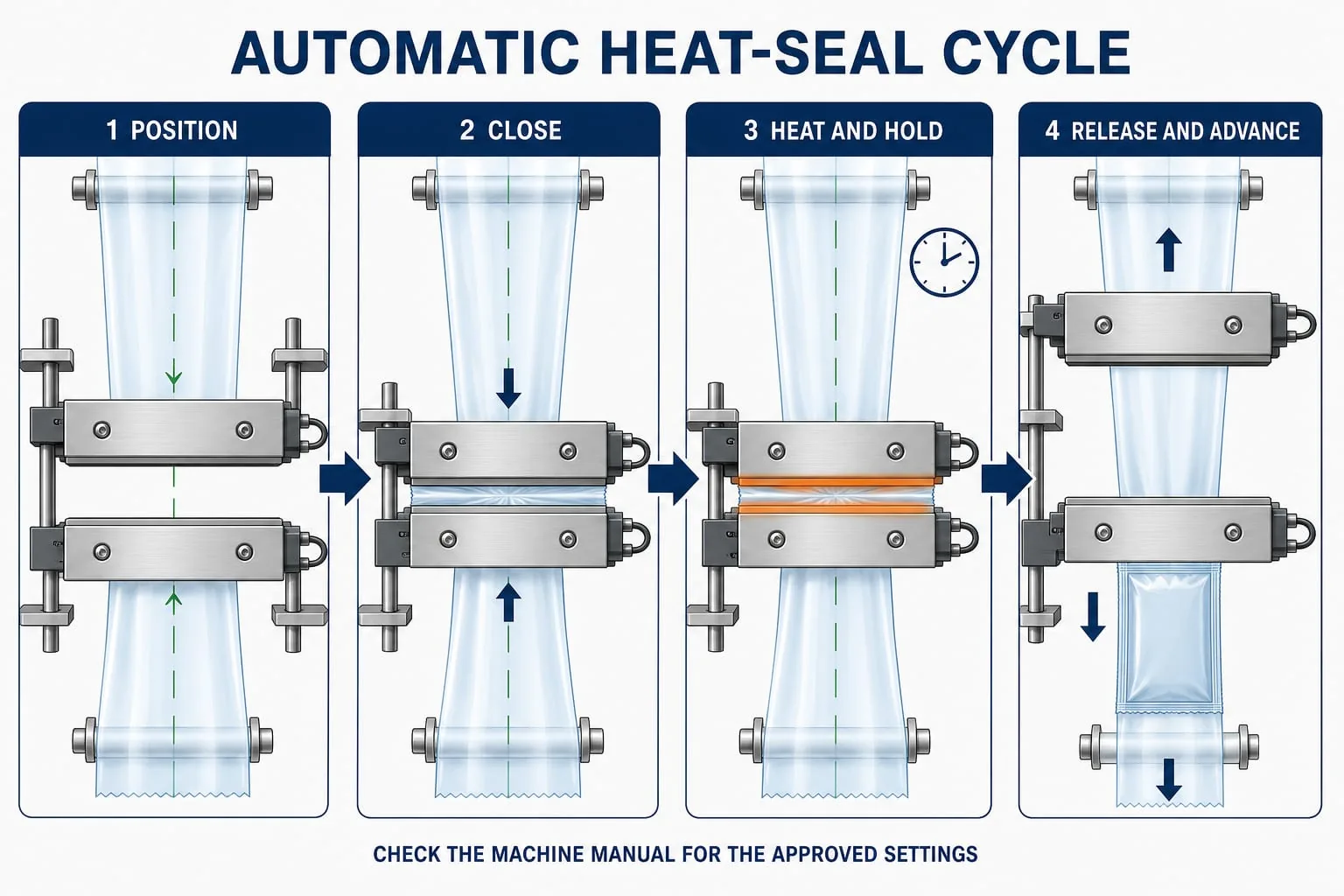
The cycle diagram is a simple way to discuss sequence with operators and maintenance teams. It is not a set of universal machine settings. Use the manufacturer’s instructions and the approved settings for the specific line.
The component group around the seal
A sealing station is more than a heater. The active element or wire creates heat, the jaw or bar presents the sealing face, and a PTFE cover or tape can protect the working surface and help the film release. The assembly also depends on terminals, insulation, supports, sensors and the machine’s control system.
Useful checks include:
- Heat-seal element or wire: confirm the form, active length, cross-section, terminals and documented electrical information.
- Sealing jaw or bar: confirm the face, profile, mounting points, overall length and alignment with the mating part.
- PTFE cover or heat-seal tape: confirm the width, fixing method, position and condition across the working area.
- Control and sensing: use the machine documentation to confirm the approved cycle settings and any sensor or control fault history.
For replacement options, review the Heat Seal Components heat-seal elements service and the sealing jaws and bars service before sending an enquiry.
Which Components Need Checking?
Heating elements and wires
An element that looks similar can still be electrically or mechanically unsuitable. Resistance is affected by the material, length and cross-sectional area. Kanthal’s resistance-heating handbook explains that resistance is directly related to length and inversely related to cross-sectional area, while resistivity also depends on the material and temperature.
Check the installed part against the machine record rather than choosing by appearance alone. Record the element or wire profile, active length, support arrangement, terminal connection and any resistance or power value stated in the equipment documentation. Heat Seal Components can review heat-seal elements and wires against those details.
Sealing jaws and bars
Jaws and bars hold the pack or film and bring the sealing faces together. A replacement must match the mounting arrangement and working geometry as well as the heater. Check the seal length, face width, profile, fixing centres, jaw travel and the condition of the mating surface.
On a VFFS or flow-wrap line, the sealing station may be part of a larger coordinated motion system. A part that fits the mounting points but changes the seal position, pressure distribution or film path can create a new fault. Treat the machine manual and the original assembly as the starting evidence.
PTFE covers and heat-seal tape
PTFE covers and heat-seal tape sit close to heat, pressure and film contact. Wrinkles, lifted edges, contamination or exposed element material can affect release and seal consistency. Inspect the full working length and confirm the replacement width and fixing method before fitting.
Use the PTFE coating and PTFE heat-seal tape services for component-specific options. Do not assume that a general-purpose tape or an unrelated PTFE product is suitable for a sealing station.
Match the Replacement to the Machine
Record the machine and assembly details
Before requesting a quote, capture evidence from the machine and the removed or installed component. A clear record reduces the risk of ordering a visually similar but incompatible part.
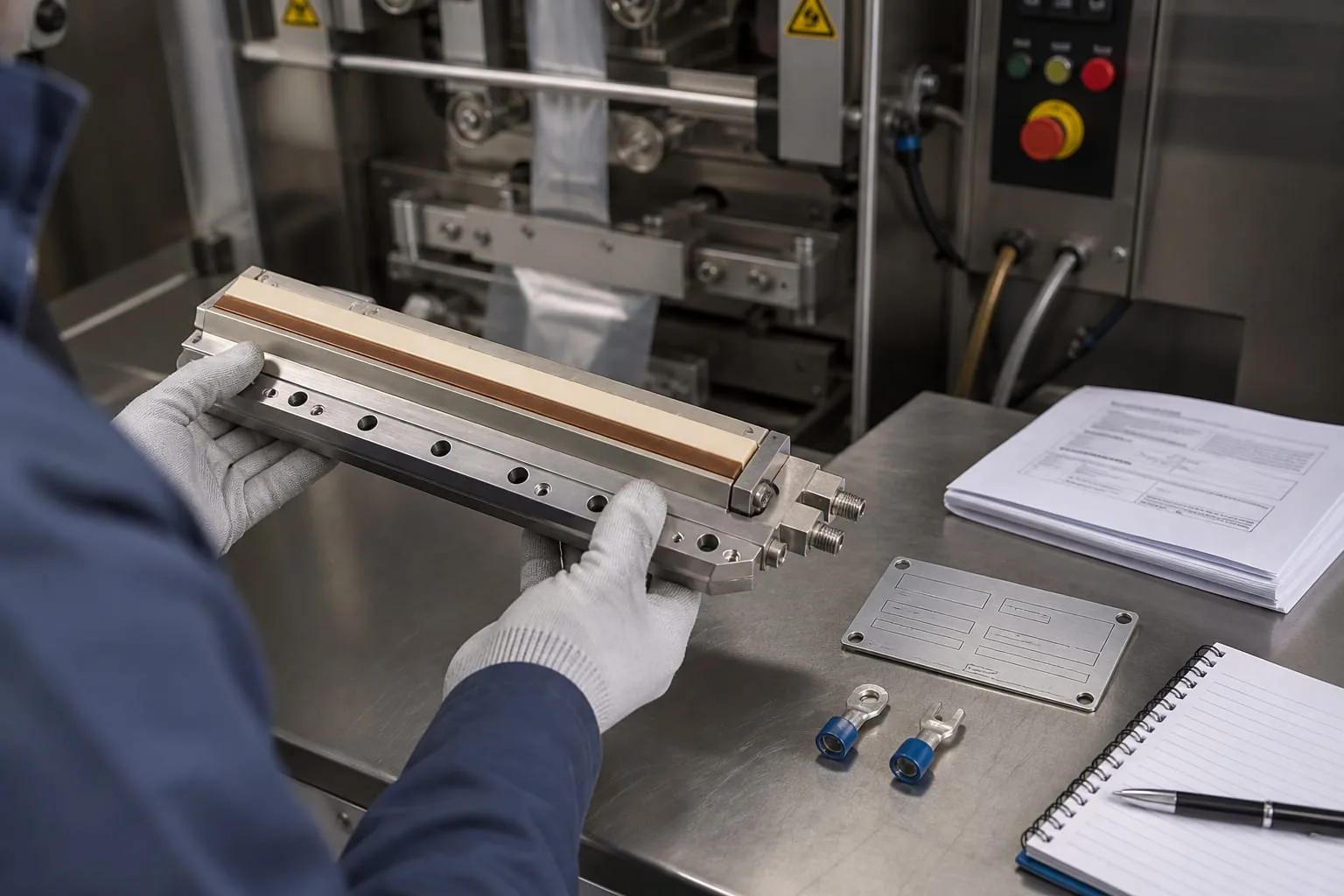
Record, where available:
- the manufacturer, model and serial or asset reference from the machine plate;
- the sealing method and station, such as impulse, constant heat, vacuum, VFFS or flow-wrap;
- heated length, overall length, width, thickness, profile and fixing centres;
- terminal arrangement and any resistance, power or voltage information in the manual or part record;
- film or material details and the required seal width;
- clear photographs of the complete jaw or bar, element, terminals, PTFE cover and any damaged area.
Fuji Impulse’s own heater guidance shows why model and application evidence matters: its braided heater page identifies particular equipment and a particular bag application. That is an example of manufacturer-specific compatibility, not a claim that every machine uses the same part.
Use electrical and mechanical evidence together
Electrical data alone does not confirm the mechanical fit, and a good mechanical fit does not prove the electrical match. Compare the part drawing, material, dimensions, terminals, support points and documented electrical values as one compatibility check.
For complex stations, include photographs of the assembly in place and removed. If the component is obsolete, bent, unusually formed or built for a modified machine, ask whether a custom heat-seal element or custom sealing jaw is the better route.
Maintenance Checks for Automatic Sealing Equipment
Inspect the sealing zone
Plan inspection around the full seal path, not just the visible heater. Look for wear or contamination on the PTFE cover, changes in element position or tension, damaged insulation, loose terminals, jaw misalignment and uneven contact across the seal length. Record findings so a gradual change can be distinguished from a one-off event.
The Health and Safety Executive recommends planned maintenance and says maintenance work should be carried out by people with the right competence, information and training. Its PUWER overview also highlights suitability, safe condition, guarding, isolation and training as part of managing work equipment.
Make the work safe
Before opening or reaching into the sealing station:
- follow the site isolation and lock-off procedure for electrical, pneumatic and other stored energy;
- prevent the machine from restarting while work is in progress;
- allow heated parts to cool and verify the safe condition before handling;
- use the manufacturer’s instructions and have the work completed or checked by a competent person.
The HSE maintenance guidance notes that high-risk equipment may need positive isolation and that components may need time to cool. Apply the site’s documented control measures to the actual machine and task.
When a Custom Component May Be Better
A standard replacement may not be the right answer when the original part has an unusual bend, profile, terminal layout, support method or heated length. Custom work can also be useful when a machine has been modified or when the original component is no longer available.
Send the component drawing or measured sketch, photographs, machine details and the required seal position. Heat Seal Components’ custom impulse heat-seal elements service can be used as a starting point for an engineering review. The final component should be confirmed against the machine evidence before manufacture.
Ordering Checklist
- Identify the machine and sealing station.
- Photograph the assembly before removal where it is safe to do so.
- Measure the part and record the terminal and fixing details.
- Check the machine manual for approved electrical and cycle information.
- Describe the film, seal width, fault symptoms and recent maintenance.
- Send the evidence for a compatibility review before ordering.
If you need a replacement element, wire, band, PTFE tape, sealing jaw or bar for an automatic sealing machine, contact Heat Seal Components with the machine model, measurements and photographs. The team can review the available component route before quotation.