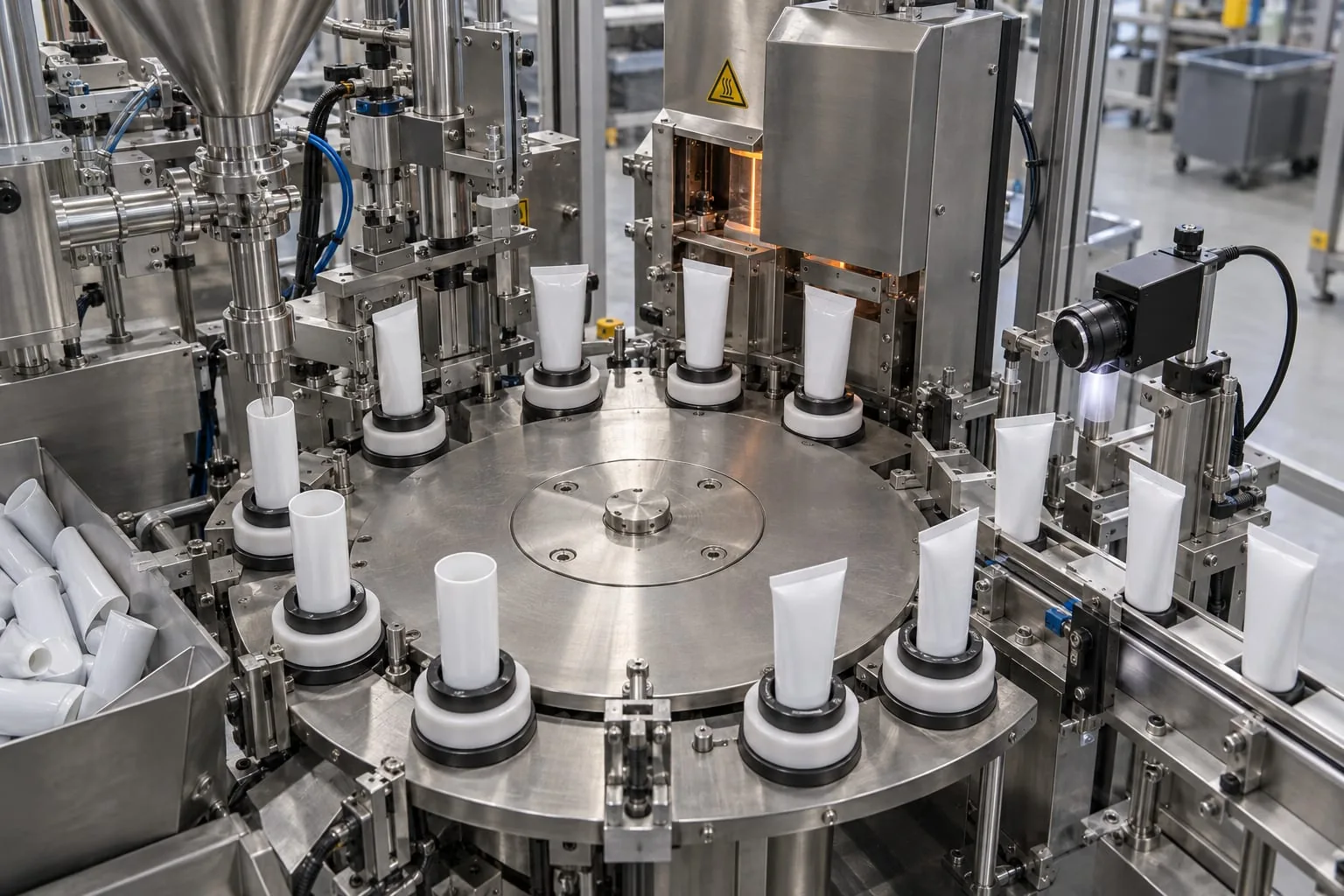
An automatic tube filling and sealing machine moves tubes through linked stations so that feeding, filling, tail closure and inspection repeat as part of one controlled line. When a seal defect appears, the machine label alone does not identify the part to replace. The line may close tubes with heated tooling, hot air or ultrasonic equipment, and each method presents a different component interface. This guide follows the sealing station through an automatic cycle, explains which parts can be supplied as heat-seal components, and shows what to check before a format change or replacement. It focuses on plastic and laminate tube applications; the machine maker’s drawings and validated process remain the authority for a specific line.
Automatic tube filling and sealing machine workflow
The exact layout varies by manufacturer, product and tube format. A typical line presents an empty tube in a carrier, establishes its orientation, meters product into the open end and transfers the tube to a closure station. Depending on the machine, the tail may be warmed, pressed, folded, embossed, cooled and trimmed before the tube is checked and discharged. Each transfer is a chance for a tube to arrive differently, so the automatic cycle depends on both the sealing assembly and the positioning steps around it.
- Tube supply and orientation: the infeed separates tubes and presents them in the required direction. Format parts, print registration or sensors may help confirm the tube position.
- Filling and tail presentation: a dosing station fills the tube while leaving the end that will be closed in the condition required by the machine and product. The fill method and the seal station are related but are separate parts of the line.
- Tail closure: the fitted system heats or welds the tube material, then uses its designated tooling to form the closure. Some machines separate the heat source from the pressing jaws; others use a contact tool or a different welding method.
- Finishing and inspection: a line may trim, shape or emboss the tail and then use a camera or other check before it releases the tube. The order and available checks depend on the equipment.
IWK’s service upgrade catalogue offers one example: its hot air station lists plastic, plastic laminate and aluminium laminate tubes and a high performance heating element. The accompanying process sequence separates tube transport, heating, pressing, embossing, cooling and cutting. This shows why a tube filler can contain several distinct serviceable parts. It is not a universal parts drawing or compatibility guarantee for another make. See IWK’s hot air sealing station catalogue alongside the manual for the installed model.
Identify the sealing method fitted to the line
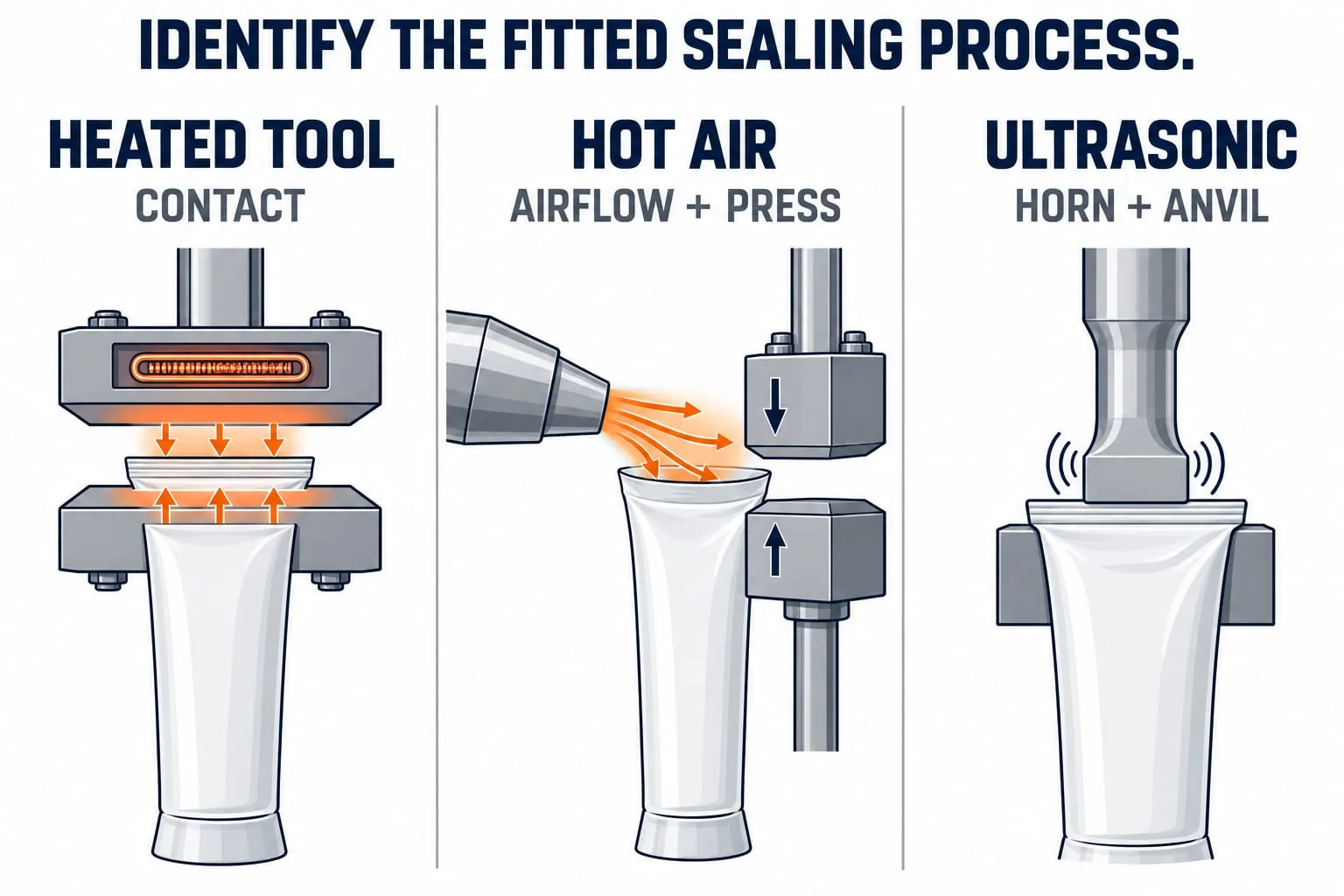
Start at the tube tail and trace the process back to its heat or weld source. The visible jaw is not always the heater: with hot air, a separate element warms the airflow; with ultrasonic sealing, a horn and anvil act at the joint. Identify the fitted method from the machine documentation or parts drawing before asking for a replacement. Similar in appearance stations can use different electrical and mechanical parts.
Heated contact tool
In a contact system, a resistive element heats a tool face or jaw that meets the tube material. The replaceable part might be a wire or element, a heated bar, or a custom assembly. Its position, terminal arrangement, electrical rating and mating geometry must match the machine specification. The jaw that applies pressure may also have a separate cover or support, so replacing a heater does not automatically address wear or alignment at the contact face.
Hot air station
A hot air system directs heated air at the tube tail, then uses its specified tooling to close and finish the warmed material. The heater, air path, pressing or cooling jaws and any trimming tool have different functions. IWK’s catalogue describes a high performance element in its own hot air station; that is useful evidence of the component boundary, not a reason to assume that every tube filler uses the same element. Compare the fitted part with its manufacturer’s drawing and see HSC’s heating element service for the relevant product category.
Ultrasonic sealing
Ultrasonic closure uses vibration at the sealing interface rather than a conventional heated jaw. IWK’s overview of ultrasonic tube sealing explains that high frequency mechanical vibration generates heat in the material at the joint and distinguishes the process from its hot air system. This example comes from one machine, not every ultrasonic unit. If the fitted station is ultrasonic, do not order a standard heat-seal element for it unless the machine documentation confirms a separate heated component.
Component boundaries on an automatic tube line
A complete filler contains controls, drives, feeding equipment and parts that contact product as well as its closure station. A component supplier can only identify a replacement when the request points to the actual part and its machine interface. Heat Seal Components supplies heat-seal elements and related parts for packaging applications, subject to confirmed specifications; it does not supply a complete tube filling machine.
Element or sealing wire
For a replaceable heater, use the machine maker’s part reference or a drawing that identifies the installed element. Confirm the relevant dimensions, connection or terminal form and electrical specification from approved records. A photograph is useful for orientation, but it cannot verify resistance, voltage or fit on its own. HSC’s heat-seal elements and wires page describes this component family.
Jaws, bars and surface layers
Pressing and cooling jaws determine how the warmed tail is held, while a bar or shaped tool may form the closure. Inspect whether the enquiry concerns the heater, the jaw, the mounting or a surface layer before naming a part. Where the fitted assembly calls for them, HSC can also discuss sealing jaws and bars and PTFE heat-seal tape. The machine drawing and sample remain necessary to confirm the correct construction.
Line controls and format parts
A position sensor, temperature controller, drive, cutting tool or carrier for a format can affect the result without being a heat-seal element. Treat these as separate components and use the equipment maker or a competent line technician for diagnosis. This distinction helps prevent an unverified heater order when the underlying change is tube registration, process control or a worn format part.
Why an automatic line can produce inconsistent tube tails
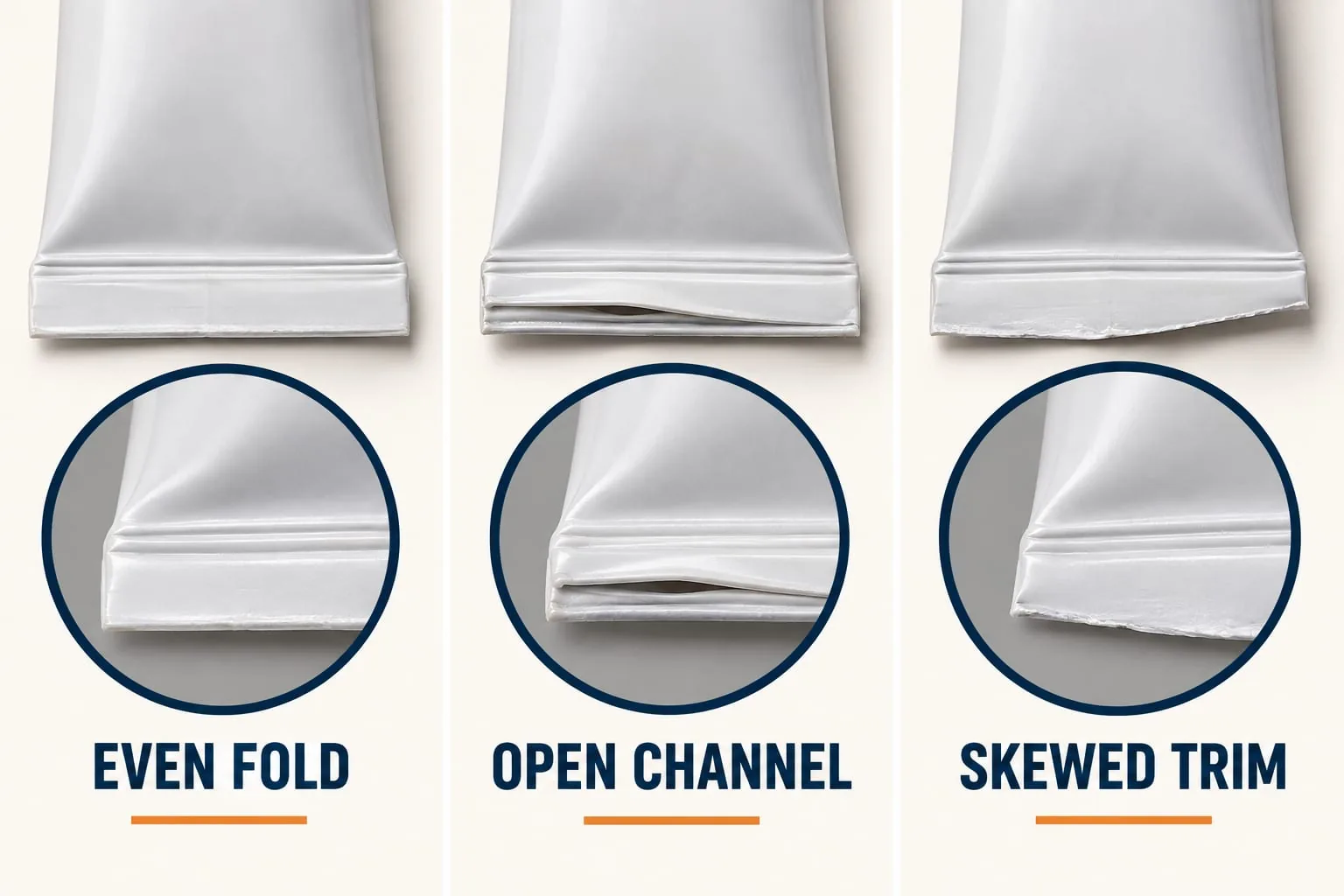
An automatic cycle can repeat a setting while the tube presented to the sealing station changes. The image shows three visible conditions to record during a quality review. They are observations, not diagnoses: the same appearance can have more than one cause, and a fold that looks clean alone does not prove package integrity.
- An uneven or misplaced fold may coincide with a tube that is not held in the same position each cycle. Review the approved orientation and format setup before changing heat or pressure.
- An open section or contamination near the closure deserves investigation against the material, product and validated sealing procedure. Do not infer a safe operating adjustment from appearance alone.
- A skewed or incomplete trim can point to a finishing or format issue as well as a sealing issue. Compare it with the machine’s accepted sample and have the correct station assessed.
- A change after maintenance or a part replacement is useful evidence. Record which part changed and when, then compare the first acceptable output with the current output using the site’s quality method.
IWK documents camera checks on specific tube filling lines, including detection of incompletely closed or incorrectly trimmed tubes. Its sterile tube filling note also describes a hot air closure option for plastic tubes and camera inspection of the fold. These examples show that closure and inspection can be separate stations; they do not set an acceptance limit for another product or machine.
Manage changeovers and routine checks
Automatic production links several operations, so a closure issue should be reviewed with its surrounding process. A short, controlled handover between production, maintenance and quality teams can distinguish a part change from a format or process change without guessing at settings.
- Follow the equipment maker’s procedure for stopping, cooling and isolating the line before inspection or component removal. Do not reach into a live or hot station.
- Keep the approved setup tied to the tube material, format and line configuration. Do not transfer settings between formats unless the machine procedure authorises it.
- After a format or component change, use the site’s established first sample and in process checks. Record the result against the correct tube specification and approved acceptance method.
- If a replacement element or jaw is fitted but the defect remains, review tube position, product contamination, tooling condition and process records with the responsible technician or machine builder.
Trend recurring faults by station, tube format and time of change. That record can reveal whether an issue follows one closure component, appears only after a format change, or begins upstream at tube feeding or filling. Use the maker’s service documentation for inspection intervals and adjustment limits; this article does not assign machine settings or maintenance intervals.
Frequently asked questions
Are all automatic tube filling and sealing machines hot air systems?
No. An automatic tube filler may use heated contact tooling, hot air, ultrasonic sealing or another method used by an individual machine. Identify the installed station from its documentation before selecting a component.
Will an element from a semi automatic tube sealer fit an automatic line?
Not because the application name is similar. Element geometry, terminals, electrical rating, mounting and the surrounding tooling may differ between models. Confirm compatibility from the equipment record and the part specification.
Can a new heater fix every poor tube seal?
No. A heater is only one possible cause. Tube orientation, material, contamination, pressing or cooling tooling, finishing and machine control can also affect the result. Use the validated quality checks and machine maker’s troubleshooting procedure before changing a component.
Discuss a replacement with Heat Seal Components
For a component enquiry, share the tube filler make and model, line or station reference, the fitted sealing method, the part number or drawing, and clear images of the removed or installed component. Include the tube material and format and any approved electrical data available from the manual or part label. Describe the observed closure condition and when it began. HSC can review whether a heat-seal element, custom element, wire, jaw or related surface component falls within its supply range. Start with the heat-seal elements service or contact the HSC team to discuss the specific part.