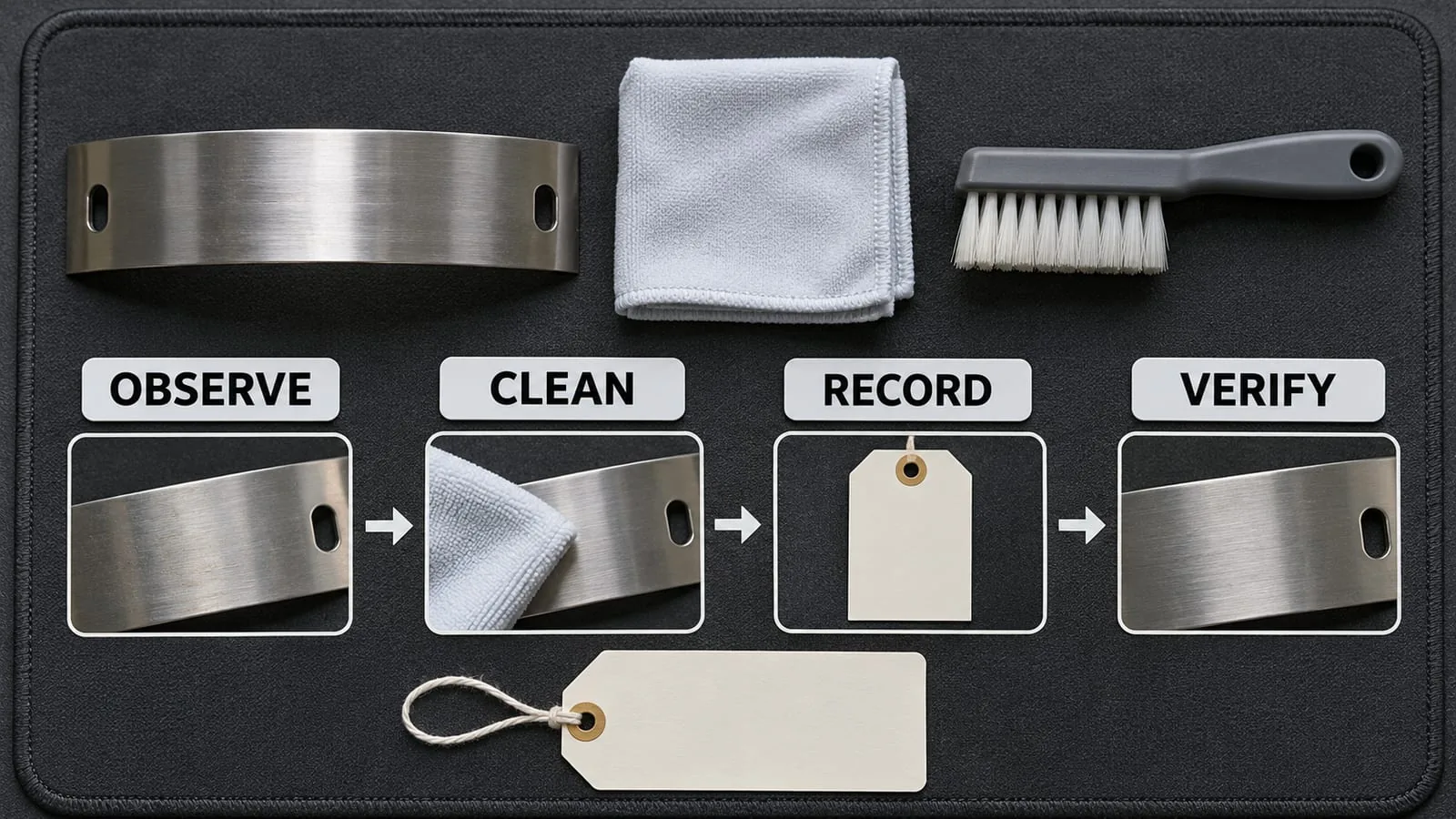
A band sealer is only as dependable as the sealing interface around its moving band, heated parts, cover, guides and supports. A maintenance schedule gives operators and maintenance teams a repeatable way to inspect that interface before a small change becomes a weak seal, tracking problem or unplanned stoppage.
This guide is for UK packaging engineers, maintenance technicians, production managers and procurement teams. It focuses on component-level checks and evidence: what to look at, how to set sensible check points and what to record when an endless heat-seal band or adjacent part needs attention. It does not prescribe one interval for every machine. The equipment manufacturer’s instructions, risk assessment and actual operating conditions must control the schedule.
Why a schedule matters for heat-seal components
The HSE maintenance guidance describes maintenance as work that prevents problems, puts faults right and keeps equipment working effectively. It also says that work equipment must be maintained in an efficient state, in efficient working order and in good repair, with maintenance logs kept up to date where a machine has one. That makes a documented routine more useful than relying on a technician remembering what was checked last time.
The schedule should cover both the component and the conditions around it. A band may look intact while its cover is worn, its support is uneven or its tracking is changing. A heat-seal element may still have continuity while a loose connection, contamination or altered contact pressure produces inconsistent seals. Record the observation and the related part rather than writing only “machine checked”.
Build the schedule around the sealing interface
Before each shift or start-up
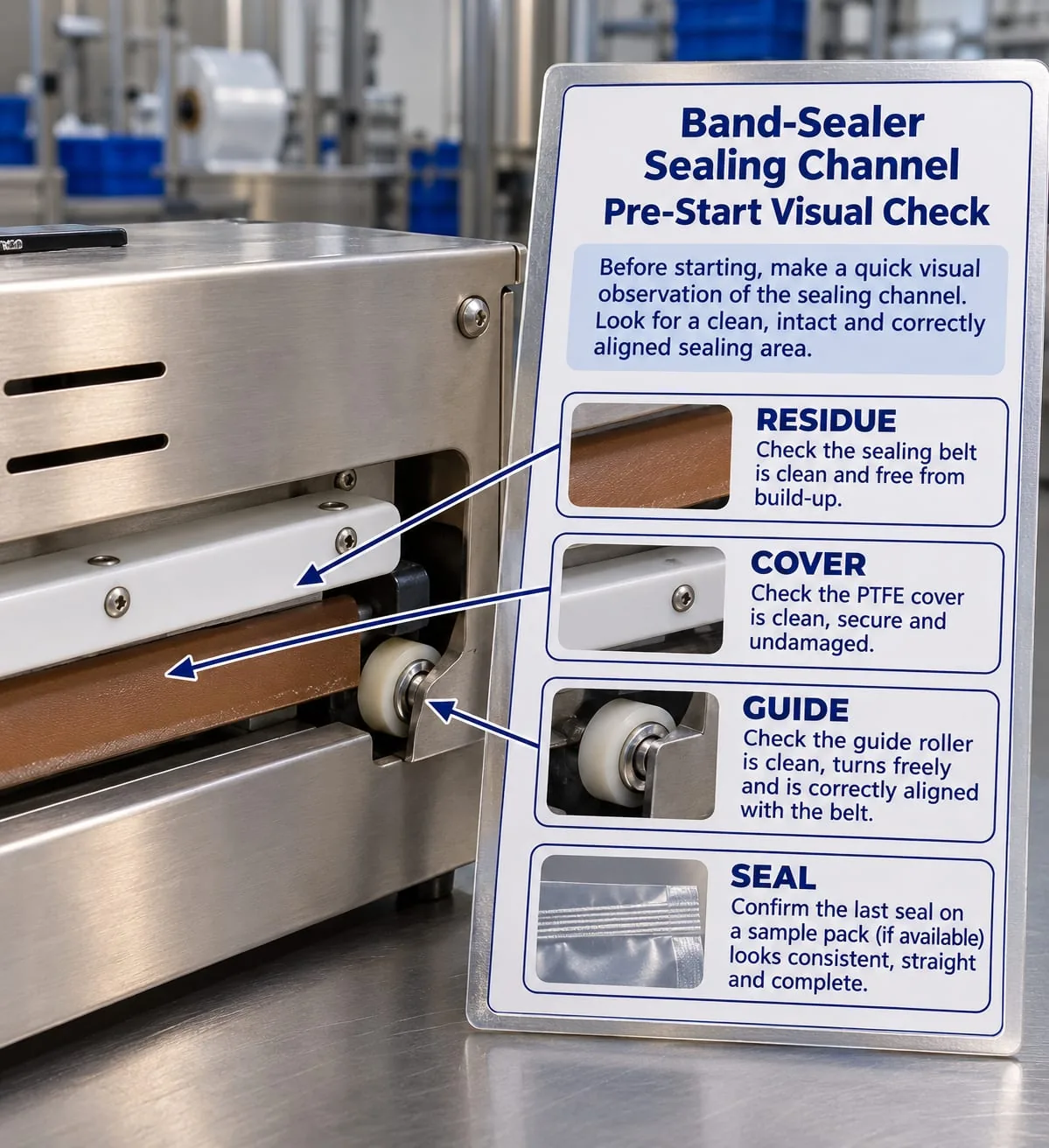
The operator’s check should be short, visible and limited to observations that can be made safely without opening guarded or energised areas. Depending on the equipment instructions, the check may include:
- visible residue or film fragments near the band, guide or seal area
- damage, lifting or contamination on a PTFE cover or heat-seal tape
- a band that is visibly out of position, slack, twisted or rubbing
- loose-looking covers, guides, fasteners or guards
- damaged cables, controls, emergency stops or other safety features that the operator is authorised to inspect
The outcome should be clear: continue, report and isolate, or stop for competent maintenance. Do not ask an operator to remove a guard, test a live circuit or adjust a heated assembly unless the site procedure and competence arrangements specifically allow it.
At planned production stops
Use a planned stop for the checks that need access to the sealing interface. The exact work will depend on the machine, but a component-focused review can include:
- Isolate the equipment using the manufacturer’s procedure and allow hot parts to cool.
- Remove permitted contamination with the approved cleaning method and tools.
- Inspect the band path, guides, supports, cover and sealing face together.
- Look for tracking marks, edge damage, raised joints, uneven wear or a change in contact height.
- Record what was found, what was done and whether a replacement part is now required.
If the cover needs replacement, the relevant PTFE heat-seal tape route should be considered with the band and support rather than as a disconnected consumable decision. A clean-looking surface is not proof that the cover thickness, adhesion or position is still correct for the assembly.
After a component change
Close the maintenance task with a compatibility record. Note the component description, supplier or part reference, dimensions in millimetres where available, joint or terminal details, cover arrangement, machine station and the checks completed after fitting. Keep photographs of the removed and fitted parts when they help explain orientation or routing.
The post-change check should use the approved machine settings and the manufacturer’s commissioning method. Do not increase temperature, pressure or speed simply to compensate for a part that is misaligned, incorrectly supported or not confirmed as the right component.
What to check on a band sealer
Endless bands, guides and tracking
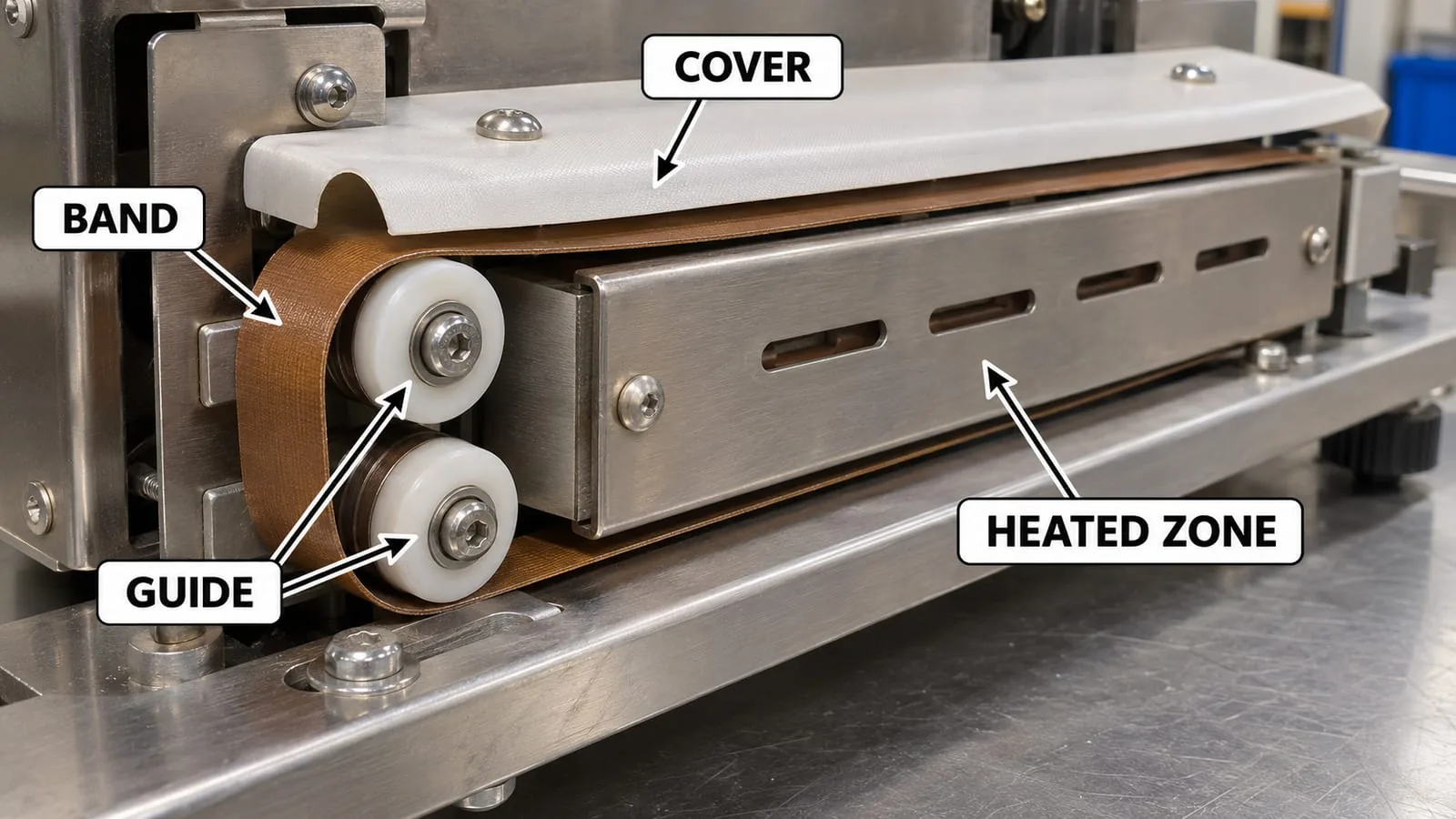
Inspect the band as part of its route. Check the active zone, return path, guides, supports, tensioning arrangement and joint or terminal area that the machine design exposes for inspection. Record a change in tracking or rubbing even if the seal still looks acceptable; a developing alignment problem can change the contact area later.
Heat Seal Components’ heat-seal bands service is the appropriate component route when the existing band needs to be identified, matched or replaced. Supply the machine evidence and measurements instead of selecting a visually similar loop.
PTFE cover, tape and release surfaces
PTFE products can be part of the heat-sealing interface, but the maintenance record should identify whether the item is a coating, a tape or another cover arrangement. Check for lifting edges, exposed substrate, wrinkles, contamination, local thinning and a change in release behaviour. Do not assume that a new strip can be applied over a damaged or distorted support without reviewing the assembly.
Jaws, bars and heat-seal elements
The band is not the only part that can affect a seal. A jaw or bar face can be worn, distorted or contaminated. A heat-seal element can have a damaged cover, altered resistance or a poor connection. When the surrounding part is the likely cause, use the relevant sealing jaws and bars service or heat-seal elements service as the component enquiry route.
Choose intervals from evidence, not a generic calendar
 There is no responsible “replace every X weeks” rule for every band sealer. HSE’s equipment FAQ says inspection frequency should reflect the type of equipment, how it is used and the conditions to which it is exposed, with the manufacturer’s recommendations and risk assessment taken into account. Use the schedule as a controlled starting point, then adjust it when evidence shows deterioration sooner or when the operating environment changes.
Separate operator checks from competent maintenance
An operator can often report visible contamination, an unusual band path or a change in seal appearance. A competent maintenance person may need to isolate the machine, remove a cover, measure a component, inspect a connection or confirm a replacement. Keep those responsibilities distinct in the schedule so a quick production check is not mistaken for a full maintenance inspection.
Add trigger-based checks
Calendar points are useful, but event triggers should also open a check. Examples include:
- a change of packaging film, product residue or cleaning method
- repeated seal defects after approved settings have been confirmed
- a band, cover, jaw or bar replacement
- a jam, tracking fault, overheating event or unexpected stop
- a planned move, modification or change to the sealing station
The trigger should lead to a defined inspection and record, not an automatic part swap. If the reason for the change is unclear, preserve the evidence before dismantling the assembly.
Keep maintenance safe and documented
HSE’s maintenance guidance says moving plant should be stopped, electrical and other power supplies isolated, stored energy released and hot components allowed to cool before maintenance. It also emphasises competent people, safe systems of work and using the manufacturer’s instructions. These controls belong at the top of the schedule, not as an afterthought.
One manufacturer’s band-sealer manual gives a useful example of the level of detail a machine-specific document can contain: daily inspection and cleaning, monthly belt checks and longer-interval checks for other components. Treat that as an example of format, not a universal schedule. Another heat-sealer instruction document recommends routine cleaning and a periodic inspection while identifying its own PTFE strip and transport-belt parts. The machine documentation for the equipment on your line remains the controlling reference.
What a useful maintenance record contains
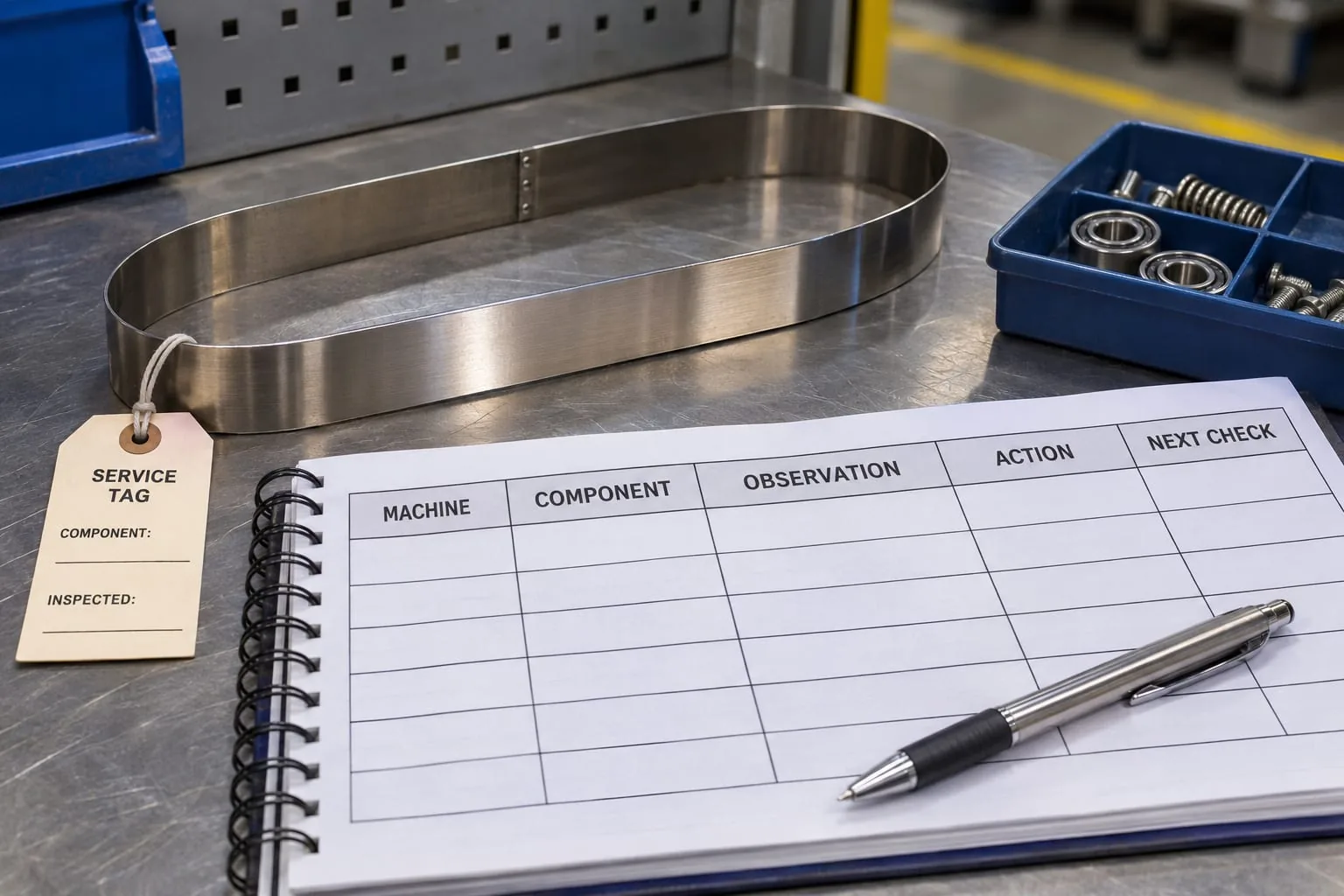 Keep the record practical enough to complete during a planned stop. A useful entry can include:
- machine identifier, sealing station and date
- person completing the check and competence or work-order reference where required
- operating conditions that matter, such as film, product residue, moisture or cleaning exposure
- component inspected: band, cover, guide, support, jaw, bar, element, terminal or control
- observation, photograph reference and severity or escalation decision
- action taken, part reference and measurements in millimetres where available
- approved settings or commissioning checks completed after the work
- next planned check or event trigger
If the record shows that the same band or adjacent component is being adjusted repeatedly, stop treating each visit as an isolated task. Review the interface, compatibility evidence and replacement route. A maintenance schedule should make recurring problems easier to see, not merely create more tick boxes.
When to ask for component identification
Ask for a component review when the band, cover, jaw, bar or heat-seal element cannot be identified confidently from the machine name alone. Provide photographs of the installed part, the route and the sealing station, together with machine details and measurements taken safely when cool and isolated.
Heat Seal Components can review the relevant component route through its Heat Seal Services. If the item is not clearly a band or heat-seal component, say so in the enquiry and include the evidence rather than naming a substitute by appearance. You can contact Heat Seal Components with the maintenance record and compatibility information.