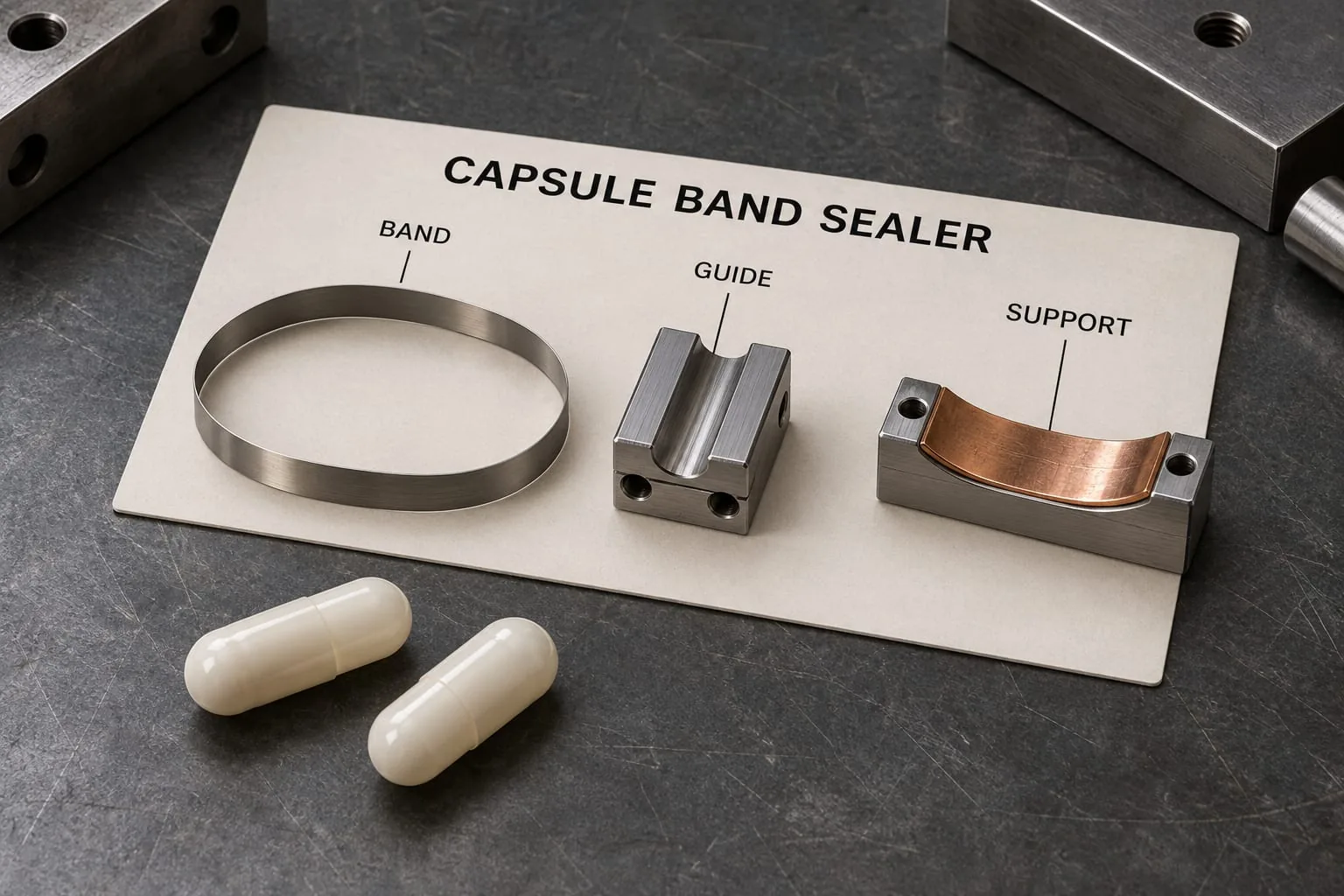
Capsule band sealing machine is a specialist search term, but the machine name alone is not enough to select a replacement part. A capsule band-sealing assembly may include an endless band, guide surfaces, a heated contact area, supports, cover materials and control connections. The correct replacement depends on the actual equipment, station and fitted component.
Heat Seal Components supplies compatible heat-seal bands, heat-seal elements and wires, custom impulse elements, PTFE coating and heat-seal tape, and sealing jaws and bars. This guide explains what to record before requesting a component review. It does not represent a complete capsule machine, capsule filler, gelatin system, pharmaceutical validation service or general machine repair service.
What a capsule band sealing machine actually does
Treat the machine term as a compatibility starting point
A capsule band sealer is generally associated with applying a band seal around a two-piece hard capsule. The exact process, sealing medium, capsule format and machine arrangement are OEM-specific. Do not infer a band size, temperature, speed or electrical specification from the phrase capsule band sealing machine or from a photograph of another model.
For procurement, the useful question is not only “Which machine is it?” It is “Which sealing station is fitted, and what component is installed there?” Record the manufacturer, model, serial number where available, station name, machine changes and the part that needs replacing. A clear photograph of the complete assembly is often more useful than a product name alone.
The sealing path is a component system
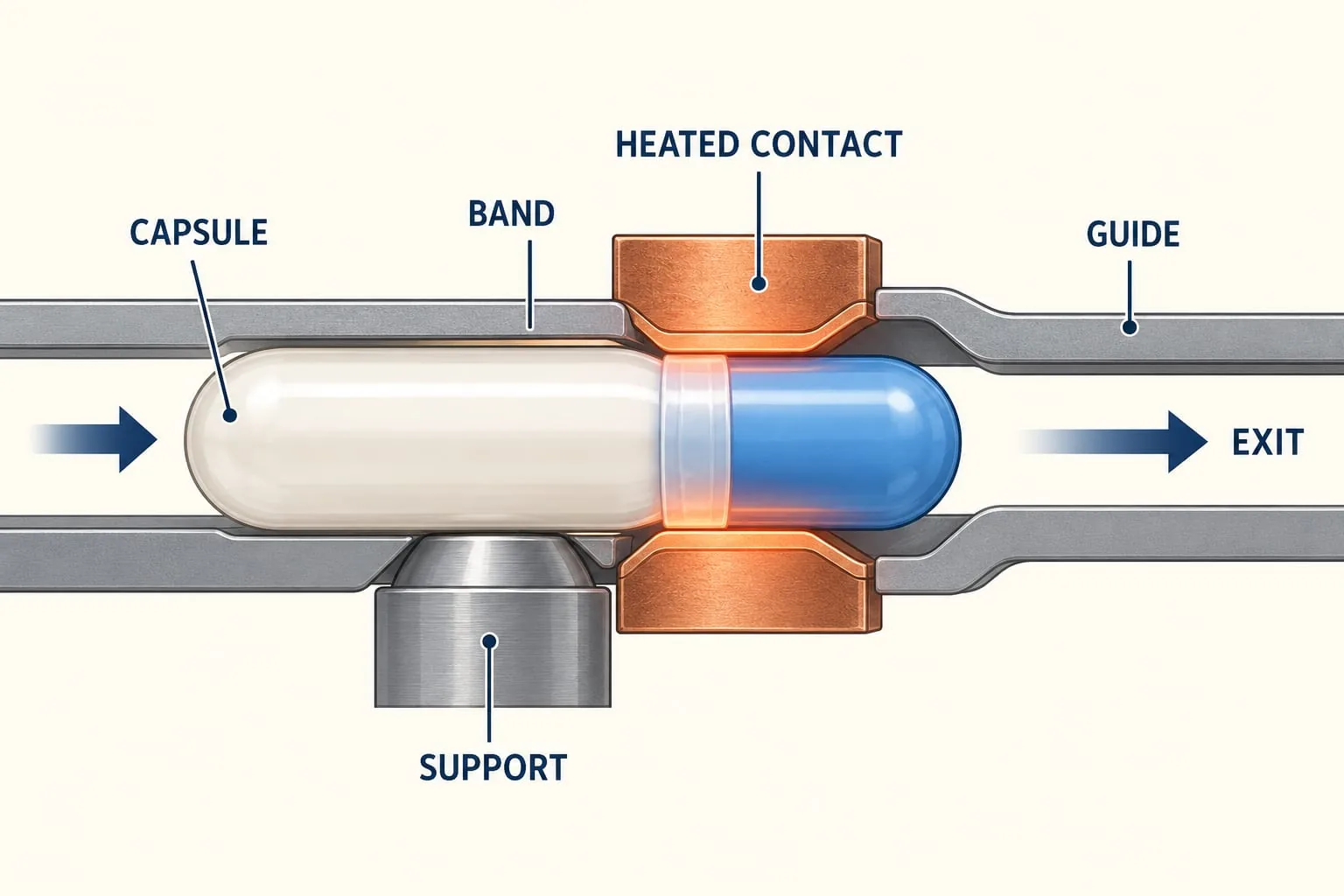
The band must follow its intended route and remain supported through the active sealing area. A guide, roller, shoe, support surface or retaining feature can affect the position of the band. The heated contact and the part that cools or releases the capsule are also part of the interface that needs checking.
This is why a replacement should be compared with the original component and its surroundings. Check the band profile, width, thickness, joint or termination, guide clearance, tensioning method and mounting details. If the fitted component is formed, coated or joined in a particular way, record those features rather than describing it only as a belt.
Check the band sealing assembly before ordering
Record the band and guide relationship
Start with the component in its normal, isolated and cool condition. Photograph the band in position, including its entry, heated contact, return or exit route. Record whether it is an endless loop or another formed component, and note any joint, weld, tab, fastener or marked orientation.
Useful records include:
- band width, thickness and visible profile, measured without stretching it;
- guide slot or support dimensions that control the band position;
- tensioning or adjustment arrangement;
- contact surfaces and signs of rubbing, edge lift, scoring or contamination; and
- the relationship between the band and any cover, heater, shoe, jaw or bar.
Do not assume that two bands with the same apparent width are interchangeable. A difference in thickness, joint, edge, tension or support can change the way the component sits in the machine. If the original is damaged, retain it and photograph both ends or the joint before disposal.
Identify heat, support and exit components
Ask which part supplies heat and which parts support, guide, cover or cool the seal. Some equipment uses an endless band as part of a continuous assembly; another station may use a formed element, wire, ribbon or sealing bar. PTFE cover tape or a PTFE-coated surface may be present to reduce sticking, but its correct format and position must be confirmed against the assembly.
Use the live heat-seal bands service when the part is an endless band or band component. For a separate heated wire, ribbon or formed part, the heat-seal elements service is a more relevant starting point. The service page does not replace the machine-specific measurements needed for a quotation.
Match the component to the machine application
Ask for the machine and station details
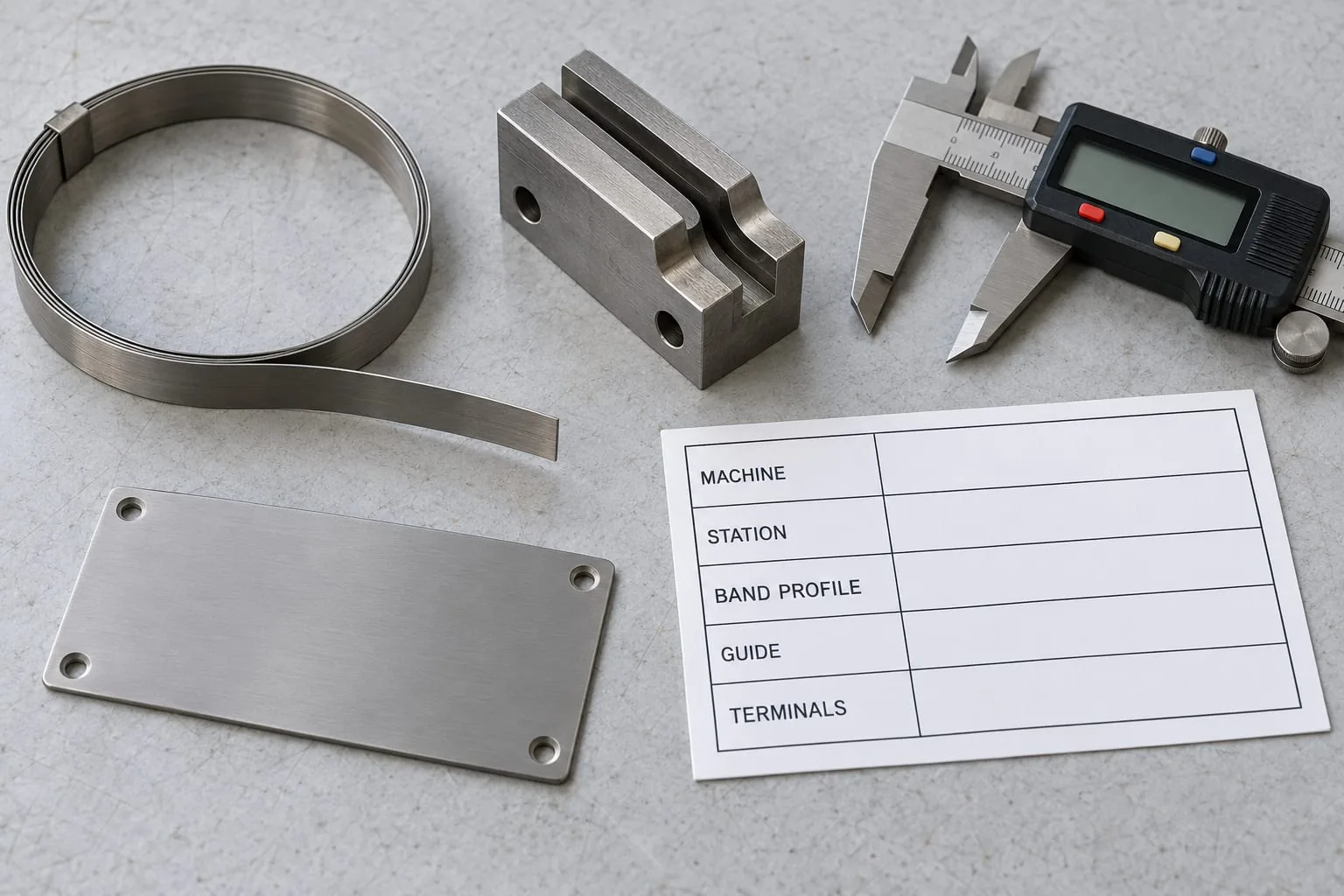
Send a compact evidence pack with the enquiry. Include the machine plate or clear model information, the sealing station, the complete assembly, close views of the component, and any readable part reference. Add the material or capsule format being processed only where the equipment owner has confirmed it.
Also record what changed before the fault appeared. A new film, coating, process setting, previous modification or replacement support can affect the sealing interface. If the machine has been altered, say so. Previous repairs or a non-original component can explain why a catalogue part appears similar but does not fit.
The following details help a compatibility review:
- manufacturer, model, serial number and station;
- component type and whether it is endless, formed, joined or mounted;
- measured dimensions in millimetres, with a sketch for bends or unusual features;
- guide, support, terminal, fixing and tensioning details;
- cover tape, coating, insulation or backing condition; and
- symptoms such as sticking, tracking, incomplete sealing, local heat, breakage or abnormal wear.
Do not infer the replacement from the name
The words band sealing machine, capsule sealer or continuous sealer do not define the component. They do not confirm the machine interface, band route, material, electrical circuit or control settings. Even when a part looks close, the working length, profile, joint, mounting and support must be checked.
For non-standard equipment, a physical sample or dimensioned drawing may be needed. Heat Seal Components can review the information supplied and advise on a compatible heat-seal band, element, PTFE cover or sealing component where the specification can be established. A quotation should remain subject to the received measurements and any required sample check.
Inspect and maintain the sealing path safely
Isolate before inspection
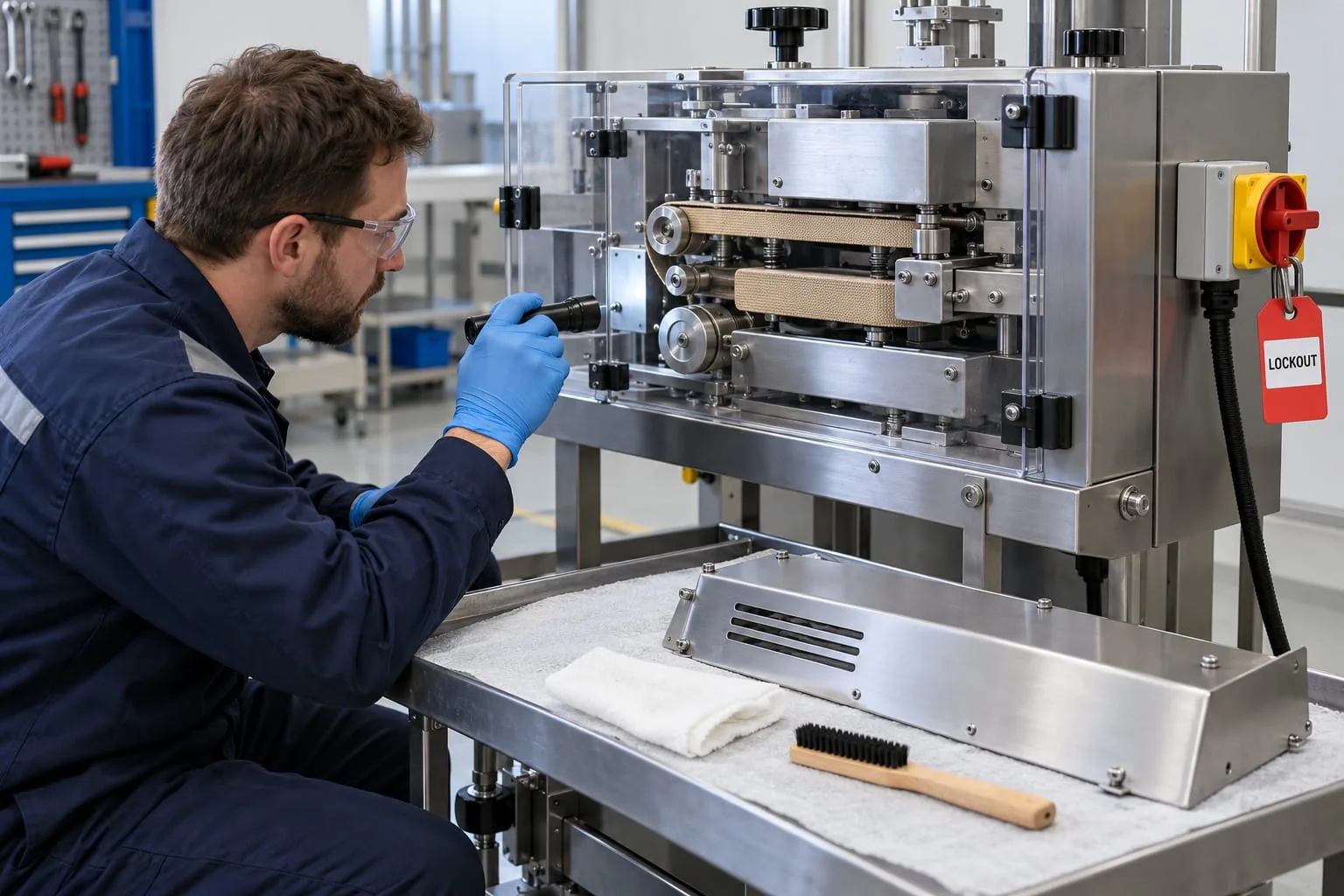
HSE guidance says work equipment should be maintained safely, with attention to competence, planning, isolation and the manufacturer’s instructions. A sealing head can involve moving parts and hot surfaces, so follow the site’s safe system of work, isolate the equipment, prevent unexpected start-up and allow hot components to cool before handling them.
Do not bypass a guard or reach into a moving band path to diagnose a tracking issue. If a risk assessment or the manufacturer’s instructions requires a competent person, use one. The inspection frequency should reflect the installation, use, deterioration and any exceptional event that could affect safety.
Check wear, alignment and contamination
With the equipment safe to inspect, look for a band that has moved laterally, a damaged edge, a rough joint, uneven contact, residue, worn PTFE cover or a support that is loose or distorted. Check the guide and retaining surfaces for damage. Photograph the condition before cleaning or changing the part so the evidence is not lost.
Do not treat every poor seal as a failed band. Check the broader interface, including pressure or support, alignment, cover condition, contact surfaces and the control settings specified by the machine maker. If the same failure returns after a replacement, stop and re-check the cause instead of fitting repeated parts without evidence.
When a custom component may be needed
A measured sample is more useful than a generic description
Custom work may be appropriate when the band or heated component has an unusual profile, joint, termination, bend, clearance, mounting arrangement or obsolete reference. Provide the original part, a dimensioned sketch, photographs, machine identity and the application details. If resistance, voltage or temperature information is known from the approved machine documentation, include it, but do not guess missing values.
Where a cover or coating is involved, identify the substrate and the fitted arrangement. The PTFE heat-seal tape service and PTFE coating service are relevant destinations for those component requirements. Sealing jaws or bars should be specified from the actual sealing assembly, using the sealing jaws and bars service when that is the component under review.
Build a procurement record
Keep the old component, photographs, dimensions, machine details and trial observations together. Record what was inspected, what was changed and whether the approved test result was achieved. This gives maintenance and procurement teams a repeatable record for the next order and helps separate a component issue from a wider machine or process issue.
If you need help identifying a replacement, contact Heat Seal Components with the machine details, photographs, measurements and sample information. The team can review compatible heat-seal bands, elements and wires, custom impulse elements, PTFE coating or tape, and sealing jaws or bars before quotation. Use the Heat Seal Components contact page to submit the evidence pack.