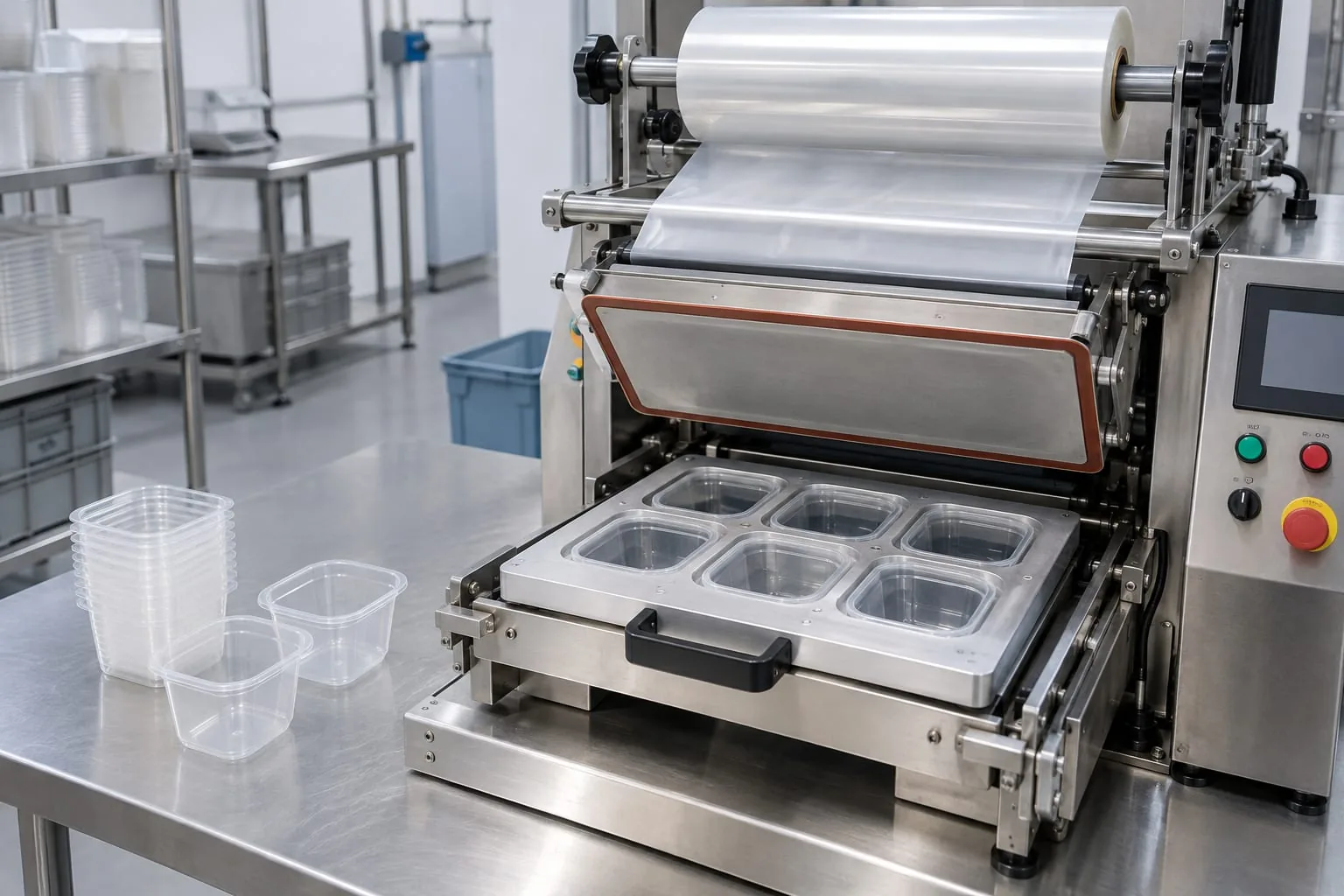
A commercial cup sealing machine can keep a packaging line moving only when the cup rim, film, sealing tool and process settings work together. A replacement heated component that looks close to the original can still create leaks, wrinkles or film pick-up if the fit, pressure or electrical specification is wrong. This guide explains what to check before ordering a replacement component or changing a sealing setup.
What the sealing interface does
The parts that make the seal
The sealing station brings a filled cup, a lidding film and a heated tool into controlled contact. The cup nest supports the container. The platen or sealing jaw applies pressure. The heat-seal element transfers heat through the working face, while the release surface helps prevent film from sticking. The film then cools sufficiently to retain a continuous seal as the tool opens.
These parts are related, but they are not interchangeable. A machine may use a formed heating element, a flat ribbon, a replaceable cover tape or a shaped jaw insert. Heat Seal Co supplies heated sealing elements and can review the dimensions and connections of a replacement part. It also supplies sealing jaws and bars where the application and component requirement are clear. The company does not supply complete cup-sealing machines.
Match the cup, film and tool before ordering
Start with the cup rim
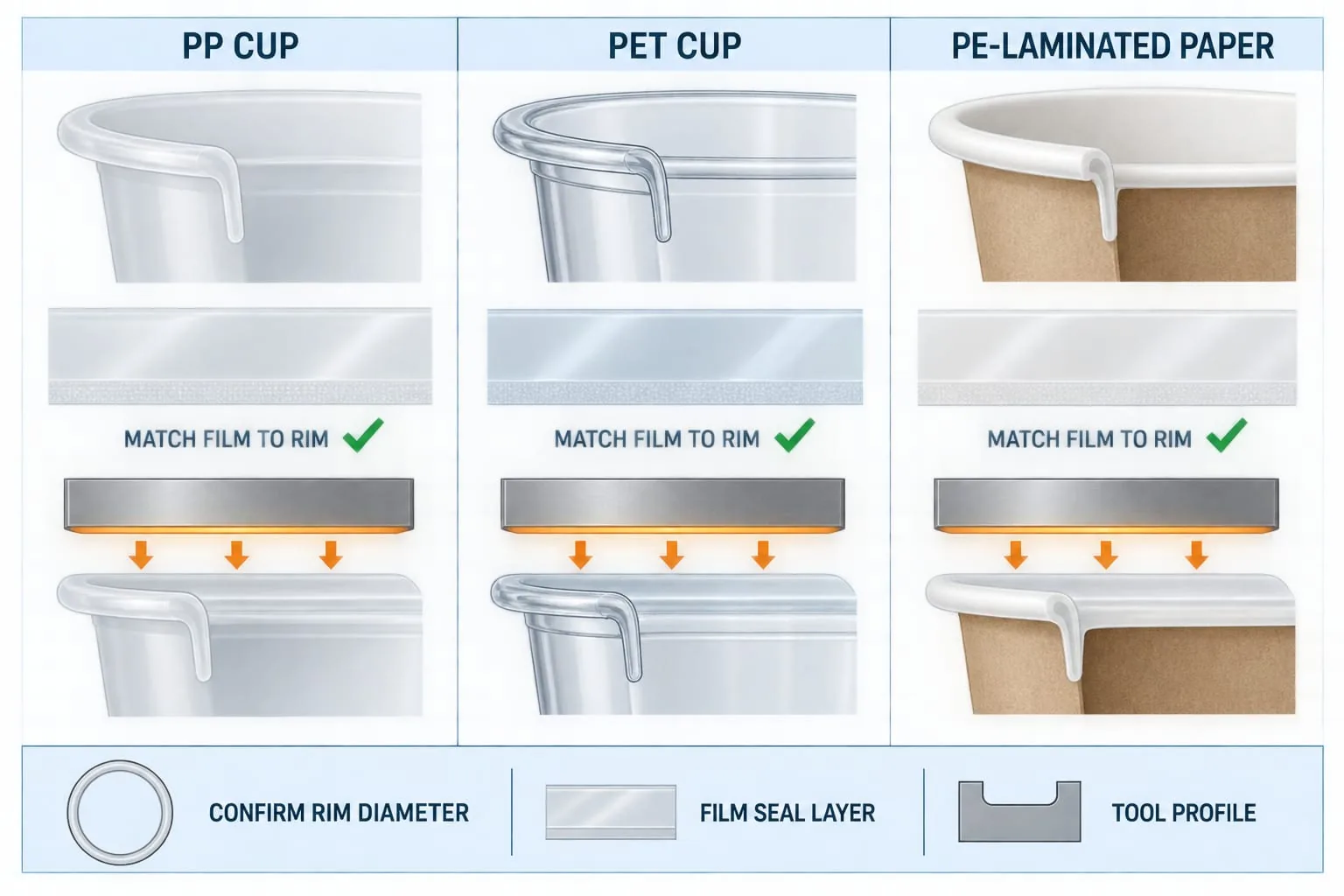
The rim is the first reference point because the film must seal to the material presented at that surface. A technical guide from Kai Will on sealing films for PP, PET and paper cups describes the need to match the film’s seal layer to the cup material. That is useful guidance, not a substitute for the film and cup supplier’s specification. Confirm the actual rim material, any coating or laminate, and the approved lidding film before changing a component.
Do not assume that two cups with the same outside diameter will use the same sealing tool. Rim shape, flange width, wall angle, cup height and the support provided by the nest can all alter how the platen meets the pack. A filled cup may also behave differently from an empty sample because the product level affects support and movement.
Record the dimensions that control fit
Before requesting a replacement, gather the information that identifies the real sealing interface. Useful records include:
- cup rim material and the rim diameter or sealing diameter used in the machine documentation
- cup height, flange shape and the nest or support geometry
- film roll width, sealable coating and any printed registration requirement
- platen or jaw contact profile, mounting points and available clearance
- machine make, model, sealing station and photographs of the installed tool
- the old element, cover tape or bar, with known dimensions marked on a sketch or photograph
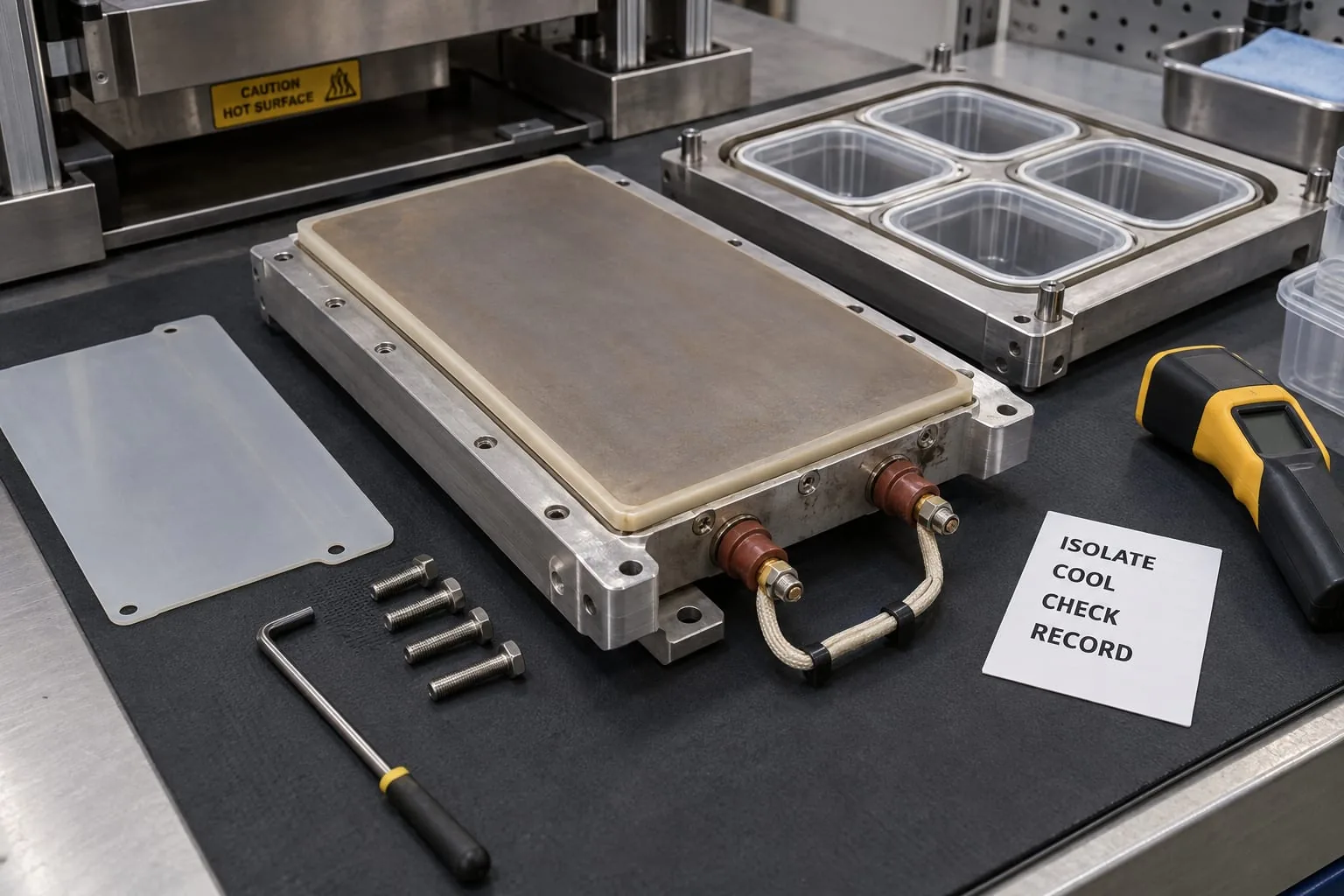
Send measurements from a cool, isolated assembly. If the original part has stretched, broken or been altered, measure the jaw, supports and fixing points as well. A clean photograph with a scale can show features that a single length cannot.
Why a machine name is not enough
Commercial machine names often cover several generations, station layouts and tooling options. The same model family may be configured for different cup materials, rim sizes or film systems. Previous repairs can also change the element, insulation or cover arrangement. Treat the model number as an identification aid, not as the complete replacement specification.
When the requirement is uncertain, share the machine plate, the complete platen or jaw, the old component and the film and cup details. That gives a supplier enough evidence to identify what can be matched and what still needs confirmation.
Control the seal with evidence
Temperature, pressure and dwell
Heat sealing is a process, not just a hot surface. The US FDA heat-sealer validation guidance identifies temperature, pressure and time as process parameters to control. Scottish NHS technical guidance also explains that seal integrity and strength are affected by temperature, pressure and dwell time, with equipment maintenance and validation forming part of the control approach.
Use the values approved for the actual cup, film and machine. Do not copy a temperature or dwell time from another line. A different film coating, cup material, platen profile or pressure condition can change the result. Record the setting, the batch or film reference, the sample result and any adjustment so a good seal can be repeated.
Keep the rim clean and supported
Residue on the rim can create a channel through the seal. A cup that is tilted, unsupported or sitting above the intended nest position can create uneven pressure. Check for product on the rim, damaged flanges, distorted cups and a nest that is not seated correctly. These checks should happen before changing a heating element because a new component cannot compensate for poor presentation.
Also check the film path. Wrinkles, poor registration, a damaged roll edge or the wrong seal side can produce a repeatable-looking fault that is not caused by the platen. Compare a failed pack with a known-good sample and record where the defect begins and ends around the rim.
Test changes against the actual pack
After a component or setting change, run a controlled trial with the intended cup, film and product condition. Check the seal around the complete rim rather than judging one easy-to-see area. Inspect for channels, incomplete bonding, scorching, film lift, sticking and distortion. Use the site’s approved seal-strength or leak-test method where one is available, and record the result with the component and setting details.
Change one variable at a time. If the element, PTFE cover, pressure and dwell are all changed together, the cause of an improvement or failure becomes difficult to identify.
Inspect the platen and wear surfaces
Read the visible wear pattern
Wear often appears first as a local change in the seal. Look for film sticking or pick-up, darkened areas, an uneven seal band, a damaged release surface or a platen face that no longer contacts the rim evenly. Compare the pattern with the cup orientation and the tool surface. A defect that follows one location may point to support, alignment or local heat transfer rather than a problem across the whole machine.
PTFE cover tape or a PTFE-coated surface is part of the working interface. Heat Seal Co explains that its PTFE heat-seal tape is used to cover heated elements and sealing surfaces where the specified material and thickness are suitable. Do not add an extra layer or substitute a tape by appearance alone, because it can change heat transfer, clearance and release behaviour.
Use a controlled inspection sequence
Isolate the equipment and allow the tool to cool before inspection. Then work through the same short sequence each time:
- photograph the platen, nest, terminals and cover arrangement in position
- check the working face for residue, cuts, lifted edges, distortion or exposed heating material
- check the element, terminal connections, insulation and fixing points against the old record
- look for a mismatch between the rim, film path and contact profile
- record the condition, the suspected cause and the part that needs confirmation
Replace only what the evidence supports
A worn cover tape may need a different response from a failed formed element or a damaged jaw surface. Separate the consumable, the heated component, the support and the machine-side control issue. If the element is open-circuit, distorted or visibly damaged, retain it for comparison rather than reshaping it to fit a new order.
For a replacement enquiry, provide the machine make and model, the station, cup and film specification, component photographs, dimensions, connection details and the failure symptoms. Heat Seal Co can review standard and custom heating elements, PTFE-coated or covered surfaces and compatible sealing components when the evidence is sufficient.
Where HSC fits
Heat Seal Components supports packaging teams with heat-seal elements, endless bands, custom heating elements, PTFE coating, cover tape and compatible sealing components. It is a component supplier, not a complete commercial cup-sealing machine manufacturer. The useful starting point is a clear part requirement tied to the actual machine, cup, film and sealing station.
That boundary matters when planning maintenance. A replacement element can be specified and supplied, but the machine owner remains responsible for the approved process settings, guarding, isolation procedure and release checks for the line.
Contact HSC with a useful specification pack
If you need a replacement component for a commercial cup-sealing application, use the HSC contact page and send the make and model, cup rim material and recorded size, film specification, photographs of the platen and nest, and any dimensions from the old part. Include the failure pattern and the quantity required. The engineering team can then tell you what can be matched and what needs confirmation before quotation.