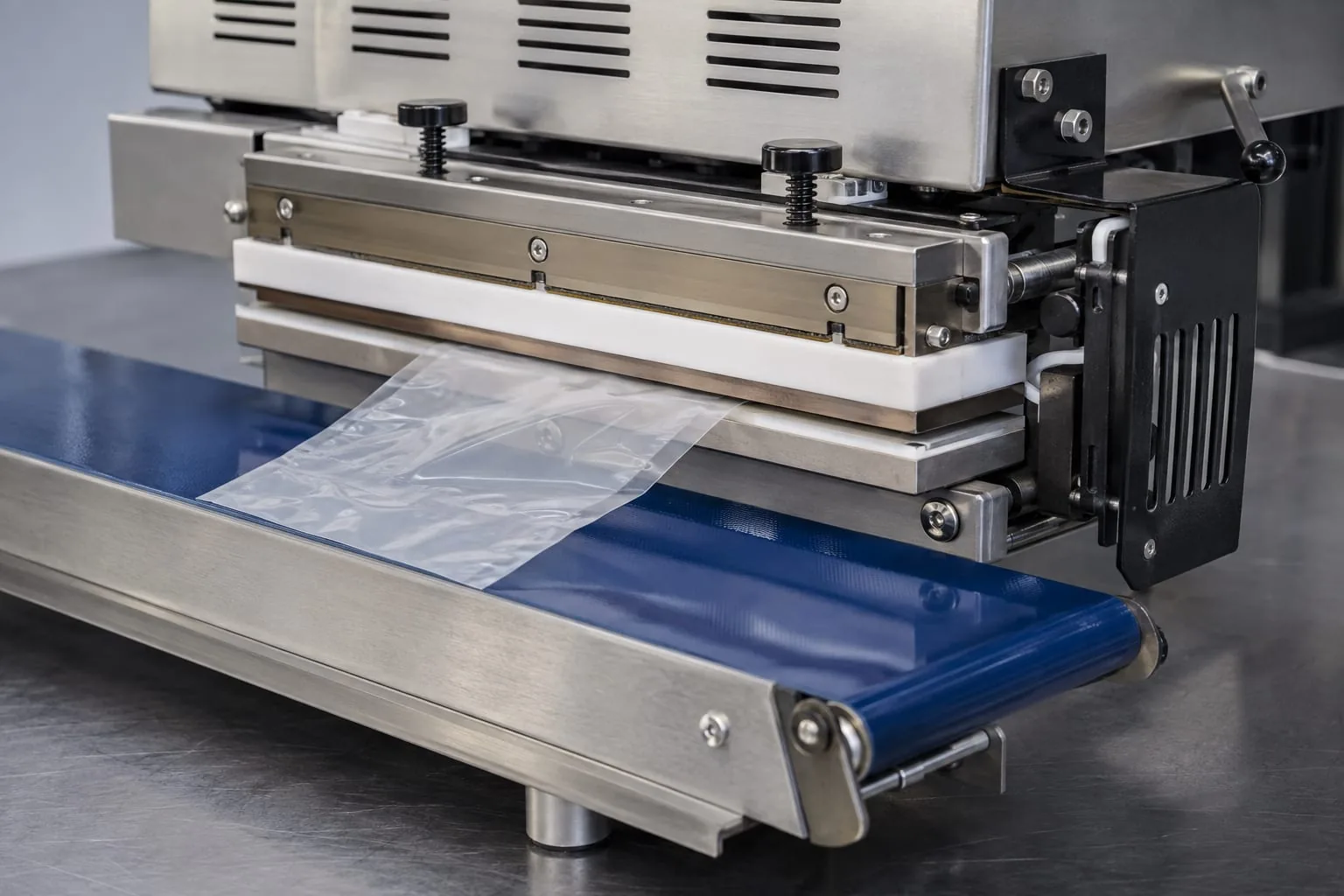
A commercial sealing machine is only as reliable as the sealing path it presents to the pack. The heater, jaw or band, PTFE cover, support surface and drive parts must suit the material and the way the seal is made.
Heat Seal Components supplies replacement heat-seal elements and wires, sealing jaws and bars, PTFE heat-seal tape, endless bands and custom heating elements. It does not sell complete commercial sealing machines. This guide focuses on the components and information needed when an existing machine needs a compatible replacement.
What a commercial sealing machine does
Commercial sealers use a controlled combination of heat, pressure and contact time to join a compatible sealant layer. The machine may use a bar or jaw that closes for each cycle, or a continuous band path that carries the pack through heated contact. PAC Machinery describes continuous band sealers as a faster alternative to a bar sealer for hand-fed packaging, while also distinguishing impulse and constant-heat bar systems.
The process determines the replacement part. A machine name alone is not enough because two machines can use different heated lengths, profiles, terminals, cover materials or mounting arrangements. Start with the installed sealing interface and the material being sealed.
Identify the sealing interface before ordering
Bar, jaw or continuous band
First record how the pack reaches the heat source. The terms below describe the part interface to investigate, not a recommendation to buy a complete machine.
- Bar or jaw sealing: record the heated length, face profile, pressure surface, terminal layout and fixing points.
- Continuous band sealing: record the band width, band path, guide and drive arrangement, heated contact area and PTFE-coated surfaces.
- Custom or unusual sealing heads: take clear photographs of the installed part, both terminals, the mounting points and the contact face before removal.
Record the film and seal conditions
Note the film or laminate construction as far as the packaging specification allows. Also record the normal cycle information, including the temperature or power setting, dwell or line speed, cooling or hold stage and the type of defect being investigated. Do not copy a setting from another material without checking the approved process.
Match components to the process
DuPont’s heat-sealing guidance explains that dwell time, temperature, pressure, sealant characteristics and the test method interact. A change in one factor can require a change in another, so a replacement element or cover should be assessed as part of the whole sealing interface.
Elements and wires
Heat-seal elements and wires provide the heat at the sealing face. Confirm the element form, heated length, overall length, width or diameter, terminal style and mounting method. The live Heat Seal Components service page for heat-seal elements is a useful starting point for a specification-led enquiry.
Jaws, bars and support surfaces
A jaw or bar must hold the material evenly while the seal forms. Check the face width, profile, alignment, support bar, pressure pad and fixing details. Sealing jaws and bars are often machine-specific, so send photographs and measurements rather than relying on a broad machine category.
PTFE covers and tape
PTFE cover material protects the sealing face and helps control release from the film. Confirm whether the machine uses a replaceable PTFE heat-seal tape, a formed cover or another approved surface. Heat Seal Components’ PTFE heat-seal tape service page explains the relevant product route without treating PTFE tape as a substitute for an entire jaw assembly.
Bands for continuous sealing
A continuous sealer needs the correct band dimensions, tracking arrangement and heat-transfer contact. A band that is too narrow, too wide or incorrectly supported can change the contact area and the finished seal. Record the old band, guide arrangement and sealing path before asking for a replacement.
Maintain the heat path, bands and jaw surfaces
Planned maintenance should protect both seal quality and people. HSE guidance says maintenance should be planned, carried out by competent people and preceded by safe isolation. It also calls for stored energy to be released and hot components to be allowed to cool before work starts.
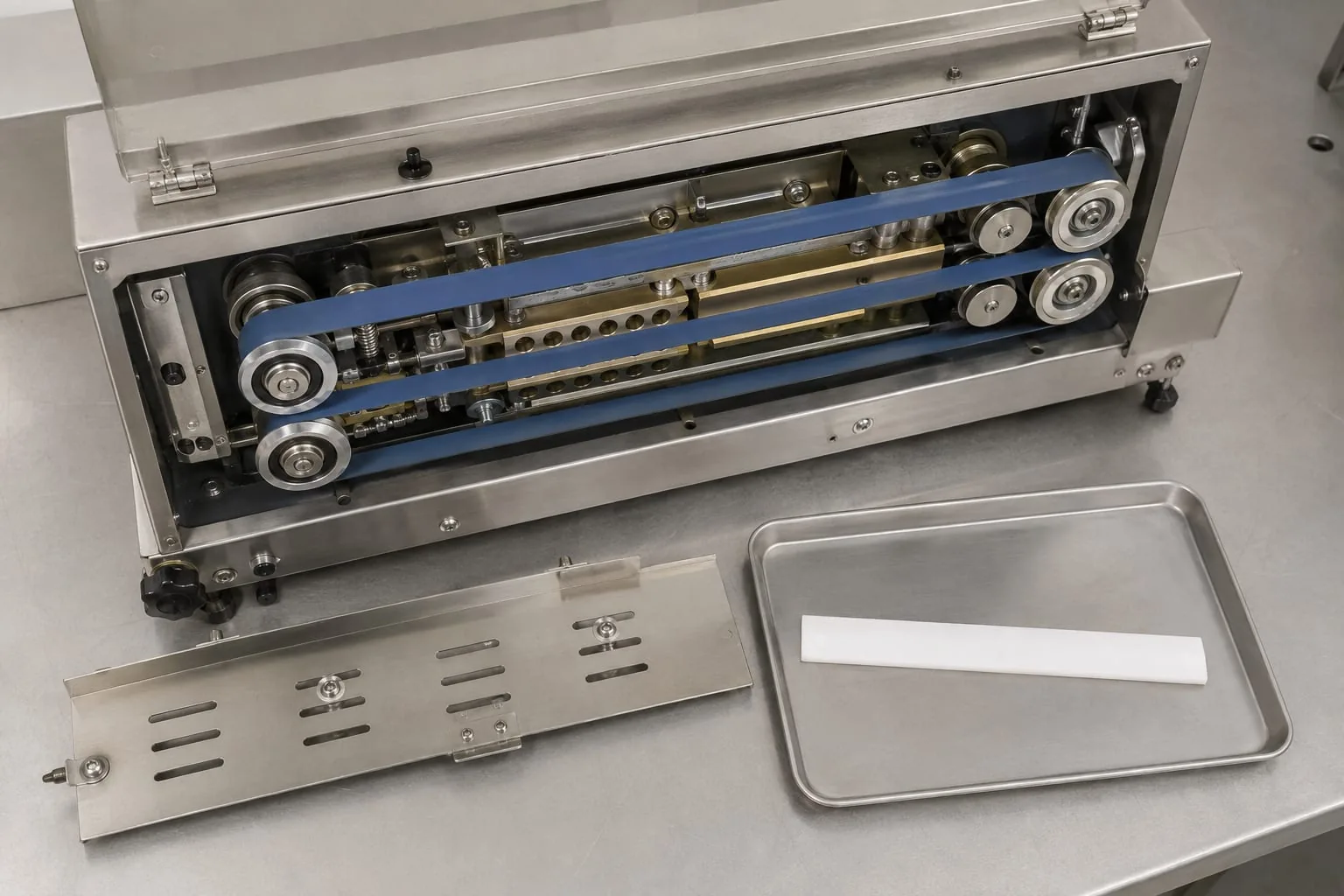
Before opening the machine
- Stop the machine using the site procedure, isolate all relevant power sources and prevent inadvertent reconnection.
- Release stored pneumatic, hydraulic, mechanical or other energy that could move the sealing head or band path.
- Wait for heated parts to cool, keep guards and covers controlled, and use the manufacturer’s maintenance instructions.
What to inspect
- Look for worn, lifted or contaminated PTFE cover surfaces and check that the contact face remains even.
- Check the element, terminal connections, band tracking, guide wheels and support surfaces for damage or movement.
- Record the defect with photographs. A weak seal may come from heat transfer, pressure, alignment, material variation or contamination rather than one failed part.
If the maintenance task involves guarding, electrical isolation or stored energy that your team is not competent to manage, stop and use the appropriate specialist support. The supplier of a replacement component should not be treated as a general machine-repair service.
Verify the seal after a component change
A new part is not proven by appearance alone. Use the approved packaging material and the machine’s controlled process to produce a representative sample, then inspect the seal for continuity, contamination, wrinkles, scorching, channels and other defined failure modes.
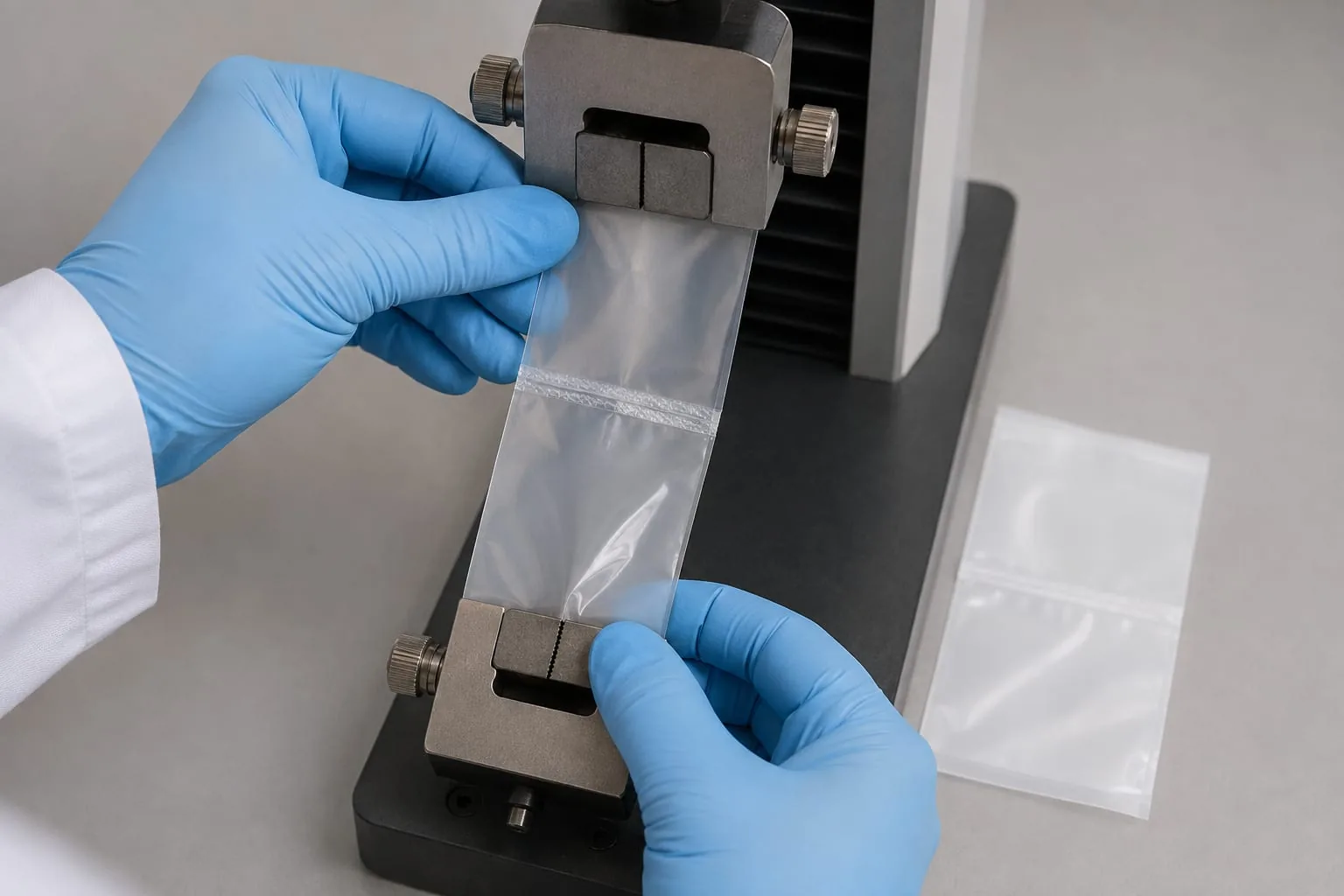
Use a controlled sample
Keep the material, product loading, alignment and process settings controlled while comparing samples. Change one factor at a time where practical and record what changed. DuPont notes that true dwell time is the time the materials are actually pressed together, not always the full machine cycle time.
Check repeatability
For flexible barrier materials, ASTM F88/F88M describes seal-strength testing as a way to support process validation, control and capability. If your quality plan uses a seal-strength method, follow the approved method consistently and record the failure mode as well as the force result. Do not invent an acceptance value where the packaging specification does not provide one.
Build an ordering record
A clear ordering record reduces the risk of receiving a part that looks similar but cannot be installed or controlled correctly. Include:
- machine make, model, serial or asset reference where available
- sealing method, orientation and whether the head is a bar, jaw or continuous band path
- heated length, overall length, profile, width, thickness, terminals and fixing positions
- PTFE cover, support bar, pressure pad and guide details
- film or laminate description, normal process settings and the observed fault
- clear photographs of the installed component, removed component, terminals and surrounding assembly
The more complete the record, the easier it is to separate a component mismatch from a wider process or machine issue. It also gives procurement and maintenance teams a traceable basis for the replacement decision.
When standard components do not match
Some commercial sealing heads use a non-standard element form, unusual terminal arrangement or custom sealing length. In that case, ask for a compatibility review based on measurements and photographs. Heat Seal Components offers custom impulse heat-seal elements for specification-led enquiries, subject to the information available for the existing assembly.
Ask for a compatibility review
Send the machine details, component photographs, dimensions and process information before removing a part that may be needed for comparison. If you are unsure which component route applies, use the Heat Seal Components contact page and describe the sealing interface, not only the machine’s sales name.
Contact Heat Seal Components about a replacement
For a commercial or industrial sealing machine component enquiry, send the machine details, measurements, photographs and material information to Heat Seal Components. The team can review the relevant heat-seal element, wire, band, PTFE cover, jaw, bar or custom component route and advise what information is still needed for a quotation.