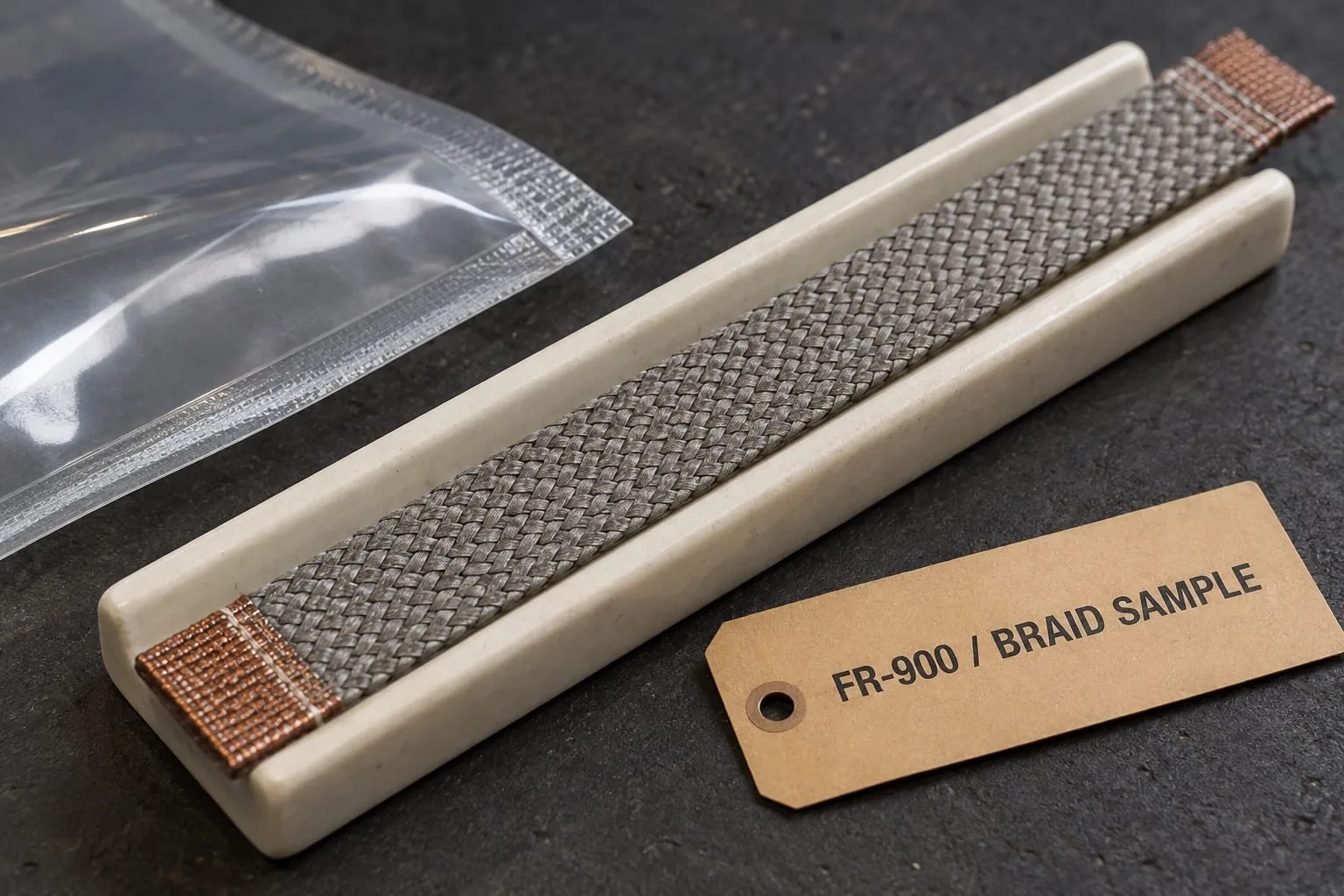
The FR-900 name identifies a family of continuous band sealing equipment. It does not, by itself, identify the exact replacement part fitted to a machine. The sealing braid, heating and cooling parts, guides, rollers, conveyor and adjustment points all affect compatibility.
The machine’s operating manual is useful context for a replacement enquiry, but any example machine settings it gives are not a universal specification for every FR-900 installation. Record the fitted part and the machine layout before ordering.
What the FR-900 name can and cannot tell you
The model name helps identify the equipment family. It can also help a supplier understand the general type of continuous sealing arrangement. It cannot confirm the sealing braid’s construction, dimensions, joint, coating, tension or route.
That distinction matters when a line is stopped for a worn or damaged part. A replacement that looks similar may still have the wrong width, thickness, surface, joint or working path. A model number is a starting point for a compatibility review, not a complete part number.
The Health and Safety Executive highlights in-running nips, transmission parts and trapping points around packaging conveyors. Use the machine maker’s instructions and your site’s safe system of work before accessing any moving or heated area. The HSE packaging machinery guidance is a useful reference for guarding and routine cleaning risks.
Components on the FR-900 sealing route
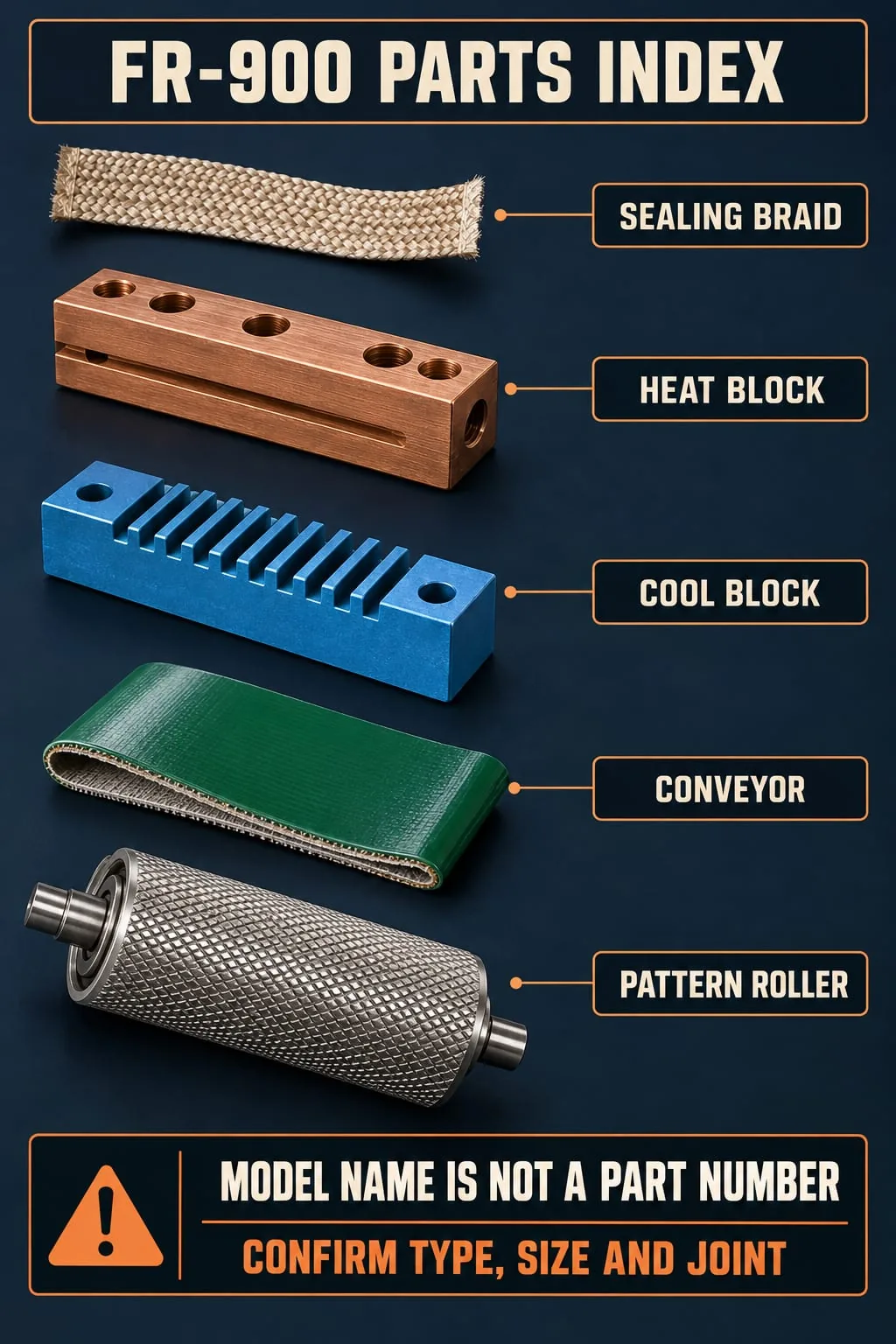
The sealing braid is the moving heat-seal component that carries the package through the sealing area. It is separate from the heating block, cooling block, conveyor, guides and pattern roller. The fitted assembly may also include supports, tension adjustments and other hardware that affect the route.
Sealing braid, heater and cooler
The braid must match the installed route and the way the package meets the sealing surfaces. Do not assume that replacing the braid will correct a fault caused by a damaged guide, poor adjustment, residue or uneven contact.
Heat Seal Components supplies heat-seal bands for packaging machinery and can review the fitted construction. If the enquiry also involves a separate heat-producing part, describe it clearly as a heat-seal element rather than using belt or band for every component.
Why the model name is not enough
Two machines with the same family name may have different orientations, part constructions or replacement histories. A horizontal arrangement and a vertical arrangement can also change the route, access and package presentation. Confirm the actual installation rather than copying a catalogue description.
Record these details before requesting a replacement
Take photographs and measurements while the part is accessible and safe to inspect. If removing the braid is not practical, photograph the installed route and describe the issue. Useful evidence includes:
- Machine manufacturer, model and any nameplate details.
- Horizontal or vertical orientation.
- Sealing braid or band width and thickness in millimetres.
- Endless length or the fitted route, if it can be confirmed safely.
- Surface construction, coating, profile, joint or terminal detail.
- Position of the braid relative to the heat block, cool block, guides and rollers.
- Package material, seal location and the operating symptom.
- Photographs of the full assembly, the surface, the edges and any damaged area.
Do not infer a dimension from a product photograph. Do not use a manual’s example setting as proof that the replacement part has the same specification. If a low-stick surface is needed, describe the process and surface requirement. A separate PTFE heat-seal tape requirement should be listed separately from a continuous sealing braid.
Use symptoms as evidence, not as a part number
An uneven seal, sticking, edge damage or repeated tracking adjustment can have more than one cause. Check the braid surface and route, but also inspect the guides, rollers, support surfaces, heating area, cooling area and adjustment condition. The aim is to identify the evidence that a supplier needs, not to guess a complete machine repair from one symptom.
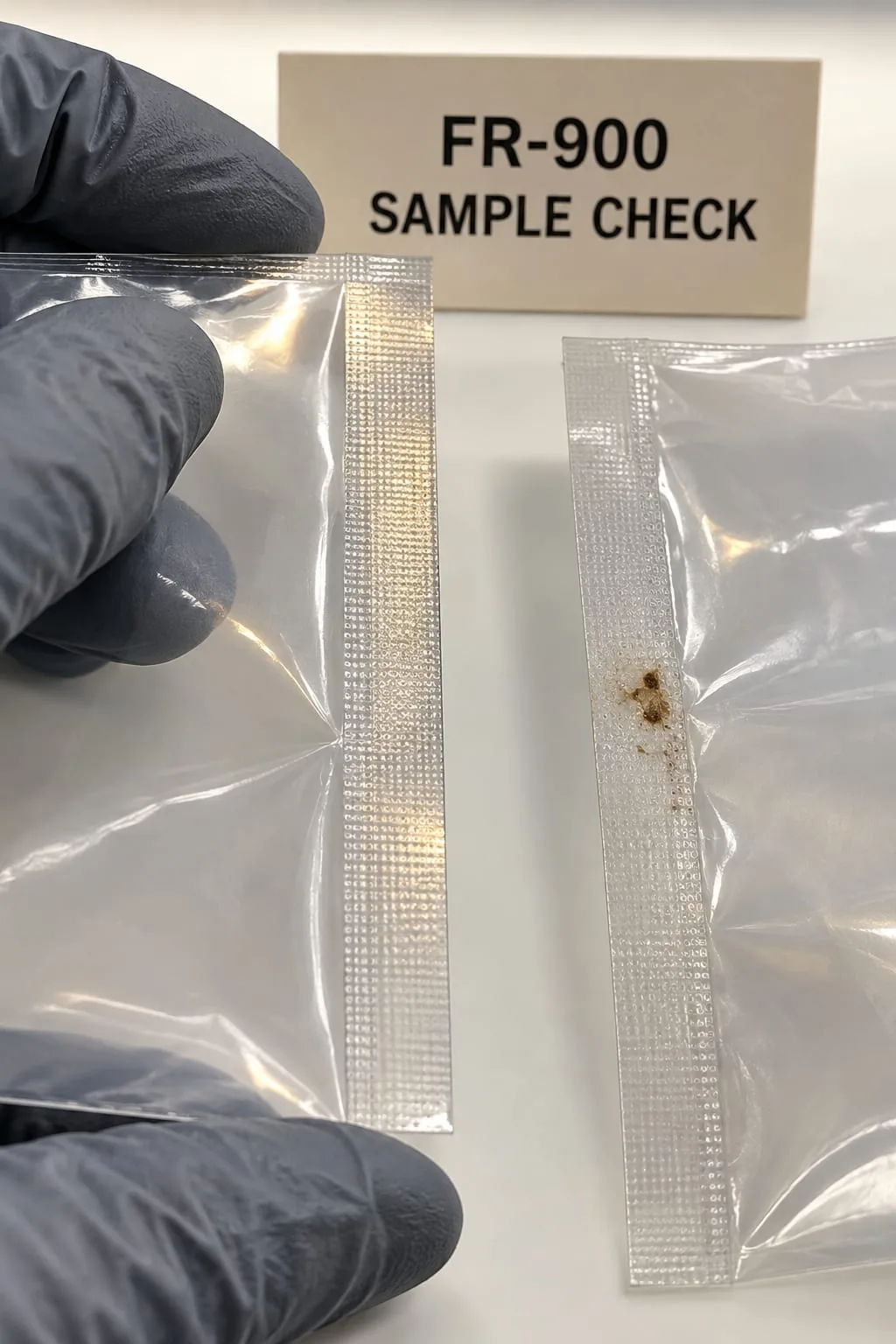
A clean sample seam and a sample with visible residue can point to different inspection questions. Record what is visible, when the symptom appears and whether it follows a particular package material or machine orientation. If the assembly includes a separate jaw or bar, list it as a separate requirement and refer to the relevant sealing jaws and bars service information.
Safe replacement and first-run checks
Replacement work should follow the equipment maker’s instructions and the site’s risk assessment. HSE maintenance guidance says work should be planned, carried out by competent people and performed with moving plant isolated or locked off. Heated parts also need time to cool before access.
Before access, stop the machine, isolate the electrical supply and prevent accidental reconnection. Keep guards and covers in place where the procedure allows. After fitting, check the route by hand only when the machine is isolated and follow the maker’s instructions for controlled testing. Do not put hands near moving braids, rollers or heated surfaces during a live run.
The HSE machinery safety guidance covers guarding, isolation, lock-off and safe adjustment. The FR-900 operating manual should remain the primary reference for the specific machine’s controls, adjustment sequence and maintenance instructions.
After a controlled first run, record the braid position, contact pattern, package presentation and any change in the symptom. A replacement part should not be treated as proof that the underlying alignment, tension or surface problem has been solved.
Ask for a compatibility review
Send the machine details, photographs, measured part information and the reason for replacement. Heat Seal Components can review the component requirement and advise on a suitable quotation within its confirmed heat-seal component offer. Use the contact page to submit the evidence, and state whether the requirement is for a sealing braid, heat-seal element, PTFE surface, jaw, bar or another named component.