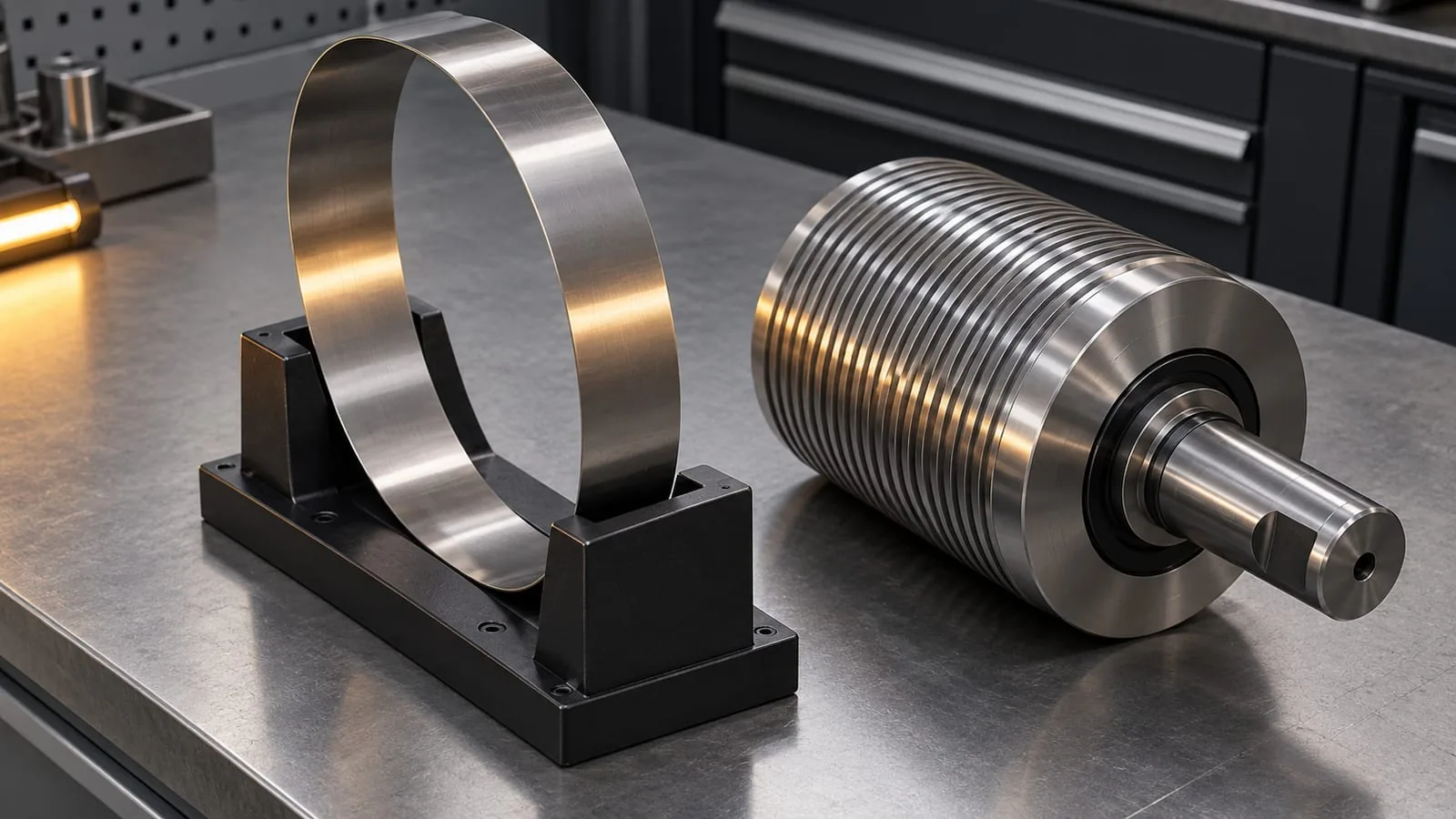
An endless heat seal band is a moving replacement component in a continuous sealing system. It carries the package through the sealing path while working with rollers, guides, support surfaces and a heat source. The band must fit the installed route, not just look similar to the original part.
This guide explains what to record before ordering, how to inspect the band and adjacent parts, and which maintenance evidence helps a supplier review compatibility.
Start with the sealing path, not the machine name
Machine names are useful context, but they rarely specify every detail of the fitted band. A continuous sealer may use a different loop length, band width, thickness, tracking method or coating from another machine with a similar name.
Start with the physical assembly. Identify where the band travels, which rollers or guides control it, where pressure is applied and how heat reaches the seal area. Photograph the route before removing anything, then record the part details separately.
Heat Seal Components supplies endless heat-seal bands and related replacement components. Its service page describes made-to-order bands in stainless steel or high-carbon steel, with plain or PTFE-coated options. The final choice still needs to be checked against the installed application.
How the band works in a continuous sealing path
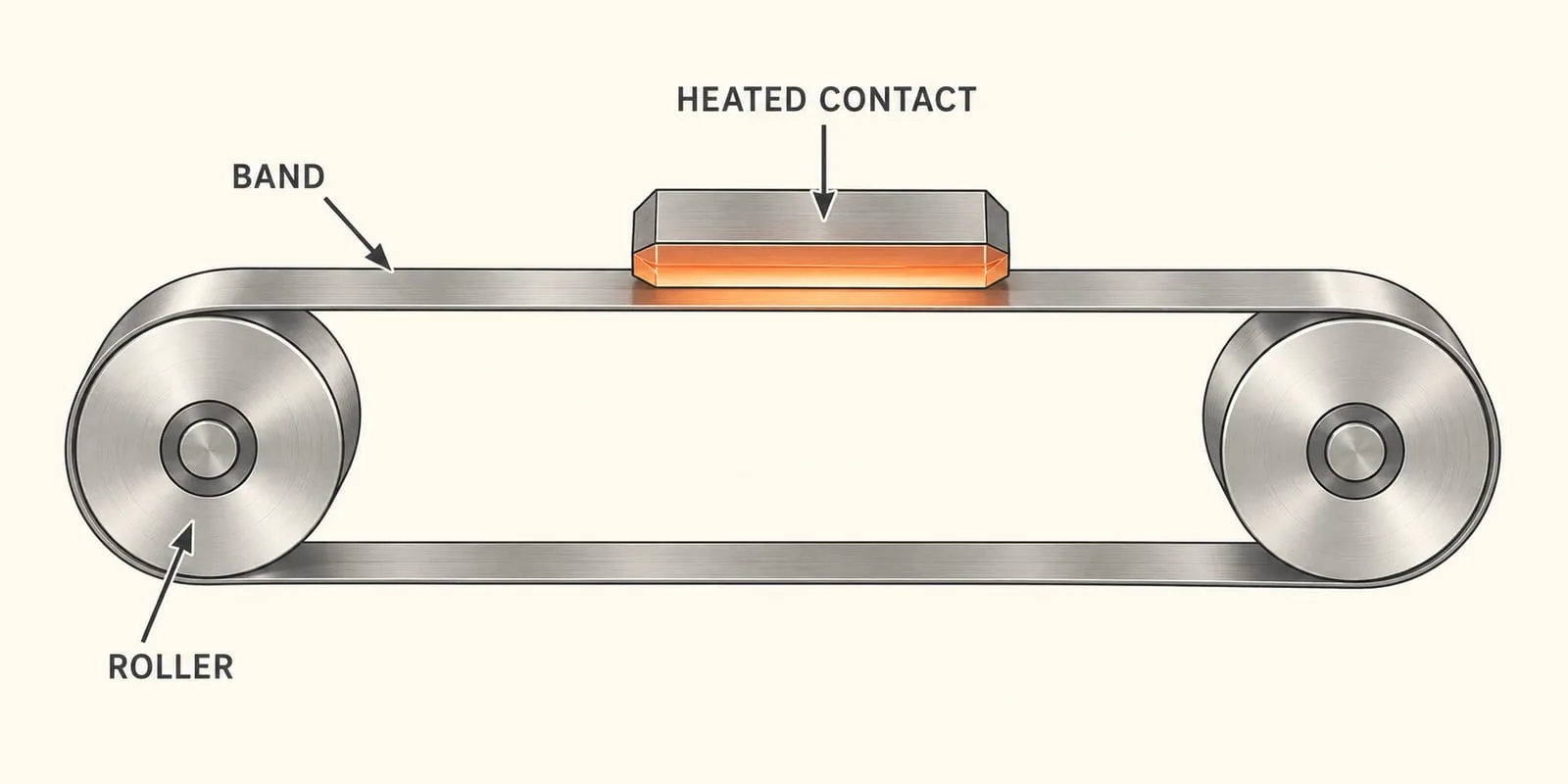
The band forms a continuous moving surface around its rollers. In the sealing zone, it can carry or press the package edge against a heated contact. The band is not automatically the heat source. Depending on the equipment, heat may be supplied by a separate heating element, hot plate or another part of the sealing assembly.
This distinction matters when diagnosing a weak seal. A band can be correctly sized but still run poorly if the roller path is contaminated, the support is damaged, the pressure is uneven or the separate heating system is not reaching its intended condition. Review the custom impulse elements as a separate component when the band route and surface condition do not explain the symptom.
A technical example from Techbelt shows a PTFE sealer-belt arrangement in which the belt travels around rollers and heat transfers through the belt to the package. Its PTFE sealer-belt data sheet gives product-specific information, including a stated temperature limit for that example. Do not treat a supplier’s figure as a universal limit for every band.
Confirm the replacement geometry before ordering
Record the loop and band section
Measure or confirm the installed band without stretching, crushing or twisting it. Record the following as separate fields:
- Endless loop length or the measured path length.
- Band width and thickness in millimetres.
- Plain, coated or otherwise specified surface construction.
- Joint or weld arrangement, including any visible change at the closure.
- Tracking features, edge form, holes, studs or other machine-side details.
If the band has been removed, lay it flat without forcing it into a smaller shape. If it remains installed, use photographs and measurements from more than one point where access allows. A single measurement can hide taper, wear or distortion.
Photograph the installed route
Take one wide photograph showing the complete route and close photographs of each drive or guide point. Include the sealing zone, the band edge, the support surface and any tracking feature. A photograph of the machine nameplate can help, but it should support the physical evidence rather than replace it.
Also note the machine orientation and application: horizontal or vertical continuous sealing, vacuum-packer component, VFFS line or flow-wrap equipment. If the assembly is actually a jaw or bar rather than a continuous band, compare the correct sealing jaws and bars service route instead of forcing a band specification onto it.
Inspect wear, the joint and the surrounding hardware
Look at the band surface and joint
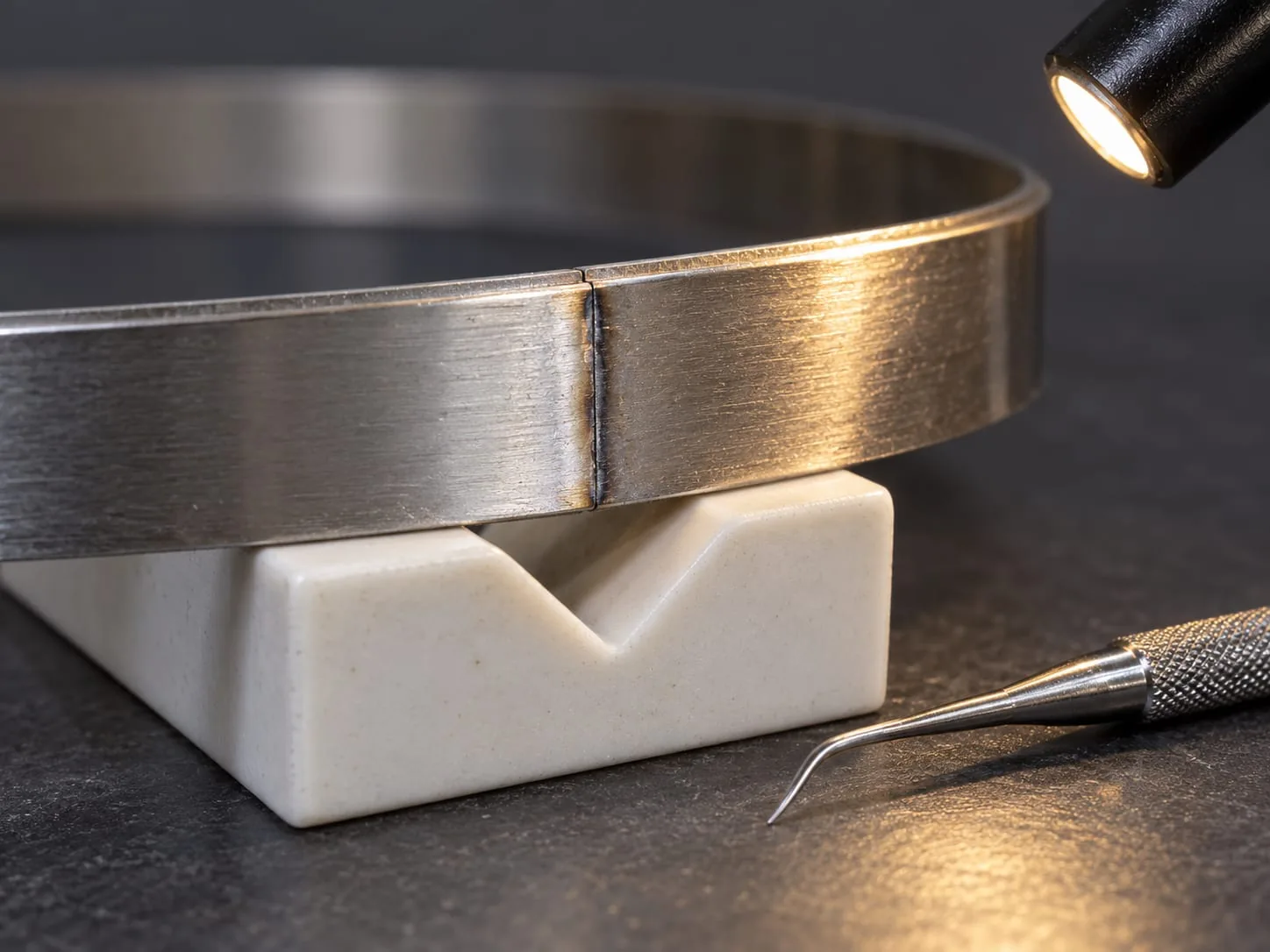
Inspect the band after the equipment has been isolated and the hot parts have cooled. Look for edge damage, scoring, distortion, residue, coating loss, a raised joint or a joint that no longer follows the band surface. Compare the sealing face with the return side. Uneven marks can indicate a route, pressure or support problem rather than a band-only problem.
The joint deserves its own check. It should pass through the route without a step, snag or visible change in tracking. Record a close photograph at the same angle as the band surface. If a coating is present, record whether the coating is continuous across the working area and how the joint is finished.
Check the rollers and supports
Clean and inspect the roller grooves, guides and support surfaces as part of the same maintenance task. Look for residue, a damaged edge, a loose guide, uneven contact or evidence that the band has been running off-centre. Replacing the band without checking the parts that control it can reproduce the original fault.
If the installed part is not clearly identified, do not infer compatibility from width alone. A supplier needs the loop, section, route and application together. The same principle applies when a band works next to another replacement component or a PTFE heat-seal tape surface.
Choose construction and coating for the application
The material and surface finish should be selected from the duty and the machine construction. Plain steel, stainless steel and PTFE-coated options can behave differently in contact, cleaning and tracking conditions. Confirm the intended coating, the working face, the support arrangement and the process temperature from the equipment or component specification.
Heat Seal Components’ service information lists made-to-order widths from 3mm to 150mm. Treat that as the supplier’s stated service range, not as proof that every width or construction is suitable for every machine. Send the existing part and route details so the requested band can be reviewed against the actual assembly.
PTFE can help provide a non-stick working surface in some belt arrangements, but the coating choice is still application-specific. The Techbelt example linked above describes its own product construction and limit. Record the surface requirement as part of the quote request rather than selecting a coating from appearance alone.
Make replacement work a controlled maintenance task
Isolate, cool and document
The Health and Safety Executive’s maintenance guidance stresses planned maintenance, competent work and safe isolation. Its packaging-machinery guidance also highlights trapping and in-running-nip risks around packaging equipment.
Before accessing the band route:
- Follow the site’s isolation and lock-off procedure, including stored-energy controls.
- Allow heated parts to cool before measuring or handling the band.
- Keep guards and covers controlled while the inspection is in progress.
- Record the original route, tracking direction and condition before removal.
- Test the replacement under the site’s approved procedure, then check tracking and seal consistency.
Do not use a test run to compensate for an uncertain fit. If the band, route or adjacent hardware is not identified confidently, stop the selection process and collect better evidence.
Send a useful quote request
A concise request should include the machine make and model, the application, the band measurements, the construction or coating, photographs of the installed path, and any symptoms or recent changes. Include the old component or a clear drawing where possible. State whether the sealing system is continuous and whether the package travels horizontally or vertically.
This information gives a component supplier a defensible starting point for compatibility review. To discuss an endless band or another sealing component, contact Heat Seal Components with the measurements and photographs ready.