Choosing a replacement heat-seal element is a fit and specification exercise, not a search for the nearest-looking strip. The fitted profile, heated length, terminals, support, electrical arrangement and machine application all affect whether the part is suitable.
This guide helps UK packaging engineers, maintenance technicians, production managers and procurement teams collect the right evidence before ordering. It covers impulse and bench sealers, vacuum packers, VFFS and flow-wrap equipment while keeping the decision tied to the actual sealing station.
What sizing a heat-seal element actually controls
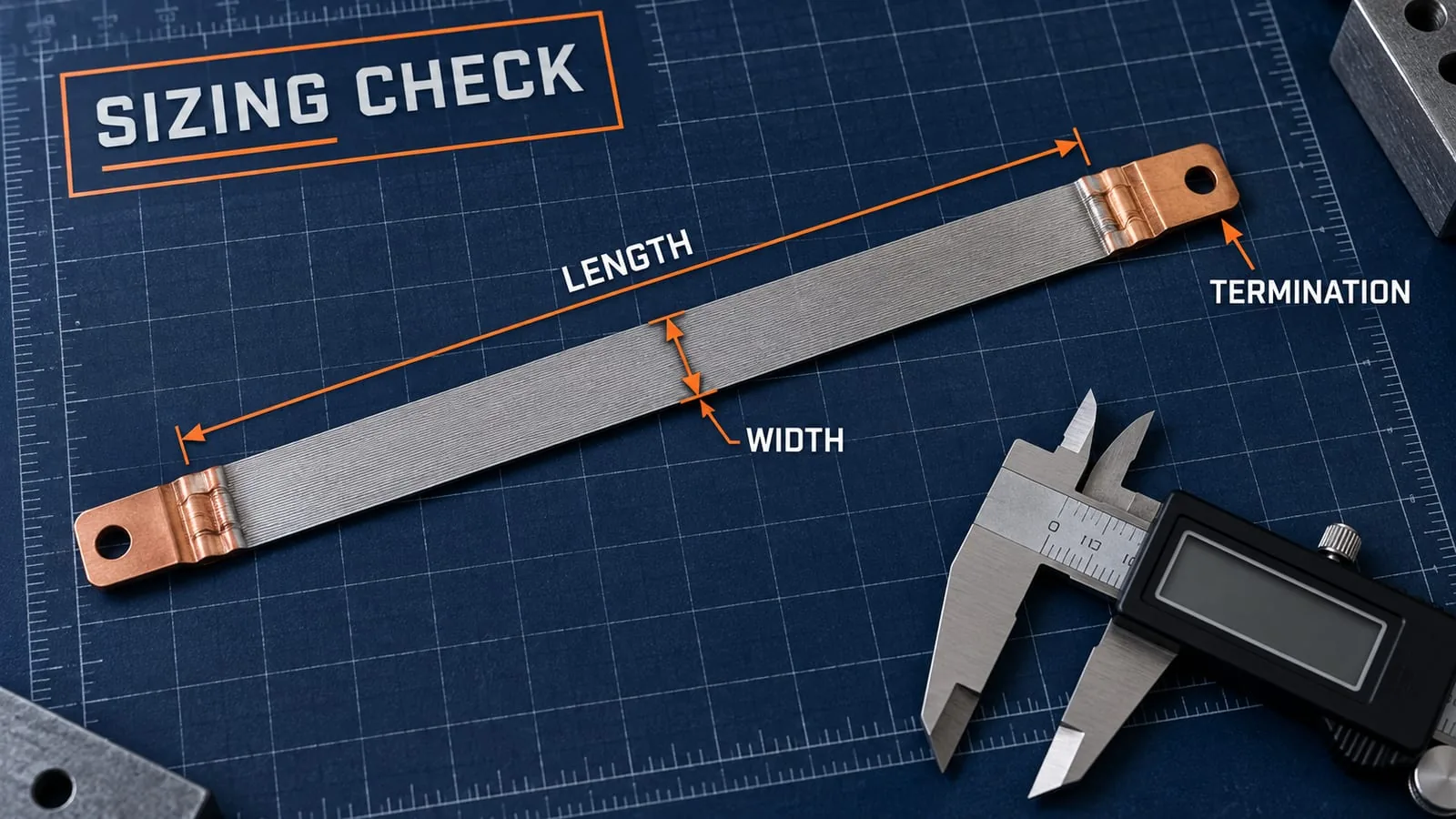
Sizing controls more than the overall length of the replacement. A flat ribbon, round wire or formed component has an active heated section, ends or terminals, a support path and a relationship with the jaw, bar or cover. Changing one part of that arrangement can alter the electrical and mechanical fit.
The heat-seal elements service explains the difference between common element forms and custom requirements. Use it as a product-scope reference, then compare the description with the component fitted to the machine.
Record the following as separate checks:
- profile: flat ribbon, round wire, shaped wire or another formed part;
- heated length and overall length;
- ribbon width and thickness, or wire diameter;
- terminal type, position, fixing centres and connection direction;
- support, tensioning, cover and jaw or bar arrangement;
- machine application and sealing station.
Start with the fitted element and sealing method
Identify the profile before measuring
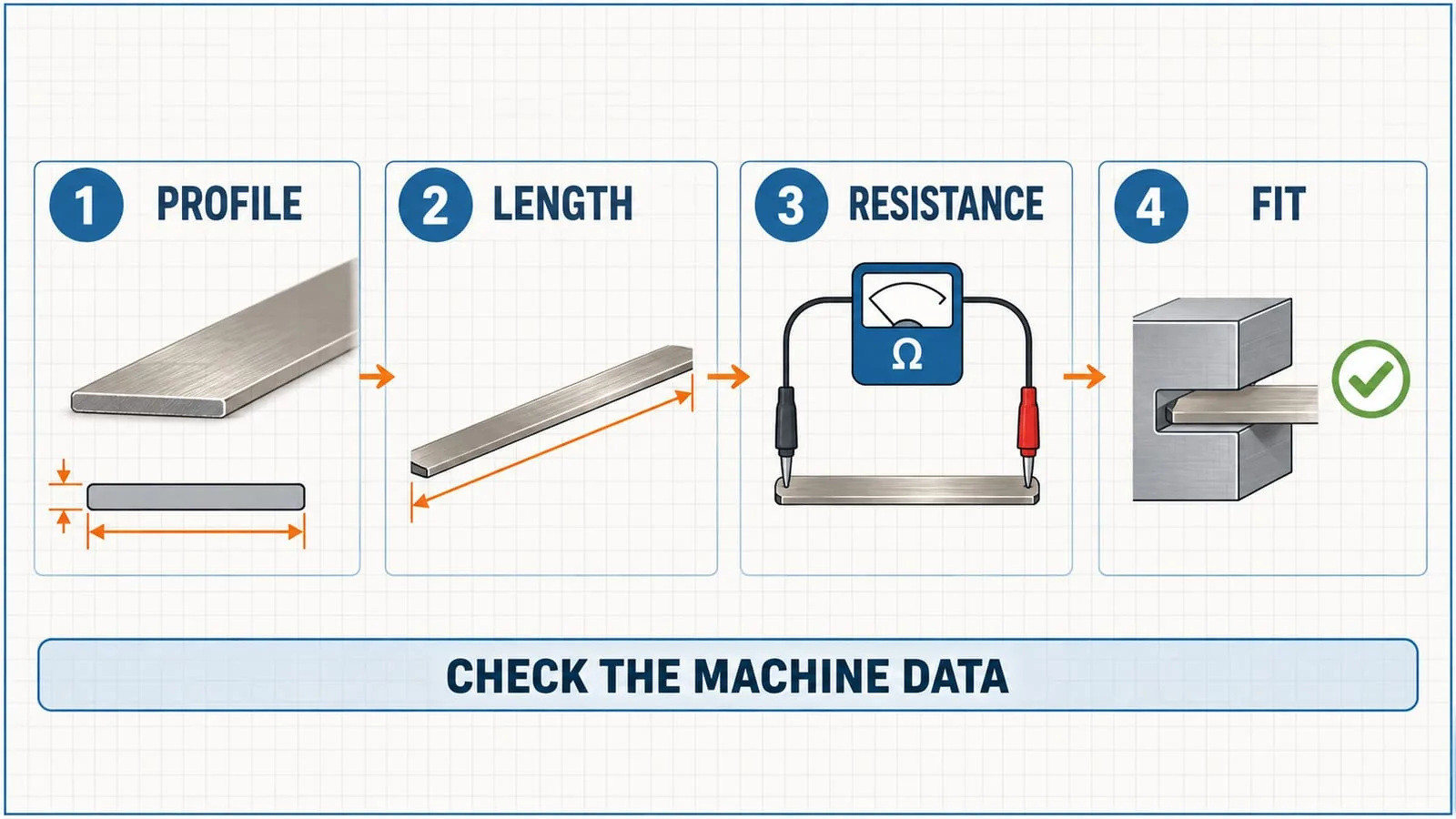
Begin with the component in its installed position or with the removed part supported without stretching or flattening it. A flat ribbon has a width and thickness. A round wire has a diameter. A shaped element may need a drawing that records bends, holes, notches and end positions from fixed reference points.
Do not treat “heat-seal wire” as a complete specification. A part with a similar name can have a different profile, active length, connection method or mounting route. If the element is broken, photograph the complete path and both ends before disposal.
Measure the heated length and the physical envelope
Measure in millimetres and separate the active heated length from the end-to-end or mounting length. Record the distance between terminals or inactive ends, the width and thickness or diameter, and the clearances around the support and cover.
The machine jaw or bar is a useful second reference when the old part has stretched, distorted or broken. It is not a substitute for the element specification, because the heated section may not run across the full mechanical envelope.
Check the electrical and thermal requirements
The electrical specification must be reviewed with the physical fit. General resistance-heating design guidance from Kanthal shows why voltage, power, resistance, material, dimensions, surface load and operating temperature interact. It is useful engineering context, not a universal setting for a packaging machine.
Use verified electrical information
If the machine documentation gives voltage, power or resistance, record the source with the value. If a competent person has taken a safe verified measurement, record the instrument result and the test conditions. Do not copy a resistance value from another machine because the replacement looks similar.
Heat Seal Components’ custom heating elements page asks for dimensions and electrical details when a requirement is reviewed. That is a better starting point than guessing a material or selecting a wire by diameter alone.
Check support, cover and duty conditions
The element transfers heat through the sealing assembly. Support, alignment, the cover or tape, contact pressure, cooling and the machine’s operating cycle can all affect the working conditions. If the element sits in a jaw or bar, inspect the wider sealing jaws and bars arrangement as part of the fit check.
Do not use an element change to compensate for a damaged support, poor connection or unstable control system. Record those conditions separately so the supplier and maintenance team can decide whether the replacement part is the right intervention.
Match the component to the machine application
The same machine category can contain different sealing assemblies. Match the component to the sealing method, station and fitted path rather than relying on a broad machine label.
Impulse and bench sealers
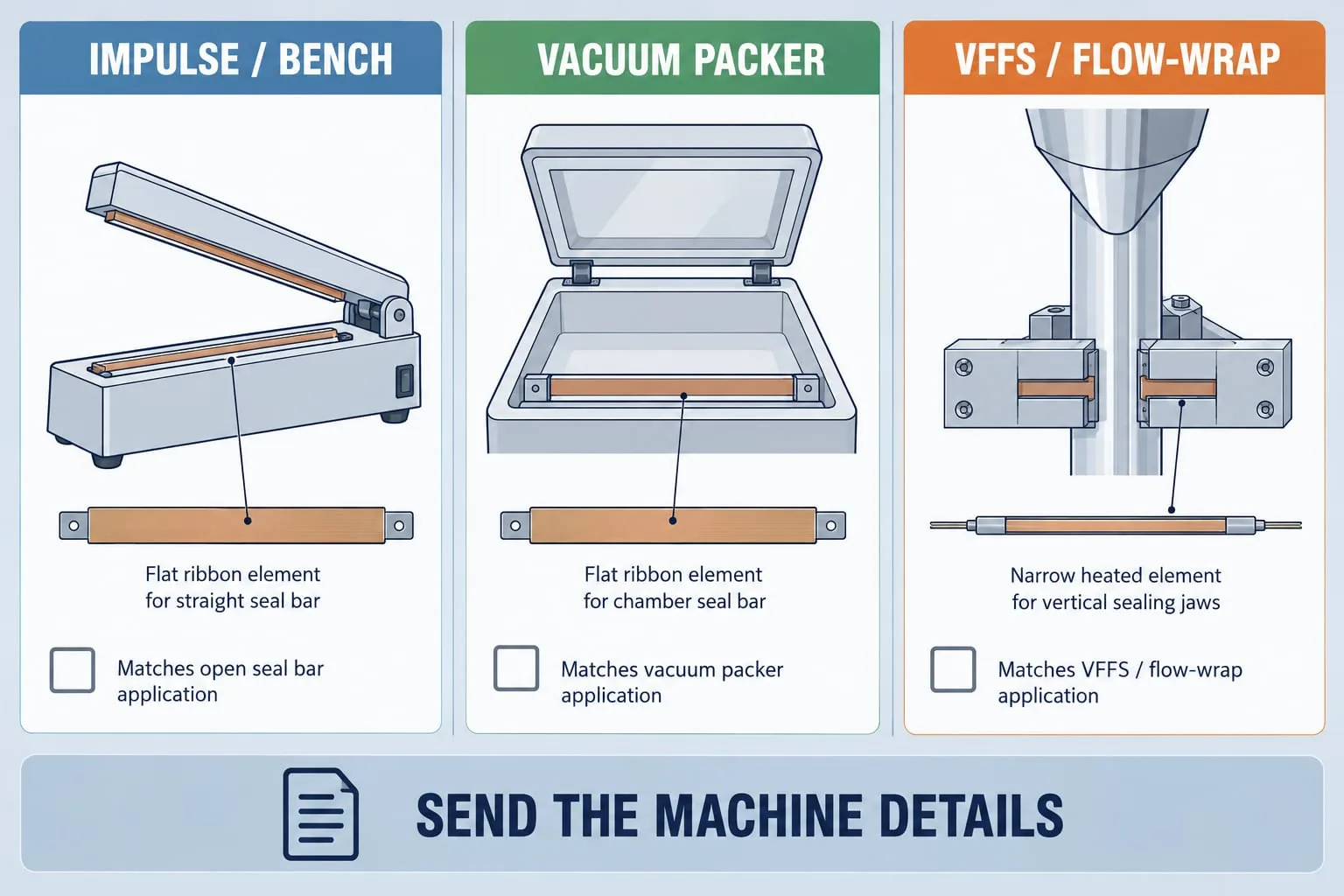
An impulse or bench sealer may use a straight flat ribbon across a seal bar, with terminals and insulation arranged for the particular jaw. Check the seal length, heated length, ribbon dimensions, end form and connection position. A similar ribbon is not proof of compatibility.
For a non-standard impulse part, the custom impulse elements service is the relevant product route. Include photographs of the seal bar, element path and both ends.
Vacuum packers
Vacuum packers can use bar-mounted elements with defined terminals, supports and fixing points. Record the chamber or bar position, element form, heated length, terminal arrangement and cover condition. If the old part is damaged, use the jaw or bar as a supporting reference and send the component evidence for review.
VFFS and flow-wrap equipment
VFFS and flow-wrap machines may use formed parts, paired jaws or continuous sealing components in longitudinal, transverse, fin or lap sealing stations. Identify the station and the path of the component through the assembly. Note whether the replacement is a flat element, wire, formed part or another confirmed component type.
Heat Seal Components’ packaging application solutions list the parts Heat Seal Components makes to fit VFFS and flow-wrap equipment. The machine model helps with identification, but the fitted component and its dimensions still need to be checked.
What to send when ordering a replacement
Put the information into one request so the component can be checked as a complete assembly:
- machine make, model and sealing station;
- application: impulse, bench, vacuum, VFFS or flow-wrap;
- old element or a dimensioned drawing, if available;
- flat ribbon width and thickness, wire diameter or formed profile;
- active heated length, overall length and end allowances;
- terminal style, orientation, hole or fixing centres and connection route;
- support, cover, tensioning and jaw or bar details;
- known voltage, power, resistance or original part reference;
- clear photographs of the installed path, removed part and both terminals.
If a measurement is uncertain, label it as uncertain. A marked-up photograph or sample is more useful than a precise-looking guess. Heat Seal Components’ heating-elements service can be used when the requirement is formed, custom or outside a simple catalogue description.
Common sizing mistakes
The most common errors are avoidable:
- measuring only the outside length and missing the active heated length;
- choosing a wire by diameter without checking resistance and machine data;
- ignoring terminal position, fixing centres or connection direction;
- assuming the support, cover and jaw are sound because the element is the visible failed part;
- ordering by machine name alone when the station has been modified or repaired;
- copying a value from another sealer instead of sending the original evidence.
A replacement should be checked against the complete physical and electrical record before it is ordered. Keep the removed part where safe to do so, because its profile and damage pattern can resolve uncertainty that photographs cannot.
Safe inspection before measuring
Measurements should be taken under the site’s safe system of work. The HSE maintenance guidance covers planned maintenance, competent people, isolation, lock-off where unexpected reconnection is possible, release of stored energy and cooling of hot components.
Packaging machinery can combine moving, heated and guarded parts. The HSE guidance on packaging machinery covers guarding and safe systems of work on packaging machines, including the forming dies and cutters on form, fill and seal machines. Follow the machine maker’s instructions and do not treat an emergency stop alone as proof of safe isolation.
How Heat Seal Components can help
Send the machine details, element form, measurements, terminal information, photographs and any drawing with your enquiry. If the requirement is unclear, include the old part or a clear photograph of the fitted path so the relevant dimensions can be identified.
For a replacement wire, ribbon or custom element review, contact Heat Seal Components with the evidence available. The team can confirm what needs to be checked before a compatible component is quoted and made.