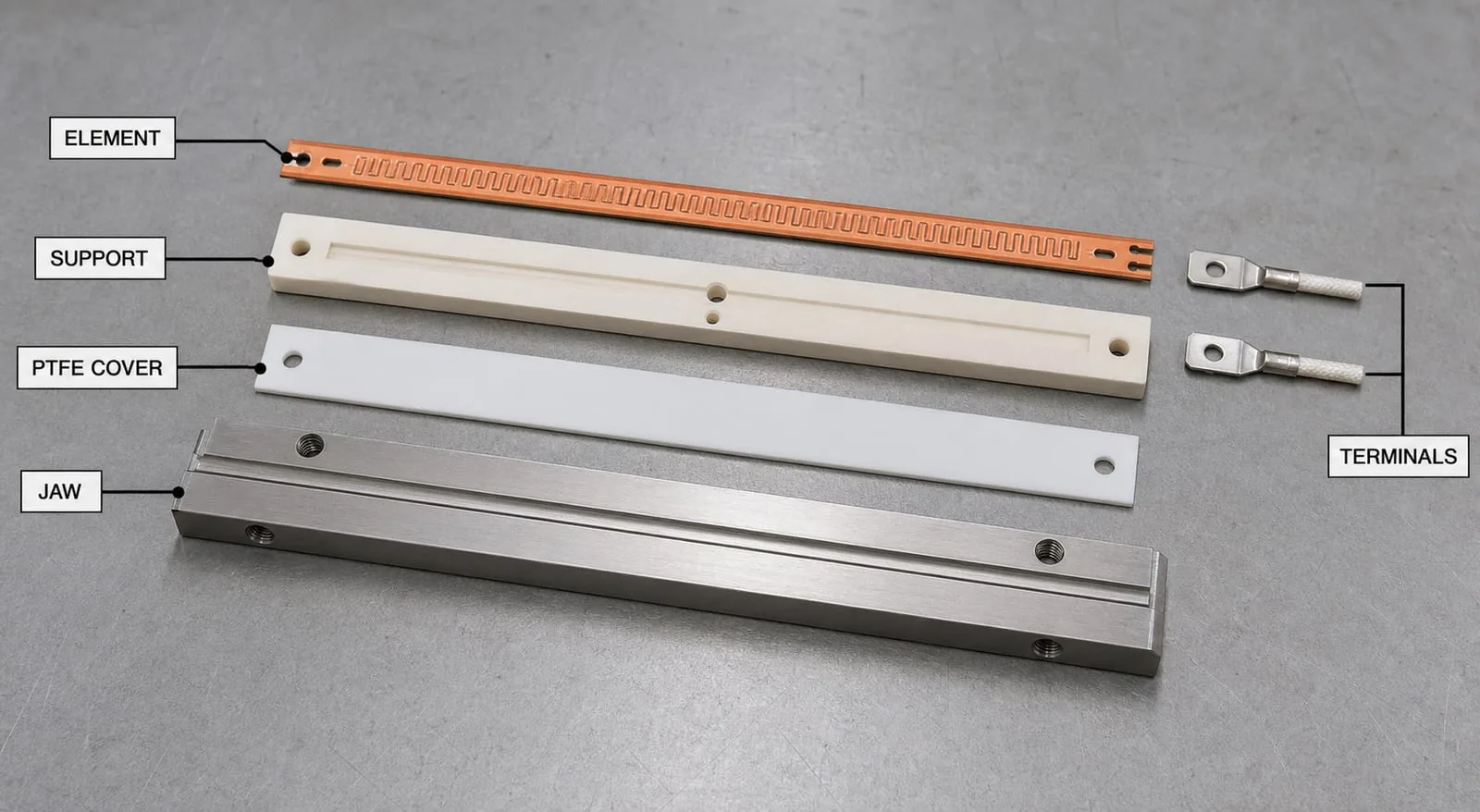
A heat seal element is the working part that turns controlled electrical energy into the heat needed to close a pack. It is not just a strip of wire. The element sits inside a wider assembly that can include terminals, insulation, a support, a PTFE cover and a sealing jaw or bar. Each part affects fit, heat transfer and service life.
When a replacement is ordered by keyword alone, a part can look close but still fail to fit or seal consistently. This guide shows the information a maintenance team should check before ordering, and the practical inspection points that help keep a sealing station stable.
What a heat seal element includes
The heated conductor may be round wire, flat ribbon or a formed element. Kanthal explains that resistance depends on the conductor material, length and cross-sectional area, while operating temperature, cycling, atmosphere and mechanical stress all affect service life. That is why a replacement must match the machine’s electrical and mechanical requirements, not only its visible length.
The heated element and its terminals
The active section is the part that reaches sealing temperature. Its shape can be straight, stepped, serpentine or another formed profile. The ends then connect through terminals or fixing tabs. Terminal position, hole shape and the way the lead is retained are part of the fit. A small change can alter tension or leave the active section in the wrong place.
For a made-to-size replacement, record the active length separately from the overall length. Also record the element form, material or part reference if known, cross-section, terminal style and the direction in which it sits in the jaw. HSC supplies impulse elements, wire and flat ribbon made to size, so these details give its team a useful starting point.
The cover, support and sealing jaw
The element normally works with an insulating support and a PTFE cover or tape. The cover helps protect the element and provides a suitable contact surface. It must be smooth, correctly positioned and free from tears or lifted edges. HSC’s PTFE heat-seal tape guidance covers element and jaw protection for several sealing applications, but the exact width, thickness and fixing method remain machine-specific.
The jaw or bar controls the mechanical side of the seal. Its groove, fasteners, pressure surface and clearances determine how the element is held. A correct element can still give a poor result if the support is damaged, the jaw is distorted or the cover is fitted off-centre. If the part is a complete jaw assembly rather than a replacement element, use HSC’s sealing jaws service page to describe the requirement accurately.
Compatibility checks before ordering
Use the machine manual, an old part and a clear photograph together. Do not rely on a generic name such as industrial sealer or vacuum sealer. The following checks reduce the risk of receiving a part that cannot be installed:
- Machine make, model and application, such as an impulse sealer, vacuum packer, VFFS or flow-wrap line.
- Element form, including round wire, flat ribbon or a shaped profile.
- Active length, overall length, width or cross-section, and the units used for each measurement.
- Terminal layout, fixing holes, lead direction and the way the element is tensioned.
- Support and cover arrangement, including PTFE tape or a shaped PTFE cover.
- Sealing material, seal width and any approved settings from the machine manual.
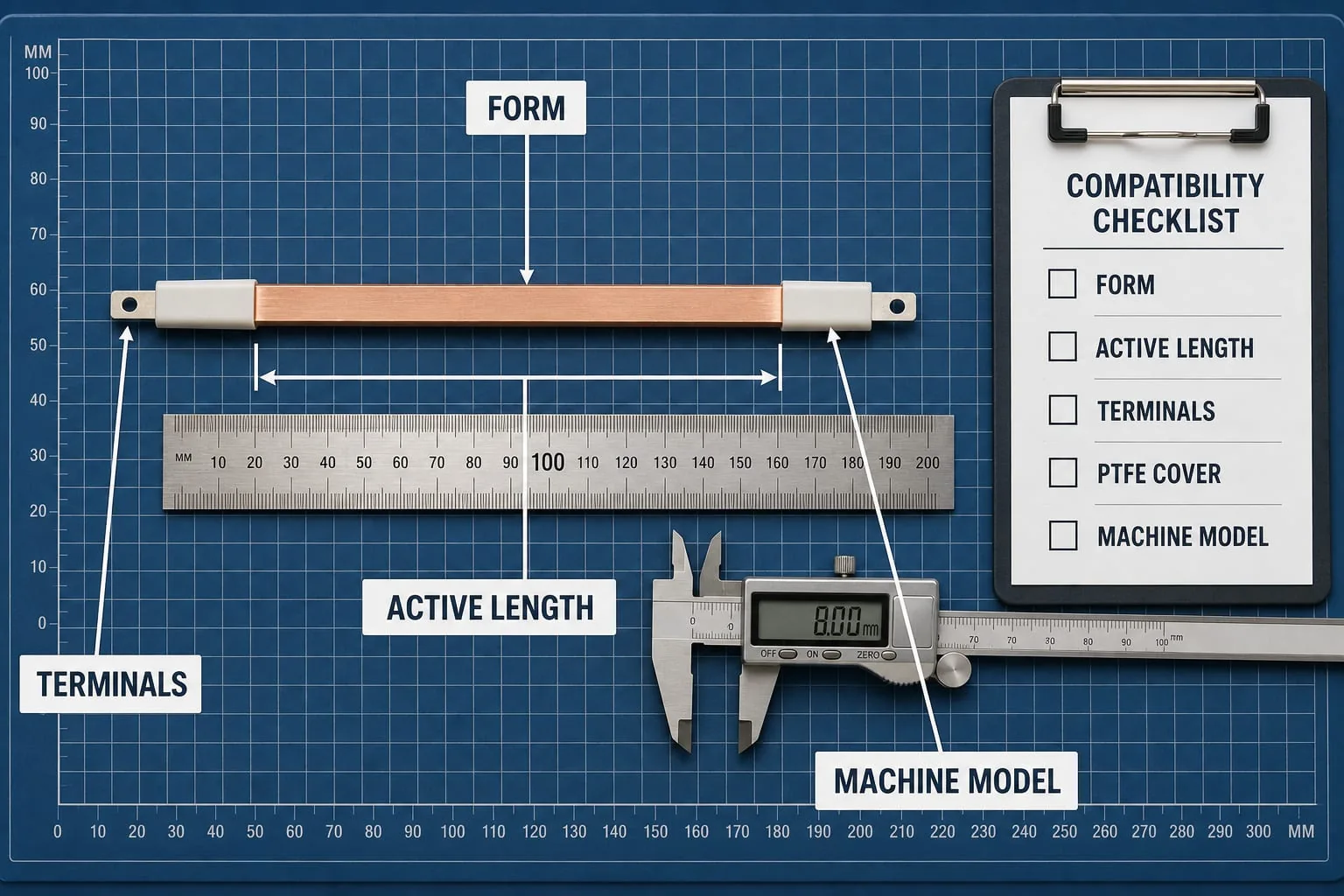 A measurement sketch is often more useful than a single photograph. Mark the active section, terminal centres and any bends. If you are replacing an element in a custom jaw, include the groove or channel dimensions and the order in which the layers are fitted. HSC’s custom impulse heat-seal element service can then review the practical constraints rather than guessing from a keyword.
Inspection and routine maintenance
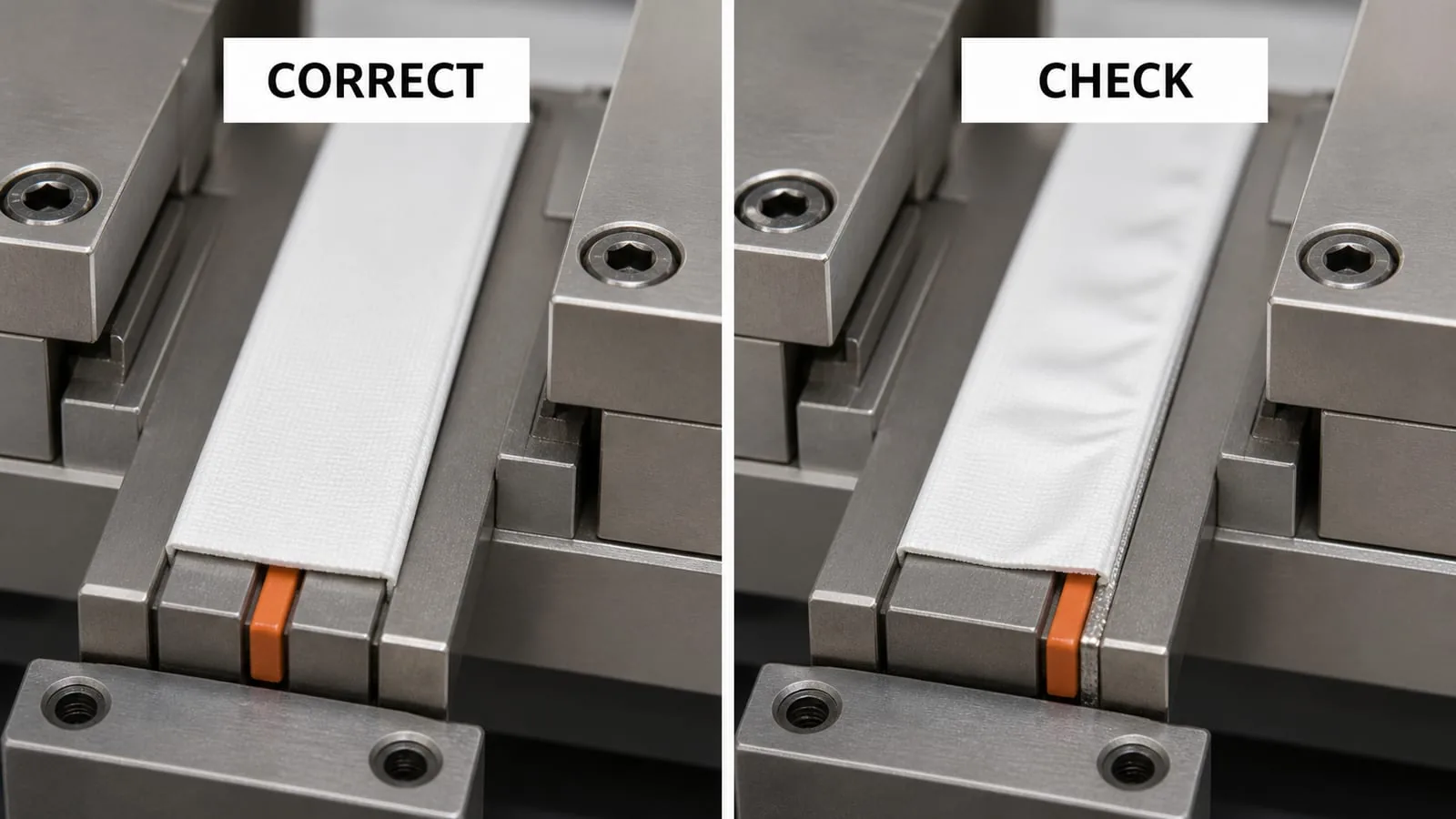
A heat-seal element is a wear part. Inspect it during planned maintenance and whenever the seal changes. Look for a narrowed or damaged conductor, discolouration, loose terminals, uneven tension and marks that show the element is touching the wrong surface. Check the PTFE cover for thinning, cuts, blisters, creases or exposed metal. Replace the cover when the machine procedure calls for it, and keep the seating area clean.
Check alignment before changing settings
If the element has moved to one side, the heat may not be centred across the seal. It can also rub against a jaw edge or expose the conductor through a worn cover. Compare the left and right clearances, check that the support is seated, and confirm that the terminal hardware is tight without crushing the element. Do not compensate for a mechanical fault by raising temperature or dwell time.
 Keep a simple record of the date, machine model, element reference, measured dimensions, cover condition and the reason for replacement. That history helps show whether a repeat failure is caused by contamination, alignment, cycling or an incorrect part. It also gives procurement a verified specification for the next order.
Replacing the element safely
Follow the machine manufacturer’s procedure and the site’s isolation rules. The Health and Safety Executive says maintenance work should isolate electrical and other power, lock off the supply, release stored energy and allow hot components to cool before work starts. Use the required competence and safeguards for the equipment in front of you.
After fitting, check that the element is centred, the terminals are secure and the PTFE cover is smooth. Refit guards before testing. Use the approved settings and a suitable test pack or material, then inspect the seal. If the element type or dimensions have changed, the machine manual may require the heating time, pressure or other settings to be checked again. Fuji Impulse’s replacement guidance is a useful reminder that these adjustments are model-specific.
What to send with a replacement enquiry
Send the machine make and model, a photo of the installed element, a photo of the terminals, and a marked measurement sketch. Add the active length, overall length, cross-section, cover details, terminal centres and the application. If you have the old part reference or a manual extract, include it. This is enough for a supplier to confirm whether a standard wire, flat ribbon, formed element, PTFE cover or complete jaw component is the right route.
For help with a heat seal element or related component, contact Heat Seal Components with those details. Its team can review the fit and point you towards the relevant heat-seal elements, heating elements, PTFE cover tape, vacuum pack sealing elements or sealing jaws service.