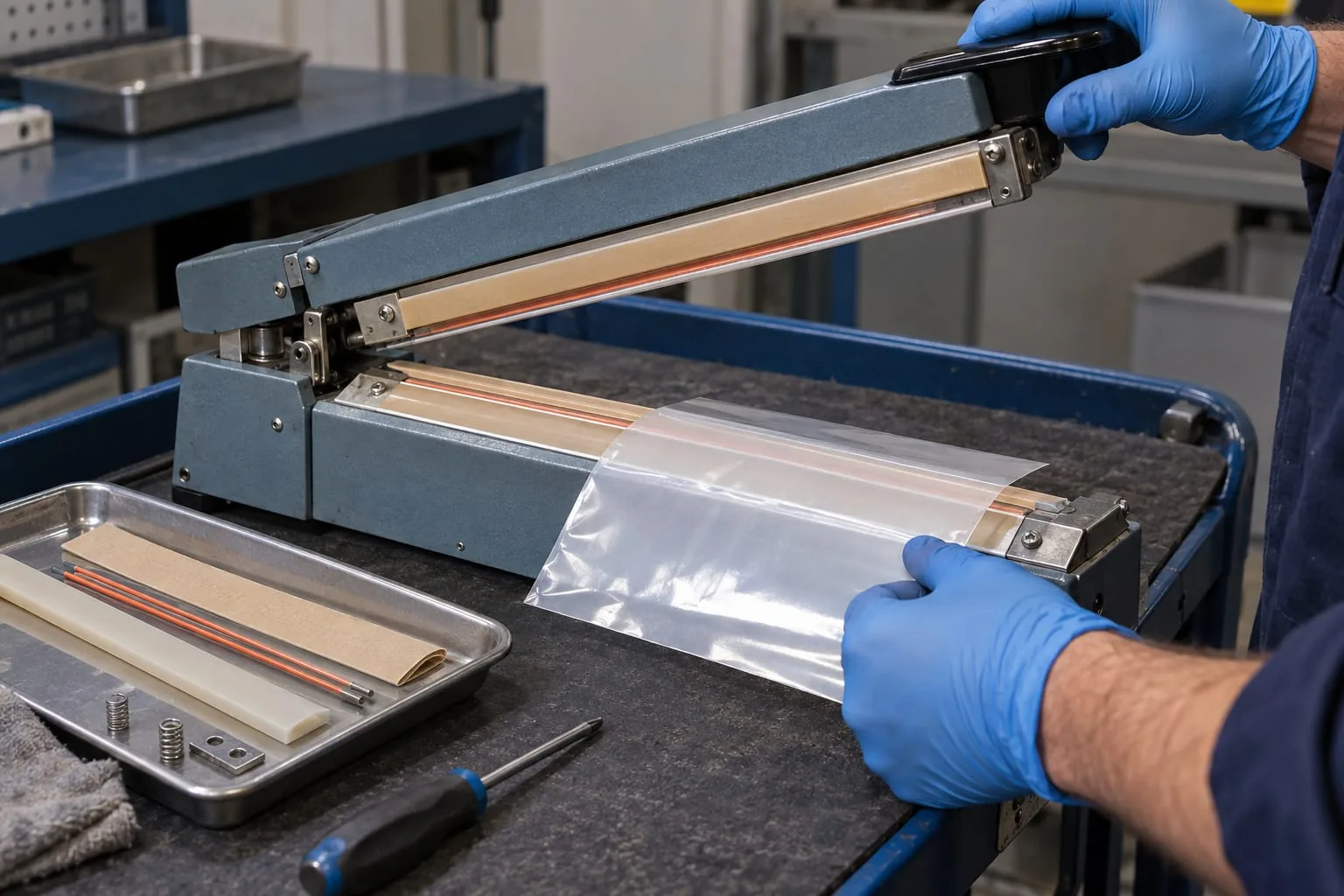
Start with the fitted sealing jaw, not the machine name. A heavy duty hand sealing machine may look simple, but its heating element, PTFE cover, pressure pad and terminals must work as one assembly. The safe replacement route is to record the fitted parts and machine details before ordering.
Heat Seal Components supplies heat seal elements and wires, including replacement and custom components for compatible packaging equipment. The company can review measurements and photographs, but the exact fit must be confirmed from the machine and the original parts.
What a heavy-duty hand sealer depends on
Heat, pressure and hold time must work together
A heat-seal joint is formed when compatible thermoplastic layers receive the right combination of heat, pressure and contact time. The heated element supplies the heat. The jaw and pressure pad hold the layers together. The operator or controller then keeps the joint closed for the required hold or cooling period.
These settings are not universal. Film construction, seal width, element design and the machine control can all change the result. A replacement element should therefore match the fitted design and the equipment instructions, rather than being chosen by a similar-looking length.
The wear parts sit in one working zone
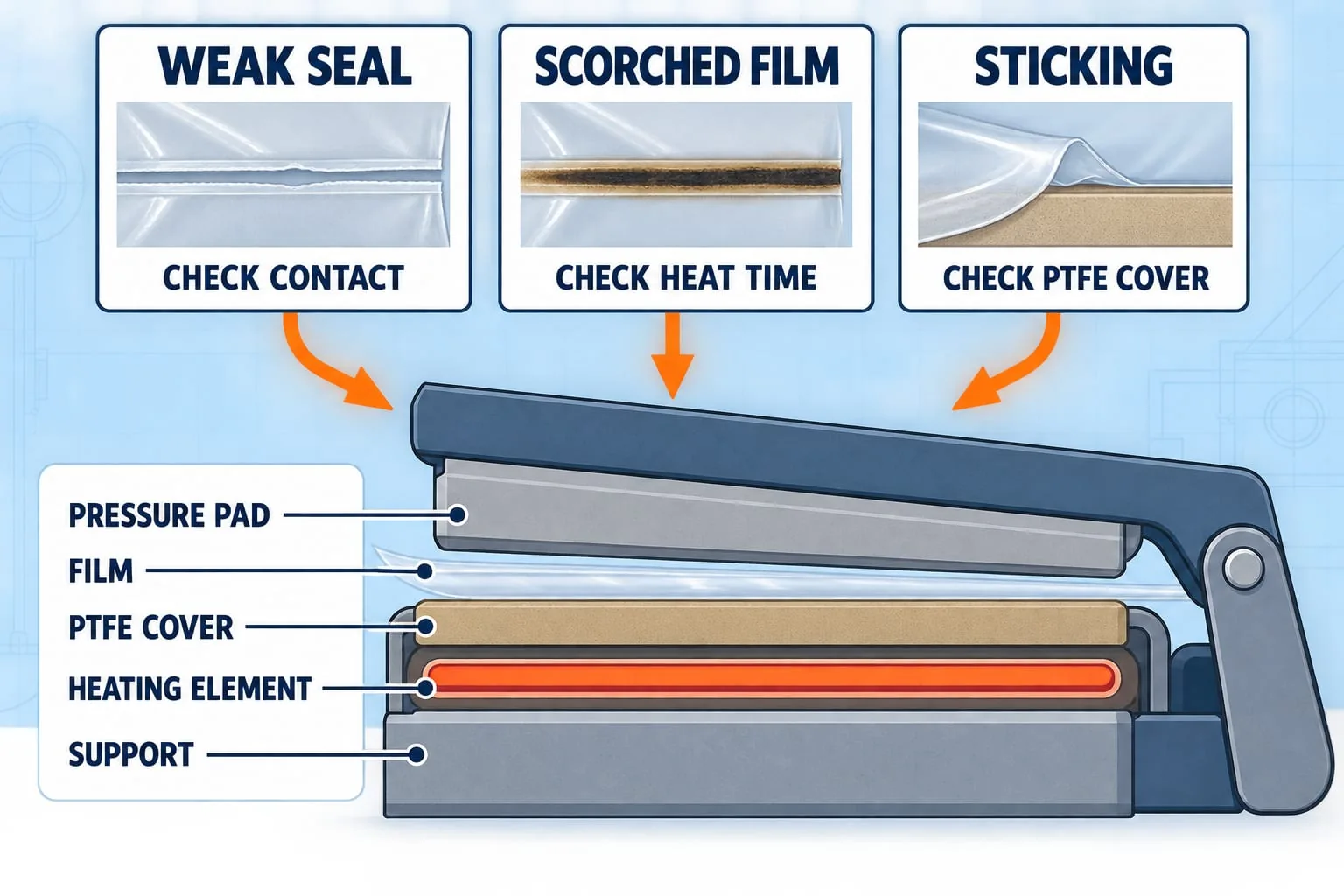
The active sealing area normally includes the heating element or wire, a non-stick PTFE cover, a pressure pad or silicone strip, the support surface and the terminal hardware. Damage in one part can affect the others. A burnt cover may allow sticking. A compressed pad can reduce contact. A loose or damaged terminal can interrupt heat input.
Audion’s Sealboy spare-parts guidance identifies the PTFE strip, silicone rubber and seal wire as wear parts for that product range. Use this as a useful maintenance pattern, not as proof that every hand sealer uses the same dimensions or parts.
Match each replacement part to the fitted sealer
Record the jaw and seal dimensions
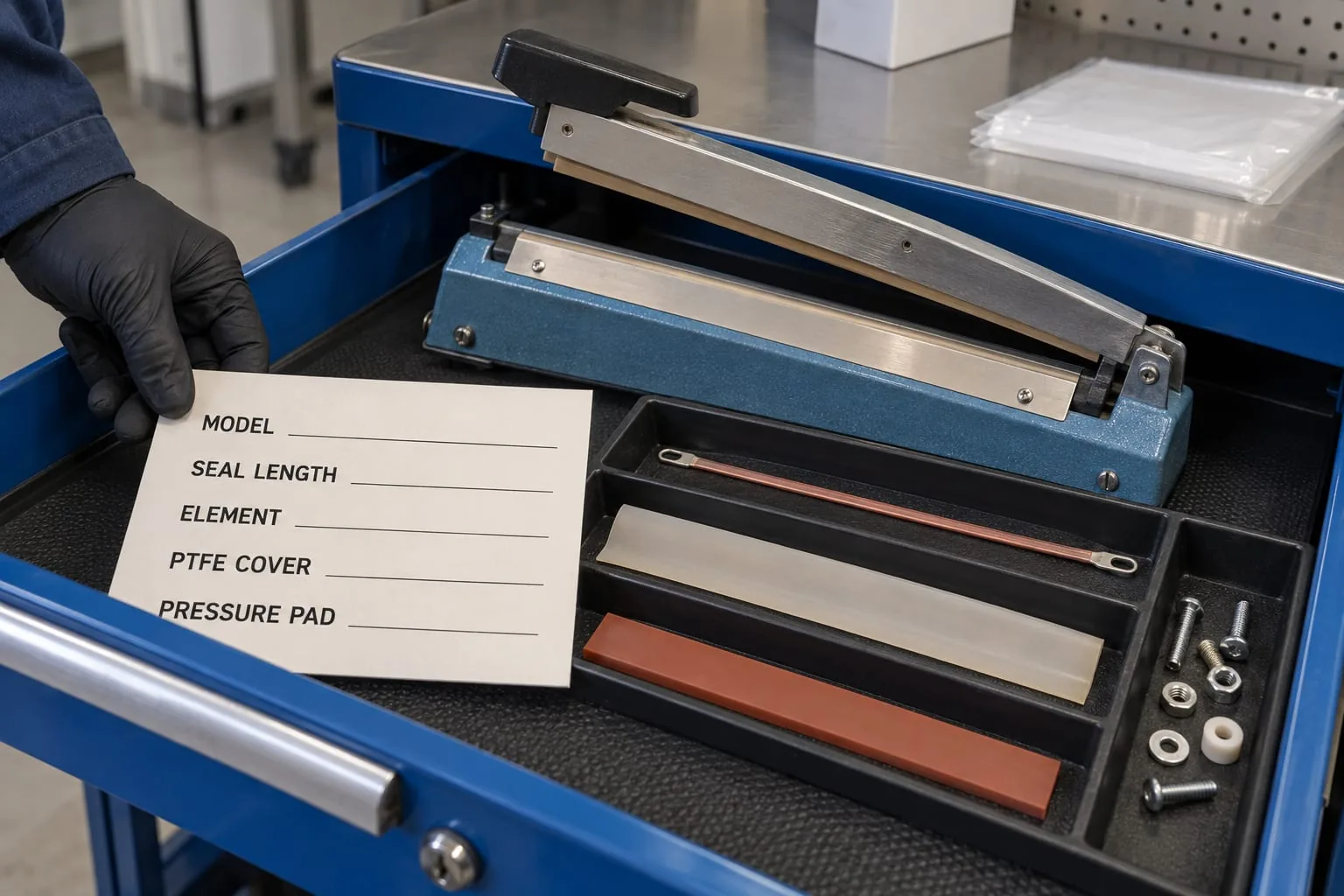
Before removing a part, record the machine model, available serial information and the sealing jaw arrangement. After isolation and cooling, note the fitted seal length, element shape, cover width, pressure-pad dimensions, terminal style and mounting positions. Take clear photographs from above and from each end.
For a jaw or bar that needs replacement, compare the complete fitted assembly with the bands, elements, covers and recoating described on the sealing jaws and bars service page. The machine name is useful, but it is not enough on its own. Two sealers with similar names can use different jaw lengths, element profiles or fixing details.
Confirm the element and electrical details
A round wire, flat ribbon or shaped element transfers heat in a different way. The replacement also needs the correct terminals, tensioning method and electrical specification for the fitted control system. Do not guess resistance, voltage or timer settings from a different model.
The heat seal elements service range covers replacement elements and wires, while custom impulse heat-seal elements are relevant when a standard part does not match the fitted form. Send the original part or a complete measurement record so compatibility can be checked before a quote is prepared.
Maintenance checks before replacing anything
Isolate, cool and clean the sealing zone
Disconnect the sealer from its power source and allow hot parts to cool before opening the jaw or removing a cover. Follow the manufacturer’s instructions and your site’s safe system of work. The HSE guidance on maintaining work equipment says maintenance should be planned, carried out safely and done by people with suitable competence.
Inspection frequency should reflect how the equipment is used and the conditions around it. The HSE inspection guidance recommends using risk assessment and manufacturer instructions to decide what needs checking and when. Keep the inspection record simple enough that technicians will use it.
Remove film residue from the sealing area using the method allowed by the machine manual. Do not scrape the element, crease the PTFE cover or wet an electrical assembly. If the jaw is damaged, stop and refer the work to a competent person.
Check the cover, pad and terminals
Look for burnt-through PTFE, lifted edges, cuts, deep creases, a hardened pressure pad, loose fixings and discoloured terminals. Check that the active part sits straight and that the mating surfaces meet across the intended seal area. A new wire will not correct poor alignment or a damaged pressure surface.
Use the PTFE heat-seal tape range when the fitted machine requires a replacement non-stick cover. Choose the correct width and application for the assembly. Heat Seal Components can also review photographs of the old cover and jaw before supply.
Troubleshoot the seal logically
Weak or incomplete seal
Start with the material position, contamination, jaw contact and hold time. Then inspect the element, PTFE cover and pressure pad. If the element is open-circuit, damaged or the wrong shape, replace it with a confirmed compatible part. If the contact is uneven, investigate the jaw and pad before increasing heat.
Hawo’s Seal Check reference card gives a useful visual check: the seal should be intact across its specified width, with no channels or open seals, punctures or tears, and no sign of delamination or of too much or too little heat and pressure. The exact acceptance method for your packaging should come from your process and product requirements.
Scorching or sticking
Scorching can indicate excess heat input, excessive hold time, contamination or a damaged cover. Sticking often points to a worn or incorrectly fitted PTFE layer, but the material and setting still need checking. Do not copy a timer value from another sealer.
The IMPAK IPK manual is a useful example of why model-specific instructions matter. It lists the heating element, PTFE cloth, silicone rubber and heater transformer as separate parts, and gives model-specific guidance for adjusting heat and keeping the handle down for cooling. Treat those instructions as specific to the IPK range, not as a universal setting for every heavy-duty hand sealer.
What to send with a component enquiry
Provide a short record that lets the supplier compare the fitted component with the requested replacement:
- machine make, model and serial information, if available;
- sealing length and jaw arrangement;
- element type, profile, terminals and mounting details;
- PTFE cover and pressure-pad dimensions;
- photographs of the complete jaw, each terminal and any worn area;
- packaging material and the fault observed, without guessing the cause.
This information reduces the risk of ordering a part that looks similar but cannot be mounted, tensioned or controlled correctly. If the part is custom, send the original component or a measured drawing where it is safe to do so.
For help checking a replacement element, PTFE cover, sealing jaw or related part, contact Heat Seal Components through the contact page. Include the machine details and photographs so the component request can be reviewed against the fitted sealing assembly.