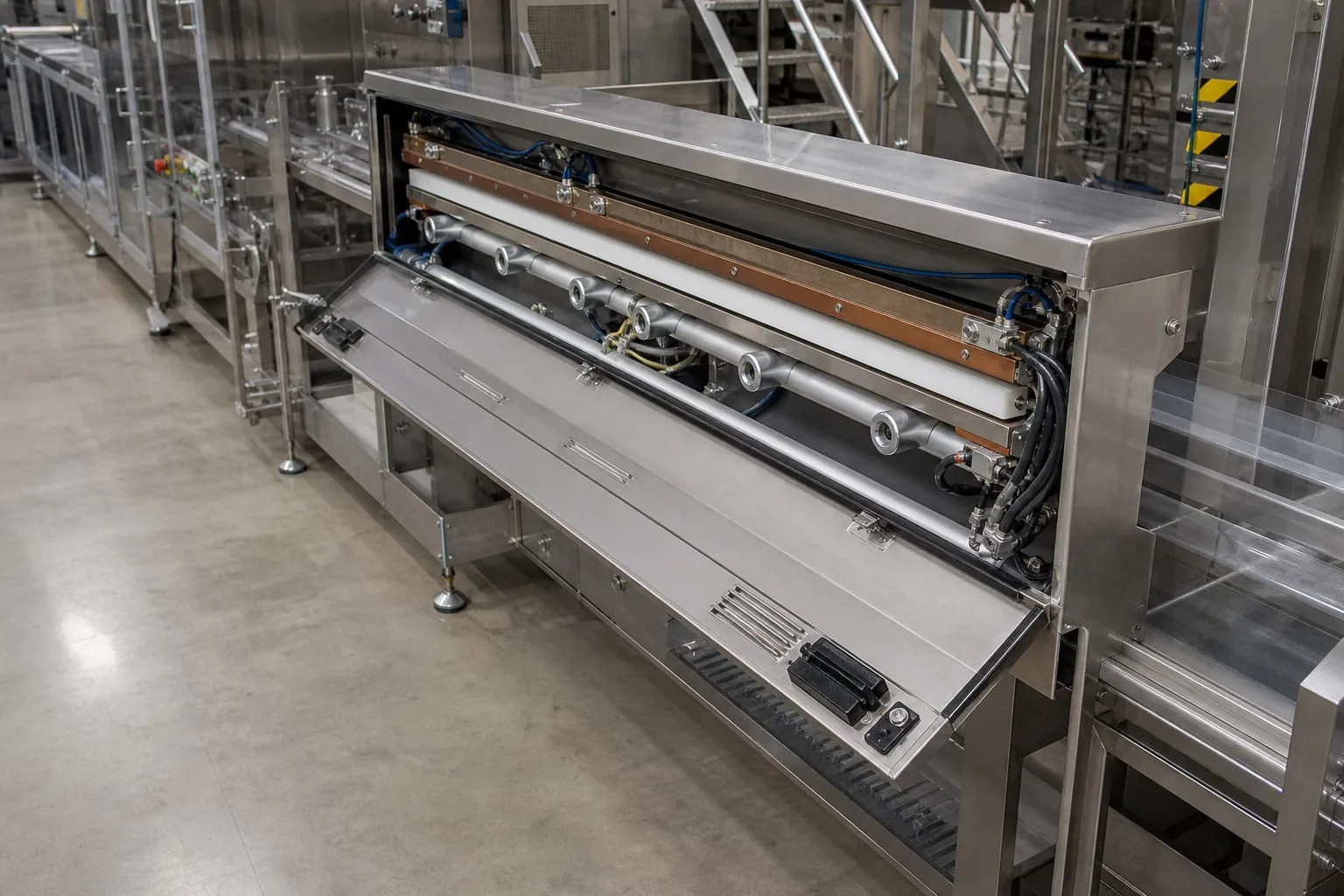
A heavy duty heat sealer is not a universal component specification. The phrase can describe a larger sealing station, a longer seal, or equipment expected to work through a demanding production routine. The replacement part still has to match the actual assembly.
This guide is for UK packaging engineers, maintenance technicians, production managers and procurement teams. It focuses on identifying component requirements, checking compatibility and collecting useful maintenance evidence. Heat Seal Components supplies component-level products, including heat-seal elements, wires, endless bands, custom heating elements, PTFE coating and heat-seal tape, sealing jaws and bars. It does not supply complete sealing machines.
What Makes a Heat Sealer Heavy Duty?
Look at the sealing station
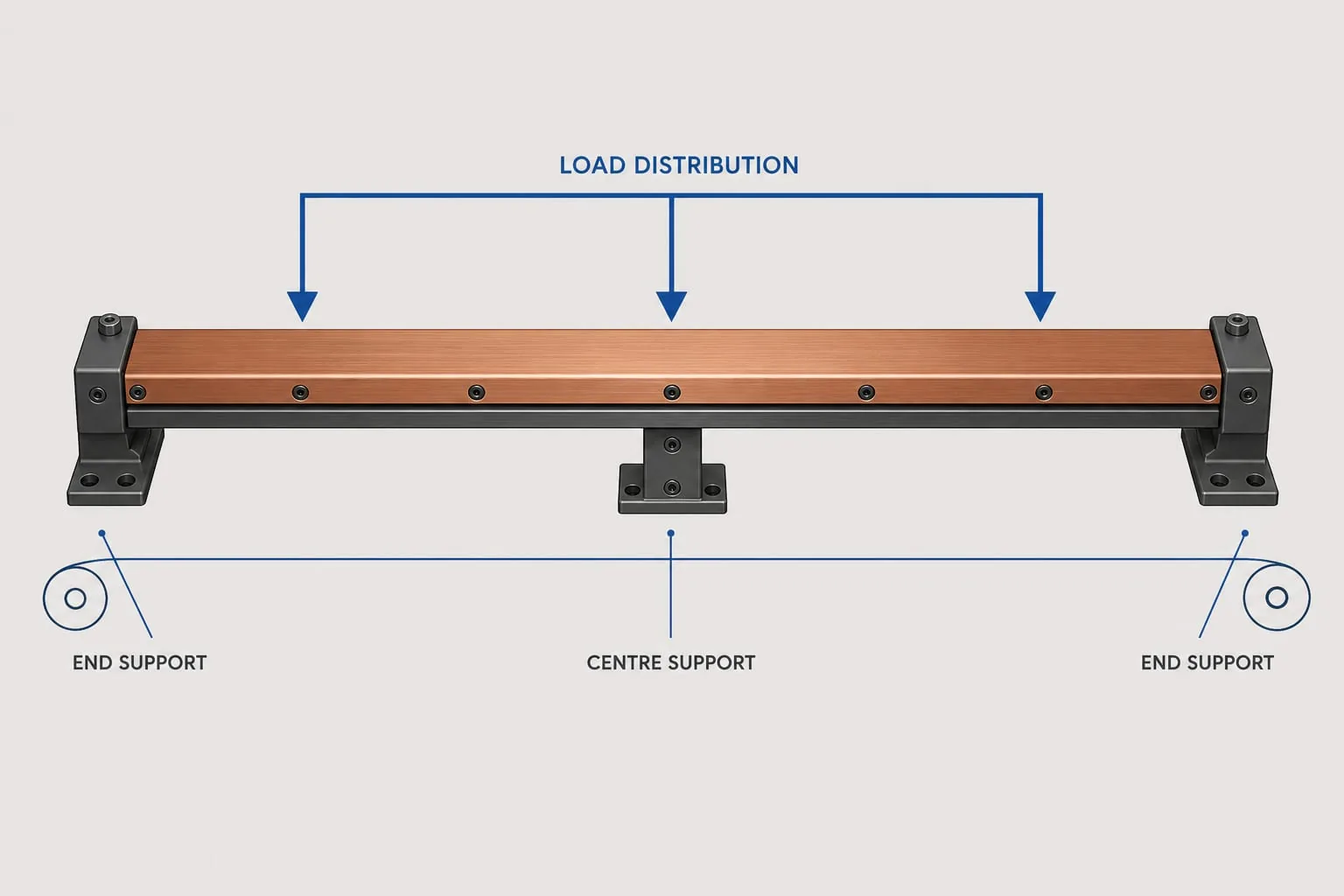
Start with the sealing zone rather than the search label. Record how the material is presented, where the heated component sits, how pressure is applied and how the part is fixed. A larger station may spread the load across a longer bar or use a different support arrangement, but the machine documentation and the installed component remain the evidence.
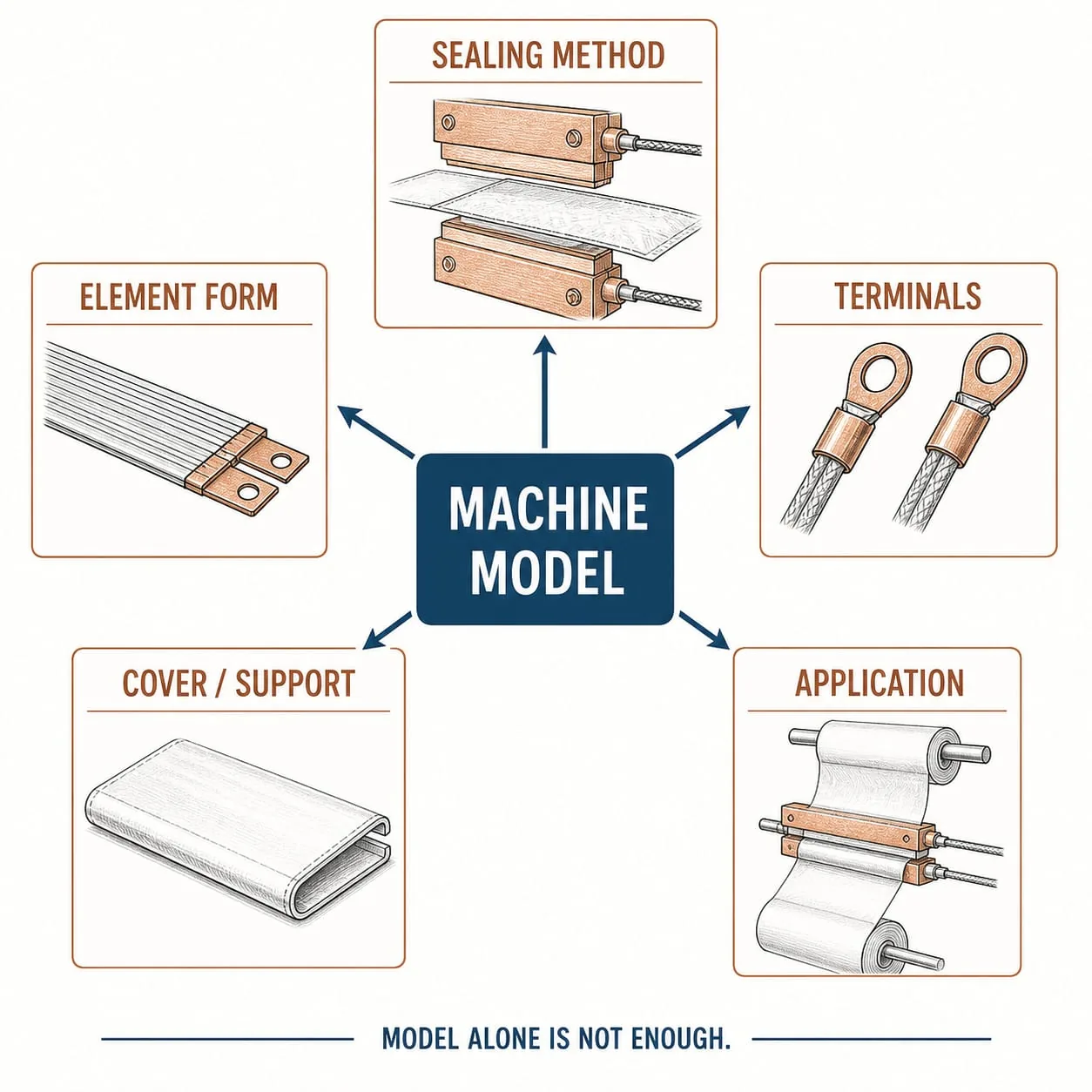
Useful details to record include the sealing method, seal length, element or band form, PTFE cover or tape arrangement, jaw or bar support, and terminal or fixing layout. Heat Seal Components’ heat-seal elements service is a useful route for checking the component family before you request a quotation.
Which Components Need Checking?
Heating elements, wires and bands
Heating elements, round wires, flat ribbons, formed elements and endless bands are not interchangeable just because they are all used for heat sealing. Their profiles, fixing details, tension or terminal arrangements can differ. The correct family depends on the sealing assembly and the application.
For made-to-order requirements, review the custom heating elements service and compare the supplied information with the old part, drawing or machine documentation. Heat Seal Components also provides heat-seal bands for applications that use an endless band arrangement.
PTFE covers, tapes and jaw faces
The non-stick face and the supporting jaw or bar are part of the sealing condition. A worn cover, loose tape edge, contaminated face or damaged support can change contact across the seal. Inspect these parts with the element rather than treating a heating fault as an isolated component problem.
The sealing jaws and bars service and PTFE heat-seal tape service describe relevant component-level routes. Do not substitute raw PTFE or assume that a tape width is suitable without checking the actual cover and support arrangement.
How to Check Compatibility Before Ordering
Record the machine and application
Create a short record before removing or ordering the part. Include:
-
Machine manufacturer, model and serial or reference number, if available.
-
Sealing method and jaw or bar location.
-
Application type, such as impulse, vacuum pack, VFFS or flow-wrap.
-
Film or pack material and seal orientation.
-
Clear photographs of the installed sealing zone and the removed component.
-
Any drawing, part number, service note or previous supplier record.
Measure the part and its fixing details
Use millimetres for physical measurements and keep the measurement points clear. Record the overall length, active heated length, width, thickness or profile, terminal type and position, mounting centres, holes or slots, and the PTFE cover or tape arrangement.
Do not rely on one length or on the machine name alone. The Kanthal resistance-heating handbook explains why resistance-heating selection depends on material and cross-sectional details as well as length. Use documented electrical information where it exists, but do not guess a specification from a photograph.
Do not rely on the machine name alone
The Fuji Impulse element guidance is a useful example of model-specific compatibility: its replacement elements are presented for particular equipment and some variants are not compatible with older models. Treat the exact model, sealing method and part arrangement as one check. A familiar machine name is not proof that a generic replacement will fit.
Maintenance and Fault Evidence for Heavy-Duty Sealing Stations
Start with safe isolation
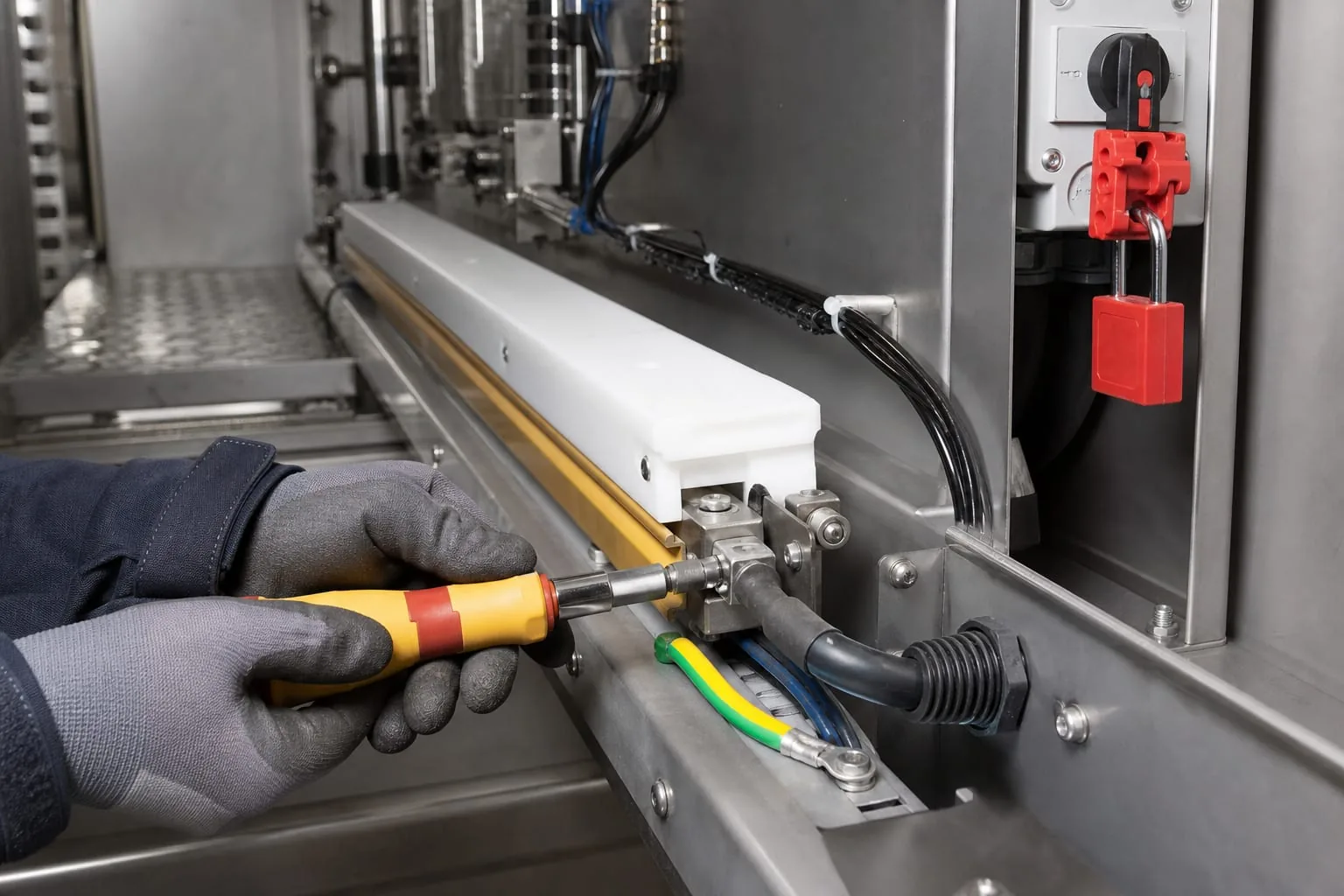
Plan maintenance around the machine manufacturer’s instructions and your site’s safe system of work. HSE maintenance guidance calls for equipment to be powered down and isolated before work, with stored energy controlled and hot parts allowed to cool. Use a lock-off procedure and competent people for the task.
The HSE PUWER overview also highlights suitable equipment, safe maintenance, isolation and training. Follow the relevant risk assessment and site controls. This article is practical guidance, not a substitute for those controls.
Record the failure pattern
Inspect the PTFE cover for wear, contamination, loose edges or exposed heating material. Check the element for a break, flattening, offset or a change in its seated profile. Check terminals and insulators for heat damage, looseness or signs of arcing.
Also inspect the jaw or support for film pickup and damage, and look for uneven contact across the sealing length. An uneven, weak, scorched or incomplete seal is evidence to investigate, not proof that the element is the only fault. Record the symptom, material, relevant documented settings and what changed before the fault appeared.
A Practical Specification to Send for a Quote
Include these details
A useful component enquiry normally includes:
-
Machine make, model and serial or reference number.
-
Application type: impulse, vacuum pack, VFFS or flow-wrap.
-
Element, wire, band, jaw, bar, cover or tape type, if known.
-
Overall and active heated length, plus width, thickness or profile.
-
Terminal, insulation and fixing details.
-
Photographs of the installed sealing zone and removed component.
-
The observed fault and any change that happened before failure.
-
Known electrical details from the machine documentation, without guessed values.
Send a useful component enquiry
If you need a replacement component for a heavy duty heat sealer, send the machine model, clear photographs and measured dimensions. Contact Heat Seal Components with the sealing-zone details so the requirement can be reviewed before a quotation is prepared.