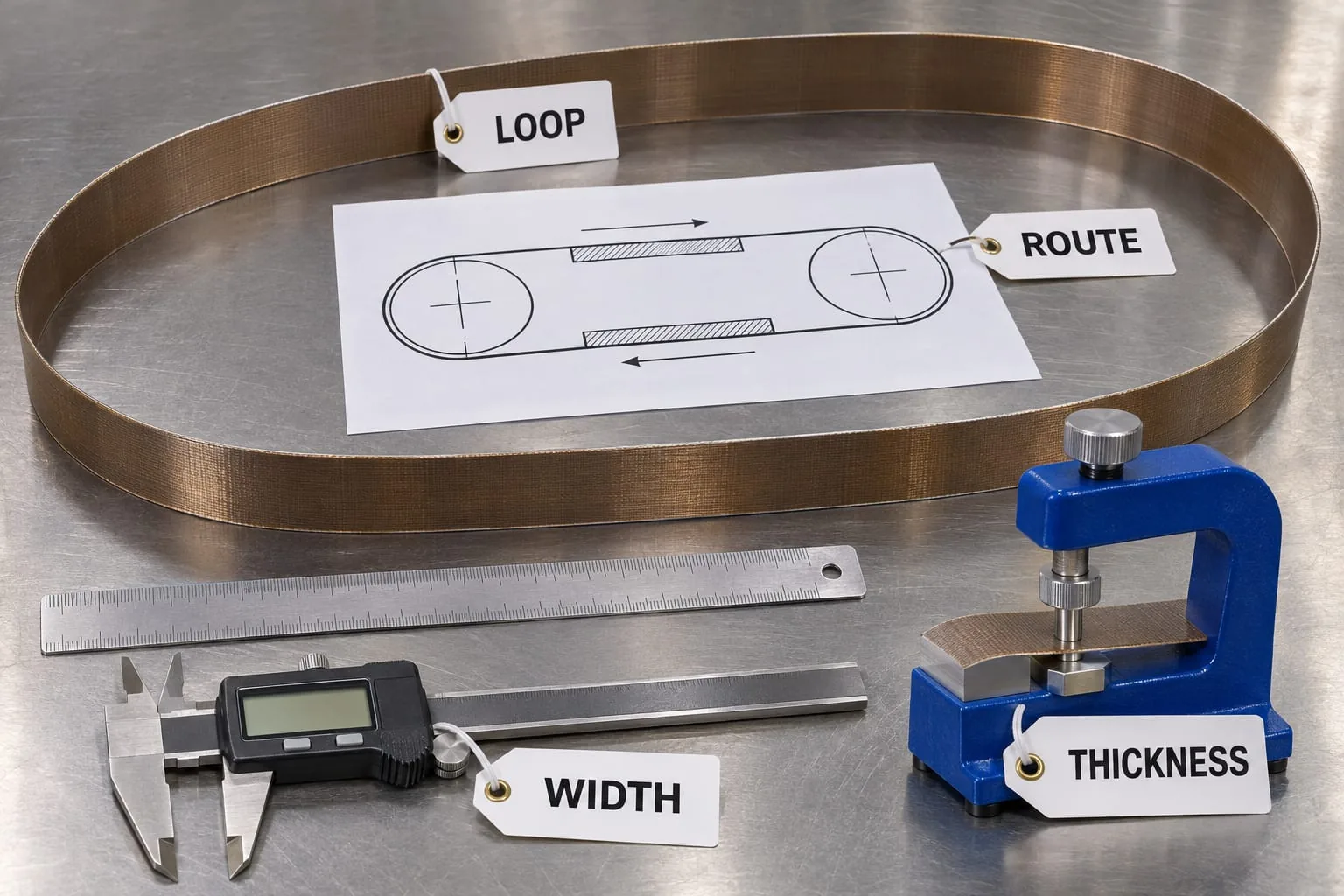
An endless heat-seal band is not selected safely by searching for the machine name and choosing the first matching belt. The replacement has to fit the loop, follow the installed route, work with the sealing interface and suit the way the line is operated.
The quickest way to reduce uncertainty is to collect evidence before the old band is removed. Record the machine layout, measure the existing loop where it is safe to do so, photograph the joint and guides, and describe the surface and failure pattern. That gives a component supplier something testable to review.
What an endless heat-seal band does in the sealing path
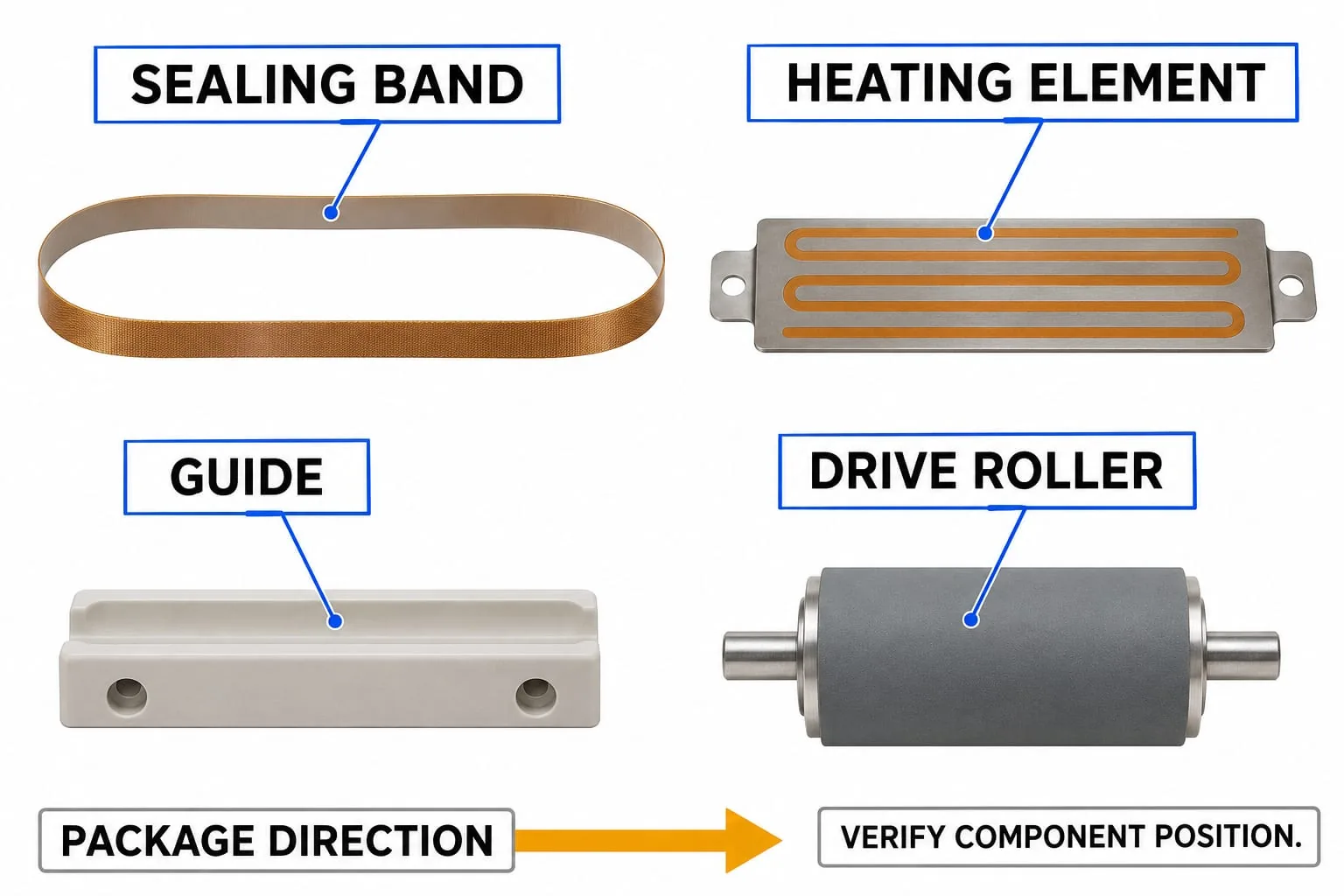
Separate the sealing band from nearby parts
In a continuous band sealer, an endless band travels around a loop and carries or supports the pack through a heated sealing zone. A separate heating element may provide the heat, while guides, rollers, pressure parts or a drive arrangement control the route and motion. The exact arrangement varies by machine, so the band should be identified by its position and function rather than by a search phrase alone.
Heat Seal Components supplies endless heat-seal bands and related compatibility guidance. If the part is actually a fixed sealing jaw or bar or a different heat-seal element, the evidence and replacement route will be different. Do not describe a drive belt, guide strip or heating element as an endless heat-seal band just because it sits near the seal.
Confirm the machine layout before ordering
Record whether the sealing path is horizontal, vertical or another orientation. Note the direction of travel, the number and position of rollers, the guide faces, the tension or adjustment points and any clearance around the heated section. A machine model is useful context, but it does not prove that an unverified band length or width will fit a modified or variant assembly.
An industry example from a UK band manufacturer explains that an existing band sample, OEM part number and machine model can help confirm the required size and specification. Use that as a practical evidence principle, not as a universal specification for every machine. If the line uses an unusual route, photograph the full path as well as the sealing zone.
Measure the band you are replacing
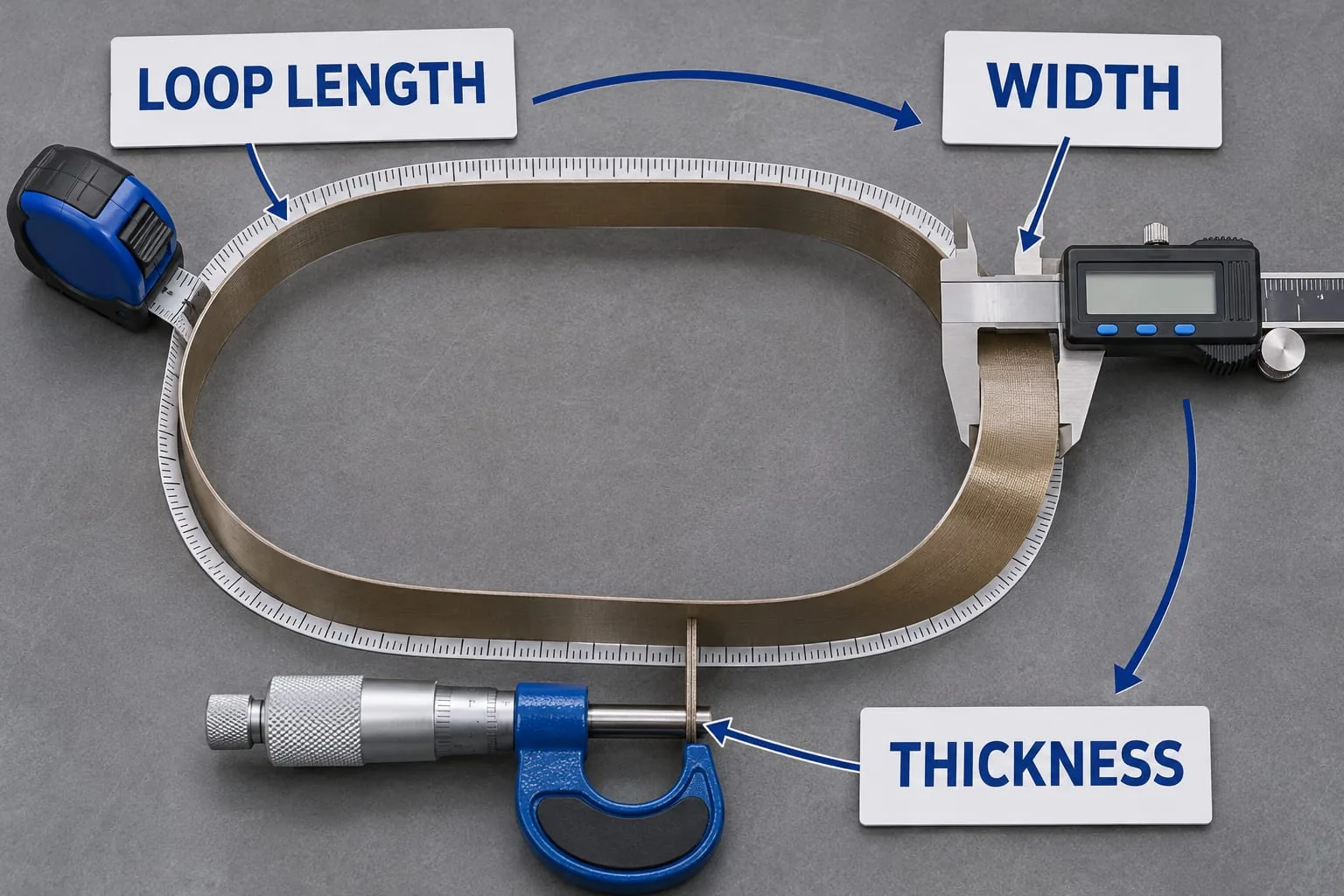
Record the loop, width and thickness
Measure in millimetres and identify how each measurement was taken. A useful request normally includes:
- endless loop length, or the measured route and the method used to derive it
- band width across the sealing surface, not the width of a nearby guide
- thickness measured without compressing or stretching the band
- joint, weld or overlap details, if the band has a joined section
- the position of holes, slots, profiles or other features that affect fit
Do not fill a missing dimension with a catalogue guess. State whether a value was measured directly, read from a drawing, taken from an old order or estimated. If the band is still installed, take photographs with a ruler or another clear datum in the frame, then follow the site’s isolation and cooling procedure before accessing the sealing route.
Photograph the evidence that changes the answer
Take a clear image of the full loop or route, then closer images of the outer surface, inner surface, edges and joined section. Include the guide faces, rollers, supports, tension adjustment and any nearby heating element that could explain rubbing, distortion or heat exposure. A close-up of a worn edge without its orientation is much less useful than a wider image showing where that edge ran.
Record the machine manufacturer and model, asset reference where available, sealing direction, package material and known operating conditions. Do not invent a temperature or speed if the machine display, manual or production record has not been checked.
Match construction to the application
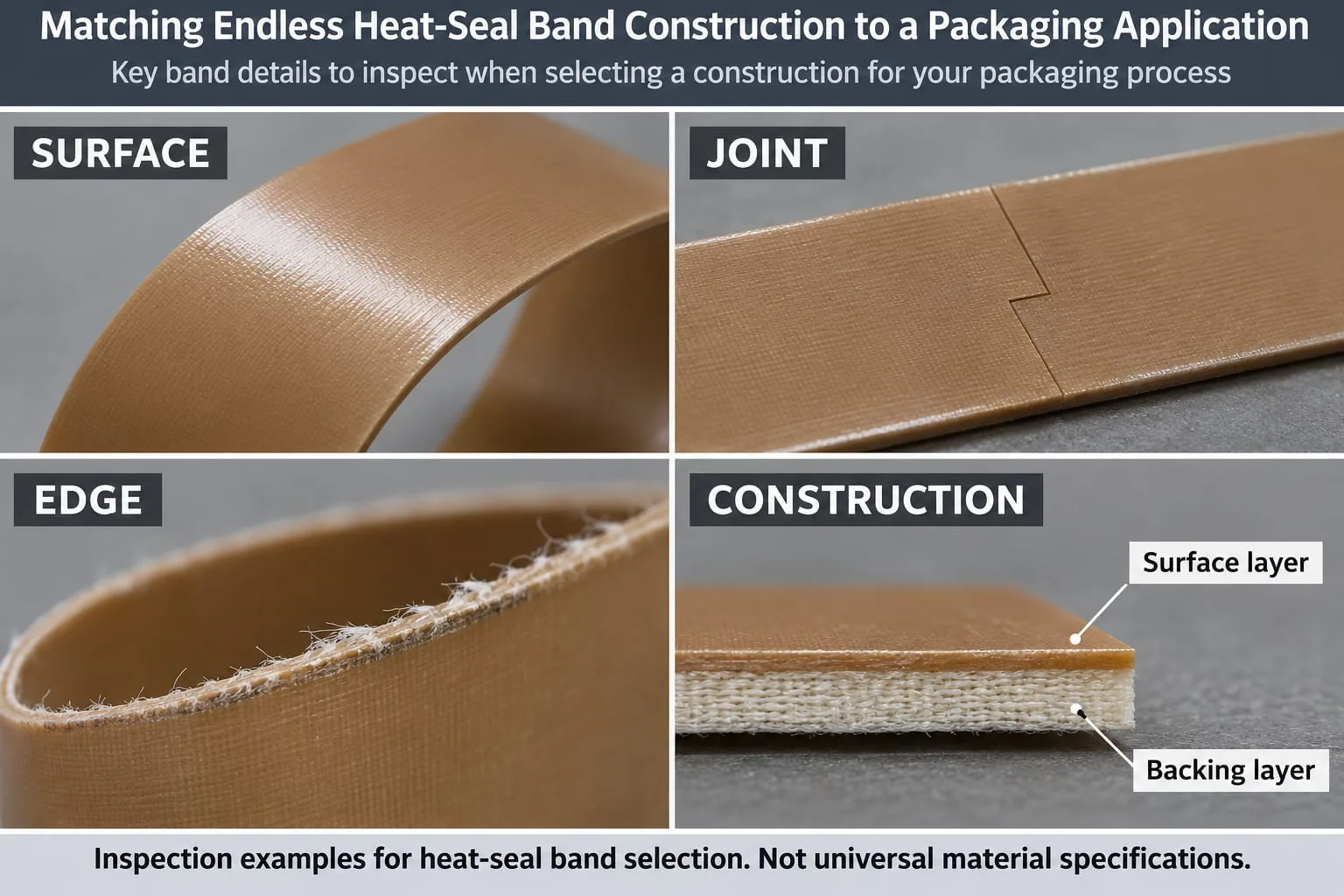
Consider coating and release requirements
The surface that contacts or passes beside the packaging material may need a particular release behaviour, coating route or resistance to the working environment. Heat Seal Components offers PTFE coating and PTFE heat-seal tape, but a coating word alone is not a complete band specification. Confirm the base construction, profile, dimensions, surface condition and machine route together.
For food packaging, GOV.UK says packaging used for food must be suitable for food use and that wrapping material should be stored properly. A replacement band is one part of the sealing interface; it does not replace the site’s packaging suitability, hygiene or food-safety controls.
Treat the joint as part of the component
The joined section should be inspected as carefully as the straight run. An industry technical guide describes stepped or offset joints as a way of keeping the joint area close to the rest of the band thickness. That is an example of why joint construction matters, not a prescription for a particular laminate or thickness.
Ask for the joint or weld detail to be reviewed with the loop dimensions and route. A raised, cracked, frayed or contaminated joint may point to the wrong construction, excessive tension, a damaged guide or another machine condition. Do not assume that replacing the band alone will correct the cause.
Check compatibility at the machine interface
Use the machine model as context, not the whole specification
Include the manufacturer, model and any part number in the enquiry, but send the measured band evidence with it. Variants, retrofits and previous changes can make two machines with similar names use different routes, supports or clearances. The complete assembly matters more than a marketplace listing or an unverified catalogue dimension.
If the band is part of a vacuum packing station rather than a continuous band route, compare the request with the vacuum pack sealing elements service. If the shape is not standard, custom heat-seal element support may be relevant after the component evidence has been reviewed.
Separate fit from process performance
A band can be the correct length and still be affected by tracking, tension, guides, roller condition, pressure, film position or control settings. Conversely, a poor-looking seal does not identify the band as the root cause without checking the full path. Treat the compatibility review, the safe installation check and the site’s approved seal-quality test as separate records.
HSE guidance on work equipment places duties around suitability, guarding, isolation, maintenance and competent use. HSE inspection guidance also says the need and interval for inspection should be based on risk, deterioration, manufacturer information and the conditions of use. Those equipment-management duties sit with the responsible site team, not with a component description alone.
Plan replacement and maintenance safely
Inspect the route before fitting
Maintenance should be planned and carried out by people with the information, instruction and competence needed for the work. The HSE maintenance guidance highlights the risks of unexpected start-up, stored energy and contact with machinery during poorly planned work. Isolate the relevant energy sources, release stored energy and allow hot parts to cool before accessing the band path.
Before fitting a new band, check the guides, rollers, supports, tension arrangement, guards and nearby heating surfaces. Look for scoring, edge wear, residue, distortion, tracking marks and damage that may have contributed to the failure. Keep the machine’s safety devices in place and do not bypass a guard to make the part easier to inspect.
Record the old settings and new part
Keep the old band’s measurements, photographs, failure description and adjustment references with the new component record. After fitting, record what was checked and which production or quality test remains the responsibility of the site. A supplier can help identify a compatible component, but that does not certify the complete packaging process or guarantee a result on every product.
Send a complete quote request
A useful enquiry contains:
- machine manufacturer, model, asset reference and orientation
- measured loop length, width and thickness, with the measurement method
- band construction, coating requirement, profile and joint details
- route photographs showing guides, rollers, tension and the sealing zone
- package material, known operating conditions and the observed failure pattern
- any drawing, old order, part number or previous compatibility reference
Send those details through the Heat Seal Services route or contact Heat Seal Components for a compatibility review. Clear evidence helps engineering, maintenance and procurement teams decide whether the requirement is an endless heat-seal band or another sealing component, and reduces the risk of ordering from an assumed machine match.