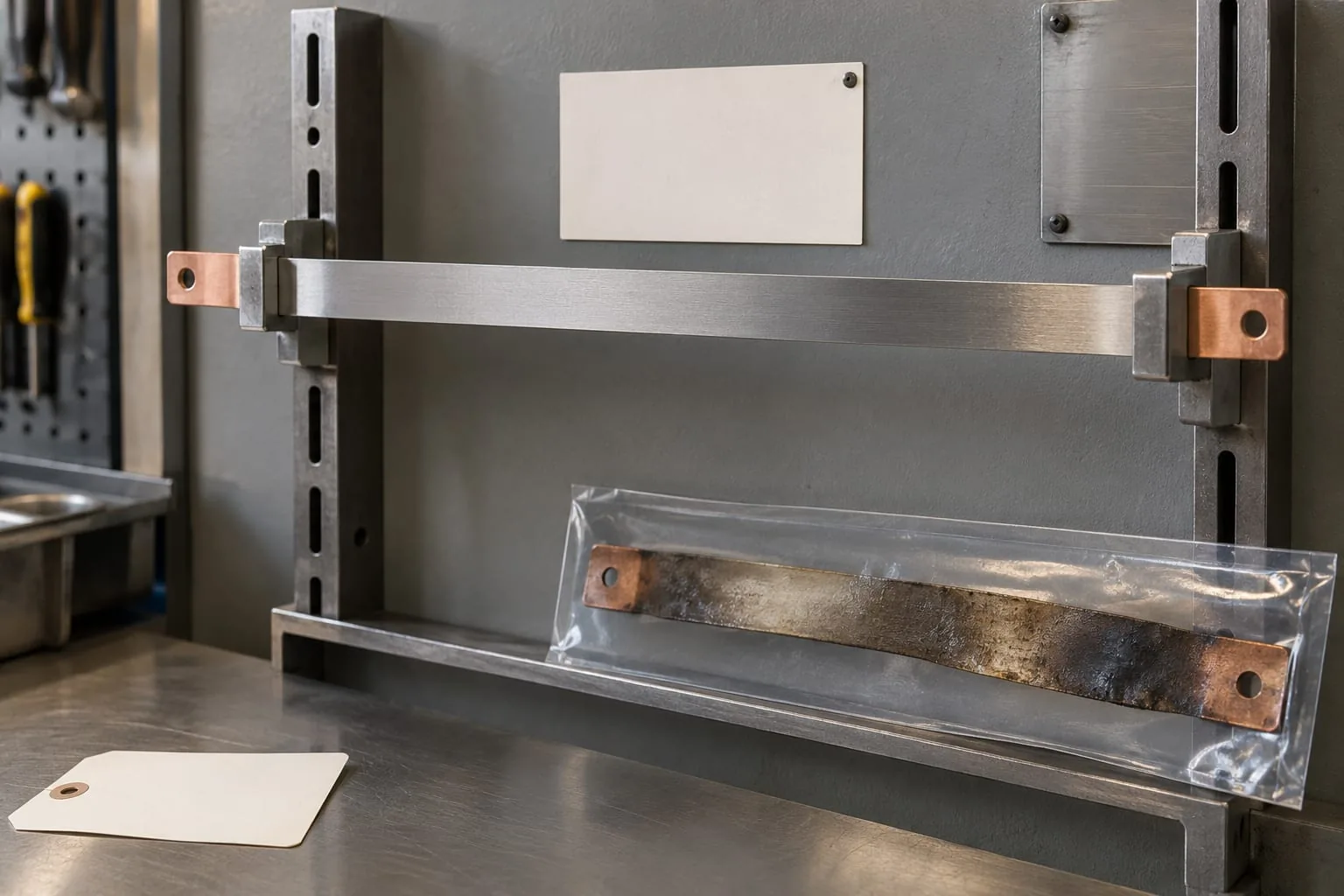
Replacing a heat-seal element is a compatibility job. The correct part is not chosen from the machine name alone. The element profile, heated length, overall fit, connection points and the way the assembly is tensioned all matter.
This guide sets out the information to record before asking for a replacement. It is written for engineers, maintenance technicians, production managers and procurement teams who need a clear request that can be checked before manufacture.
Start with the machine and sealing method
Begin with the machine make and model, but do not stop there. Record whether the sealing action is impulse, continuous, rotary, vacuum-packer, VFFS or flow-wrap equipment. The application helps identify the sealing method and the type of element that the machine can accept.
If the old element is available, keep it with the request. Heat Seal Components’ heat seal elements service says that specifications, an old element, a drawing, a sketch or the machine make and model can support a replacement review. A clear photograph of the fitted part and both ends can also help, provided the important features are visible.
Use the machine documentation as a check
Use the machine maker’s parts list or maintenance instructions where they are available. Treat a catalogue reference as a starting point, then check that the supplied part matches the physical assembly in front of you. A previous order may have been altered, or the fitted element may already be the wrong size.
Isolate, lock off and allow the part to cool
Follow the machine maker’s instructions and your site’s safe system of work. The Health and Safety Executive says maintenance should be carried out by competent people, with power isolated and locked off where unexpected reconnection is possible. Stored energy must be released and hot components allowed to cool before work begins. Read the HSE’s maintenance guidance before removing or measuring a heated part.
Record the information before ordering
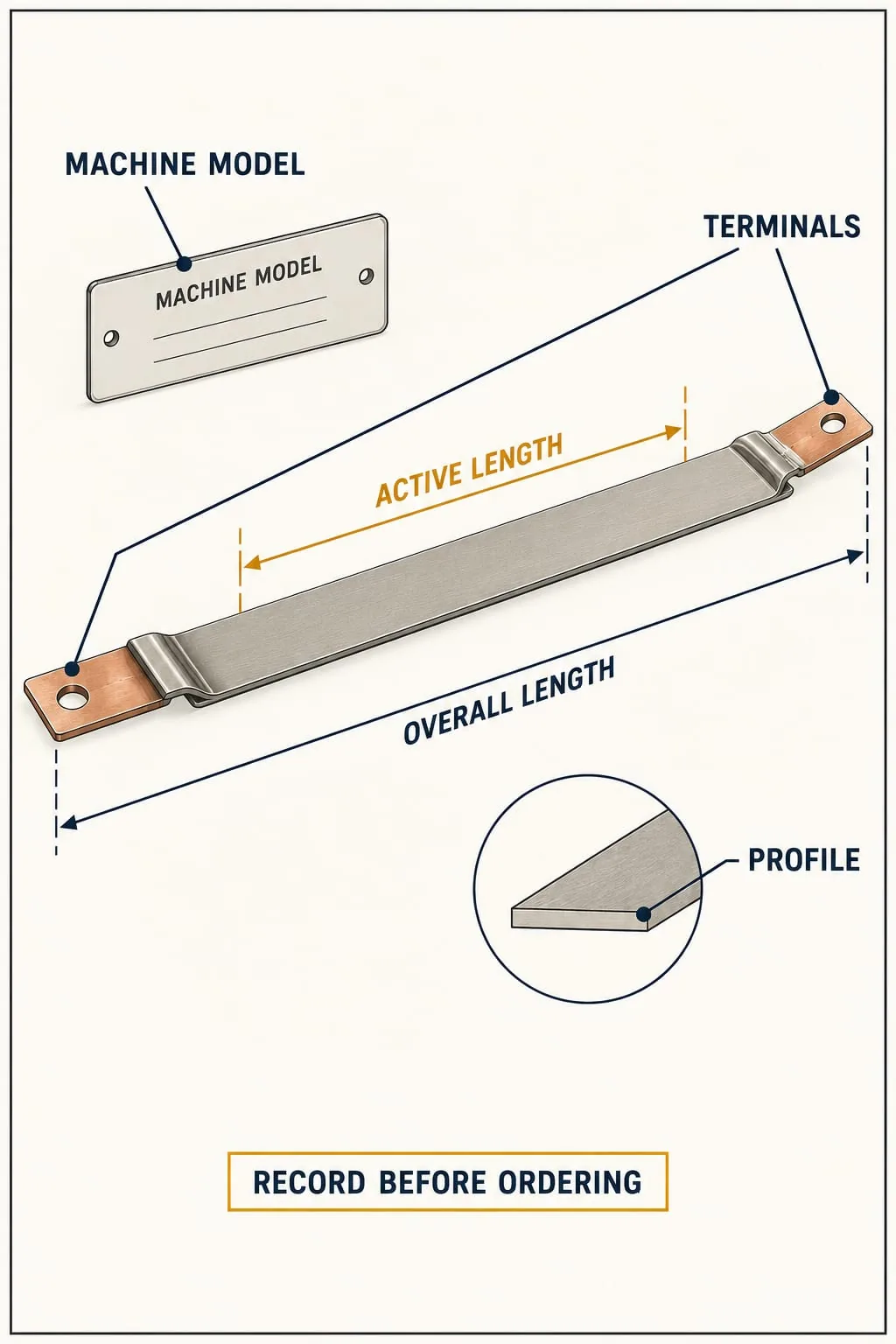 The strongest request gives the supplier enough evidence to check the part without guessing. Record the following information in one place:
- Machine make, model and the sealing station or jaw position.
- Sealing method and application, such as impulse, vacuum packing, VFFS or flow-wrap.
- Element form: flat ribbon, round wire or a custom profile.
- Active heated length, overall length and the relevant terminal or fixing centres.
- Ribbon width and thickness, or wire diameter, measured from the original where possible.
- Terminal style, terminal material if known, connection route and mounting or tensioning arrangement.
- The condition of the old element, including visible breaks, burn marks, distortion or contamination.
- A clear photograph of the fitted path, the removed part and both terminals.
Separate active length from overall length
Active length is the part that performs the sealing work. Overall length includes the ends, terminal tabs or any part that sits in the mounting arrangement. Do not replace one with the other in a purchase request.
Use a drawing or a simple marked-up photograph to show where each measurement begins and ends. If the element is damaged, record the matching dimensions from the machine assembly as well as the old part. Do not force a broken element straight or stretch it before measuring.
Describe the terminals and mounting route
The ends are part of the specification. Record the terminal shape, hole or fixing arrangement, connection direction and how the element is held under tension. The same heated length can be unsuitable if the terminals or mounting route do not match the machine.
Match the element type to the sealing method
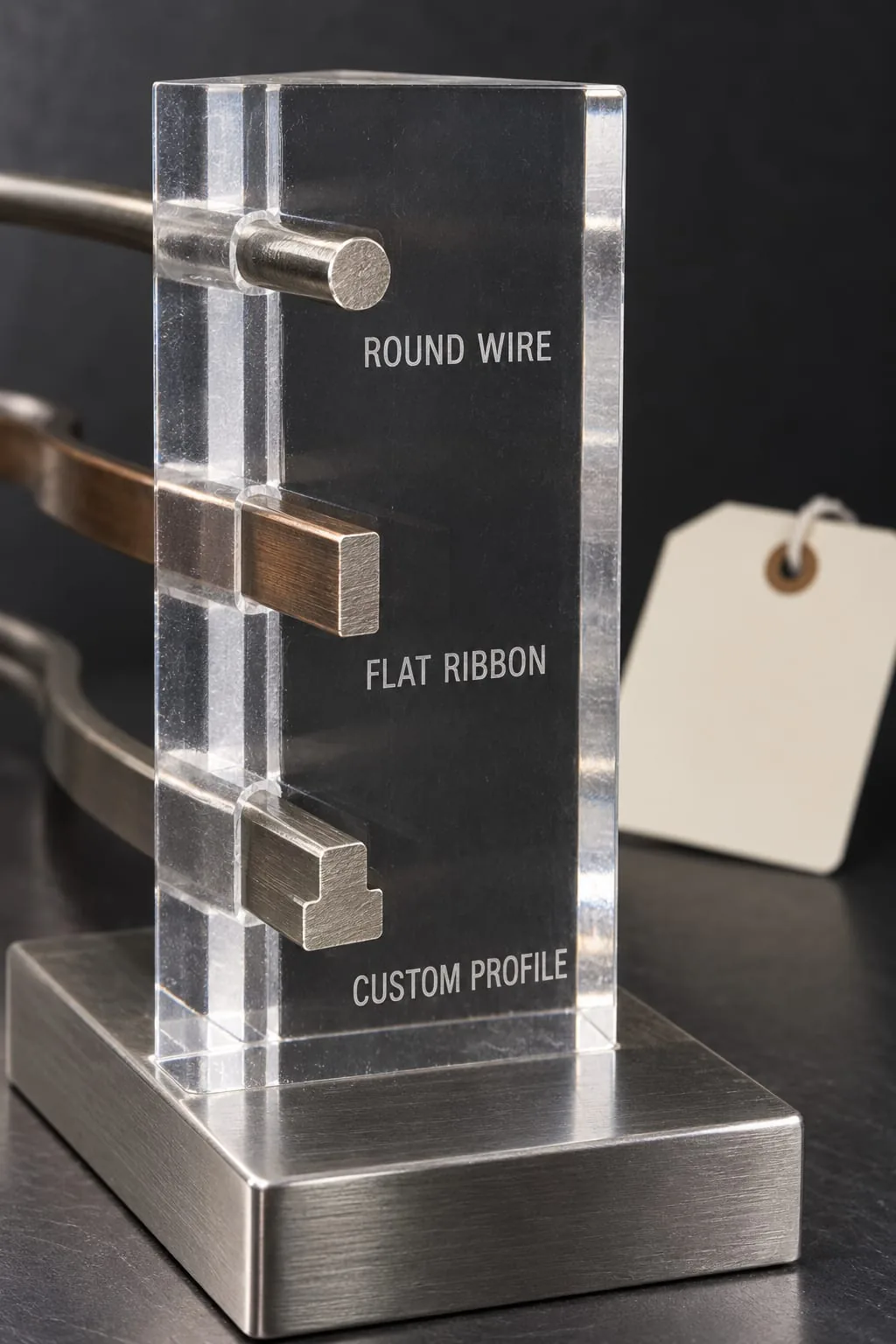 Flat ribbon, round wire and custom-profile elements should not be treated as interchangeable. Heat Seal Components describes flat nichrome ribbon for impulse sealing, round-section wire for continuous and rotary sealers, and custom-profile elements for specialist applications. The custom impulse heat-seal element service is the relevant route when a standard flat shape does not describe the fitted part.
Flat ribbon elements
Describe the ribbon’s profile, width, thickness, active length and terminal arrangement. A small change in profile can alter the way the element sits against the film and support layers. Do not copy a width from a similar-looking machine without checking the original part or the machine documentation.
Round wire elements
Record the wire diameter, heated length, end connection and the way the wire is tensioned. Round wire is used in different sealing arrangements from flat ribbon. The heating elements service can help when the machine uses a wire or another formed heating element.
Custom profiles and sealing jaws
Some assemblies use a shaped element or a jaw and bar arrangement that needs more than a single width measurement. Record the profile, support, cover and fixing details, then include a drawing or the old component. If the element sits in a jaw or bar, the sealing jaws and bars service is a useful internal reference for the wider assembly.
Check the electrical and mechanical fit together
Heat output is not specified safely from a generic temperature or resistance figure. Heating-element design depends on interacting factors such as voltage, power, resistance, material, dimensions and heat dissipation. Kanthal’s design-calculation guidance explains those relationships for heating materials. Use it as general engineering context, not as a universal setting for a packaging machine.
The mechanical fit matters just as much. Check the element path, support, PTFE cover, tensioning and terminal clearance. For packaging machinery, the HSE highlights the need for guarding and safe systems of work around forming, filling, sealing and cutting equipment. Its packaging-machinery guidance is useful when planning the maintenance task.
Send a complete request for review
Before ordering, send the machine make and model, the measurements, the element type, terminal details, photographs and any drawing together. If the old element is available, keep it safely identified and include it when the supplier requests it. A complete request reduces back-and-forth and gives the supplier a better chance of checking compatibility before manufacture.
If you are unsure which measurements apply to your machine, contact Heat Seal Components with the old element, a drawing or clear photographs. The team can review the component requirement and advise on the information needed for a quotation.