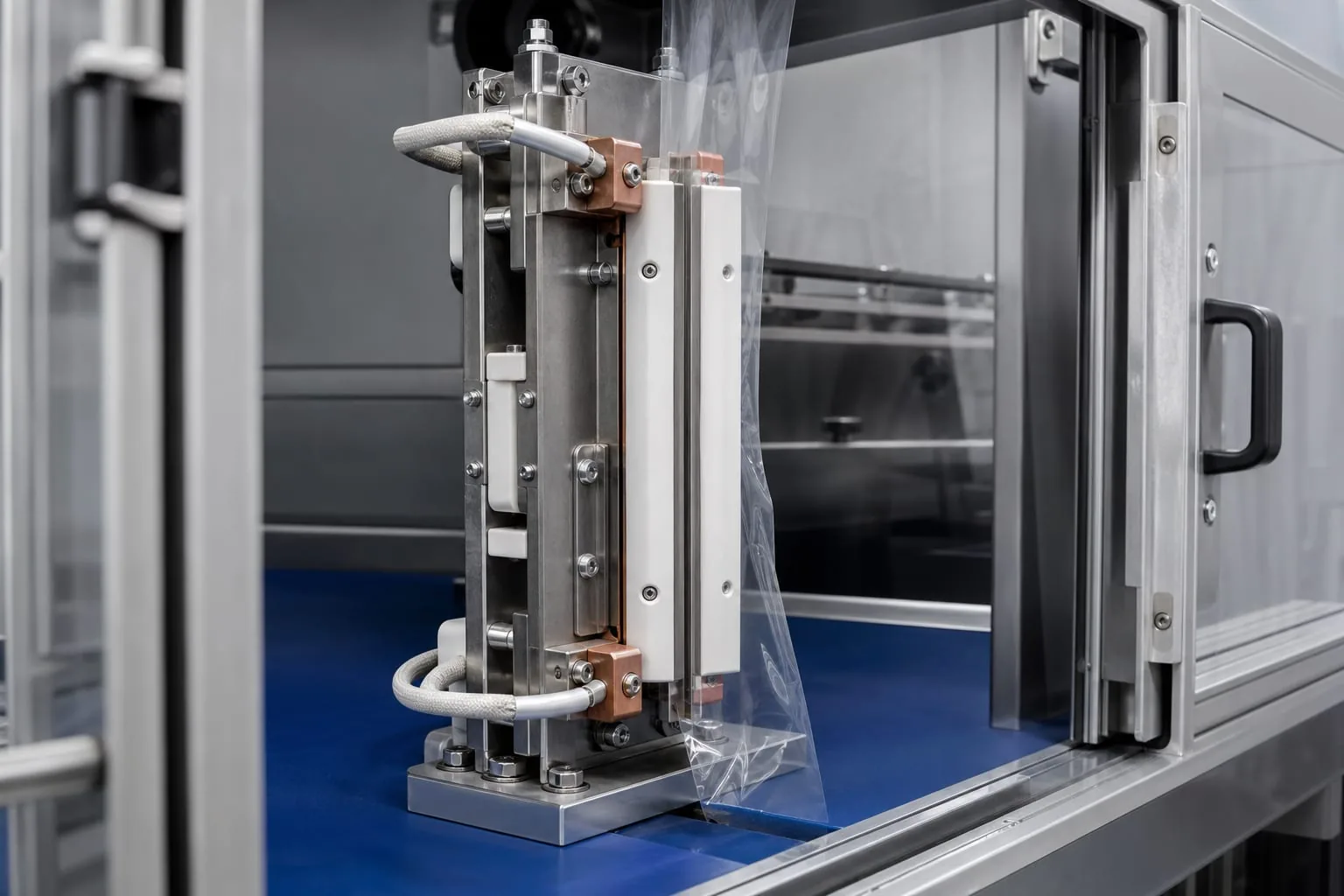
An industrial plastic sealing machine is only as dependable as the sealing interface it uses. When a production line starts producing weak, uneven or open seals, replacing a random part can add downtime without removing the cause. The useful starting point is the component record: how the machine forms the seal, which parts touch the film and what the existing assembly actually looks like.
This guide treats the machine as equipment context, not as a product supplied by Heat Seal Components. The focus is on replacement elements and wires, PTFE protection, sealing jaws and compatibility checks for engineers, technicians and procurement teams. Searches may also call the equipment an industrial plastic bag sealer machine or an automatic sealing machine for plastic bags. Those labels describe the application context, not a universal replacement specification.
Treat the machine as a component interface
Plastic-film sealing may be part of a VFFS, flow-wrap, impulse or other packaging format. The machine application determines how the sealing zone is supported, heated and closed. That is why an element that looks similar may still be wrong for the installed jaw or bar.
Start with the part that makes the seal, then work outward. Heat Seal Components supplies heat-seal elements and wires, while the surrounding jaw, support, insulation and PTFE protection need to remain compatible with the original arrangement. Avoid assuming that a machine name or a generic length is enough.
Which components deserve attention
Heating element or sealing wire
The heating element or sealing wire converts controlled electrical input into the heat applied at the seal. Its form may be round, flat, shaped or a made-to-order assembly. Resistance, length, profile and termination all affect whether it belongs in the original circuit and support arrangement. Do not infer a replacement specification from a photograph alone.
Kanthal’s technical information shows that resistance wire is available in round, flat and shaped forms and that operating life depends on factors including temperature cycling, contamination, wire diameter, surface condition, mechanical stress and regulation. That supports a record-first approach: capture the installed part and machine data before requesting a like-for-like or custom option.
For a replacement request, include the old element if available, a clear image of each end, the measured heated length and any machine documentation. Heat Seal Components’ custom impulse heat-seal elements can be considered where the installed design calls for a made-to-order part, subject to confirmation of the relevant dimensions and terminals.
PTFE protection
PTFE coating or heat-seal tape separates the heated component from the film and helps the contact surface release cleanly. It is a wear item, not a substitute for a damaged element, distorted jaw or incorrect control setting. Record whether the existing protection is a strip, coating or tape, how it is retained and where wear or film residue appears.
Use the existing machine instructions for the approved replacement method. The relevant PTFE heat-seal tape service page can help you identify the correct supply route, but the final width, length and fixing method must follow the machine and component record.
Sealing jaws and support
The jaws or bars provide the geometry and pressure that brings the film together. A new wire cannot correct a bent jaw, uneven support, damaged insulation or a terminal that is not seated. Inspect the full contact path and keep the old arrangement available for comparison until the replacement is proven.
If the part is a complete jaw or bar rather than a loose element, review the sealing jaws service information and send the machine model, seal length, terminal details and photographs of the mounting ends.
Record compatibility before ordering
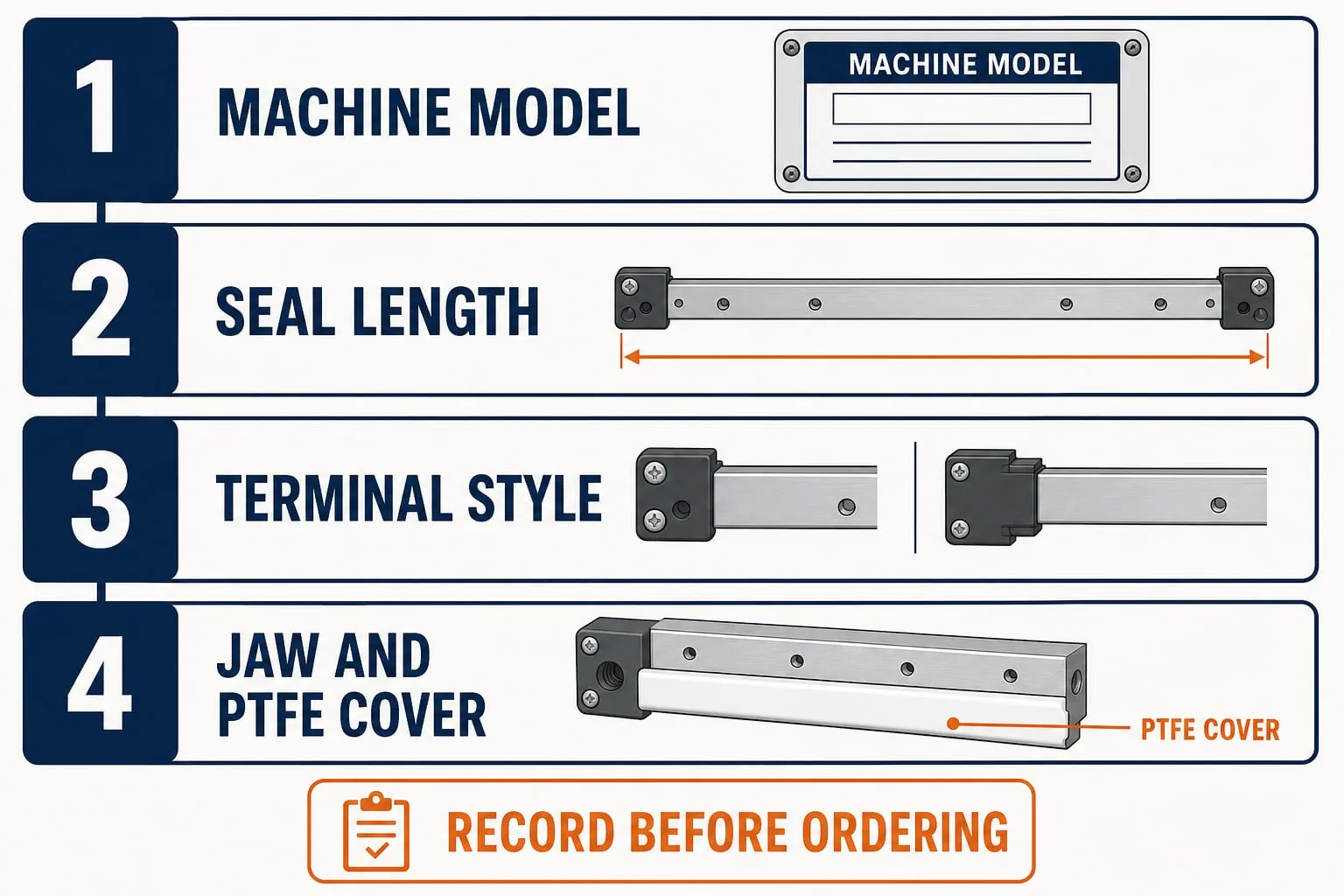 A reliable request is a record of an installed interface, not a guess based on the phrase industrial plastic sealing machine. Use the machine plate, service manual and the removed component together. Fuji Impulse’s model-specific heating element guidance is a useful reminder that a named element may be limited to listed models and may not replace an older design.
Record these details before requesting a replacement:
- Machine make and model from the plate or service record.
- Seal length and seal width, only when confirmed from the machine documentation.
- Terminal arrangement and mounting pattern.
- Jaws or bars, plus the existing PTFE cover or tape arrangement.
If the original part is unavailable, say so. Supply the machine model, application type, seal length, seal width if documented, terminal arrangement, mounting pattern, element form, PTFE arrangement and photographs. Heat Seal Components can then review the heating element service route, subject to the evidence supplied.
Maintenance checks for a repeatable seal
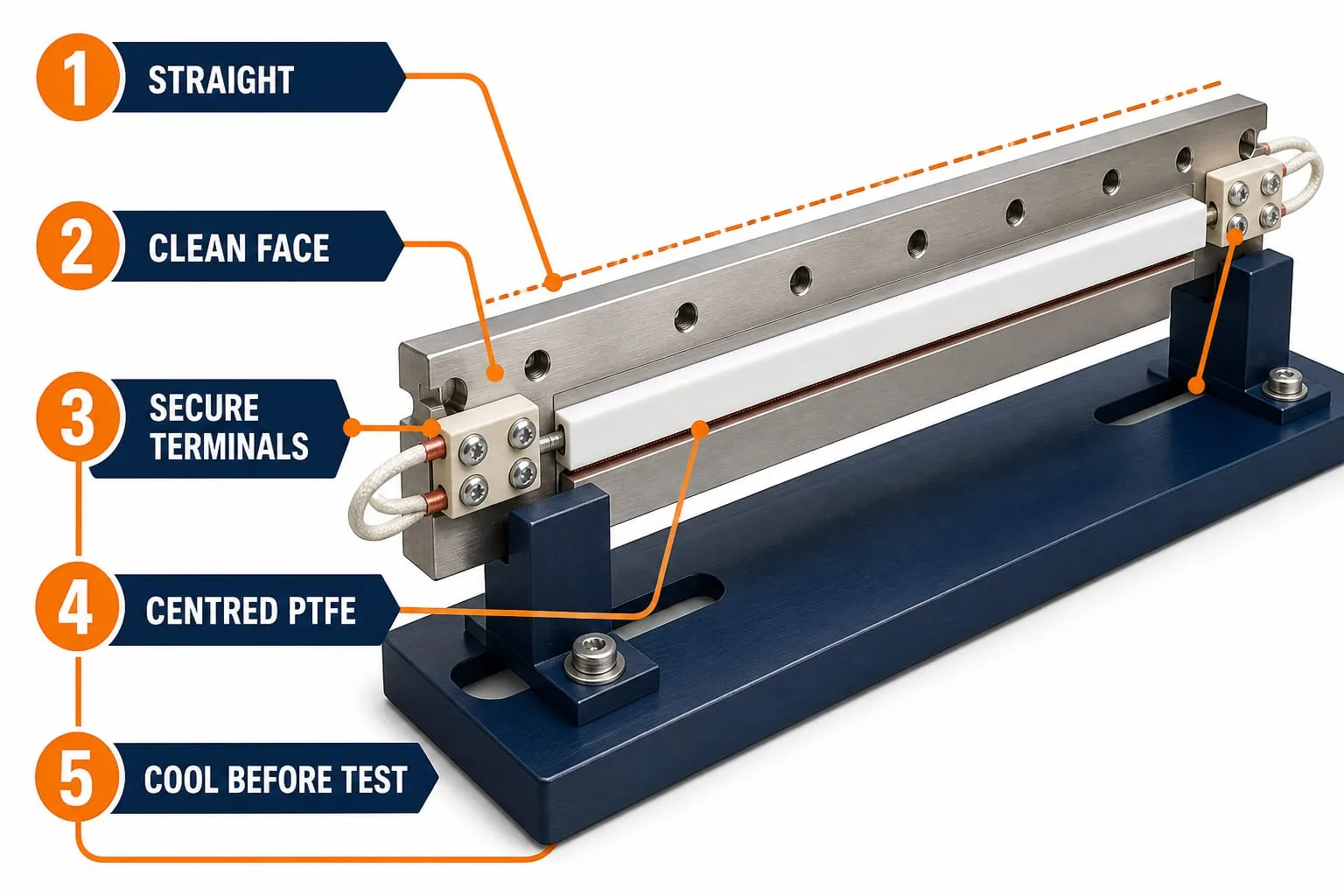 Maintenance should be planned around the actual equipment instructions and site safe system of work. HSE guidance says maintenance needs to be planned and carried out by competent people, with moving plant and energy supplies isolated and hot components allowed to cool. HSE’s maintenance guidance covers those controls. PUWER also requires work equipment to be suitable, maintained and inspected, and used by people with adequate information, instruction and training. See the PUWER overview when your site is reviewing equipment controls.
- Isolate electrical, pneumatic and other relevant energy sources under your site’s procedure, and prevent inadvertent restart.
- Allow the sealing zone to cool before touching the element, PTFE cover, jaw or support.
- Check the element path for breaks, loose terminals, distortion, contamination and uneven contact.
- Replace worn PTFE protection using the machine’s approved method, then run the documented test routine.
A failed seal still needs diagnosis after a component change. Look for a repeatable relationship between the symptom and the component: a broken element points to an electrical or mechanical check, while uneven contact can point to jaw alignment, support or PTFE condition. Do not increase temperature or dwell time as a universal fix.
Replace the component when evidence points to it
Replacement is sensible when inspection confirms a failed element, damaged terminal, worn PTFE protection or a jaw or bar that no longer holds the intended geometry. Keep the removed part and the first test sample with the maintenance record. That makes future procurement faster and helps distinguish a component fault from film, pressure, timing or control issues.
The custom element enquiry route is the right next step when a standard part does not provide enough certainty. Include the complete record rather than asking for a generic machine part.
Get the part record right
If you need a replacement heat-seal element, wire, PTFE tape, sealing jaw or related component checked against an existing packaging machine, contact Heat Seal Components with the machine model, seal details, component photographs and any available service documentation. The team can review the compatibility information before you place an order.