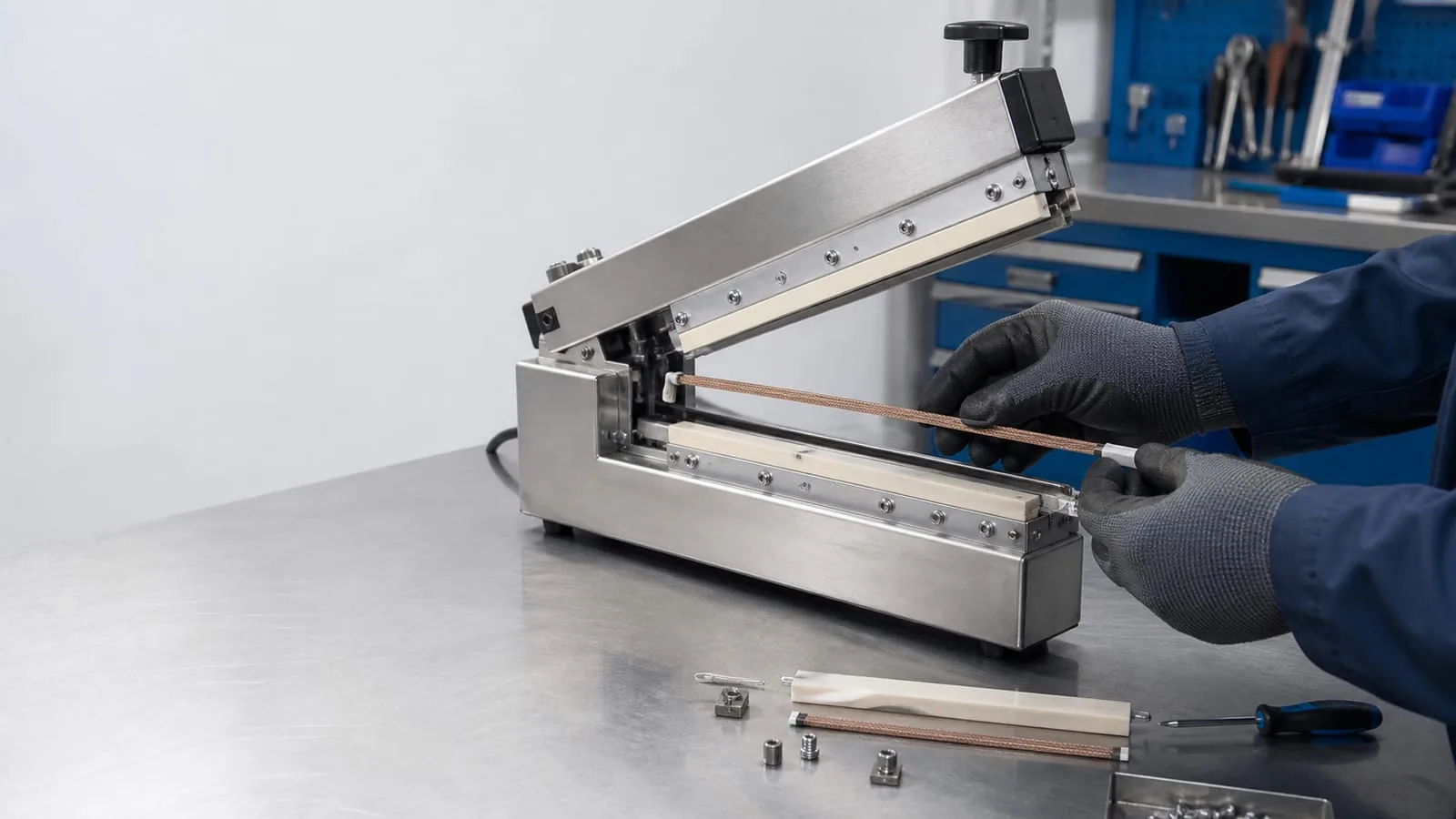
A professional heat sealer is only as dependable as the interfaces that transfer heat, pressure and cooling time into the seal. When an element, cover, jaw or terminal is replaced, the machine model is useful context, but it is not a complete specification.
This guide is for packaging engineers, maintenance technicians and purchasing teams who need to identify a replacement component without guessing. It focuses on elements, wires, PTFE covers, jaws and bars, compatibility evidence, safe inspection and the information needed for a quote. It does not recommend buying or modifying a complete machine.
Use the checks below to turn a vague request such as ‘professional sealer wire’ into a traceable component brief. Record what is fitted, how it is mounted and how the finished seal is verified before ordering a substitute.
What Makes a Professional Heat Sealer Reliable?
The sealing process is a controlled sequence
A sound seal depends on more than a hot strip. The material must meet a clean, supported sealing surface with enough pressure, heat and contact time. Cooling or release timing can also affect the finished joint. The variables interact, so changing one setting can hide a mechanical or material problem rather than solve it.
DuPont’s heat-sealing guidance identifies dwell time, temperature, pressure, sealant characteristics and the test method as connected factors. It also notes that uneven contact, hot or cold spots and material thickness variation can produce inconsistent results. Treat the element and its supporting surfaces as one working system.
Professional describes the application, not one standard part
The phrase professional heat sealer does not identify a universal element profile. A bench impulse sealer may use a straight ribbon with insulated terminations. A vacuum packer, VFFS jaw or flow-wrap jaw may use a different length, profile, support arrangement or connection. Even two machines with similar outside dimensions can require different internal parts.
Start with the component you are replacing. Heat Seal Co’s heat-seal elements and wires service covers round wire, flat ribbon, impulse and custom profiles. A useful request names the fitted part, its position and the machine application rather than relying on the marketing name of the equipment.
Match the Component to the Machine Application
Impulse bars and bench sealers
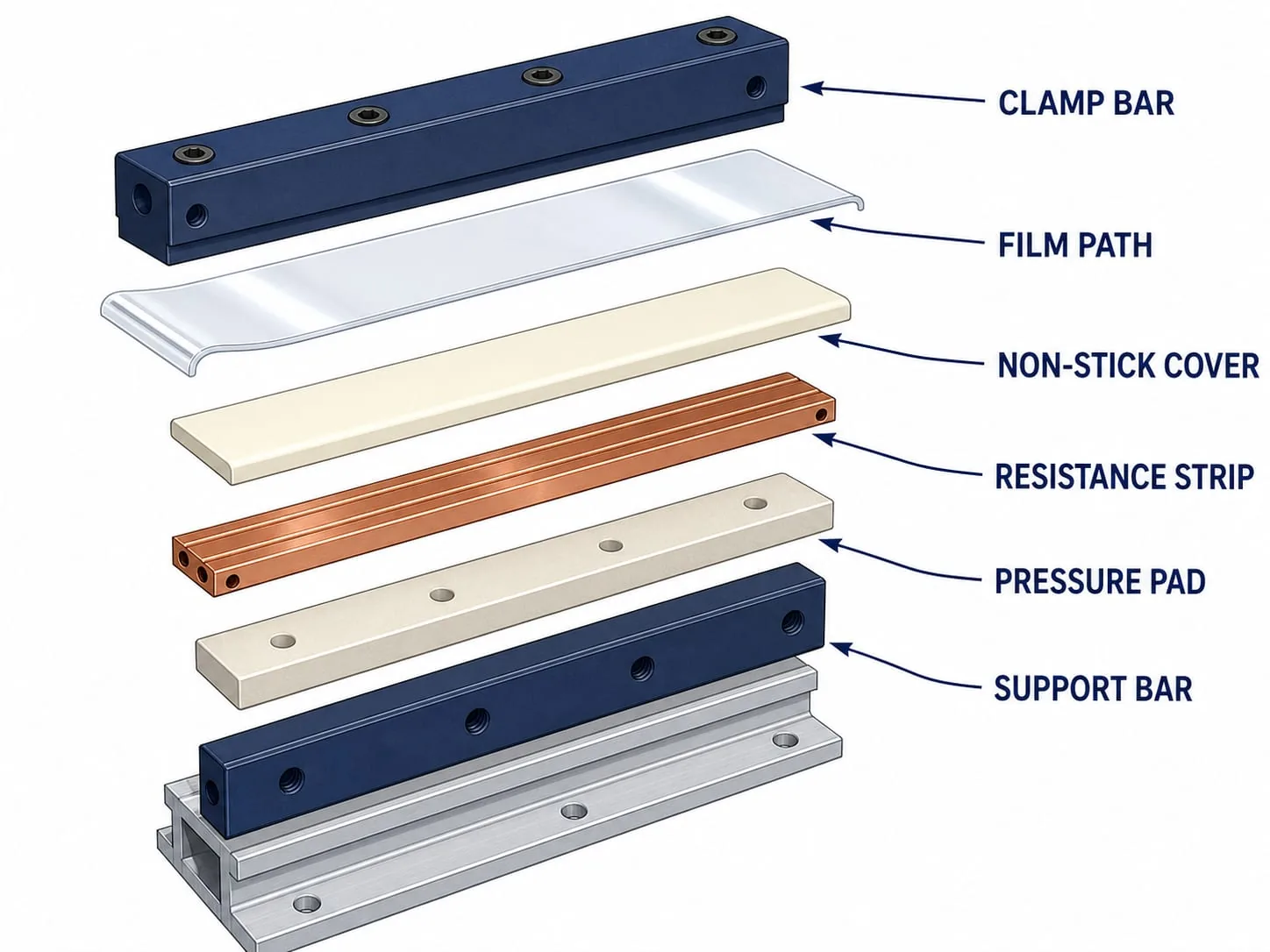
In an impulse arrangement, the resistance element is energised for a controlled part of the cycle and is separated from the film by an insulating or non-stick cover. The element must be held at the correct tension or support condition, with terminals that fit the bar and the machine’s electrical connection.
The FDA inspection guide describes an impulse bar using a taut Nichrome ribbon with an insulating PTFE-coated fibreglass layer, and highlights temperature, pressure, dwell and clean, parallel sealing surfaces as critical factors. Use that principle as a check prompt: confirm the element, cover, pressure surface and timing together.
Vacuum, VFFS and flow-wrap jaws
Jaws used in vacuum packing, vertical form-fill-seal or flow-wrap equipment can have different lengths, profiles, fixing points and surface treatments. The application determines how the film arrives, how the jaws close and how the seal is released. Do not swap a straight impulse element into another jaw simply because the visible heated length looks similar.
For a jaw or bar that needs replacement or rework, compare the original part with the options described on the sealing jaws and bars service page. For a fabricated impulse element, the custom impulse heat-seal elements service explains the kind of made-to-length, width and gauge information that helps a supplier review fit.
Record the Replacement Specification
Mechanical details to measure or photograph
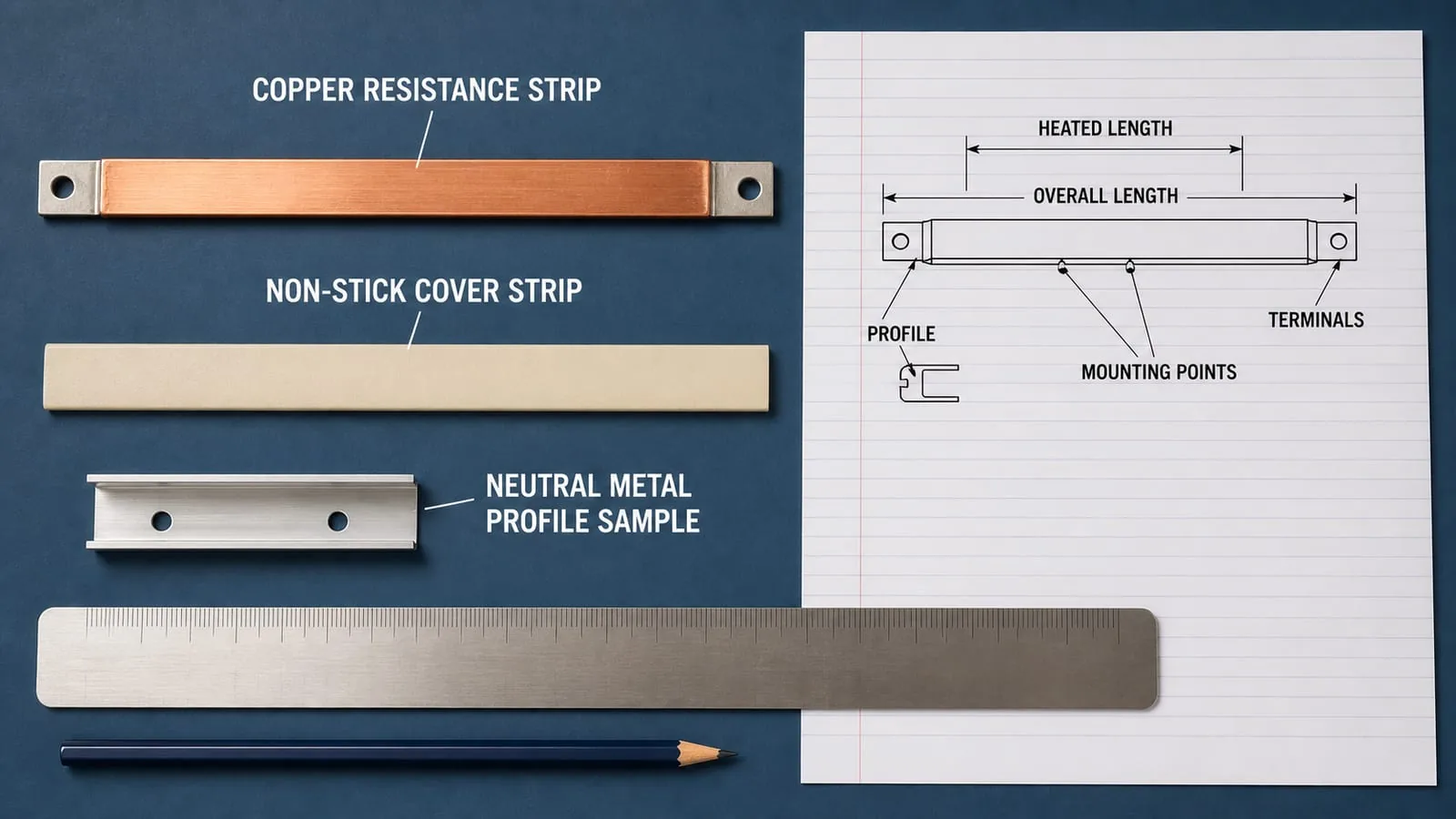
Record dimensions from the original part or a controlled drawing. Separate the overall length from the heated or active length, and identify the profile rather than describing a strip as simply ‘flat’. Note the fixing method, mounting-hole or slot positions, terminal centres, insulation, cover arrangement and orientation in the bar.
A photograph should show the whole part, both ends, the mounting face and any worn areas. Include a ruler only as supporting evidence. If the part is distorted, photograph it before attempting to straighten it, because the distortion may be part of the failure history.
Electrical and connection details
Capture the machine make and model, the component position, the controller or supply information available on the machine, and any original resistance or power data that has been verified. Record terminal style, plating, fastening method and cable or connector arrangement. Do not infer a replacement rating from appearance alone.
A thicker or wider element can change resistance, heat distribution and the load seen by the controller. The Toss jaw-force article also explains why material thickness and force, time and temperature need to be optimised through actual testing. Use the original specification, supplier review and controlled trials together.
Maintenance and Fault Checks
Isolate, lock off and allow the assembly to cool
Before opening a sealing bar or checking terminals, stop the equipment, isolate electrical and other energy supplies, lock off where required, release stored energy and allow hot parts to cool. The HSE maintenance guidance sets out these controls and stresses that maintenance should be carried out by competent people using planned procedures.
Keep hands and tools clear until the machine is safe to inspect. If a guard, interlock or electrical protection has been defeated, stop and escalate to the responsible maintenance person. A component replacement is not a reason to bypass a safety control.
Inspect the element, cover and pressure surface
Look for broken or stretched element sections, discolouration near a terminal, loose fasteners, arcing marks, contamination, a torn PTFE cover or a pressure pad that no longer presents a clean, even face. Check whether the bar closes parallel and whether the element sits in its intended channel or support.
A worn cover can expose the element to film or adhesive contamination. If the cover is damaged or no longer gives a consistent release surface, review the available PTFE heat-seal tape or coating option alongside the element. Do not use a new strip to mask a bent bar, uneven support or damaged terminal.
Verify with a controlled seal trial
After the mechanical and electrical checks, use the machine’s approved settings and a representative material. Change one variable at a time and record the result. Inspect the seal for uniformity, gaps, scorching, distortion and edge continuity. The FDA and DuPont sources both support validating the combined process rather than relying on a temperature number in isolation.
When a Custom Element or Jaw Part Is Needed
A custom part is often the practical route when the original element is obsolete, has unusual terminations, follows a shaped path or sits in a jaw that is no longer supported. The aim is to reproduce the working interfaces, not to create a visually similar part.
Send the original component if safe to remove, clear images of both ends, the machine make and model, the application, the cover and support arrangement, and any verified electrical information. If a jaw or bar is involved, include the mating part and the fixing pattern. This gives the supplier evidence to check before material is selected.
What to Send for a Quote
- Machine make, model and the position of the sealing assembly
- Application type, such as bench impulse, vacuum, VFFS or flow-wrap
- Component type, element or wire form, overall length, active length and profile
- Terminal style, mounting points, cover or coating arrangement and support details
- Verified resistance, voltage, power or controller information, where available
- Clear photographs of the complete part, both ends, the bar and any failure evidence
- Required quantity, delivery timing and whether a sample or drawing can be supplied
If you have the evidence above, send it to the Heat Seal Co contact team for a component review and quote. Include the dimensions and photographs rather than asking for a generic professional part.
Frequently Asked Questions
Does professional mean there is one standard element?
No. Professional describes the duty or application. The correct element depends on the machine interface, profile, active length, terminals, support, controller and material process.
Can a higher-power element make the seal stronger?
Not necessarily. A different element can change resistance, heat distribution and controller load. Match the approved specification and validate the combined heat, pressure and dwell process instead of increasing power by guesswork.
Should the PTFE cover be replaced with the element?
Inspect the cover whenever the element is replaced. If it is torn, contaminated, uneven or no longer releases the film consistently, replace or rework it as appropriate. The correct choice depends on the bar and material application.
How do I choose temperature and dwell settings?
Start with the machine and packaging-material instructions, then verify the result on representative material. Record heat, pressure, dwell and cooling or release conditions. A generic setting is not a substitute for process validation.
A reliable replacement request is specific enough to be checked. Identify the machine application, document the complete component interface, isolate the equipment safely, and verify the finished seal before returning the line to routine production.