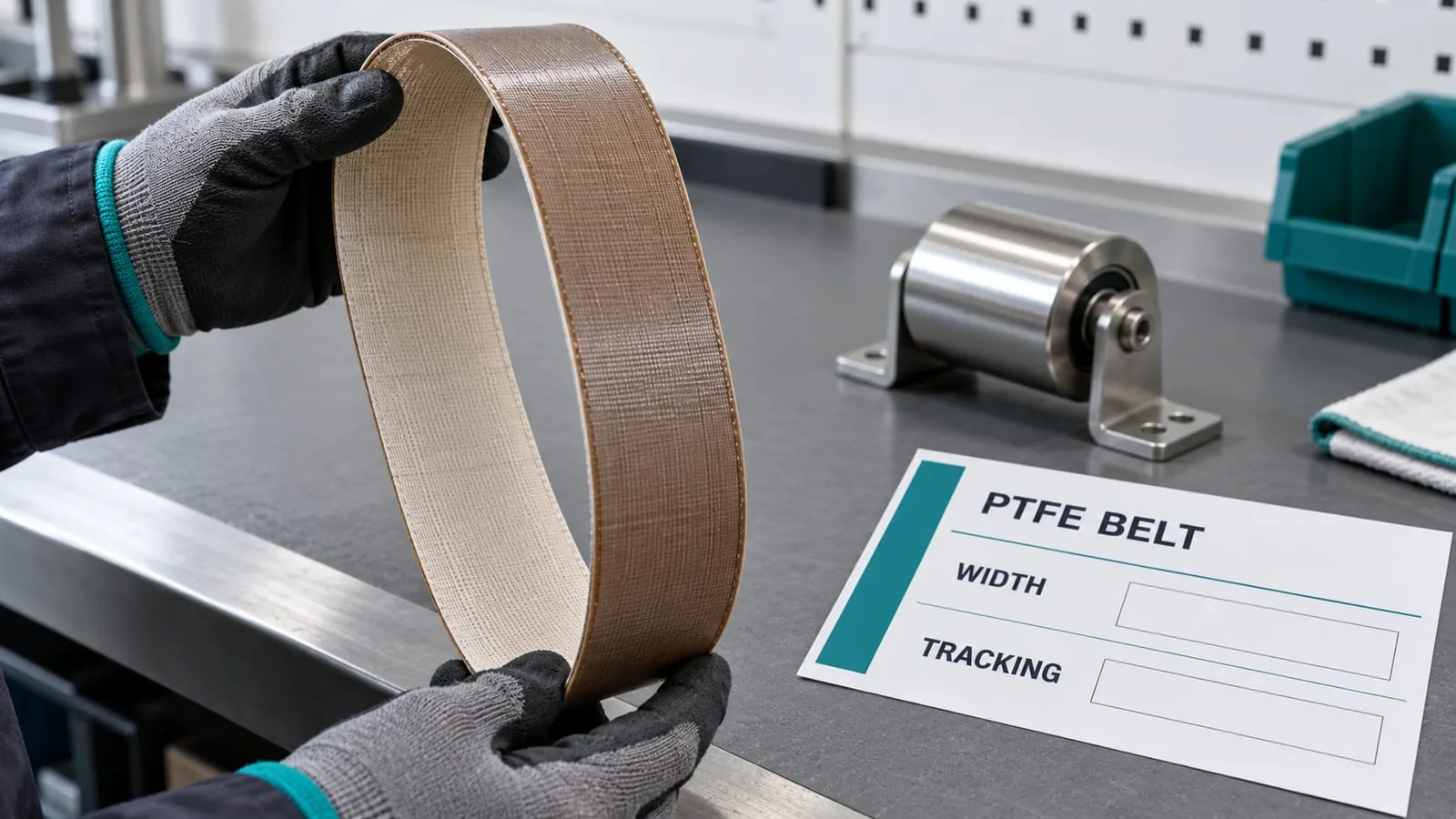
PTFE belts are working components in continuous heat-sealing equipment. Their non-stick surface helps a film or laminate pass through a heated sealing zone without adhering to the belt, but the belt still has to match the machine path, roller arrangement and sealing process.
This guide explains what to record before ordering, how to check compatibility across band sealers and related packaging equipment, and which observations help distinguish a belt issue from a wider sealing-path problem. It covers replacement components rather than complete sealing machines.
What a PTFE Belt Does in a Sealing Line
An endless PTFE belt normally forms part of a moving heat-transfer assembly. In a continuous band sealer, paired belts can carry the package while heat passes through the belt surface from a heated support or hot plate. The exact arrangement varies by machine, so the replacement must match the existing path and construction.
Heat Seal Components supplies endless heat seal bands in plain or PTFE-coated forms. The live service information describes stainless-steel and high-carbon options, welded endless loops and widths from 3 mm to 150 mm. Treat those as the supplier’s stated range, not as a universal specification for every machine.
The belt is part of a heat-transfer assembly
The belt surface is only one part of the result. The roller or guide arrangement, heated support, package path and belt tension all affect whether the film stays centred and whether heat reaches the sealing interface consistently. A belt that looks similar may still be unsuitable if its width, thickness, edge treatment or loop length differs.
For applications that need a related non-stick component rather than a moving belt, compare the requirement with Heat Seal Components’ PTFE coating service and the available PTFE heat-seal tape. These are different components and should not be substituted for one another without checking the machine design.
Match the Belt to the Sealing Path
Record the dimensions and construction
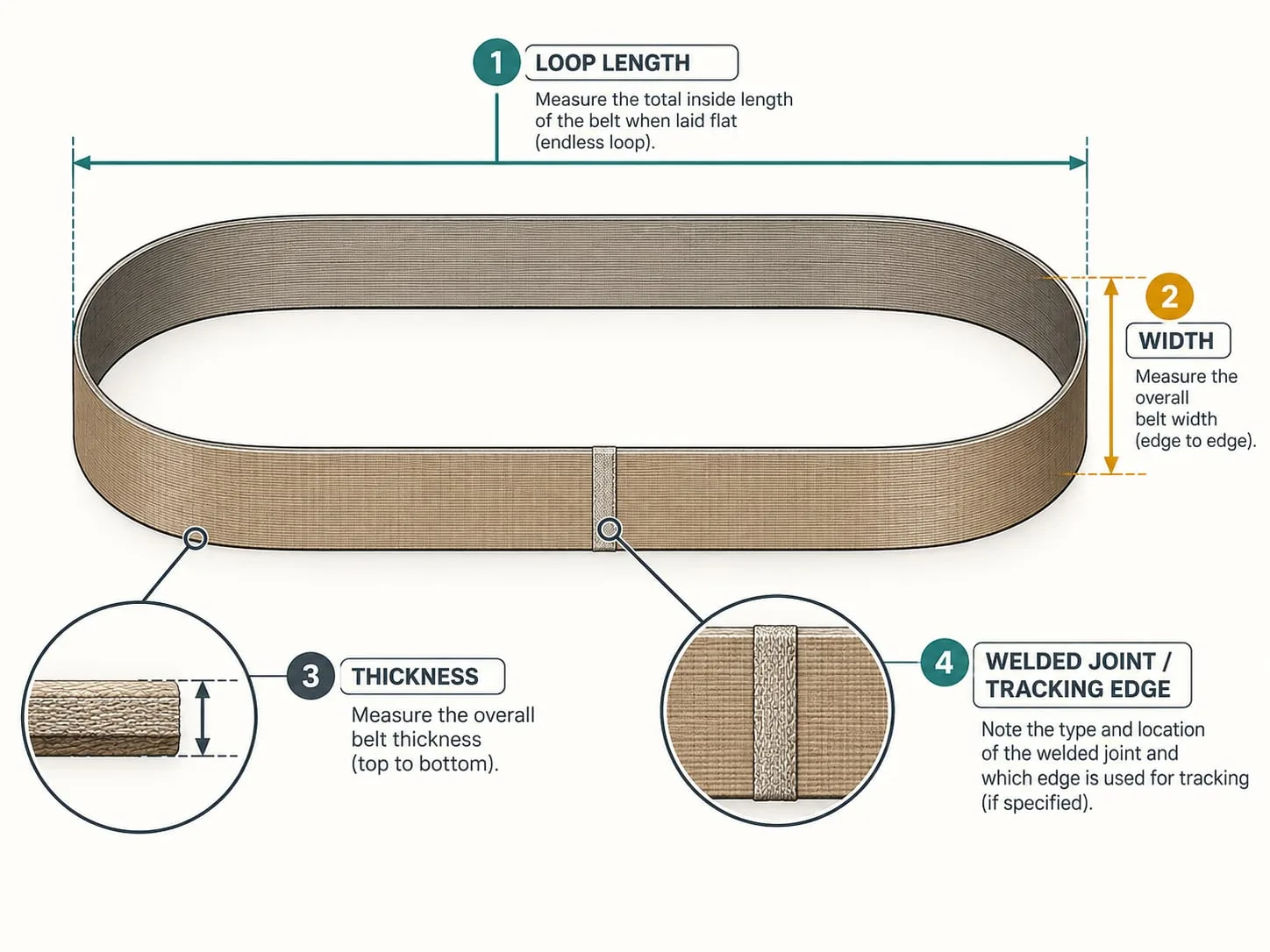 Before requesting a replacement, record the details that can be measured or confirmed from the old belt:
- Inside loop length, belt width and belt thickness, using the same measurement method each time.
- Whether the belt is plain or PTFE coated, and whether the coating is present on one or both working faces.
- The welded or joined construction, including any visible joint, edge finish or tracking feature.
- The number and position of tracking studs, holes, grooves or other features that engage with the rollers.
- The direction of travel, the roller groove arrangement and any identification mark from the machine or old part.
Do not infer a dimension from a catalogue photograph. If the loop is stretched, damaged or difficult to measure, send clear photographs and the old belt details for a component match.
Check the machine application
State where the belt sits in the line and what it carries. A vacuum-packer conveyor, impulse-sealer path, VFFS machine and flow-wrap line can present different space, tension and heat-transfer constraints. Heat Seal Components also supplies custom impulse elements, so identify whether the belt is working alongside an element, hot plate, sealing jaw or another heated component.
If the equipment has two belts, describe both paths and whether they are handed. A replacement that fits one side physically may still be wrong if its tracking feature or working face is oriented differently on the other side.
Choose Coating, Tracking and Joint Details Together
PTFE is selected for a non-stick working surface, but coating choice does not remove the need to confirm temperature, pressure, speed and contact conditions. Heat Seal Components states a 260°C limit for its PTFE-coated heat-seal bands; use the quoted product information for the specific band and process rather than treating that figure as a blanket machine setting.
Why tracking details matter
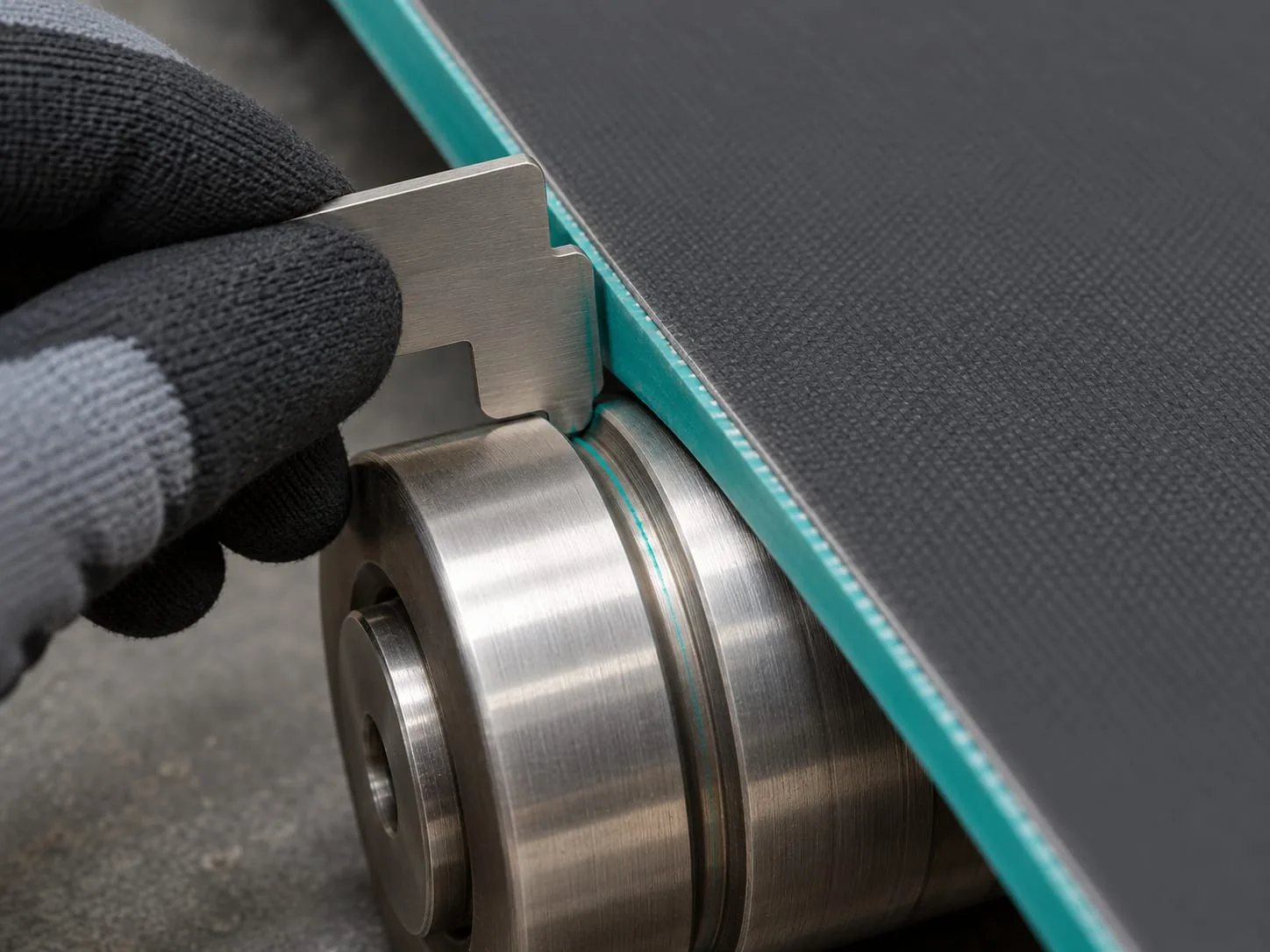 Some PTFE sealer belts use tracking studs that engage with grooves in the rollers. The supplier data sheet describes this arrangement as helping prevent the belt from tracking off the roller. It also explains that the belt can transfer heat from a hot plate to the package through its surface. These details show why a belt’s edge and joint construction are part of compatibility, not just finishing details.
Check the roller grooves, guides and belt edges together. A clean belt can still wander if a guide is worn, a groove is obstructed or the loop length is wrong. Conversely, a belt that is too thick or has a damaged edge can alter the contact pressure even when the roller path appears clean.
When the joint or edge needs closer inspection
Look for a raised joint, cracked coating, frayed edge, missing tracking feature or a polished strip where the belt has been rubbing. Record where the defect appears in relation to the roller and hot zone. That position helps the supplier compare the old part with the machine path and helps the maintenance team investigate an alignment or support issue.
Install and Inspect the Belt Safely
Heat-sealing equipment combines moving parts with hot surfaces. The Health and Safety Executive advises planning maintenance, isolating power, locking off where appropriate, releasing stored energy and allowing hot components to cool. Its packaging-machinery guidance also highlights in-running nip and trapping hazards around conveyors and recommends effective guarding.
Isolate, cool and check the guarded path
Use the equipment manufacturer’s procedure and your site’s isolation controls. A sensible sequence is:
- Stop the line, isolate the relevant energy sources and prevent unexpected restart.
- Allow the belt, hot plate, sealing jaw or adjacent heated parts to cool before handling them.
- Remove the old belt only after the guarded path and stored tension have been made safe.
- Check rollers, guides, grooves and the heated support for residue, damage or obstruction before fitting the replacement.
Do not operate the machine with guards removed unless a competent person is following a documented safe test procedure. Replace guards and confirm the normal path before production use.
Check the first run
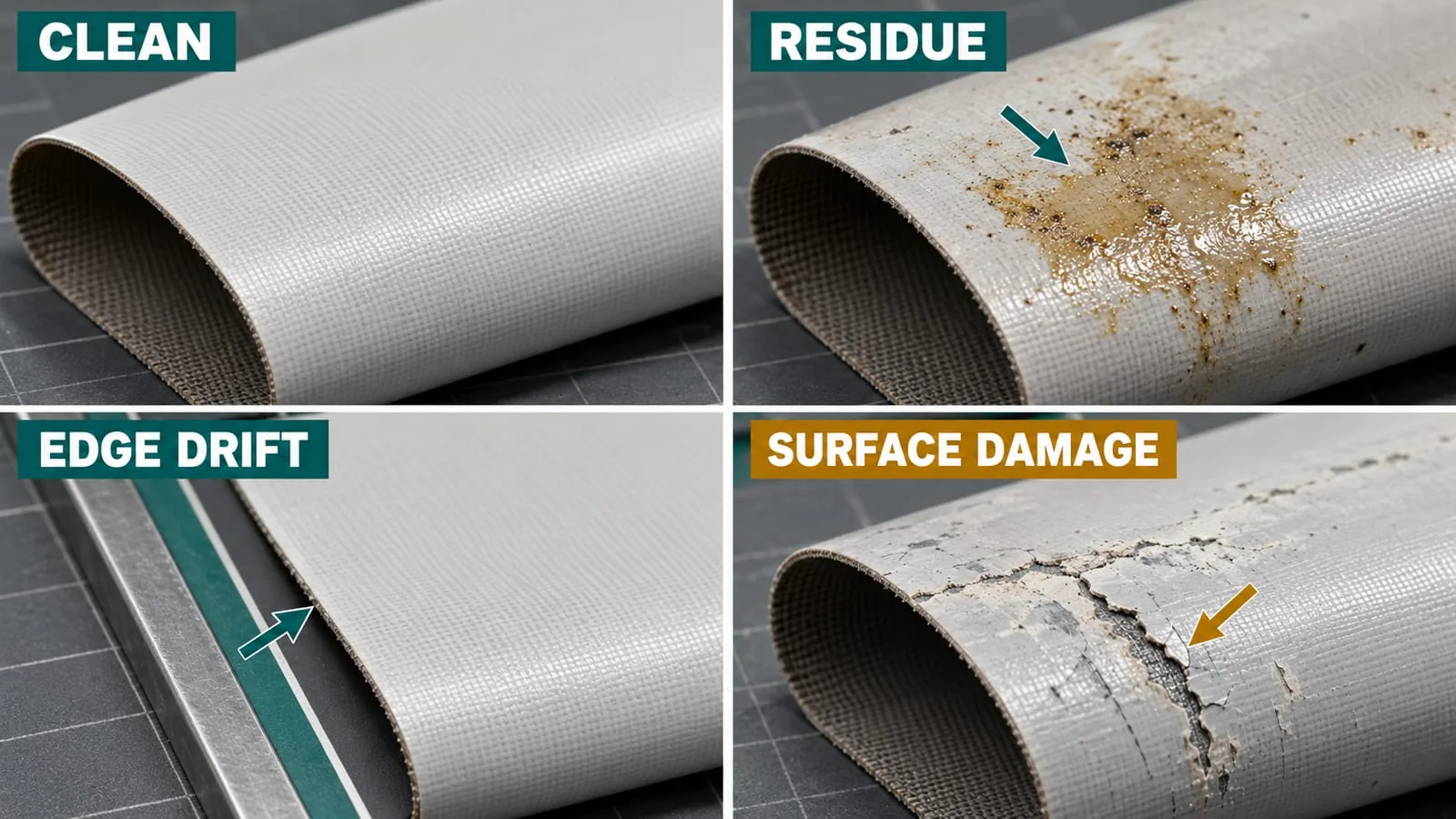 At a controlled first run, observe the belt without reaching into the path. Check that it tracks centrally, passes cleanly over the rollers, does not rub a guard and presents the intended working face to the package. Then review the first seals for consistent contact and unwanted film adhesion.
Record the belt condition and the machine settings used for the check. A change in seal quality can also come from temperature control, pressure, speed, film construction or another sealing component, so do not blame the belt alone without evidence.
When a PTFE Belt Is Not the Only Part to Replace
If a new belt quickly develops an edge mark, slips or produces inconsistent seals, inspect the surrounding assembly. Check the roller grooves and bearings, guides, heated support, sealing jaw or bar, nearby element and any adjacent tape or coated surface. The correct replacement may be an endless band, a custom impulse element, a PTFE-coated surface or another compatible component.
A short record with the machine type, belt measurements, photographs, defect location and operating conditions gives the supplier a much better basis for matching the part. It also creates a useful reference for the next planned maintenance check.
Ordering Information to Send
Include the following when asking for a PTFE belt or compatibility check:
- Machine make and model, line position and whether the belt is left- or right-handed.
- Measured loop length, width and thickness, plus the belt material or coating if known.
- Photographs of the belt, joint, tracking edge, rollers and the installed path.
- The package or film type, observed operating temperature if available, and any recent change in seal quality.
- The required quantity and whether a matching belt is needed for a paired path.
For a component review, contact Heat Seal Components with the old belt details and photographs. The team can confirm what can be matched from the evidence supplied and identify whether another heat-sealing component should be considered.