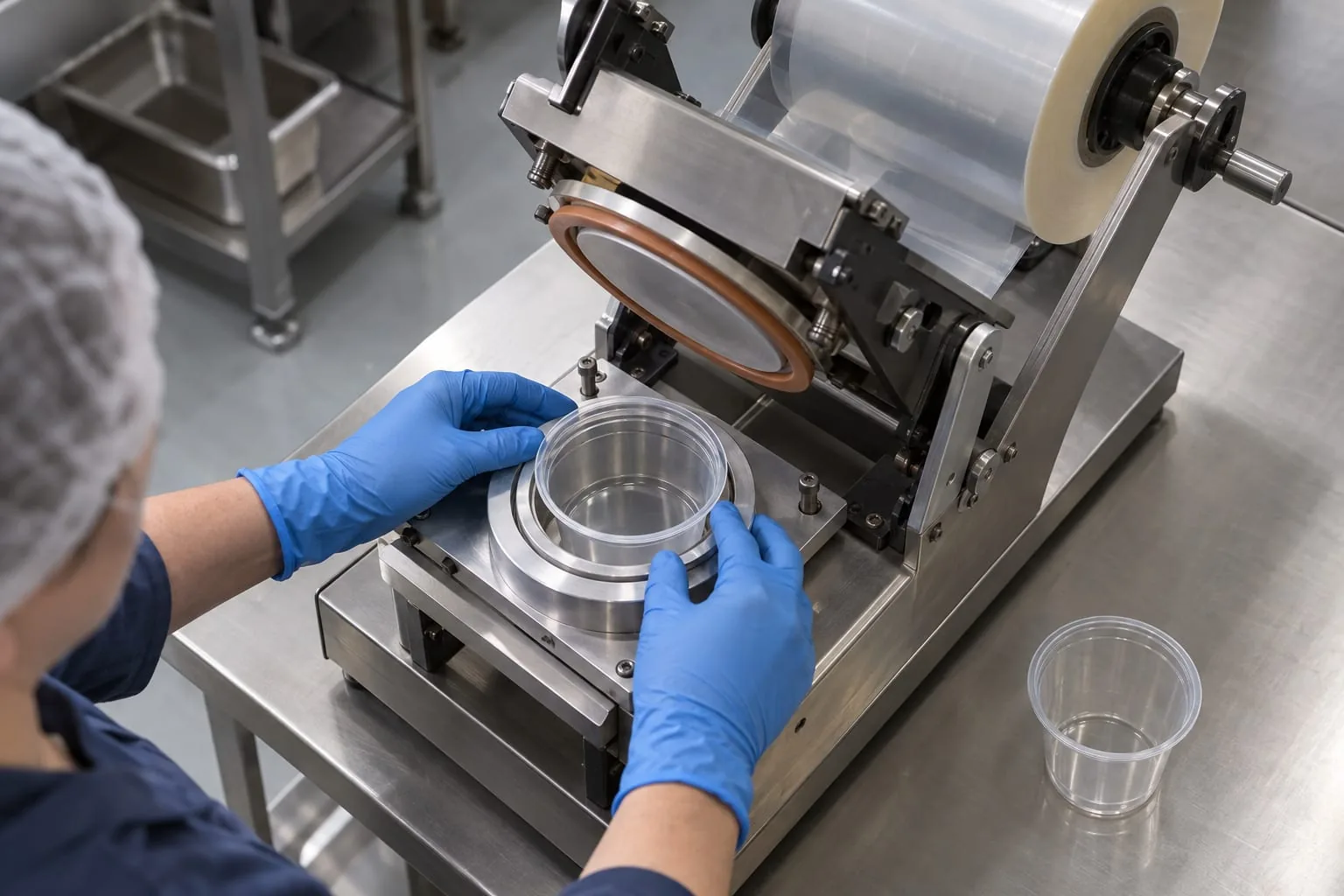
A semi automatic cup sealing machine can be a useful fit for short production runs, food service packing and repeatable cup presentation. The operator still loads the cup and film, but the machine controls the sealing action more consistently than a fully manual hand press.
The part that needs replacing is not chosen from the machine name alone. Cup rim, mould opening, film, sealing surface, pressure and the working cycle all need to agree. A compact machine can still have a very specific sealing assembly.
What a Semi Automatic Cup Sealing Machine Actually Does
In a semi automatic setup, the operator normally places a cup into a mould or locating nest, positions the film and starts or completes the sealing cycle. The machine may control the heat, dwell time, pressure or release movement, but the exact arrangement varies by model.
Manufacturer specifications show why the model record matters. The YODO desktop sealing machine page lists a 95 mm sealing range and 300 to 400 cups per hour, while another semi automatic design lists different mould sizes, speed ranges and control settings. These figures are examples from named machines, not universal specifications. Check the maker’s data and the actual assembly before ordering a replacement.
For packaging safety, the sealing head, mould and any moving film path should be treated as machinery components, not just consumables. The HSE packaging machinery guidance highlights guarding, trapping points and safe cleaning around packaging equipment.
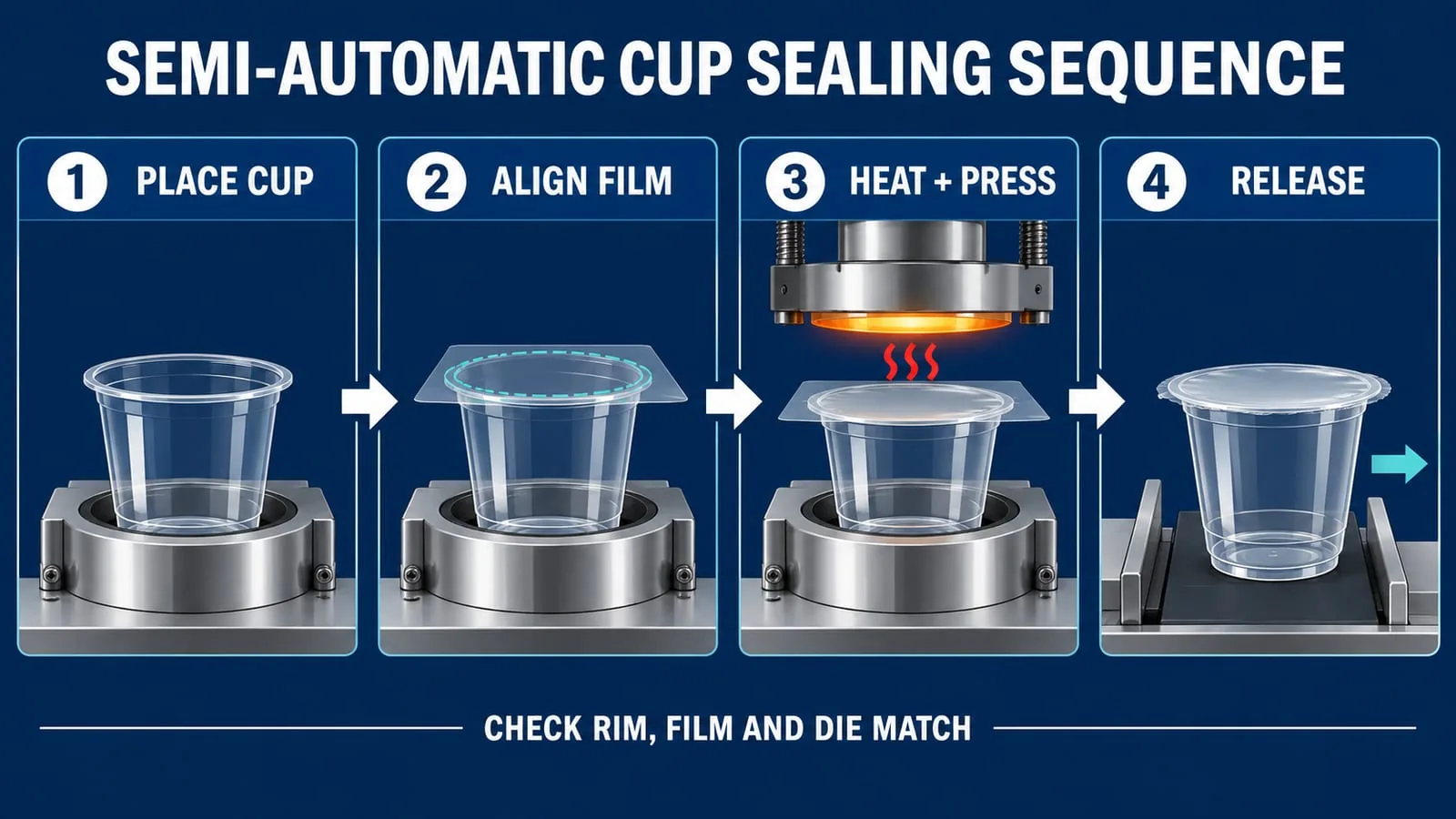
The Components That Need to Match
A reliable replacement review starts with the sealing assembly. The main checks are:
Cup rim and mould opening
The cup must sit squarely in the mould. The rim should be supported without excessive side play, and the opening must match the cup form. A mould that is close but not correct can shift the film or create uneven contact.
Sealing head and heated surface
The head must meet the supported seal land evenly. Some machines use a heated circular tool, while other designs use a replaceable sealing face or a jaw-like assembly. Do not assume that a heating element, PTFE cover or sealing ring is included with another component.
Film width and tracking
The film must cover the seal land without fouling the mould or machine guides. Printed or indexed film can also require a particular tracking or registration arrangement. Confirm the film construction with the packaging supplier and the machine maker.
Pressure, support and release
The cup support, die, spring or actuator and release path affect how the seal is formed and how the cup leaves the station. A new sealing jaw or bar will not correct a bent support or a misaligned mould.
Heat-seal elements and wires
Where the machine uses a replaceable element, record the shape, length, width, thickness, terminals and mounting method. Heat Seal Components supplies heat seal elements and can review the component details without assuming universal fit.
How to Check Compatibility Before Ordering
Start with the cup and the tool together. Record the cup rim diameter, cup height, mould opening, seal land and the part number or drawing reference if one exists. Take photographs with the film removed and with the cup seated in the mould.
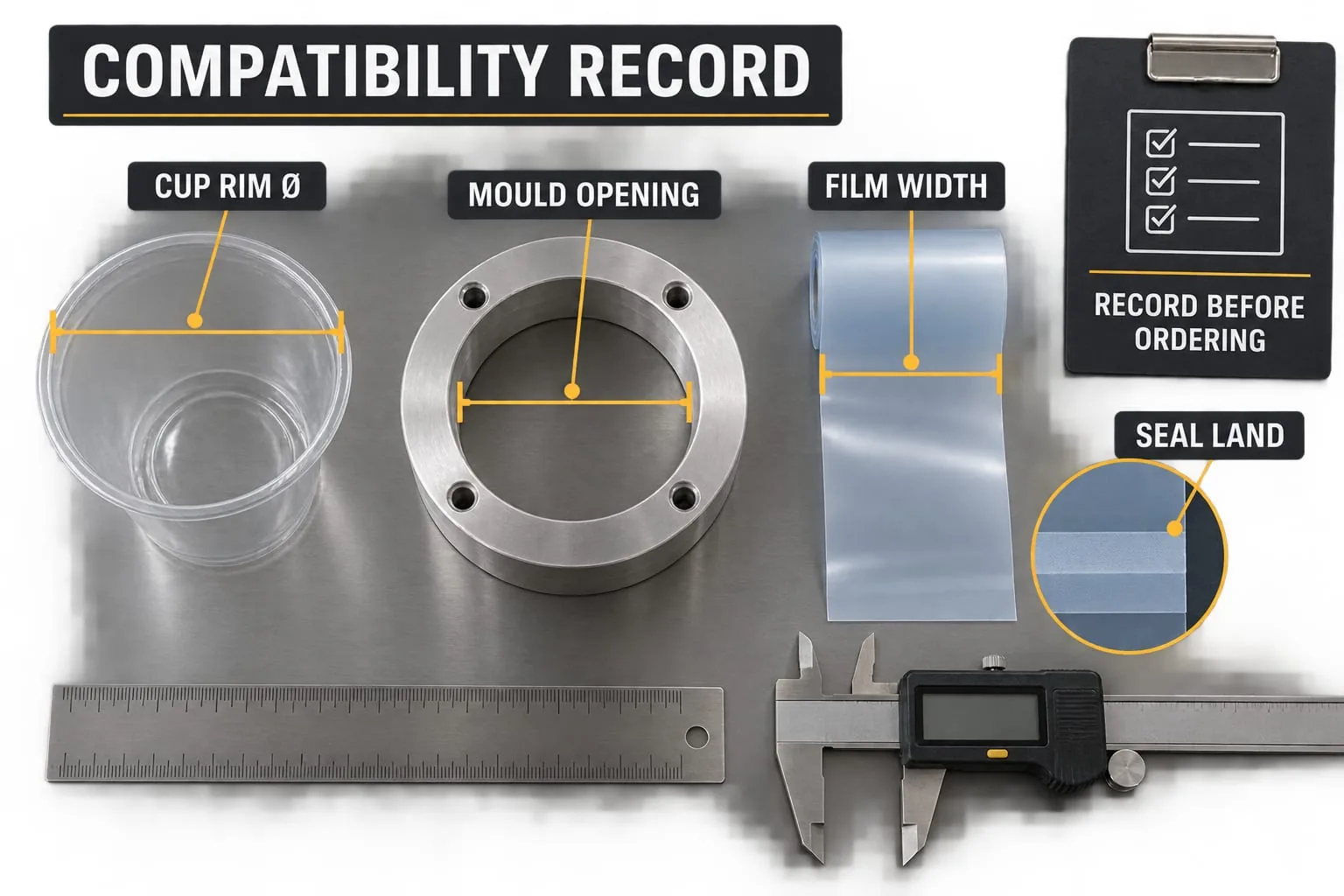
Measure the cup and mould together
Measure the cup at the rim, not only at the base. Check whether the rim is flat, rolled, stepped or shaped for a particular lid film. Then measure the mould opening and the locating features that keep the cup centred.
Do not copy a dimension from a similar cup. Small changes in rim shape can alter the contact area. If the tool has been modified, record the modification and send a clear photograph of the seating surface.
Confirm the film and seal surface
Film is part of the sealing system. It needs to match the cup material and the process conditions, and it must sit over the seal land without folds or contamination. The ZONESUN semi automatic cup sealing machine page shows an example of a machine with adjustable sealing controls and customisable moulds, but its figures apply to that product range only.
If a PTFE cover, tape or coated surface is worn, record its width, fixing method and position before removing it. Heat Seal Components supplies PTFE heat-seal tape and related component support. It does not mean that every PTFE product is suitable for every cup sealer.
Record model details and symptoms
Keep the manufacturer, model, serial or asset number, mould identity and current settings together. Add the reason for the enquiry, such as a weak edge, film sticking, uneven seal width, a damaged element or a cup that is not sitting square.
A useful record contains:
- Machine manufacturer and model
- Cup material, rim diameter and height
- Mould opening and locating features
- Film material, width and tracking method
- Seal land shape and condition
- Heating element or sealing-face details
- Photographs of the cup, mould, film path and worn parts
- The operating symptom and any recent change
This information lets a component supplier check what is actually needed. It also reduces the risk of ordering a part because its description contains the words “cup sealer”.
Semi Automatic Operation and Seal Quality
Seal quality depends on more than the displayed temperature. The cup must be supported, the film must be clean and aligned, and the heated surface must contact the intended seal land. Dwell time, pressure and release timing also need to suit the material combination.
Use the machine maker’s instructions for the working settings. A manufacturer may specify a sealing range, power, film option or mould arrangement for its own model. A different machine can use a different assembly even when the cup diameter appears similar.
If the seal is weak on one side, inspect centring and parallel contact before changing the element. If film sticks, check the surface, residue, temperature and PTFE cover. If cups are difficult to remove, check the release path and mould support rather than increasing heat without evidence.
Maintenance Checks for Semi Automatic Cup Sealers
Maintenance should be planned and carried out by competent people. The HSE maintenance guidance advises isolating moving and electrical power, releasing stored energy and allowing hot components to cool before work. Follow the machine maker’s instructions and your site’s safe system of work.
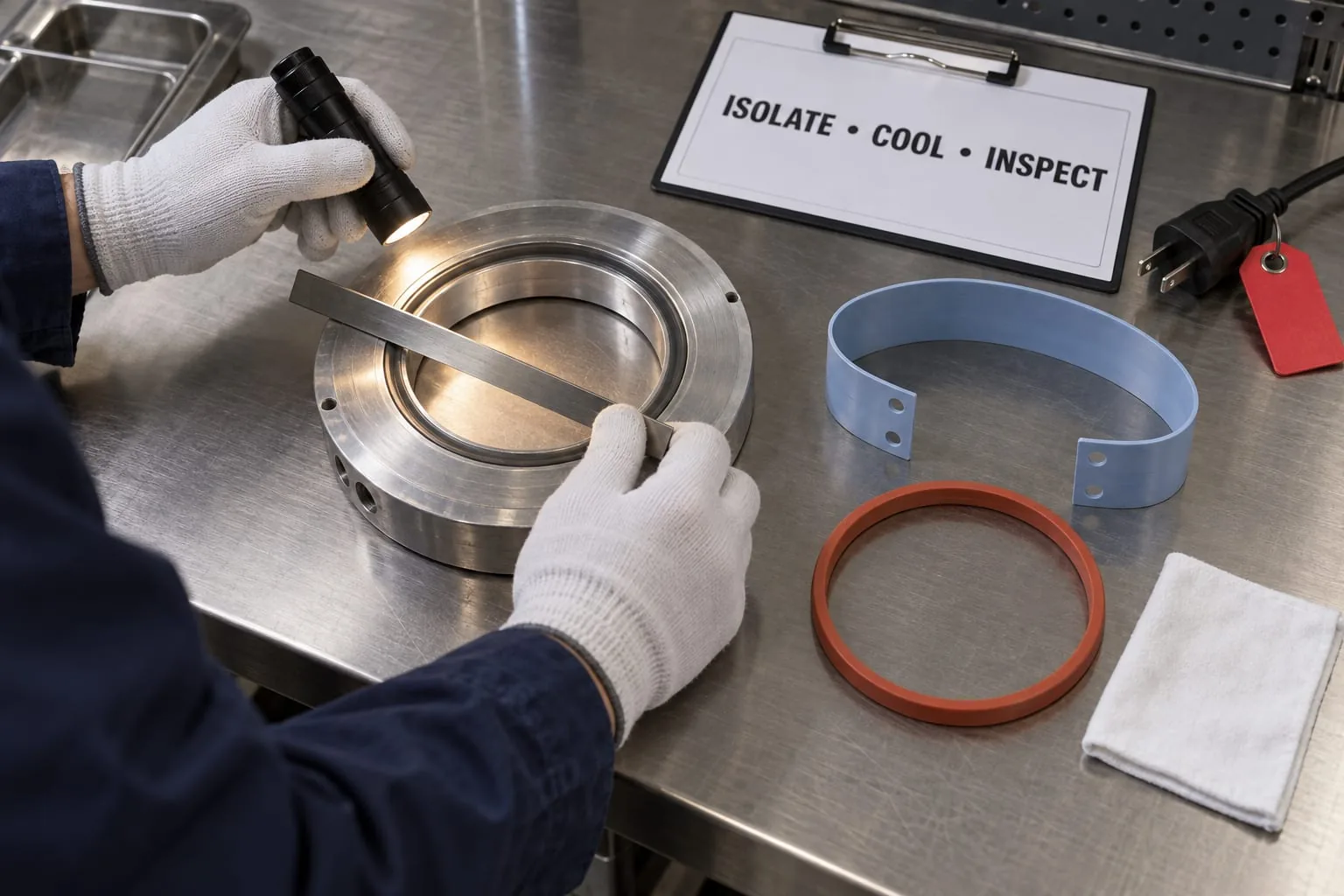
Inspect the sealing face
After isolation and cooling, check the die or sealing face for residue, scoring, distortion and uneven wear. Check the PTFE cover or tape for tears, lifting, thinning and contamination. A damaged cover can change release behaviour, but replacing it will not correct a distorted tool.
Check the silicone ring, support surface and locating features for damage. Keep removed parts in order so the original assembly can be compared with the replacement. Do not scrape a heated surface with a tool that could gouge it.
Inspect the film path and controls
Check the film roll, guide points and tension path. Look for rubbing, skew, folds and residue. Confirm that guards, interlocks and emergency controls are in place and working as required by the machine instructions.
Record the setting used for a known-good seal, along with the film and cup combination. This creates a useful baseline for maintenance and makes it easier to separate a component fault from a material or setting change.
When to Replace a Component
Consider replacement when a part is visibly damaged, has lost its intended surface, no longer holds alignment or causes a repeatable seal problem after the assembly has been checked. A new part should be matched to the existing machine, not selected because it is described as a cup sealer component.
For a custom or replacement enquiry, custom impulse heat-seal elements may be relevant where the machine uses a shaped or terminated element. Provide measurements and photographs before a quotation. Do not remove a working part before its dimensions and connections have been recorded.
Request a Component Compatibility Review
Send the machine model, cup and film details, measured mould information, photographs and the reason for replacement. Heat Seal Components can review component requirements for your sealing equipment and advise on the relevant heat-seal element, PTFE material, sealing jaw, bar or related part. For a quotation or a fit check, contact the Heat Seal Components team with the full record.