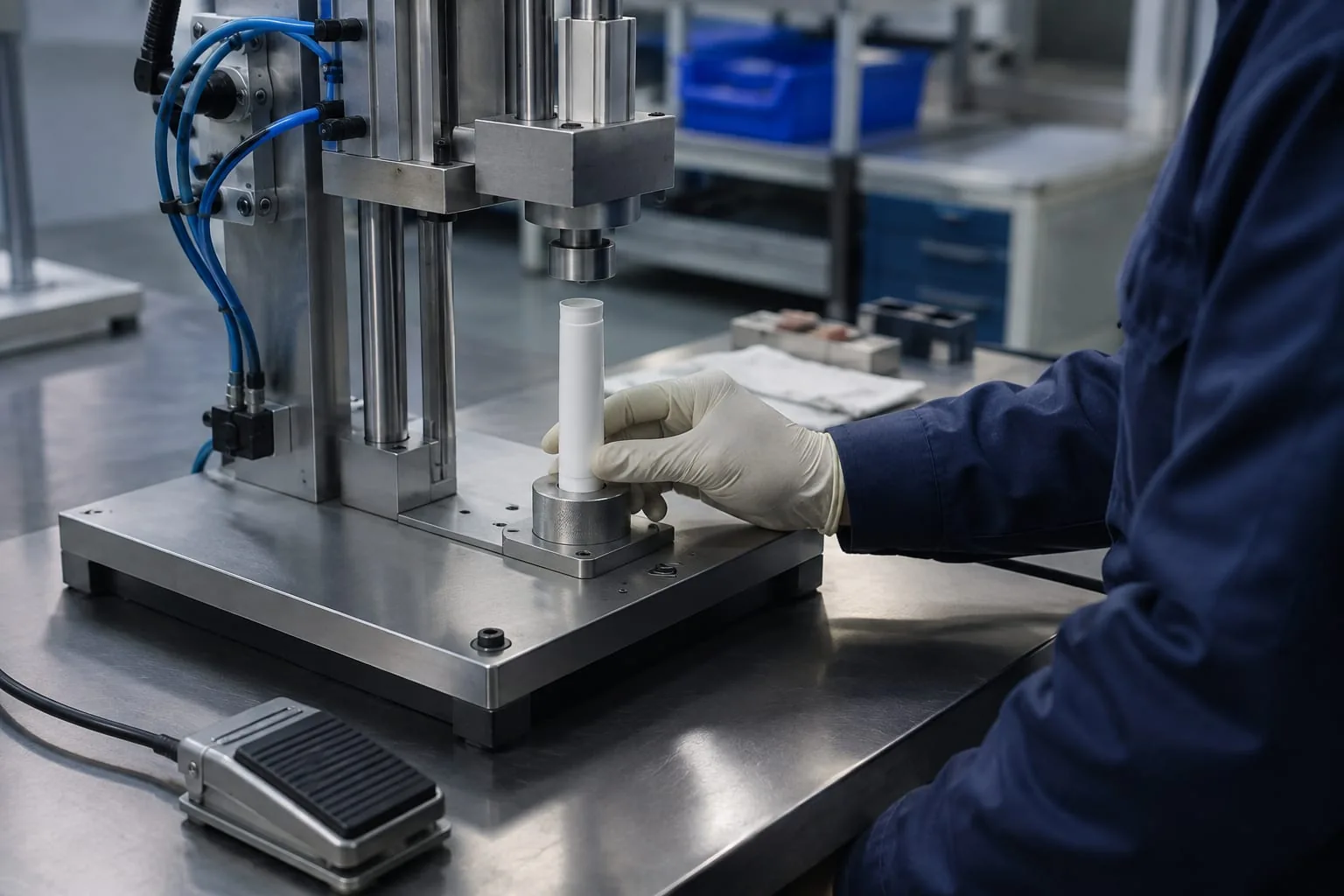
A semi automatic tube filling and sealing machine is often used where an operator loads or presents each tube, while the station controls part of the fill and seal cycle. The arrangement is simpler than a fully automatic line, but the replacement parts still have to match the tube format, sealing method and machine geometry.
This guide follows the checks that matter before you order a heating element, sealing jaw, support or cover surface. It also explains how to document a faulty seal so a supplier can review the application without guessing.
How a semi automatic tube filling and sealing machine works
Filling and sealing are linked but separate
A semi automatic tube sealing machine may be used with a separate filling step, or with a compact station that combines dosing and tube presentation. The important point for a component buyer is that filling accuracy, tube positioning and the final seal meet at one small work area. A change in the tube or its tail can therefore affect the part that looks like the source of the fault.
Norden’s tube-filling overview describes equipment for plastic, laminate and aluminium tubes, with different machine arrangements for different applications. That range is a useful reminder to identify the tube material and process before treating a replacement as a standard part.
The tube tail is the critical interface
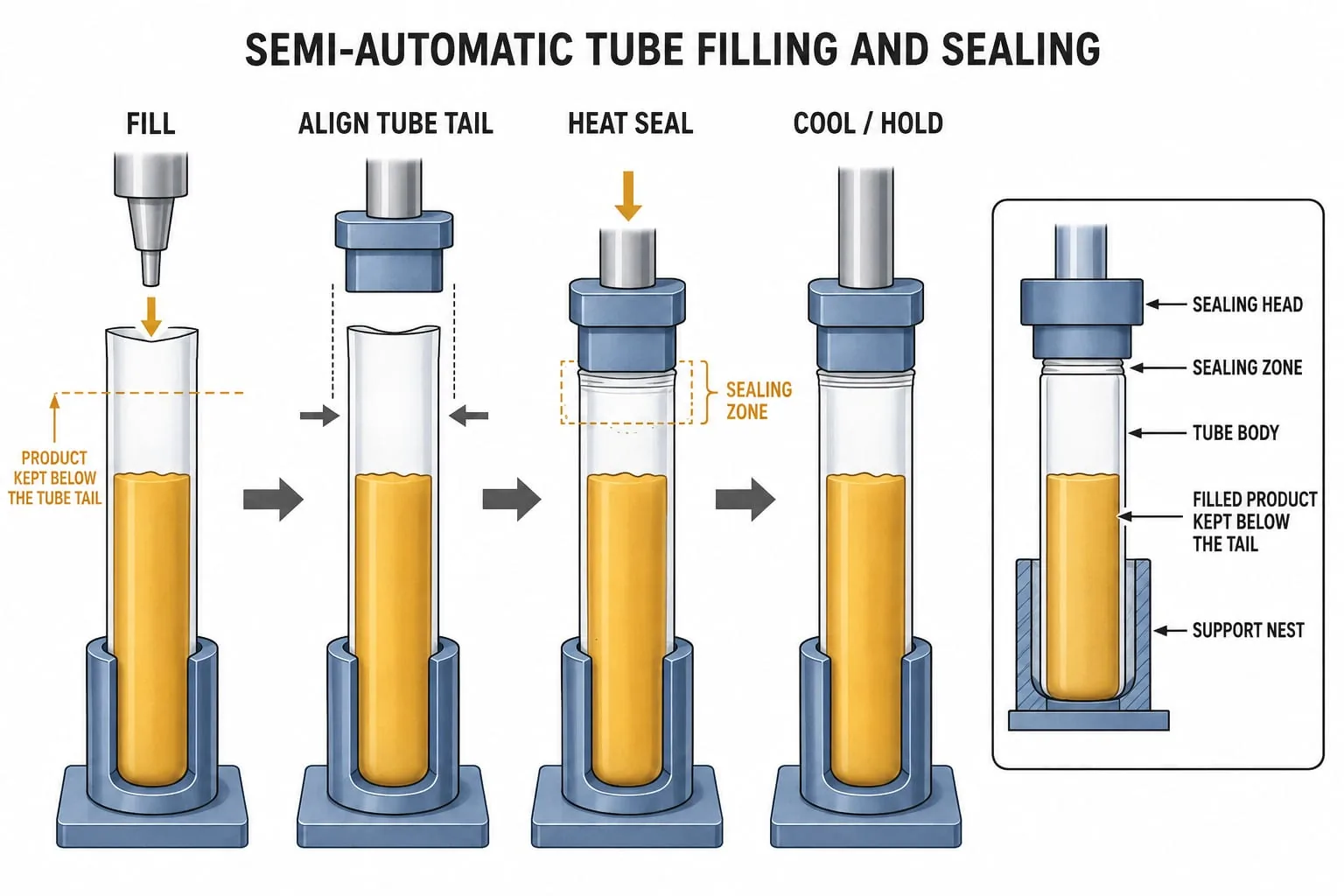
After the product is dosed into the tube, the open tail has to be presented in the right position for the sealing operation. The tail must be supported, kept clear of product and held consistently while the sealing head applies its process. A crooked or contaminated tail can create a poor seal even when the heating component is in good condition.
Norden’s Tube Filling 101 guide explains that tube-filling systems can combine several configurable functions and that sealing method, format parts and maintenance needs vary by application. For a semi automatic setup, record which task is manual, which task is controlled by the machine and where the tube is supported.
Components around the sealing station
Heating element or sealing head
Depending on the machine design, heat may be supplied by a heated bar, a jaw, a hot-air assembly or another process selected for the tube material. Do not infer the replacement element from the search phrase alone. Confirm how the heat reaches the tail, where the element is mounted and which part of the head is replaced as a service item.
If the failed part is a resistance component, compare its dimensions, terminals, mounting points and operating position with the original. The heat seal elements service page is a useful starting point for identifying the component family, but the machine and tube details still need to be checked.
Sealing jaws, bars and supports
Jaws and bars determine how the tail is presented and how contact is maintained across the seal area. Their working faces, spacing, travel and support arrangement must suit the tube diameter and the required seal geometry. A part can look similar while placing the contact line in the wrong position.
A support nest or guide is just as important as the moving face. It keeps the cylindrical tube stable during the cycle and helps prevent side loading on the sealing parts. When requesting a replacement, photograph the full station as well as the worn face so the surrounding geometry is visible.
Cover surfaces and contact condition
Cover materials and non-stick surfaces can affect release, cleanliness and the condition of the seal contact area. If the station uses a replaceable cover, record its thickness, width, fixing method and the surface it protects. The PTFE heat-seal tape service page explains the relevant cover-tape component family.
Do not treat a cover as cosmetic. Wrinkles, exposed fasteners, product build-up or a damaged surface can change contact and leave marks on the tube tail. Clean and inspect the station according to the machine maker’s instructions before deciding that the heating element alone needs replacement.
Match the component to the tube format
Tube material changes the process
Tube material is a first-order compatibility check. Plastic, laminate and aluminium tubes may require different sealing methods, contact conditions and format parts. The same head arrangement should not be assumed to deliver the same result across all three.
Record the tube construction as supplied by the tube maker, together with the product being filled and any coating or printed area near the tail. This information helps separate a material or contamination issue from a failed machine component.
Diameter, tail shape and seal width
Tube diameter affects the support nest, guide, sealing face and the space available around the tail. Tail length, fold or trim shape and the position of the seal also matter. Measure the actual sample used in the station rather than relying on a catalogue family name.
Take measurements at more than one point if the tube is flexible or distorted. Note the target seal width and its position from the tube end, but do not use seal width as the only dimension when ordering a replacement jaw or support.
Machine model and station geometry
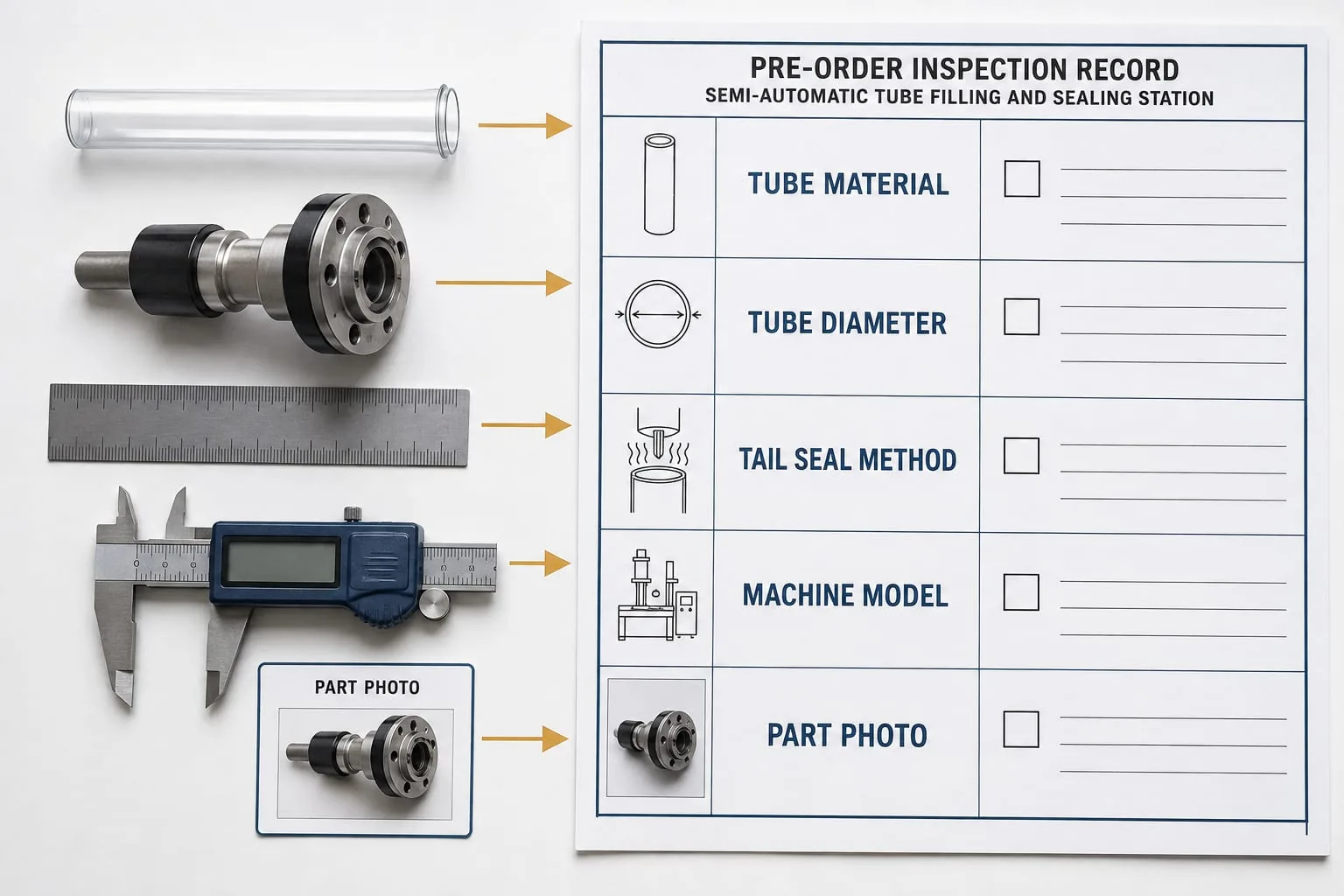
Record the machine make, model, serial number if available and the station where the part is fitted. Add a clear photograph of the complete machine area, a close photograph of the part and a photograph of the tube in its support. This evidence is more useful than a part name copied from an old purchase order.
For non-standard dimensions, the custom impulse heat-seal elements service page shows the type of component conversation that may be needed. A custom review still depends on accurate measurements, the sealing method and the working conditions of the machine.
Record compatibility before ordering
Use a short compatibility record before asking for a quote. The aim is to preserve the physical evidence that can be lost when a worn part is removed, cleaned or discarded.
Set and verify the sealing process
Treat time, temperature and pressure as a set
Seal quality is not controlled by temperature alone. DuPont’s heat-sealing guidance describes dwell time, temperature, pressure, sealant characteristics and test method as interacting factors. That is why a setting copied from another tube or another machine may give a misleading result.
Start with the machine maker’s approved process and the tube supplier’s guidance. Change one controlled variable at a time, keep a record of the sample and record the material lot when it matters. Avoid presenting a generic temperature or dwell value as a universal setting.
Confirm contact and cooling
True contact across the intended zone matters more than a control display that appears normal. Check for uneven jaw faces, a displaced support, a damaged cover or a tail that is not square in the station. DuPont also notes that contact conditions and hot or cold areas can change seal results.
After the heat step, allow the seal to cool or hold in the manner specified for the machine and material before judging the result. Use representative filled tubes and inspect the complete tail, not only the most convenient edge.
Maintenance and inspection for reliable output
Inspect the head, jaws and cover
HSE maintenance guidance recommends planned maintenance using the manufacturer’s instructions, suitable competence and proper tools. For the sealing station, that means checking the head, jaws, supports, covers, cables, fasteners and guards at an interval suited to the equipment and its use.
Look for a damaged contact face, loose fixing, frayed lead, exposed conductor, contamination, product build-up, uneven cover and a support that no longer centres the tube. Record what was found and whether the defect appears on every cycle or only with a particular tube.
Isolate energy before inspection
Packaging machinery can expose people to moving parts, hot surfaces and stored energy. HSE packaging-machinery guidance highlights the need for guarding and safe systems around machinery hazards. Before reaching into the station, follow the machine’s isolation procedure, release relevant stored energy and prevent unexpected movement.
Do not rely on a stop button as the only control. Allow hot parts to cool, use the required lock or warning system and return a fault to a competent person when the condition is not safe to inspect.
Use the finished tube as evidence
A finished tube is a useful record of what the process is doing, but one acceptable sample does not prove that a replacement is compatible. Keep representative good and rejected samples where the quality system allows it, and connect each sample to the machine setting and material information.
- Seal line is even across the intended contact area.
- Tube tail is centred and supported during the cycle.
- No product is present in the seal zone.
- Repeat defects are linked to the same station, direction or tube material.
When to request a custom component review
Send a useful enquiry pack
Include enough information for the component to be identified without guesswork. A concise enquiry pack can contain:
- Machine make, model, serial number and sealing-station photograph.
- Tube material, diameter, tail form and target seal description.
- Close photographs of the old part, terminals, mounting points and working face.
- A representative good seal and a representative rejected seal.
- Known process settings, fault symptoms and the date the issue began.
What a compatibility review can confirm
A review can help confirm which dimensions and interfaces need to be matched, whether the reported fault points to a heating part, jaw, cover, support or process condition, and what additional evidence is still missing. It cannot replace the machine maker’s risk assessment or the tube supplier’s process guidance.
Where the application needs a component made to measured geometry, use the heat-seal elements and sealing jaws and bars service information as part of the enquiry. Keep the original part available until the replacement has been checked against the recorded evidence.
Practical questions before you order
Can any sealing head seal any tube?
No. The tube material, diameter, tail shape, sealing method, support and process settings all affect compatibility. A visually similar head may still have the wrong contact geometry or mounting arrangement.
Should the replacement match the old part exactly?
It should match the required interface and working geometry, but the old part may already be worn, distorted or an earlier revision. Use the machine documentation, measured dimensions and photographs together rather than copying a damaged part without review.
What should I send with a quote request?
Send the machine and tube details, measurements, photographs of the complete station and part, and representative seal evidence. If the phrase tube sealing machine semi automatic describes the search that brought you here, add the exact station model so the application is not confused with a different machine format.
Contact Heat Seal Components for component advice
For a compatibility review, send the tube details, machine information, part photographs and representative seal evidence through the contact page. If you already know the failed component, include its measurements and the station where it is fitted. Heat Seal Components can then advise on the next practical check before a replacement is specified.