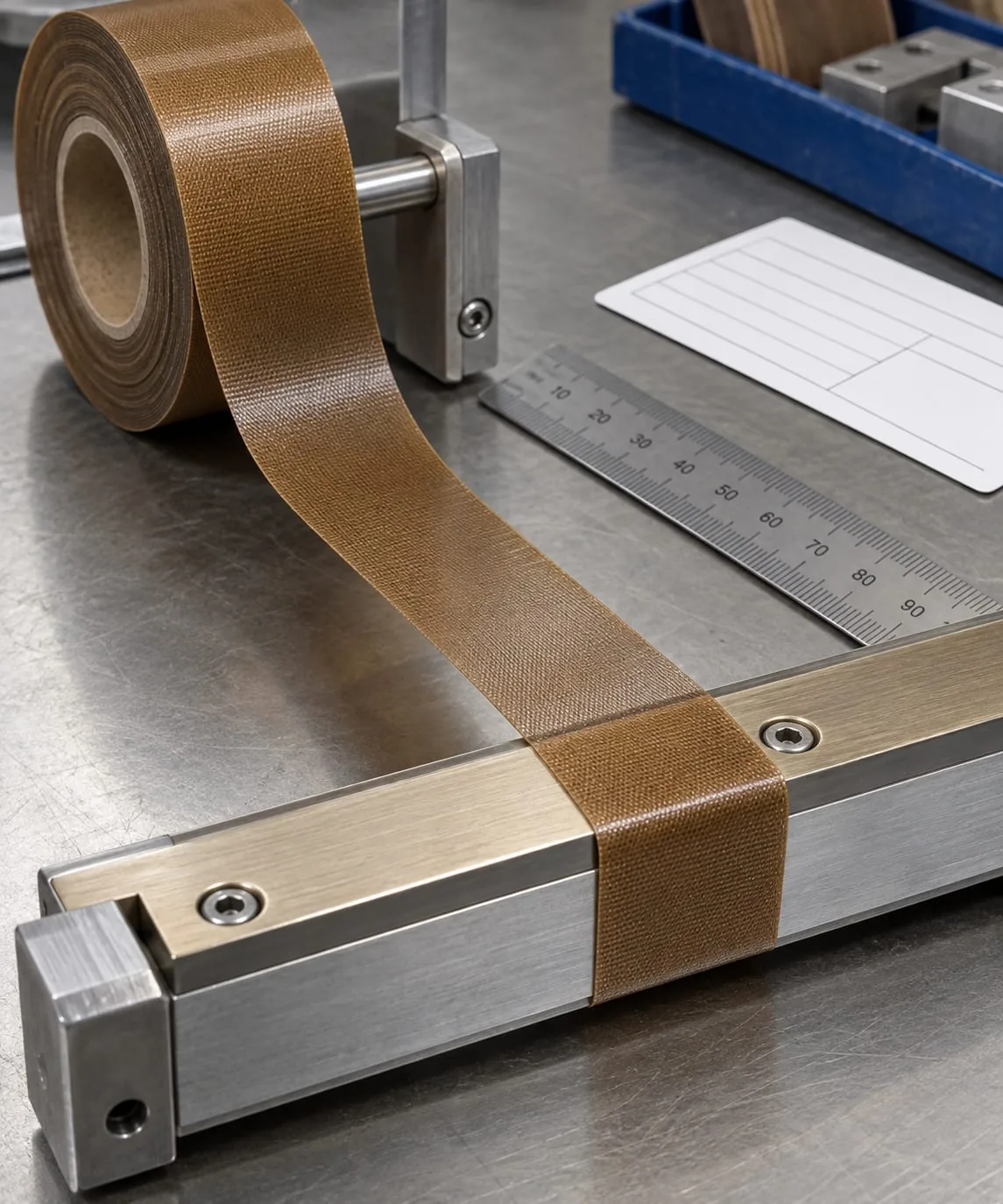
“Teflon cloth” (Teflon is a Chemours trademark) is often shorthand for generic PTFE-coated glass cloth used as the release layer on a heat-sealing jaw or element. It is a replaceable consumable, not the metal heating element itself. The right choice depends on how the old cloth is held, its width and thickness, and the sealing assembly it covers.
Heat Seal Components supplies PTFE heat-seal tape matched to the element, band or jaw underneath it. This guide explains what the cloth does, how self-adhesive and non-adhesive formats differ, what to record before ordering and how to inspect used material safely.
What Teflon Cloth Does on a Sealing Machine
PTFE-coated glass cloth forms a low-friction release surface between the heated sealing assembly and the packaging film. It helps reduce sticking at the contact surface while the element or jaw applies heat and pressure. Saint-Gobain describes PTFE-dispersion impregnated fibreglass tapes as release materials for packaging heat-seal applications, but a product specification should always be checked for the actual assembly.
The cloth is the release layer
The cloth is fitted over or against the working face of the sealing assembly. Heat Seal Components supplies PTFE heat-seal tape in self-adhesive and non-adhesive formats, with the format selected around the way the machine holds the tape. A worn or poorly fitted layer can contribute to sticking, creasing and contamination, so replacement should start with an inspection of the installed part.
It is not the element or the jaw
The release cloth should not be confused with the heating element or the sealing jaw. Heat Seal Components supplies replacement heat-seal elements and wires, as well as sealing jaws and bars, while the correct part depends on the machine application and dimensions. Confirm which component needs replacing before ordering tape or a complete replacement assembly.
Choose the Correct Backing and Retention Method
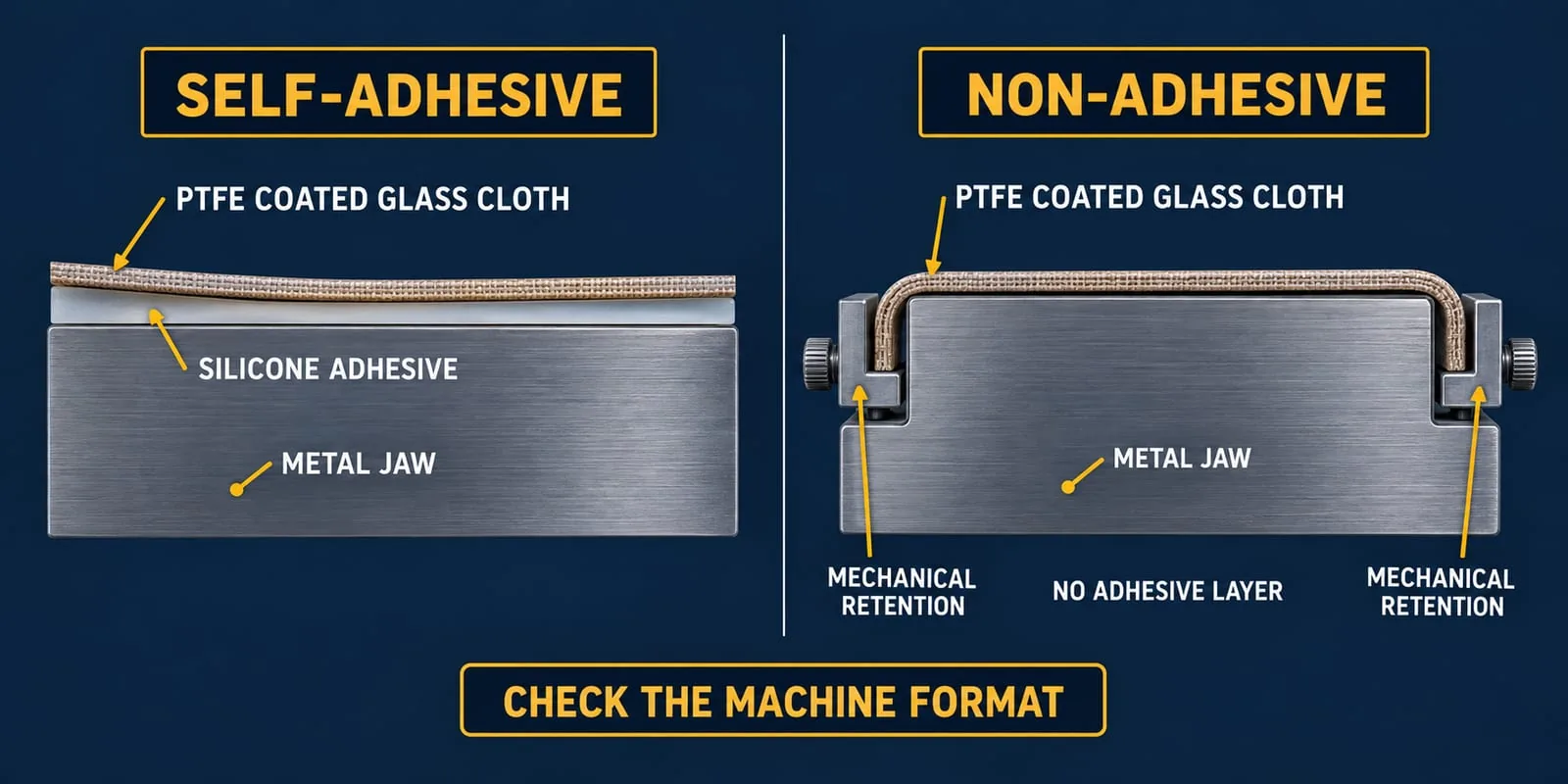
The first practical distinction is how the cloth is retained. Self-adhesive tape uses a silicone adhesive layer. Non-adhesive tape has no adhesive backing and is held by the machine’s own arrangement, such as a folded edge, clamp or other mechanical retention. The machine format must decide the choice.
Self-adhesive cloth
Self-adhesive PTFE-coated glass cloth can be applied to a suitable clean surface when the machine design calls for an adhesive-backed release layer. Remove old residue and follow the machine or maintenance procedure for preparing the surface. Do not assume that an adhesive-backed format is suitable simply because the width appears correct.
Non-adhesive cloth
Non-adhesive cloth is used where the machine retains the tape mechanically. The replacement must match the way the existing strip is folded, clamped or otherwise held. A strip that is the right width but cannot be retained securely is not a compatible replacement.
Use Machine and Tape Specifications Together
Heat Seal Components lists PTFE-coated glass cloth in 3 thou (0.076 mm), 5 thou (0.127 mm) and 6 thou (0.15 mm) thicknesses, with standard widths from 15 mm to 70 mm and 30 m rolls. Self-adhesive tape is the common format; non-adhesive tape is a standard line in 6 thou at 70 mm, with other widths to order. The listed continuous temperature limit for the supplied tape is up to 260 °C. Treat those values as the supplier’s listed options, not as a universal setting for every machine.
Material: PTFE-coated glass cloth
Thickness: 3 thou (0.076 mm), 5 thou (0.127 mm) or 6 thou (0.15 mm) listed options
Standard width: 15 mm to 70 mm
Roll length: 30 m listed roll length
Backing: Self-adhesive or non-adhesive
Temperature: Up to 260 °C continuous limit listed for the supplied tape
Film type, sealing temperature, dwell time and the way the tape is retained all affect the choice. If the assembly is coated or needs a different surface treatment, ask about the PTFE coating service as well as tape.
Inspect the Existing Cloth Before Replacing It
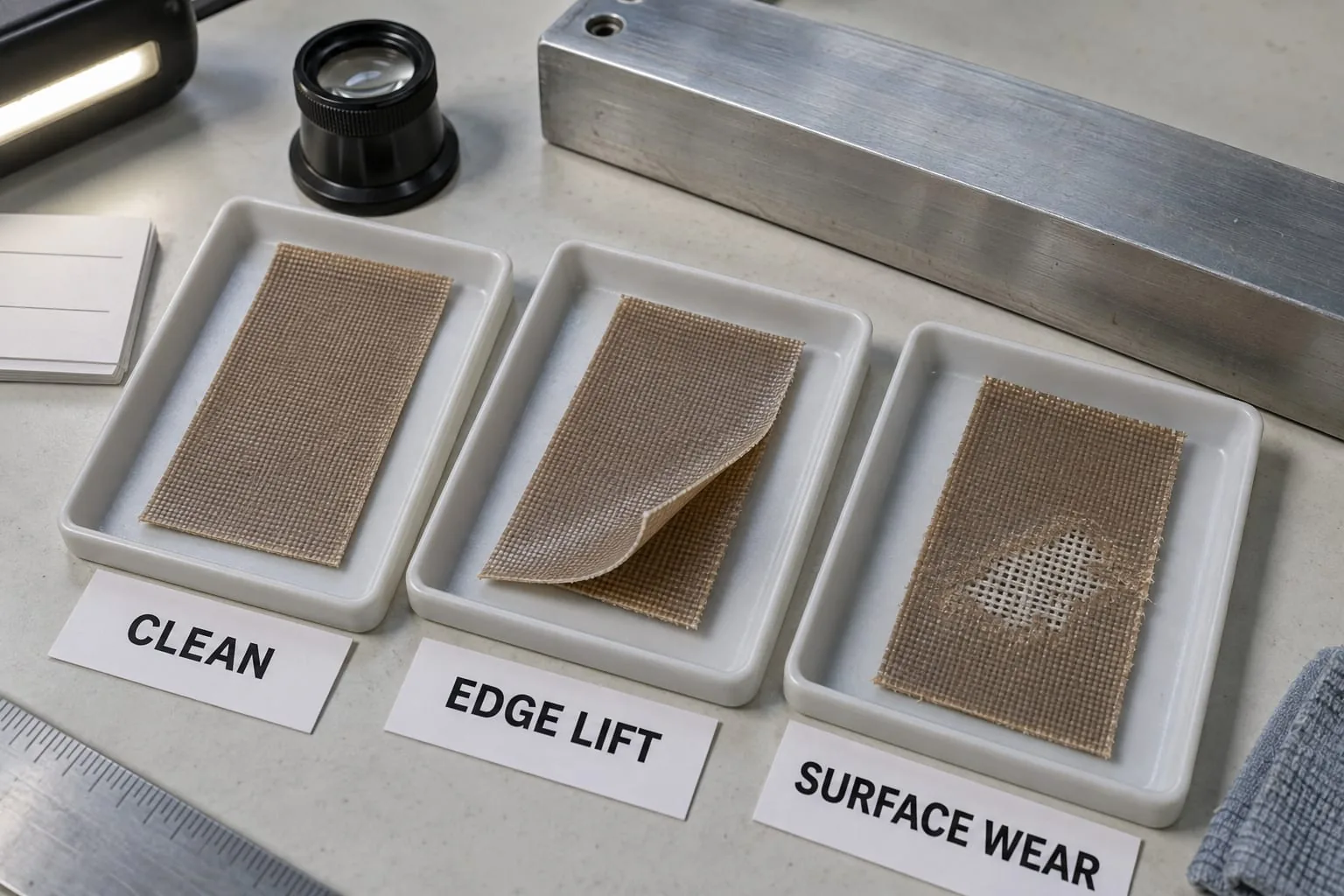
Start with the part that is actually installed. Record its width, thickness if known, backing and retention method. Check whether the surface is clean and continuous, and look for edge lift, creasing, tears, local wear or contamination. The condition comparison below is a visual aid for recording what you can see; it is not a pass or fail test.
Look for changes at the release surface
Sticking, creasing and contamination can indicate that the release layer, the sealing settings or another part of the assembly needs attention. Check the cloth together with the element, jaw and film path. If the cloth has lifted or worn locally, record where that has happened rather than relying on a general description such as “old tape”.
Make maintenance safe
Packaging machinery can injure people through moving parts and stored energy during use, maintenance or blockage clearance, and sealing parts run hot. HSE guidance recommends planned maintenance by competent people and isolating energy sources before work. Follow the machine maker’s procedure, isolate and lock off where required, and allow hot parts to cool before handling the cloth.
What to Send When Ordering Replacement Cloth
Send enough information for the tape to be matched to the working assembly:
- Machine make and model, if available.
- The old cloth width and the length you need.
- Whether the backing is self-adhesive or non-adhesive.
- The existing thickness, if it is marked or documented.
- How the strip is retained around the element or jaw.
- A clear photograph of the installed cloth and the removed strip.
- The film type and the sealing conditions if you need help checking the format.
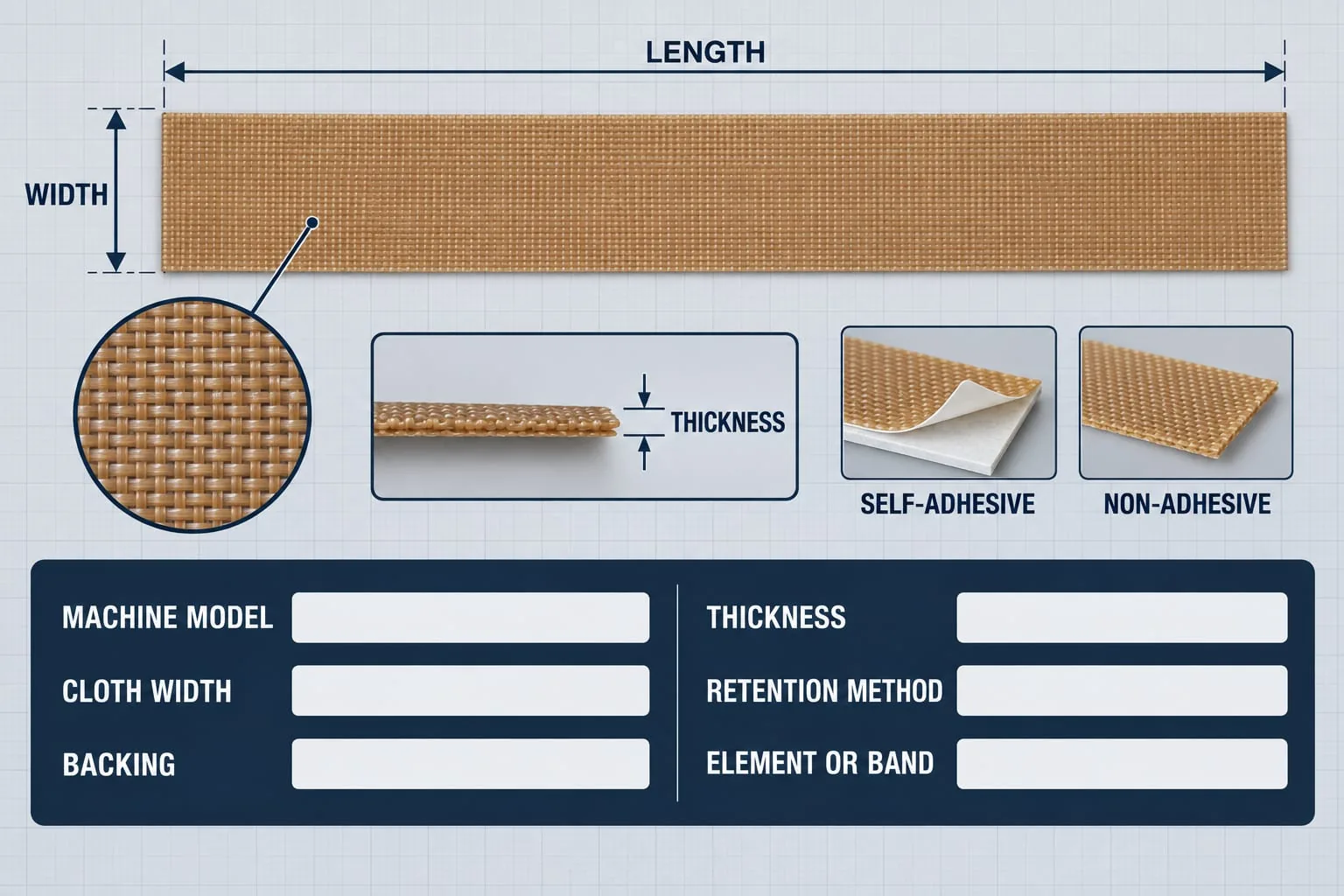
This information helps separate a cloth replacement from a heat-seal element, endless band or sealing-jaw requirement. It also gives the supplier a way to check whether the requested width and thickness fit the application rather than matching on the word “Teflon” alone.
Contact Heat Seal Components With the Machine Details
For a replacement PTFE cloth or a related heat-seal component, contact Heat Seal Components with the machine make and model, the cloth dimensions and a photograph of the installed part. The team can help check the available tape, element, band or jaw option against the information supplied.