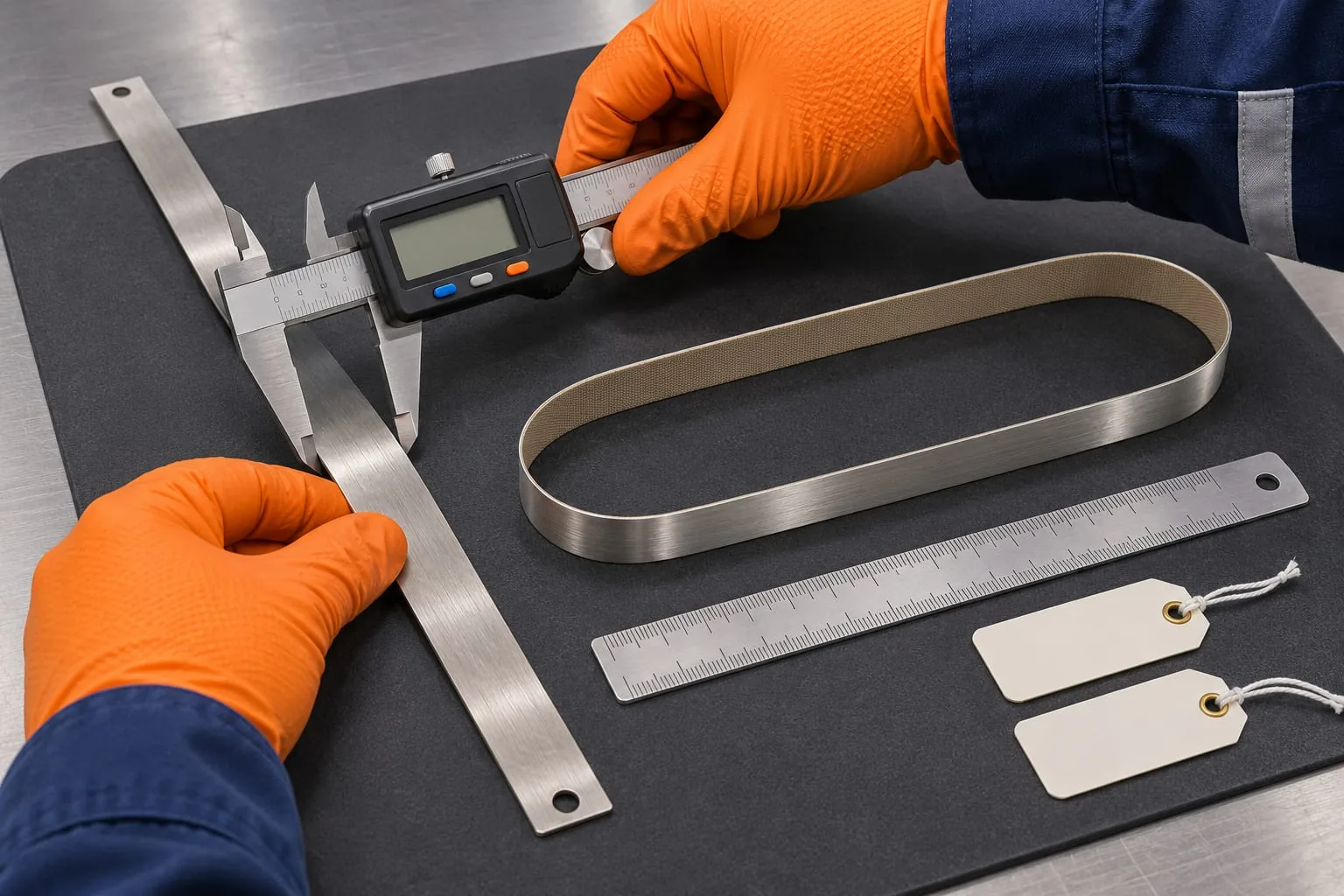
Vacuum packaging equipment can contain more than one sealing route. A search for a vacuum band sealer may refer to an endless band on a continuous machine, a sealing element in a vacuum packer, or a wider request for a replacement part around a vacuum-pack process. The machine label alone is not a part specification.
This guide shows how to identify the fitted component, record the sealing interface and prepare a compatibility request. Heat Seal Components supplies vacuum pack sealing elements, heat-seal bands, PTFE products, sealing jaws and bars, and related component guidance. It does not supply complete vacuum machines, pumps, bags or general machine repair services.
The search term needs a component answer
“Vacuum” describes an application, not a band profile
Vacuum packaging removes air from a pack and relies on an airtight seal to prevent its return. That process description does not identify the shape, length, material, support or connection of a replacement component. Two machines can be used for vacuum packing while using different sealing assemblies.
The Food Standards Agency’s vacuum packaging guidance is about safe food production, not spare-part selection. It is a useful reminder that the pack, the sealing process and the controls around the product must be considered together. It should be read alongside the food business’s HACCP procedures and the current guidance for its nation and product.
Start with the fitted part
Before asking for a “vacuum band sealer”, decide which item is actually worn, broken or due for replacement. It may be an endless band on a continuous route, a flat or formed heat-seal element in a vacuum packer, a PTFE cover or tape, or a sealing jaw or bar.
Do not infer the part from a marketplace photograph or a generic machine name. Use a clear image of the installed station, the removed component where safe, the machine plate and any parts drawing or previous order reference. If the part cannot be removed safely, photograph it in place with the guard or lid in the normal safe position.
Separate the band route from the vacuum packer seal
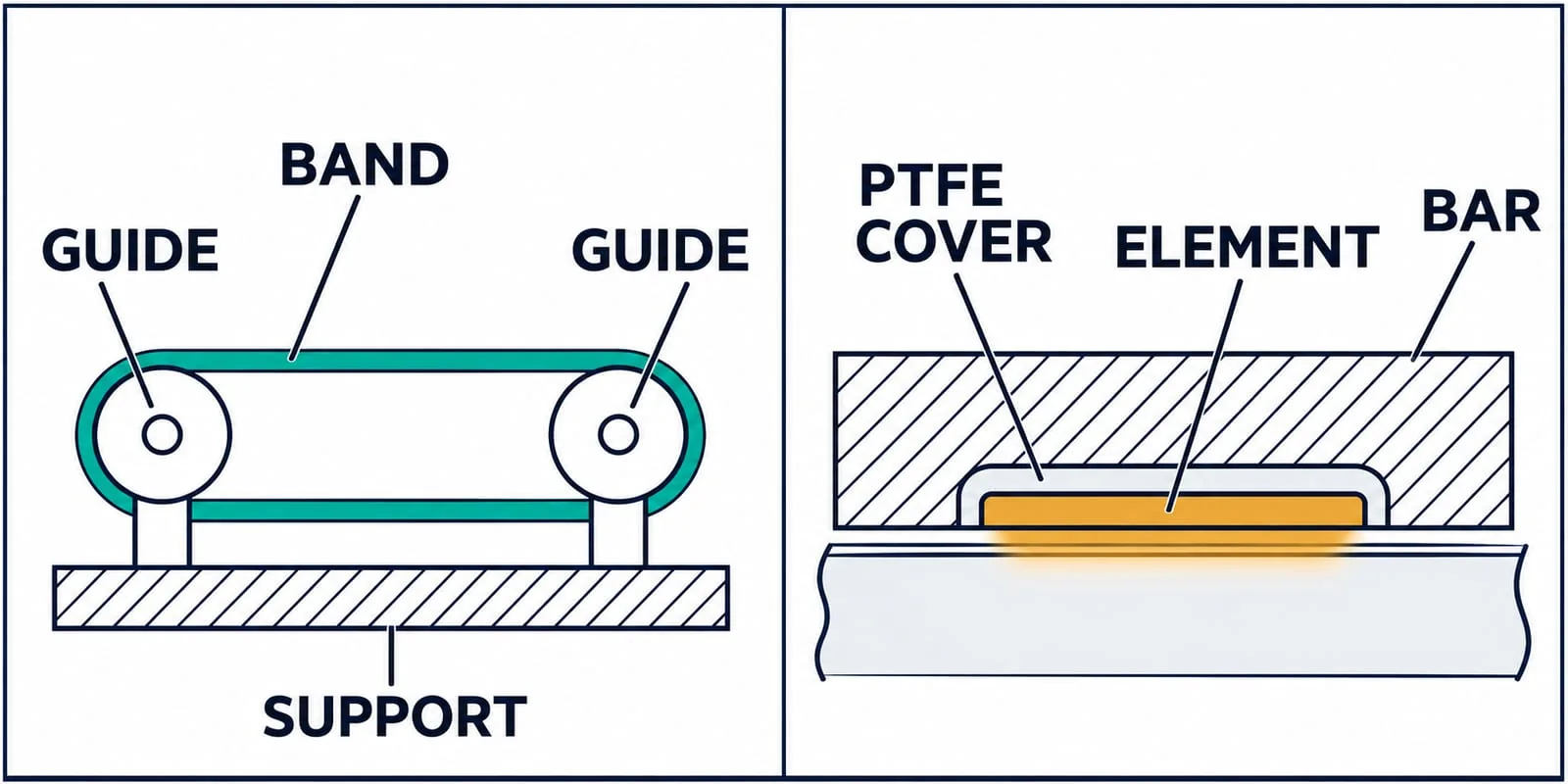
Evidence for an endless band
An endless band normally follows a defined route around guides, rollers or supports. Record the route before removal, including the direction of travel, changes of direction, tracking features, joint or weld detail, and the surfaces that guide or support it.
Measure the fitted band at identified points rather than measuring a nearby carrier or cover. Useful records include band width, thickness, loop length where it can be established, edge condition, surface finish and any marks that show tracking or rubbing. A band that looks similar in a photograph can still be wrong for the installed guide and tension arrangement.
The heat-seal bands service is the relevant route when the endless band itself is the component under review. It does not confirm that a band is interchangeable with a vacuum packer’s sealing element.
Evidence for a vacuum packer element
A vacuum packer may use a sealing element or wire held by a bar, cover or support. Record the element’s visible profile, length, terminal arrangement, tension or fixing method, insulating parts and the condition of the PTFE cover. Note the sealing-bar position and whether one or more sides of the pack are sealed in the same cycle.
The vacuum pack sealing elements service is a better starting point when the fitted part is inside a chamber or vacuum packing station. Do not substitute a continuous band just because the process removes air, and do not substitute a wire or element without checking the actual support and connection details.
Use a simple comparison record rather than a generic part name:
- Endless band route: record the loop or band, guides, rollers, supports, tracking and joint details.
- Vacuum packer seal assembly: record the element or wire, sealing bar, PTFE cover, terminals and insulation.
- Band measurements: record width, thickness, loop or joint details, and the point at which each measurement was taken.
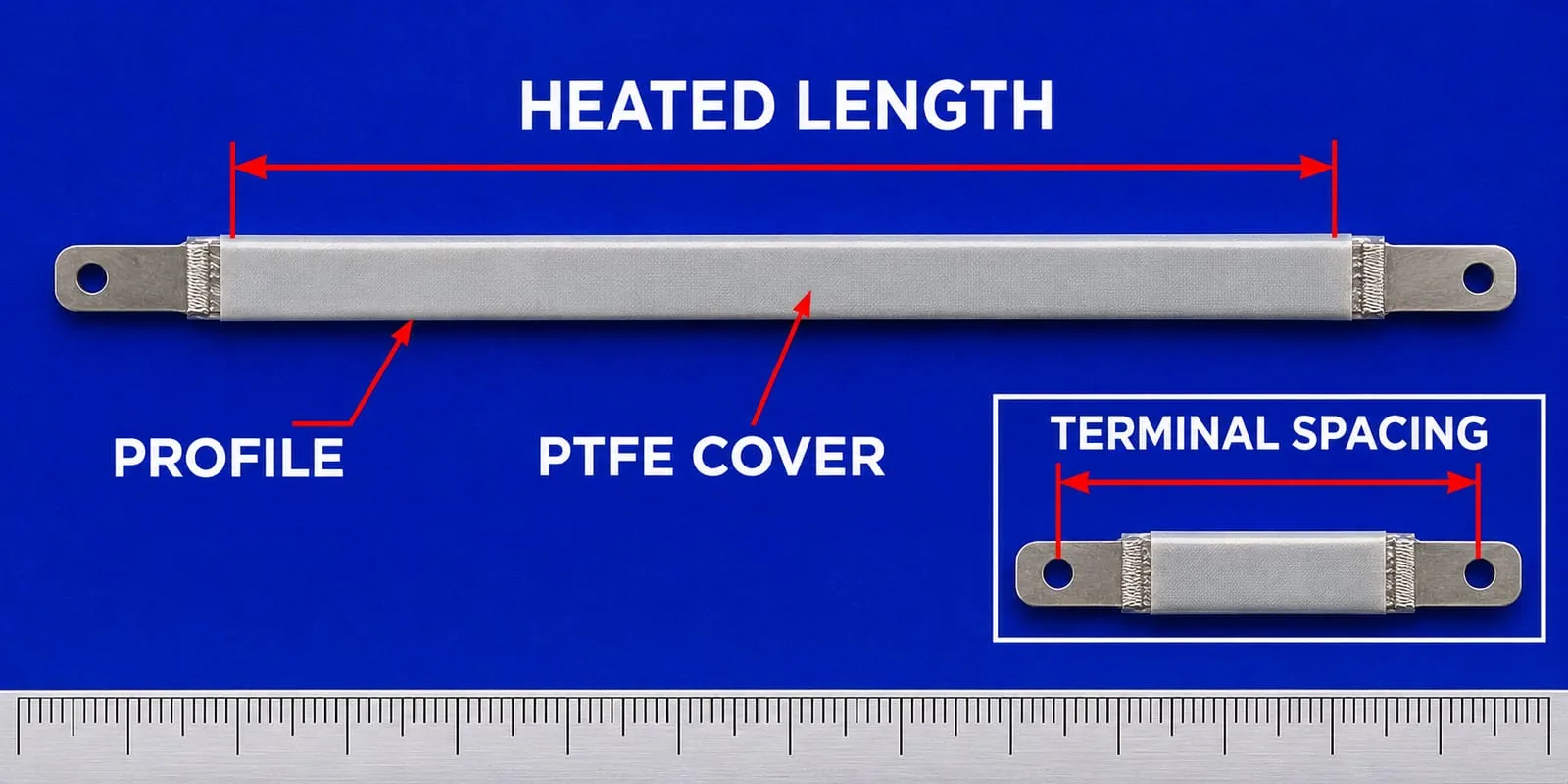
- Element measurements: record heated length, profile, fixing details and terminal positions.
- Photos: capture the full band route or the open bar, element ends and PTFE cover condition, subject to safe access.
Measure the sealing interface you actually need
Record measurement points, not just numbers
A procurement team needs to know where a measurement was taken. Mark the start and end of the heated length, identify the datum used for width or thickness, and note whether the component was measured under tension, flat on a bench or still installed. Use millimetres and retain a photograph of the measuring tool in position where practical.
For a formed element, record the shape as well as the overall length. Terminal spacing, bend positions, hole centres, notch positions and the relationship between the active heat path and the support can determine whether a replacement can be fitted. A single overall length is rarely enough to prove compatibility.
For an endless band, record the closed-loop route and any joint information. If the loop length is uncertain, state that it is an estimate and provide the measured band width, thickness, guide relationship and a sample or clear photographs for review.
Match the component to the support and cover
Heat is only one part of the interface. Check the backing or support, the insulation, the PTFE tape or coating, clamping arrangement and nearby parts that may affect contact. The PTFE heat-seal tape service can be relevant when a cover layer is the worn item, while PTFE coating is a different requirement for a component that needs a coating specification.
Do not describe a component as compatible solely because its material name matches the old part. Compatibility still depends on the machine interface, dimensions, fixing, heat path and the application information supplied for review.
Check the pouch, film and sealing face together
Clean contact is part of the evidence
For vacuum-packed food, GOV.UK says packaging should not contaminate food, packaging materials should be stored properly, and containers should be kept clean and undamaged. The FSA guidance also describes vacuum packaging as removing air and preventing its return with an airtight seal around the food within the packaging material.
That guidance does not turn a replacement component into a food-safety approval. A seal request should still include the pack material, product residue, contamination risk and the condition of the sealing face. A component that is dimensionally close may still be unsuitable for the actual film, pouch or cleaning regime.
Inspect the failure pattern before ordering
Record whether the problem is a broken element, frayed band, edge damage, uneven contact, sticking, contamination, a changed joint, a damaged PTFE cover or a seal that is not consistently closed. Photograph both good and failed examples if the line has a comparison available.
Avoid assigning the cause from the seal appearance alone. Uneven results can involve the component, alignment, support, control settings, film or product in the seal area. A useful supplier request separates what is observed from what is suspected.
Maintain the equipment safely and record change
Isolate, lock off and allow hot parts to cool
HSE’s PUWER overview says work equipment should be suitable, maintained, inspected where required and protected against access to dangerous parts. It also covers safe isolation and managing risks from very hot or cold equipment.
HSE’s maintenance guidance advises that competent people plan the work, stop and isolate moving plant, lock off against reconnection, release stored energy and allow hot components to cool. Follow the site’s isolation procedure and the machine manufacturer’s instructions. Never reach into a moving band path or exposed sealing area to identify a part.
Use a proportionate inspection record
HSE’s inspection guidance says inspection should be based on risk, deterioration, installation conditions and exceptional circumstances, with the manufacturer’s recommendations considered. The inspection should focus on safety-related parts and the record should be kept at least until the next inspection where a record is required.
For a vacuum sealing station, a practical record can note the date, machine and station, isolation completed, component condition, support and cover condition, contamination or residue, measurements taken, photographs stored, action required and the component fitted. Keep the record factual. Do not use it to claim a seal, vacuum level or shelf-life that has not been tested and validated by the responsible team.
Build a purchase request that can be checked
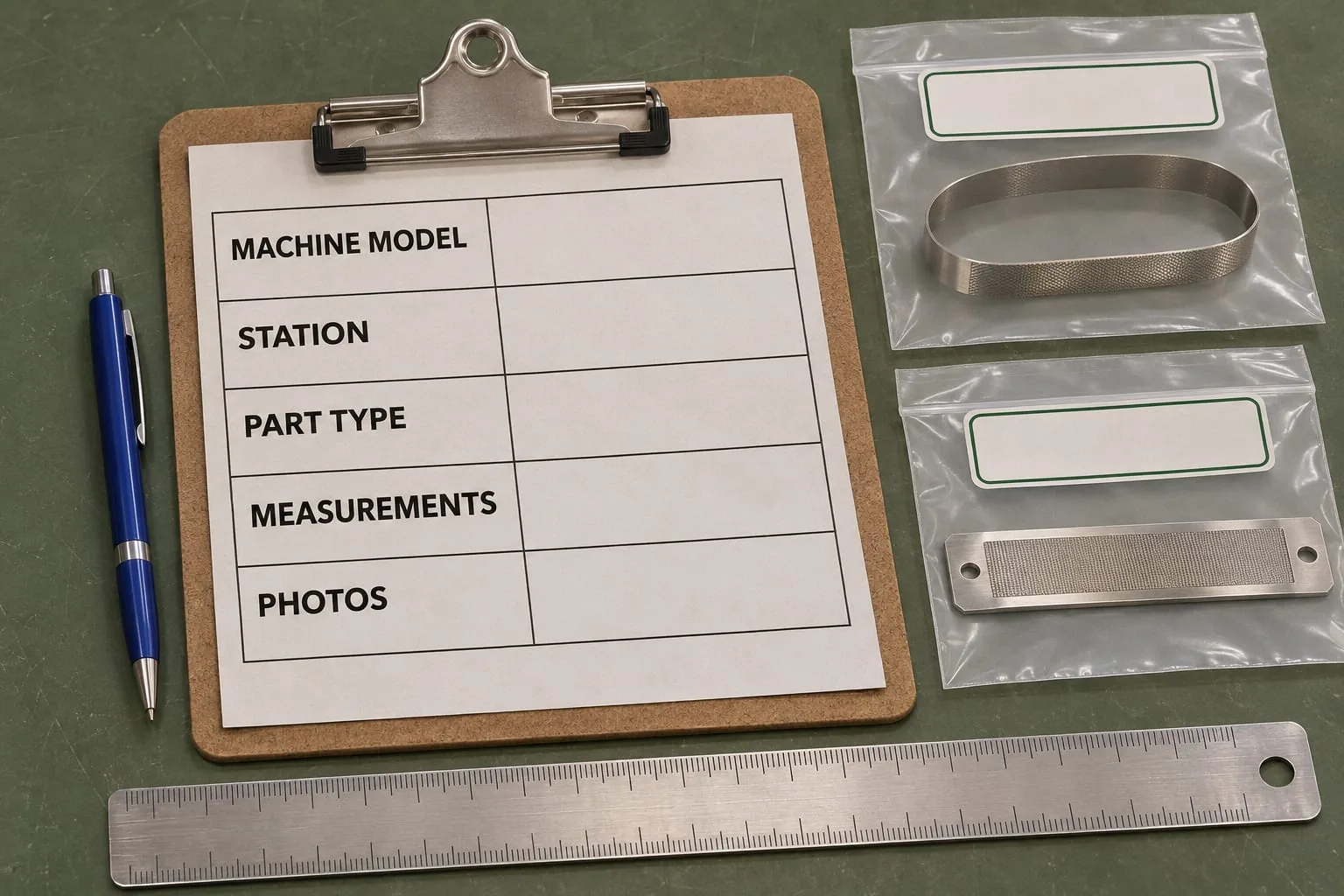
Send one evidence pack
A clear request should contain:
- machine manufacturer, model and serial or asset reference if available
- the sealing station and whether it is a band route or vacuum packer bar
- photographs from more than one angle, including the fitted position and removed part where safe
- measurement points, units and any uncertain dimensions
- band route, joint, guide and tension details, or element profile and terminal details
- PTFE cover or coating information and the condition of the support surface
- pack or film information relevant to the sealing interface
- observed failure pattern, maintenance history and any approved parts reference
If the required component is a sealing jaw or bar rather than a band or element, the sealing jaws and bars service is the more appropriate starting point. For an element that is not a standard shape, custom heat-seal element support may be relevant after the machine evidence has been reviewed.
Keep the wording precise
State what is known, what was measured and what still needs checking. A good subject line can include the machine model, station, part type and the words “compatibility review”. This gives engineering, maintenance and procurement teams a common record and reduces the risk of ordering a part based only on a broad search phrase.
For a component enquiry, contact Heat Seal Components with the photographs, measurements and machine details available. The team can then advise whether the request is best treated as a vacuum pack sealing element, endless heat-seal band, PTFE product, sealing jaw or bar, subject to the supplied evidence.