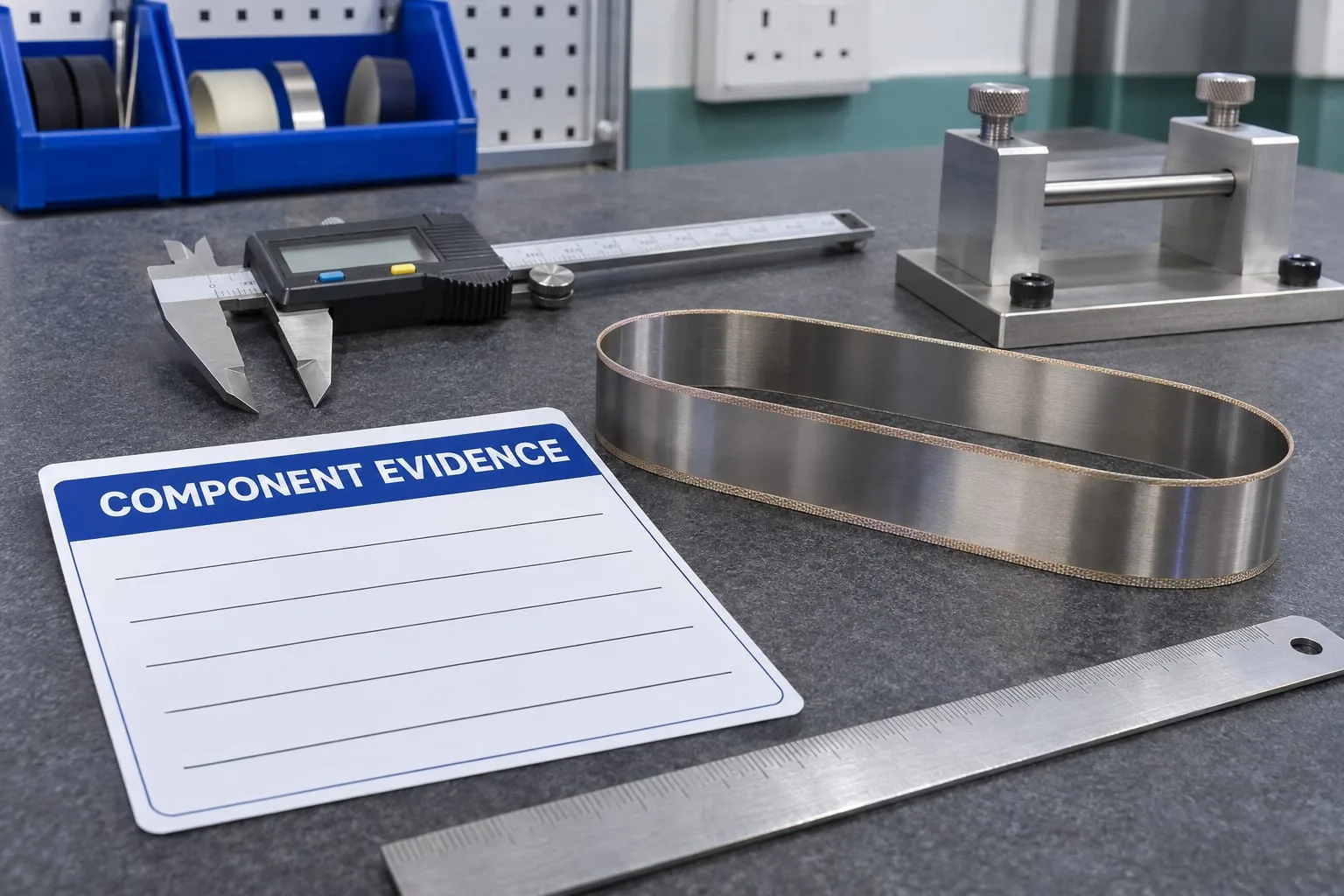
“Validatable band sealer” is a useful search phrase, but it can hide two different jobs. A production team may need evidence that its sealing process is controlled and repeatable. A maintenance or procurement team may simply need the correct endless band, sealing element, PTFE cover or sealing bar for a machine already in service.
The component is part of that evidence chain, not the whole validation claim. This guide shows how to separate the machine or process qualification from the replacement-part request, build a traceable component record and maintain the sealing route safely. Heat Seal Components supplies heat-seal bands, elements, PTFE products, sealing jaws and bars, and compatibility guidance. It does not supply complete sealing machines or certify a customer’s packaging process.
What a validatable band sealer request should prove
Keep component evidence separate from process validation
Validation belongs to the responsible production, quality or engineering team and should follow the site’s approved method, risk assessment and records. A replacement band or element can be specified and checked, but it does not by itself prove that a machine produces an acceptable seal on every pack.
For equipment used at work, the HSE PUWER overview emphasises suitability, maintenance, inspection where required, information, training, guarding and safe isolation. Those are equipment-management duties. They are different from a packaging process owner deciding the test method, sample plan and acceptance criteria for a product.
Use three separate questions:
- Is the machine and sealing station safe and suitable for the intended use?
- Is the installed band, element, cover or bar identified and fitted as intended?
- Does the approved production test show that the finished pack meets its defined requirements?
Keeping these questions separate prevents a supplier part number or a visual check from being presented as a complete validation certificate.
Start with the band route and sealing interface
Identify the component that actually controls the seal
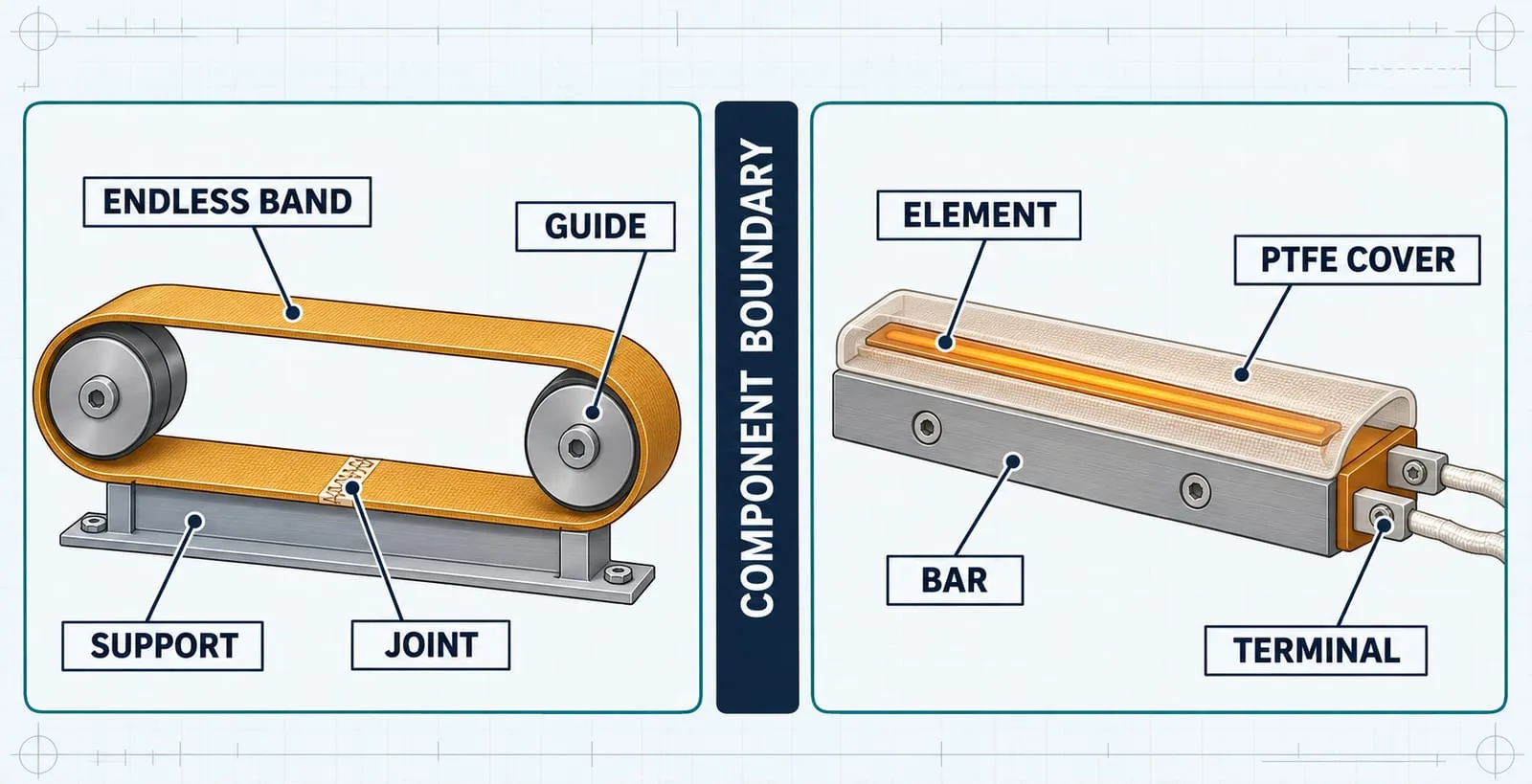
An endless band follows a continuous route around guides, rollers or supports. It may carry a heat-sealing surface, transfer motion through a sealing station or work beside a separate heating and pressure arrangement. Record the path, tracking features, joint or weld detail and the surfaces that guide or support it before removal.
A vacuum packer or impulse station may instead use a straight or formed element held by a bar, cover or insulation. A sealing jaw or bar can also be the part that defines the contact geometry. The machine application does not identify the replacement profile on its own.
The heat-seal bands service is the relevant starting point when the worn part is an endless band. For a chamber or vacuum packing station, compare the evidence with the vacuum pack sealing elements service. If the part is a jaw or bar, use the sealing jaws and bars service instead.
Record the interface, not just the machine name
Take photographs of the installed station, the component in place, the removed part where safe, the machine plate and any drawing or previous order reference. Show enough of the surroundings to establish orientation. A close-up with no datum can be difficult to use later.
For an endless band, record width, thickness, loop or joint information, guide relationship, tension arrangement and evidence of rubbing or edge damage. For an element, record heated length, profile, terminal position, fixing method, insulation and the condition of the PTFE cover. State which dimensions were measured directly and which are estimates.
Build a traceable component record
Use repeatable fields
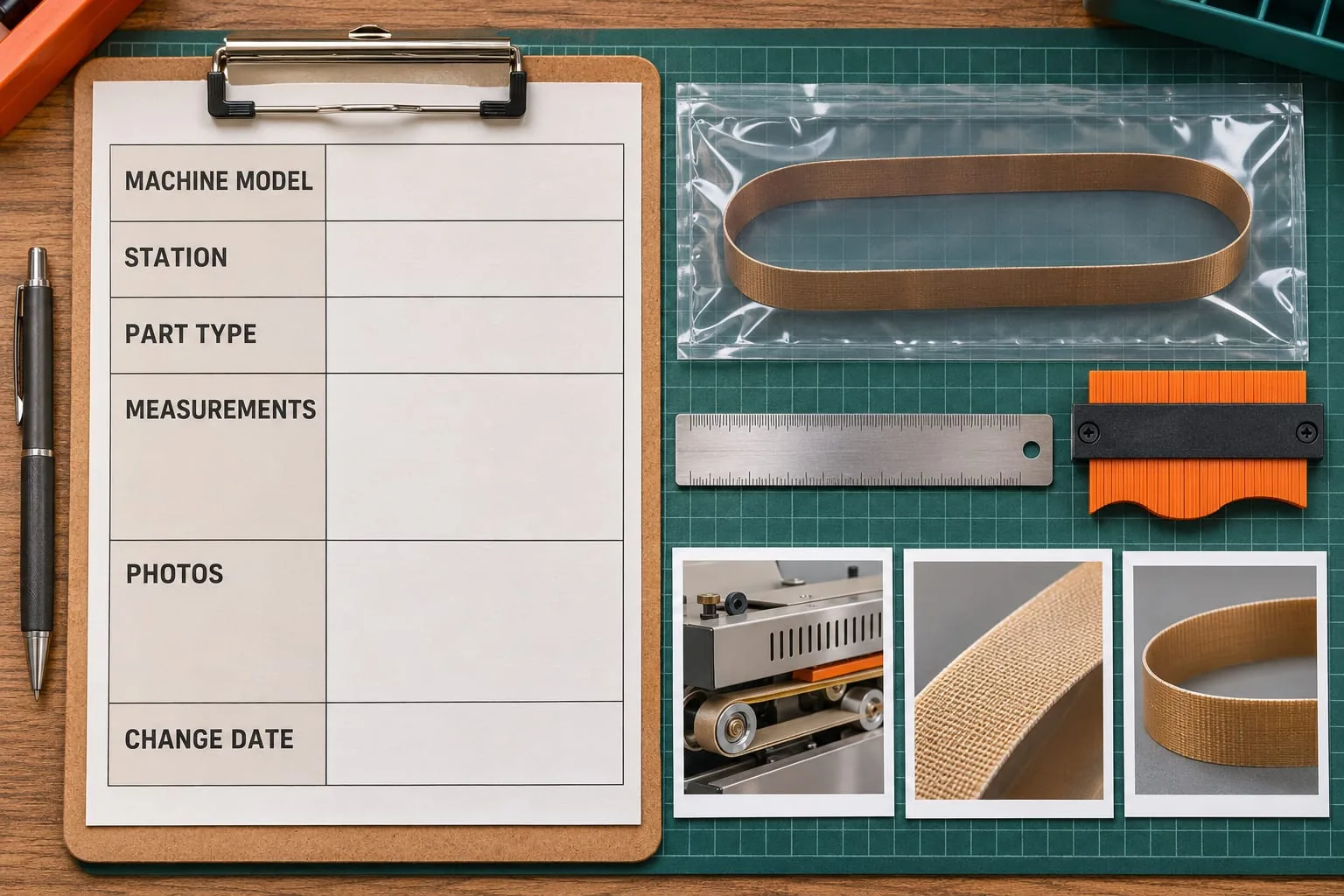
A useful component record can be short, provided another competent person can understand what was inspected and repeat the key measurements. Include:
- machine manufacturer, model and asset or serial reference where available
- sealing station, product direction and component type
- band width, thickness, loop or joint details, or element profile and terminal positions
- support, guide, tension, insulation, PTFE cover or coating details
- condition at removal, including fraying, stretching, tracking marks, contamination or local damage
- photographs, drawing references and the date and person responsible for the record
Use millimetres and identify the measurement datum. Mark the start and end of a heated length. For a loop, state whether the length was measured directly, calculated from a route or estimated from a sample. If a dimension is uncertain, label it as uncertain rather than filling the field with a guessed value.
Make changes visible
When a component is replaced, link the old record to the new one. Note what changed, why it changed, which checks were completed after fitting and which production or quality test remains the responsibility of the site. This creates a usable history without claiming that the component supplier has validated the entire process.
Where a cover layer is the worn item, compare the request with PTFE heat-seal tape requirements. Where a component needs a coating specification, PTFE coating is a different route from adhesive tape. Do not treat the words PTFE, Teflon or coated as a complete specification.
Test the seal process at the right level
Use the approved method and acceptance criteria
The component record should support the process test, not replace it. Depending on the product, packaging material and quality system, the responsible team may use visual inspection, leak testing, seal-strength testing or another approved method. The method, sample plan and acceptance criteria must come from the site’s process owner, customer requirement, manufacturer guidance or applicable standard.
Those methods are useful context, not a universal recipe for a UK band-sealer line. Link the test result to the material, machine settings, product condition and date instead of treating a component swap as proof of performance.
For food operations, the Food Standards Agency vacuum-packaging guidance explains that vacuum or modified-atmosphere packing needs appropriate controls, and GOV.UK notes that packaging should be suitable for food use and kept clean and undamaged. A heat-seal component can support the sealing interface, but it does not replace HACCP controls, packaging suitability evidence or shelf-life work.
Check the visible seal without over-interpreting it
Look for incomplete seals, wrinkles, channels, contamination, uneven contact, overheated areas or damage to the pack. Record the observation and the test result separately. A visual defect can indicate an issue with the band, element, jaw, support, alignment, film, residue or control settings, so do not assign a root cause from one photograph alone.
Maintain and inspect without breaking the chain
Isolate before inspection or replacement
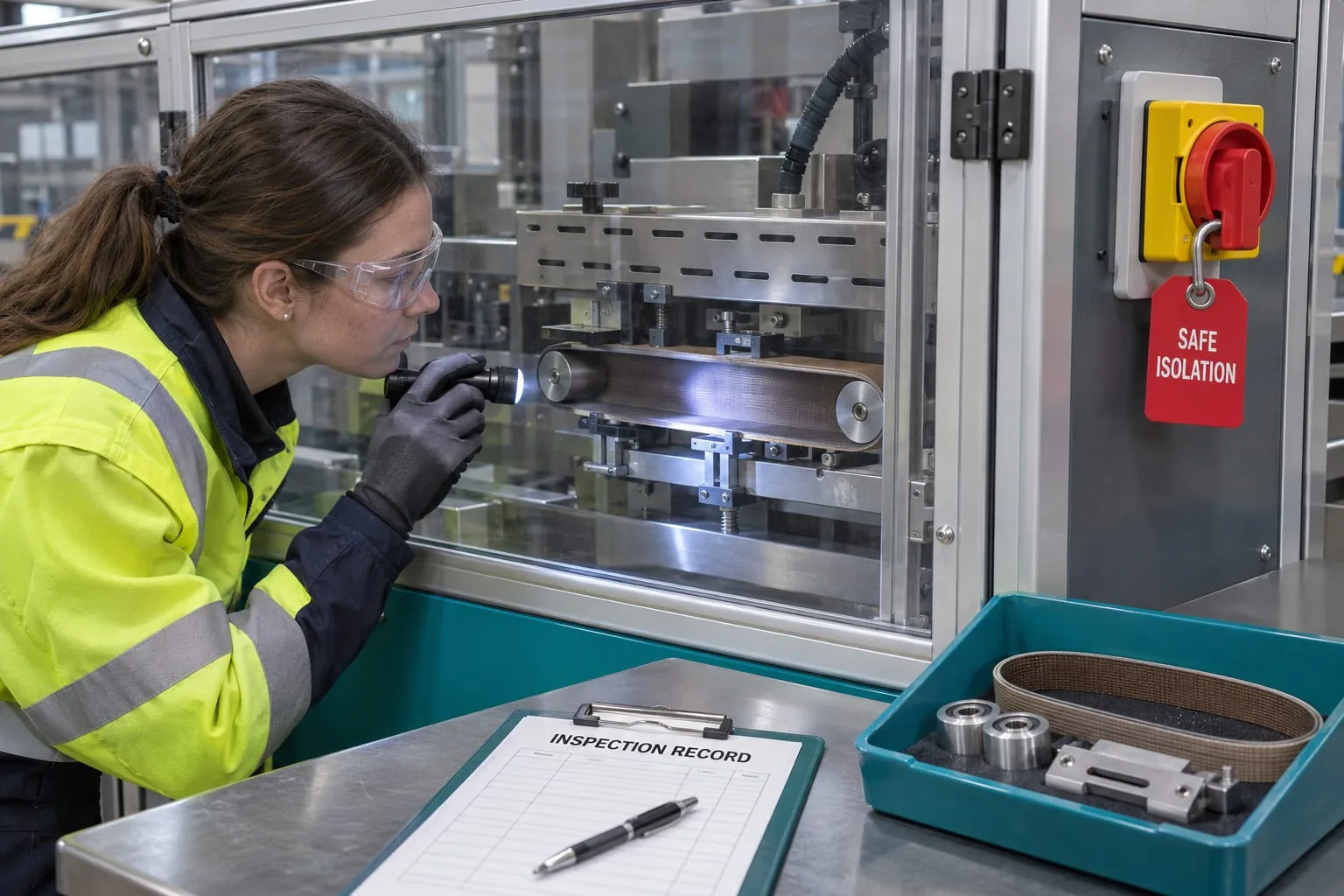
HSE maintenance guidance says work should be planned by competent people, with equipment stopped and isolated, stored energy released and hot components allowed to cool. Use the site’s isolation and lock-off procedure, including electrical, pneumatic, hydraulic and gravitational sources where relevant. Do not reach into a moving band path or exposed sealing zone to identify a part.
Packaging machinery can also present trapping and in-running-nip hazards. Guards, interlocks, emergency stops and safe cleaning procedures must remain part of the machine’s safety system. A component record should note that safe access was established, not encourage an operator to bypass a guard.
Inspect at a proportionate interval
The HSE inspection guidance says inspection needs depend on installation conditions, deterioration, risk and exceptional circumstances. It recommends considering the manufacturer’s instructions and recording the result where a record is required. The inspection should be tailored to the equipment rather than becoming a meaningless tick-box exercise.
For a band-sealing route, the record may cover guide condition, tracking, joint or weld condition, edge wear, support surfaces, PTFE cover, contamination, guards and the effect of a recent change. Use photographs and measurements where they help establish a trend. If the machine has a separate maintenance log, keep the component change and inspection reference connected to it.
Send a compatibility pack that can be checked
Include evidence in the first request
Send the machine model and station, the component type, clear photographs, measurements with datums, the band route or element profile, support and cover details, the observed failure pattern and any previous reference. Include the packaging material or application information needed to understand the sealing interface, without assuming that a supplier can approve the customer’s process.
If the shape is non-standard, custom heat-seal element support may be relevant after the evidence has been reviewed. If you need to discuss the component boundary or missing measurements, contact Heat Seal Components with the machine details and photographs available.
Use precise wording
Ask for a compatibility review of the stated part. Avoid asking for a “validated band sealer” when what you need is an endless band, sealing element, PTFE cover or sealing jaw. The clearer wording helps engineering, quality and procurement teams decide which checks belong to the component record and which belong to the production process.