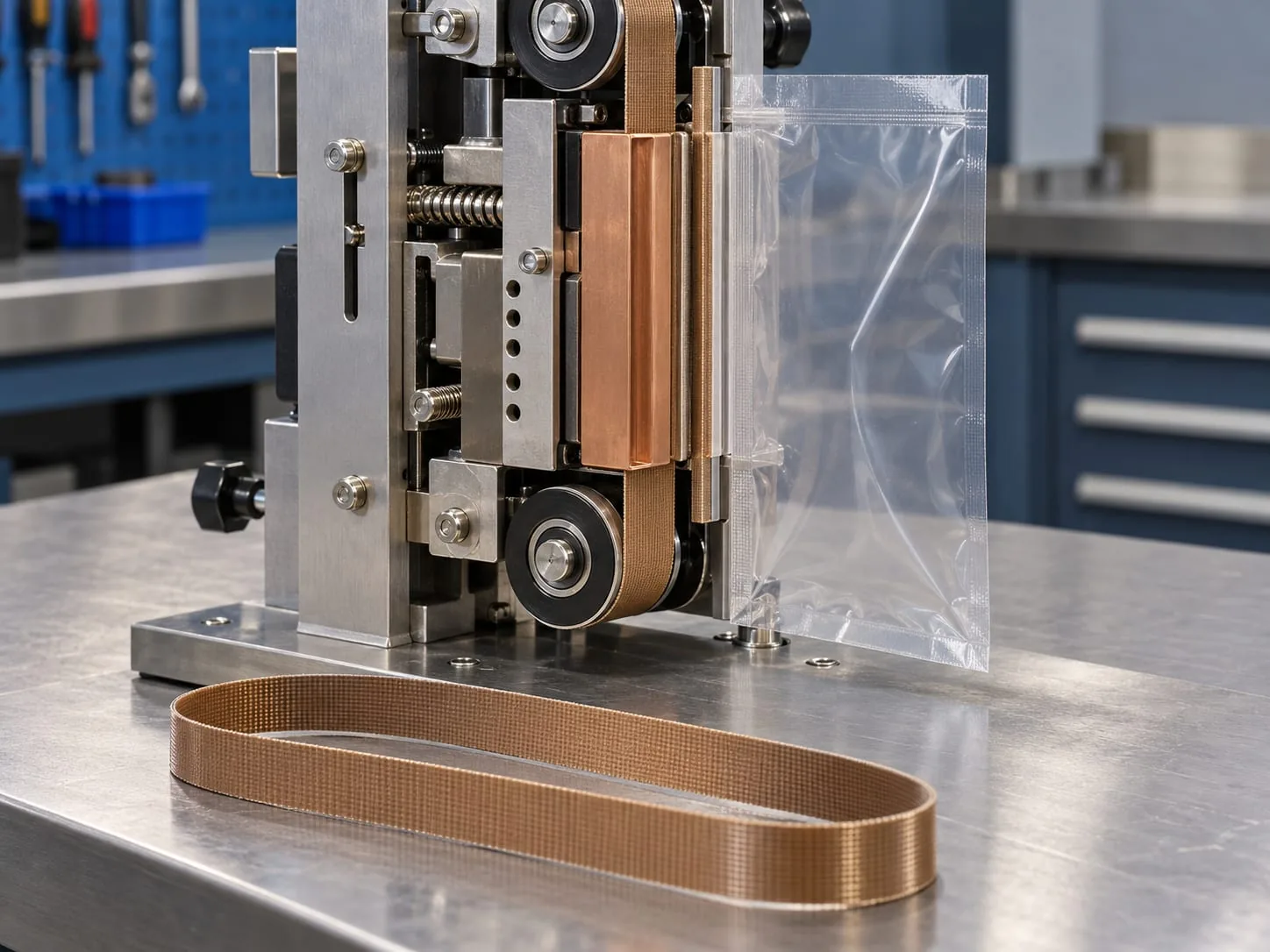
A vertical continuous band sealer uses a moving sealing band to carry a pouch past heating and cooling stages while the pack opening is presented upright. For engineers and maintenance teams, the key question is not simply whether a machine is labelled vertical. It is whether the fitted band, guide path, heating and cooling parts, pressure parts and support arrangement match the pack and the route.
Heat Seal Components supplies replacement heat-seal bands, heat-seal elements, PTFE heat-seal tape, sealing jaws and bars, and custom impulse elements. Good component advice starts with evidence from the fitted machine, not a model name on its own.
What makes a vertical continuous band sealer different?
The vertical arrangement changes how the pouch is presented and supported as it reaches the sealing zone. A guide, conveyor or support can affect the height and stability of the opening. The precise arrangement varies by machine, so confirm the fitted route in the manufacturer’s instructions before ordering a replacement part.
Keep the pack upright through the sealing zone
Some continuous band sealer manuals describe vertical arrangements for packs containing powders or liquids because the bag can be presented in an upright position. That is an application description, not a universal compatibility rule. The pack material, fill level, opening shape and machine support still need to be checked together.
HSE guidance for packaging machinery highlights in-running nips and trapping points around conveyors and moving parts. Guards, interlocks and a safe system of work matter during cleaning, setting and maintenance, not only during production. Read the HSE packaging machinery guidance before planning access to any moving sealing route.
Do not use the machine label as a part number
The words vertical continuous band sealer identify a machine arrangement. They do not identify the exact band profile, joint, guide path, heater, cooling block or pressure component. Two machines with similar names can use different component dimensions and mounting details.
Components on the vertical sealing route
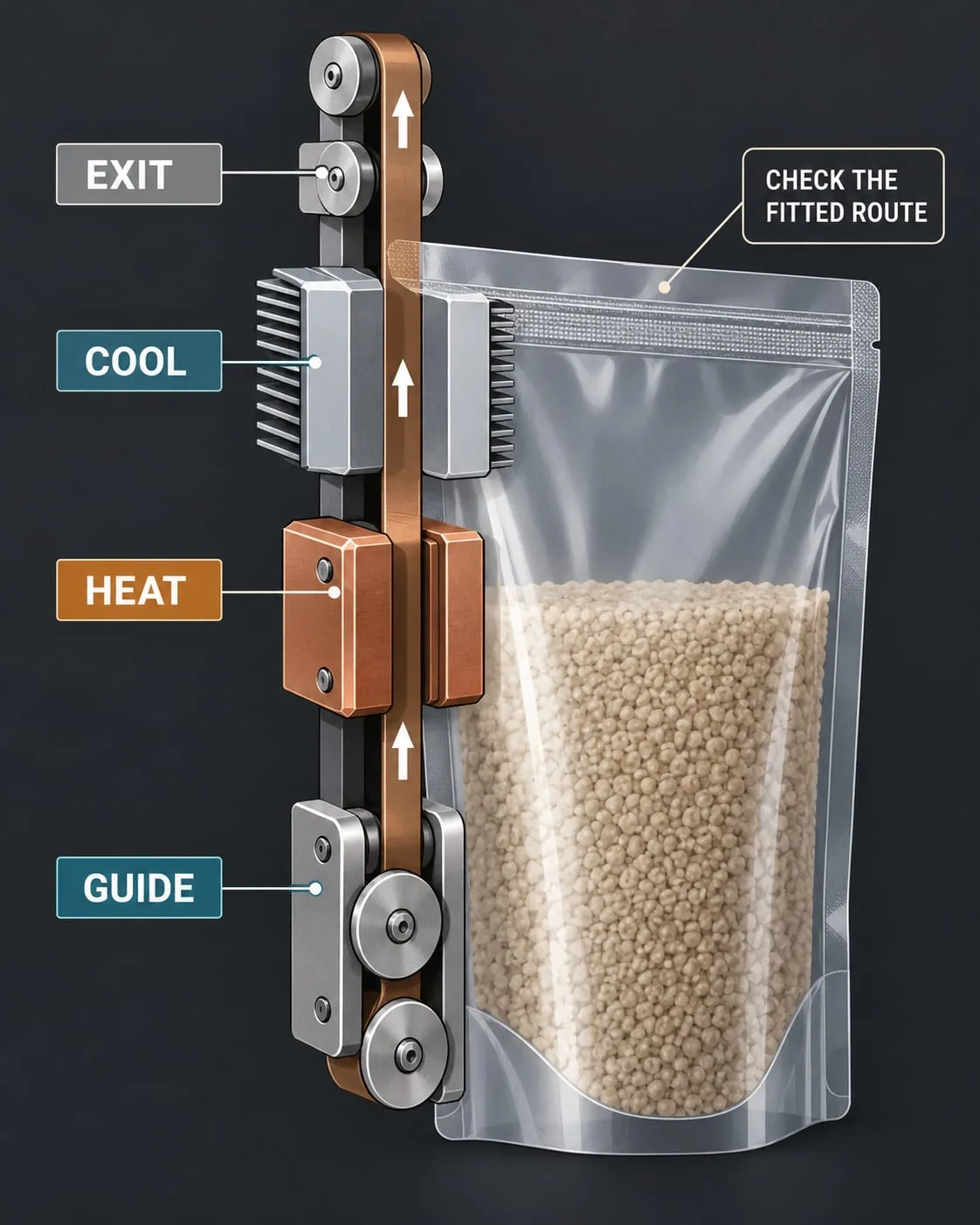
A typical route may include the following component groups. Treat this as a checking framework, not as a replacement specification for a particular machine.
- A continuous sealing band that carries the film through the sealing zone and is exposed to heat, pressure and friction.
- Heating and cooling blocks that bring the seal area to process temperature and then help it stabilise before the pack leaves the head.
- Drive, guide and pressure parts that keep the band and pack moving in the intended path.
- A conveyor, shelf, guide fence or other support that holds the pouch at the required height and presentation.
- Guards, covers, isolators and other safety features that control access to moving or hot parts.
Some heads also use a separate heating element or heater assembly inside the heating block. Do not infer the element size from the band width. Compare the fitted component, its terminals and its support arrangement with the machine information. Heat Seal Components also supplies heat-seal elements and custom impulse heat-seal elements when a standard replacement does not match the original.
Check compatibility before ordering a replacement
The most useful enquiry includes a clear view of the installed route and the part that needs replacing. A photo of the outside casing or a machine nameplate alone may not show the information needed to identify a compatible component.
Record the route, joint and support
Before removing a worn part, record the evidence that will help a supplier compare like for like:
- The machine name, model marking and whether the sealing head is installed vertically or horizontally.
- The direction of travel through the head, with a photograph showing the band route around the guide and drive parts.
- The original band profile, surface, width and material description where these can be confirmed from the part or machine documentation.
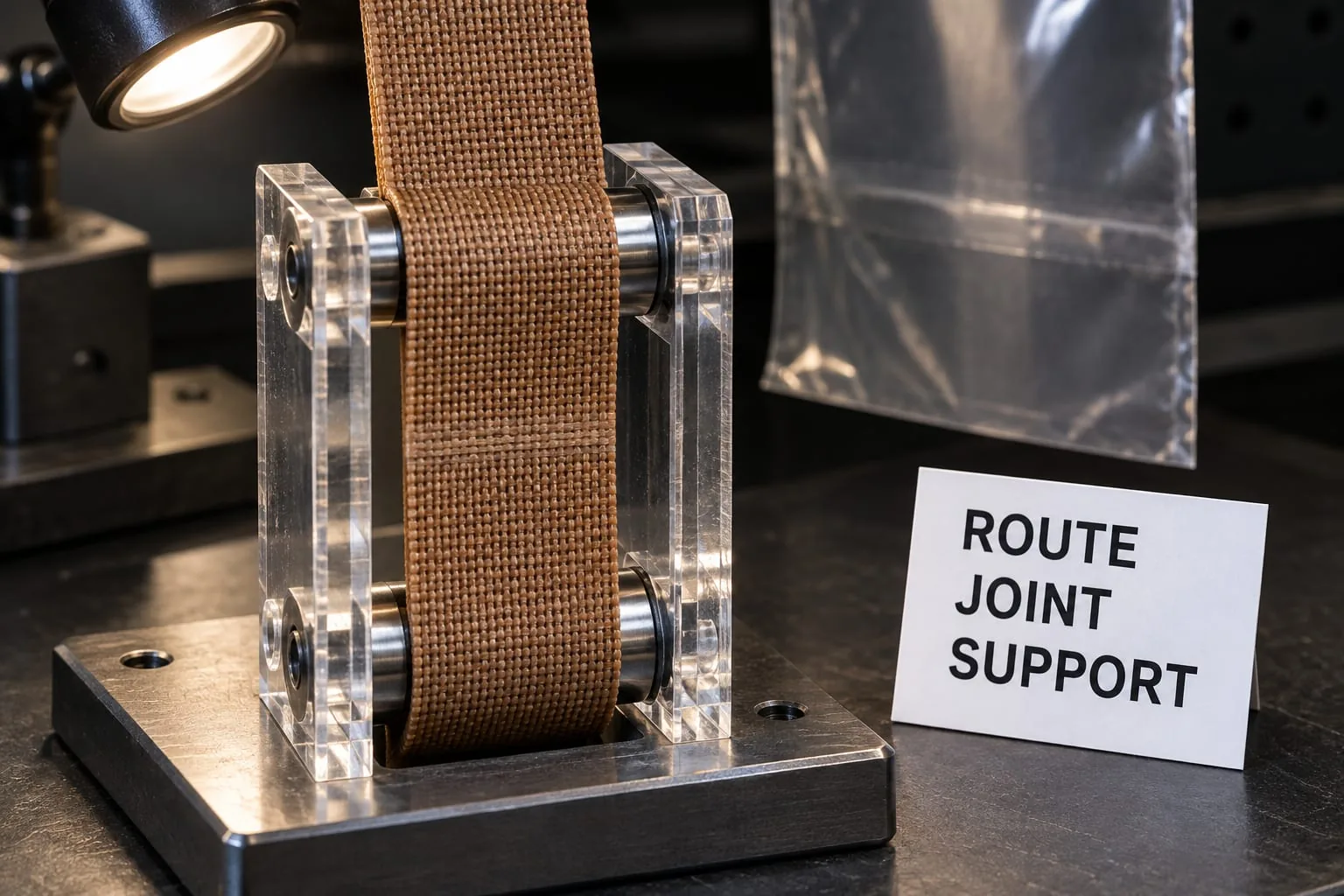
- The band joint or closure, including how it sits in the wheels and guides.
- The support, guard and cover arrangement around the heating and cooling area.
- A sample or photograph of the seal defect, if the replacement is being considered because of poor seal quality.
Do not substitute dimensions from an online example for the dimensions of the fitted component. If the band, guide or support has already been changed, record that too. It may explain why a replacement that looks similar does not track correctly.
Compare symptoms with physical evidence
Band drift, frayed edges, residue, an uneven seal or a weak joint can have more than one cause. Check the band and its joint, but also check alignment, film presentation, pressure, temperature, speed and the condition of the cooling area. A failed seal does not prove that the band is the only faulty part.
Set the sealing process around the pack material
Temperature, speed and pressure work together. A continuous band sealer manual describes the need to adjust temperature and speed for the band material and the thickness of the bag, then check the result. Those settings are machine and material dependent. They are not universal replacement specifications.
Temperature and speed need a controlled trial
Use the manufacturer’s instructions and the film supplier’s guidance as the starting point. Make a controlled trial with the intended pack material, then inspect the seal across its full width. A higher temperature is not a safe substitute for a dirty sealing surface, poor alignment or an incorrect band route.
The Interplas continuous band sealer manual describes adjustable conveyor height, band position, tension, temperature and speed. Use such manuals to understand the adjustment points on the relevant machine, but do not copy their example values to another model without verification.
Keep the contact surfaces suitable for the film
Film residue can affect heat transfer, tracking and the appearance of the finished seal. Clean the fitted parts using the method approved for that machine and material. Where a sealing face needs a protective surface, use the correct PTFE heat-seal tape or PTFE coating service, matched to the component and working conditions.
Maintenance and fault checks
HSE maintenance guidance recommends planned work, competent people, safe isolation, release of stored energy and time for hot components to cool. It also advises using the manufacturer’s maintenance instructions, especially where safety-critical features are involved. The HSE maintenance guidance and its machinery safety introduction are useful starting points for a site procedure.
- Stop the machine, isolate the relevant energy sources and lock off where accidental restart is possible.
- Allow the heating and cooling area to reach a safe condition before opening the guarded section.
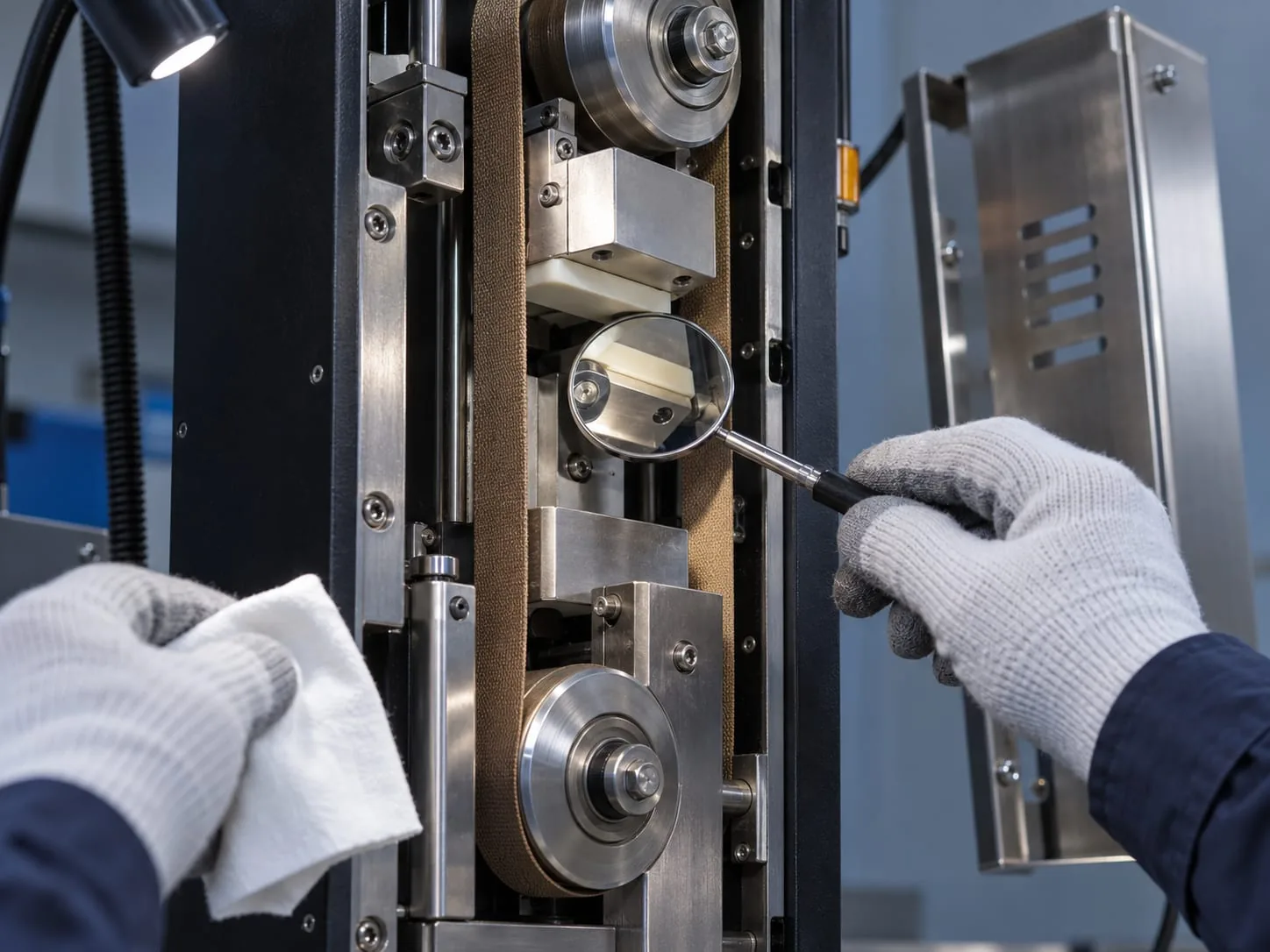
- Inspect the band for fraying, contamination, tracking marks, joint damage and signs of over-tension.
- Check guides, pressure parts, heating and cooling surfaces, supports and covers for wear or obstruction.
- Clean and refit the parts in line with the machine instructions, replace guards and complete a controlled test before returning to production.
Do not leave a sealing band stationary under high heat unless the manufacturer’s procedure specifically requires it. One continuous band sealer manual warns that a stationary band under high-temperature heating can burn out the band. Follow the stop and cool-down sequence for the actual machine.
When a replacement component is needed
Heat Seal Components can review photographs, measurements and machine details for replacement heat-seal bands, elements, custom impulse elements, PTFE tape, sealing jaws and bars. The aim is to match the part to the fitted route and application, rather than assume that a generic component will fit.
If you need help identifying a component for a vertical continuous band sealer, contact Heat Seal Components with the machine marking, orientation, route photographs and any failed seal samples you can share.