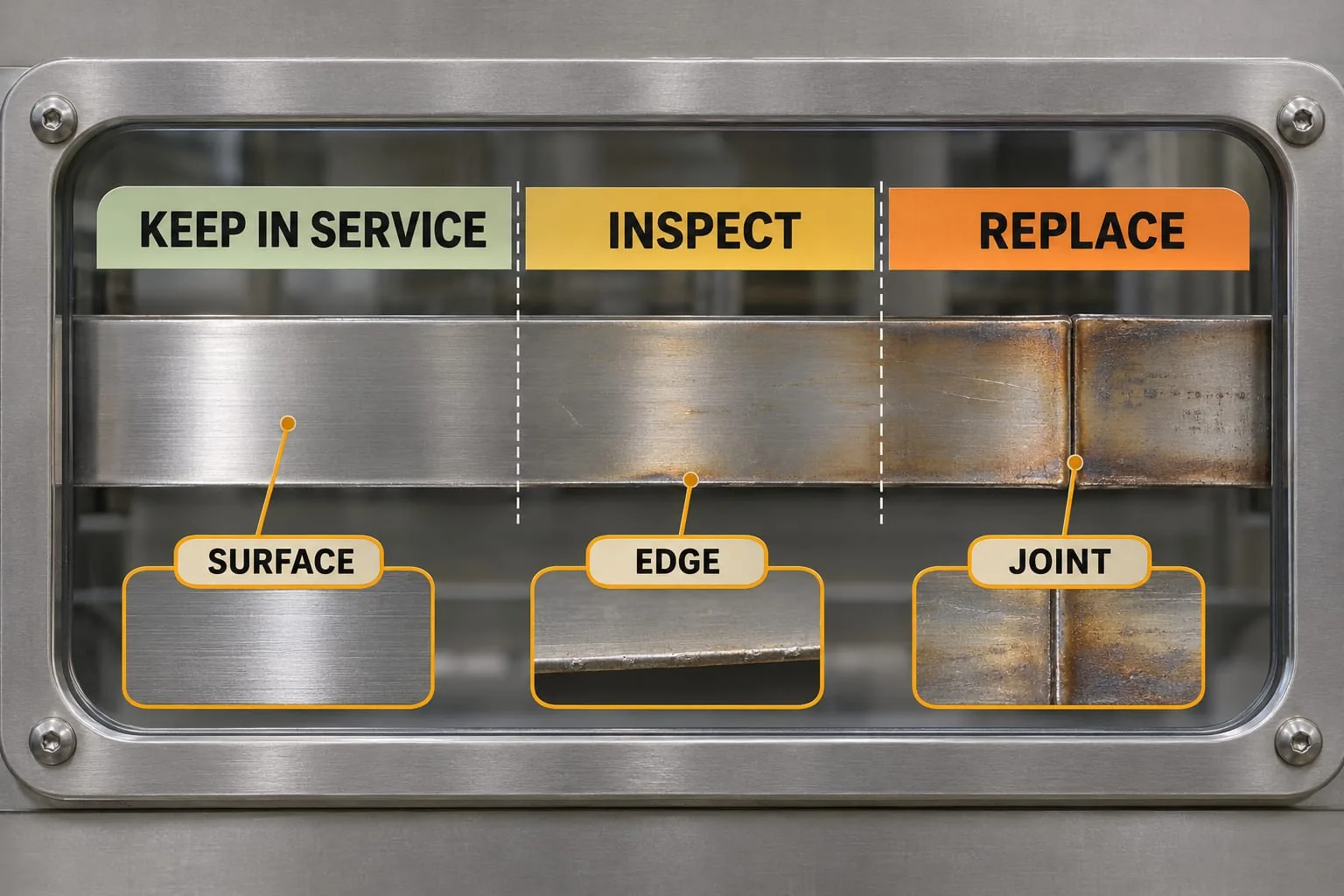
Replacing a sealing band too early wastes a serviceable part. Replacing it too late can leave a packaging line with uneven seals, repeated stoppages or a component that is harder to identify after failure. The useful question is not simply how many hours the band has run. It is whether its condition, the quality of the seal and the surrounding assembly still support safe, repeatable operation.
This guide helps packaging engineers, maintenance technicians and production managers decide what to inspect, what to replace and what evidence to collect. It covers endless bands and related sealing components without inventing a universal service interval. The machine maker’s instructions, the application and the site risk assessment remain the controlling references.
Use condition, not a calendar, to decide replacement
There is no single replacement interval that applies to every heat-seal band. Material being sealed, sealing temperature, seal time, cycle rate, cleaning method, alignment and the condition of the opposing parts all influence wear. HSE maintenance guidance also expects maintenance to be planned around the equipment, its risks and the manufacturer’s instructions rather than treated as an improvised repair.
For that reason, use a condition record alongside any planned maintenance schedule. Record the machine, band position, part description, symptoms, photographs and the date of each inspection. A short history makes it easier to distinguish normal wear from a new alignment or contamination problem.
An endless heat-seal band is one part of a working assembly. The correct decision may be to replace the band, replace a cover strip or pad, clean a guide, correct tracking, or review a separate heating element. Do not treat every poor seal as proof that the band itself has failed.
Read the band’s physical condition
Inspect the working surface
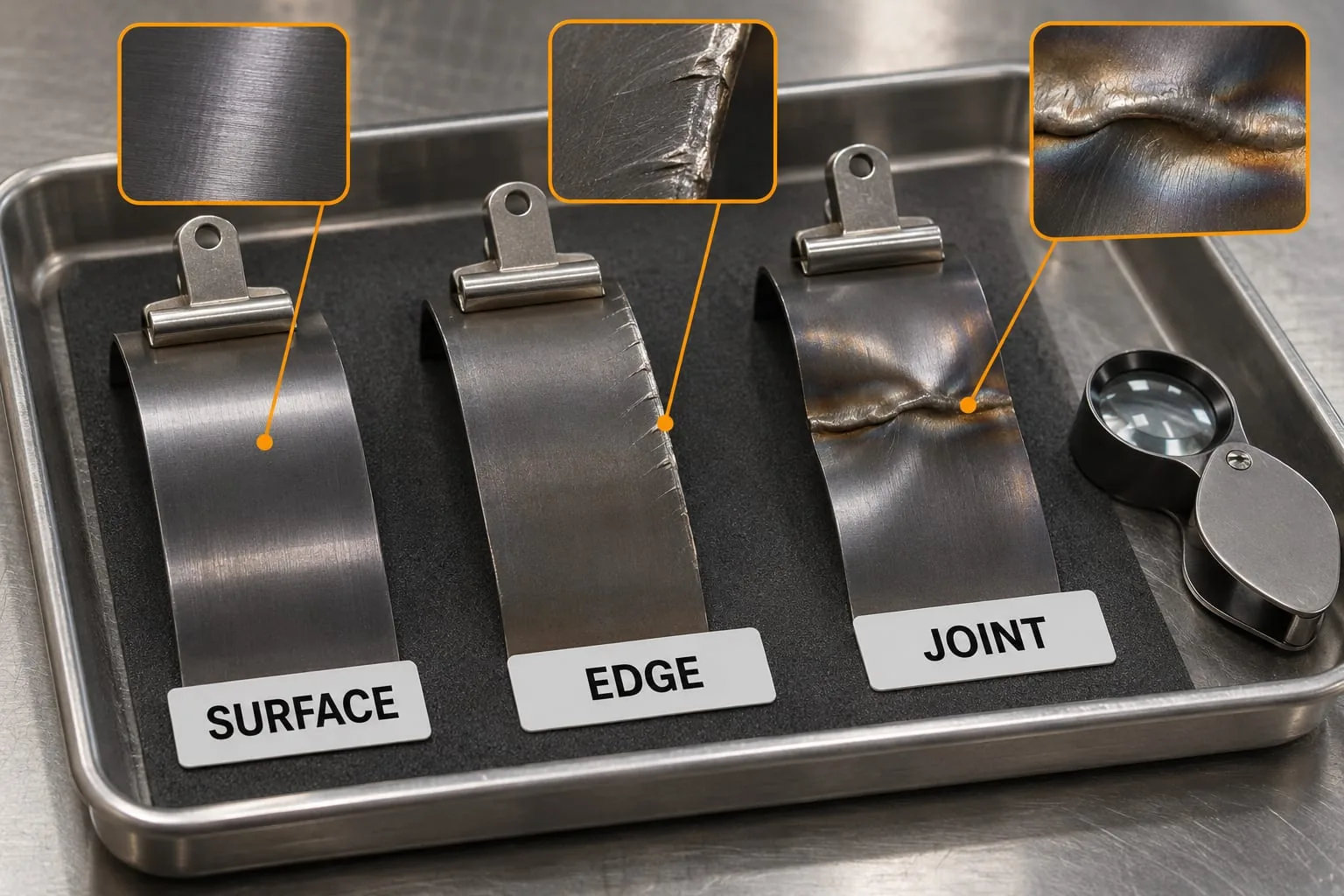
With the equipment isolated and cool enough to handle, inspect the surface that contacts the package or the cover material. Look for visible contamination, scoring, cracks, distortion, coating loss, darkening, fraying or a change in the band’s shape. A mark should be recorded with a photograph and its position in the route, not described only as “worn”.
The severity depends on where the damage sits. A small mark outside the active sealing path may need monitoring, while a defect across the working zone can affect heat transfer, release or seal appearance. Never infer a safe operating limit from appearance alone. Compare the condition with the machine instructions and the site’s inspection method.
Treat the joint, edge and tracking as evidence
An endless band must travel through its route without catching, rubbing or wandering. Inspect the joint or joined area, the edges and the points where the band passes guides, rollers, compensators or supports. A kink, raised joint, edge nick or recurring tracking adjustment is a reason to stop and investigate the assembly before ordering a replacement.
A replacement loop can wear quickly if the original cause remains. Record whether the band is tight or slack at the adjustment, whether the route is centred, and whether a guide or roller is dirty, damaged or misaligned. These observations help a supplier compare the component with the actual machine interface.
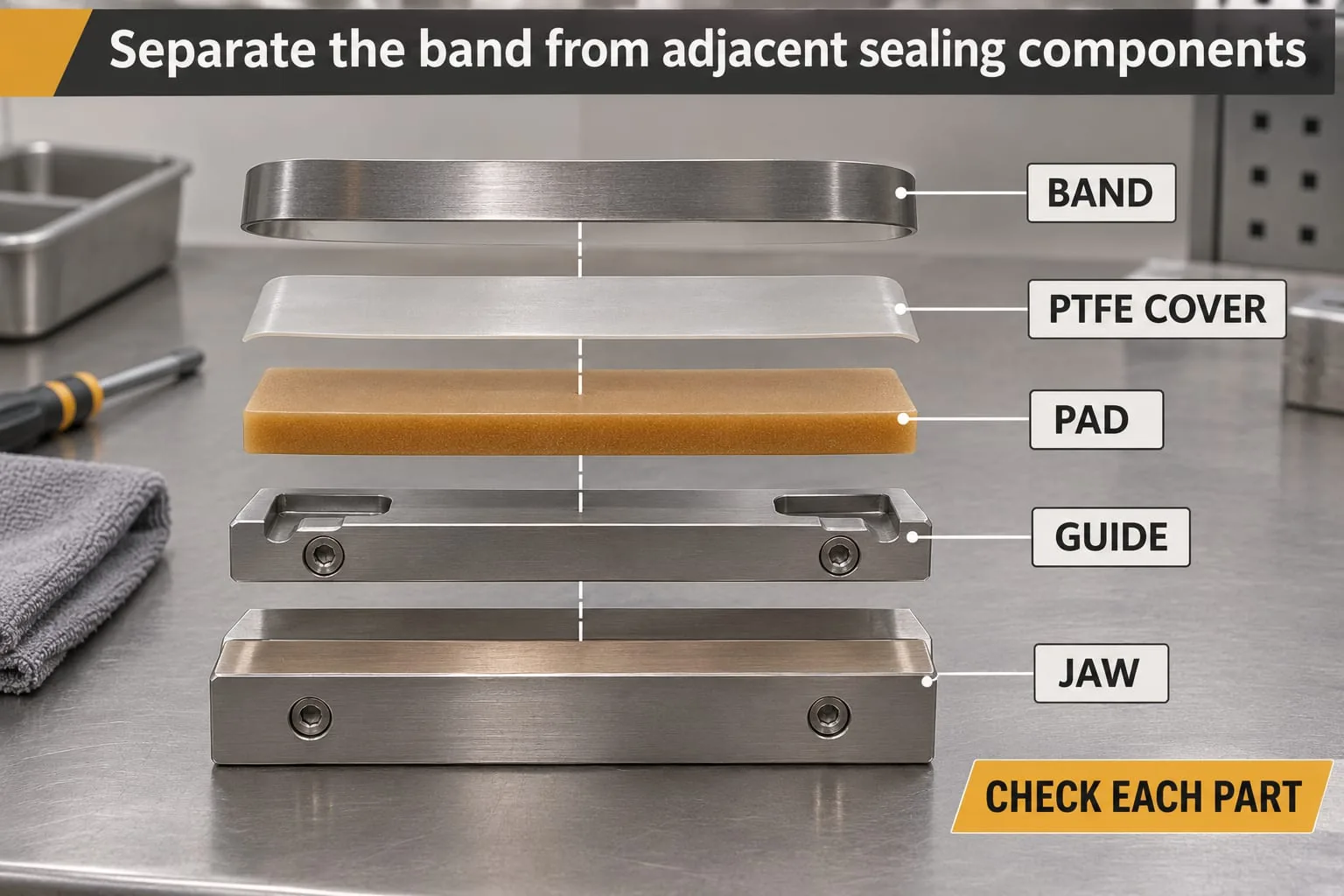
Separate the band from adjacent sealing components
Check the cover strip, pad and guide
Some sealing assemblies place a PTFE cover strip, support material or resilient pad next to the band. These parts can tear, wrinkle, harden, deform or collect residue while the band still appears intact. A model-specific Eastey manual treats the seal band, PTFE tape, pads and guides as separate items that may need inspection or replacement as part of the same maintenance task.
If the cover material is damaged, replace it with the specified product or ask for a compatibility review. Heat Seal Components’ PTFE heat-seal tape service is relevant when the tape or cover route needs to be identified. Do not assume that a generic tape, a thicker layer or an adhesive strip is an equivalent substitute.
When the band may not be the root cause
Poor results can also come from the opposing jaw or bar, a worn resilient facing, a guide that prevents free movement, or a separate heating element that is not delivering the intended heat. The sealing jaws and bars service is the relevant route when the problem appears to be in the jaw or bar assembly.
Where the equipment uses a replaceable wire, ribbon or formed element rather than the band being inspected, compare the part against the heat-seal elements service. Identify the component’s location and function before ordering. “Sealing band” and “sealing belt” are not reliable names for every part in a packaging machine.
Match symptoms to a replacement decision
Seal gaps, weak seals and poor cut-off
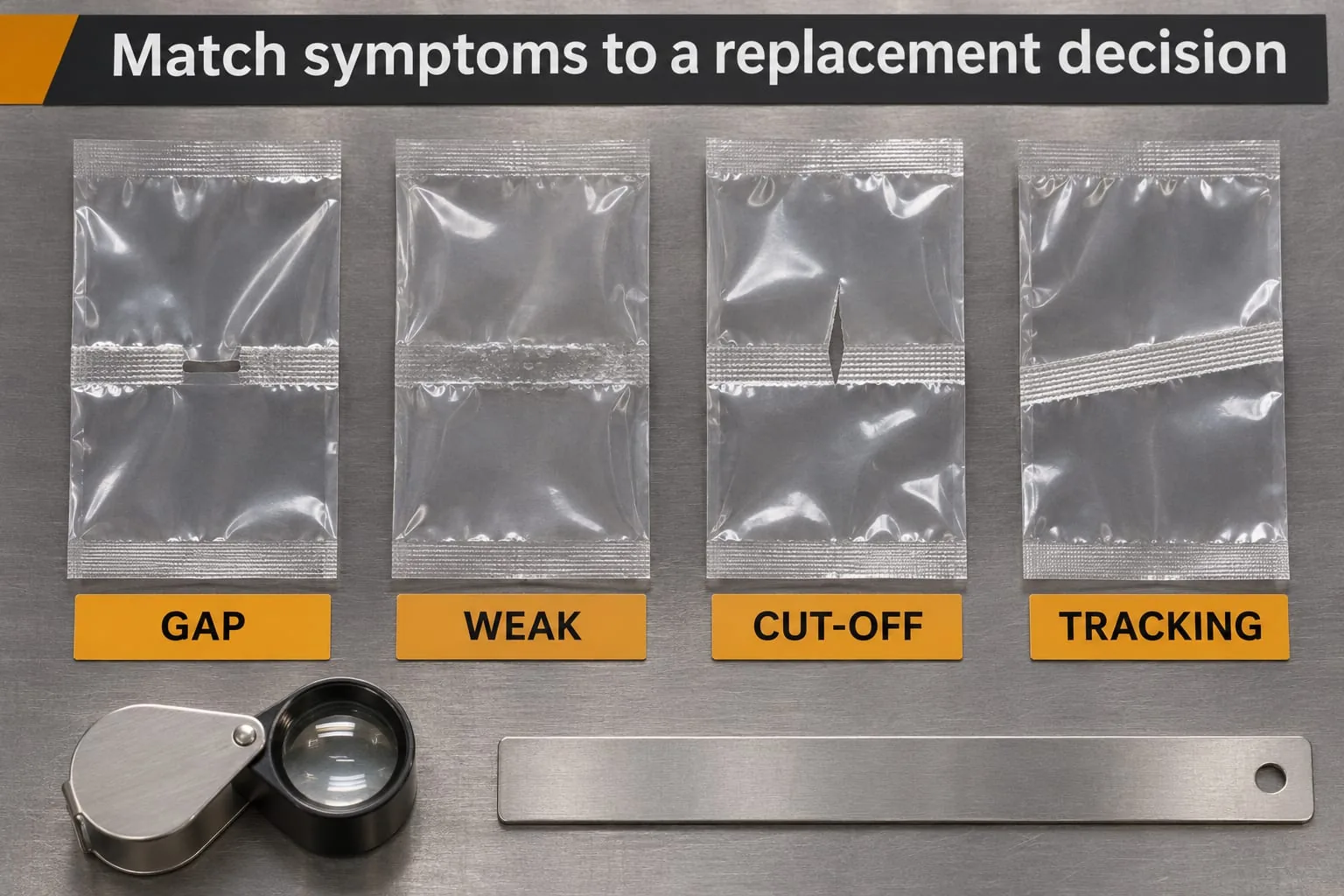
Seal gaps, weak seals, poor cut-off and a need for unusually high pressure are useful symptoms to record. An Eastey operator manual lists these symptoms as reasons to inspect the seal band, PTFE tape, pad and related parts after checking the factors affecting heat and timing. Treat that guidance as specific to the documented equipment, not as a universal diagnostic rule.
The practical sequence is to preserve a sample, photograph the defect, note the machine setting and inspect the band and opposing surface. If the defect follows the band position, the band or its immediate support needs closer review. If it follows the guide, jaw, pad or material path, replacing the band alone may not solve it.
Check heat, time and pressure before condemning the band
Packworld’s maintenance guidance describes replacement frequency as dependent on the material, sealing temperature, seal time and sealing rate. It also recommends inspecting associated components when a band is replaced. Use these factors to explain the symptom, but do not copy another machine’s settings or interval into your own process.
If the band has been overheated, contaminated or mechanically distorted, record what happened and what was checked. If an electrical heating element is suspected, follow the equipment maker’s electrical test method and isolate the machine before testing. HSE guidance says maintenance should be planned and carried out by competent people with the right information and safe isolation arrangements.
Plan a safe changeover and post-fit check
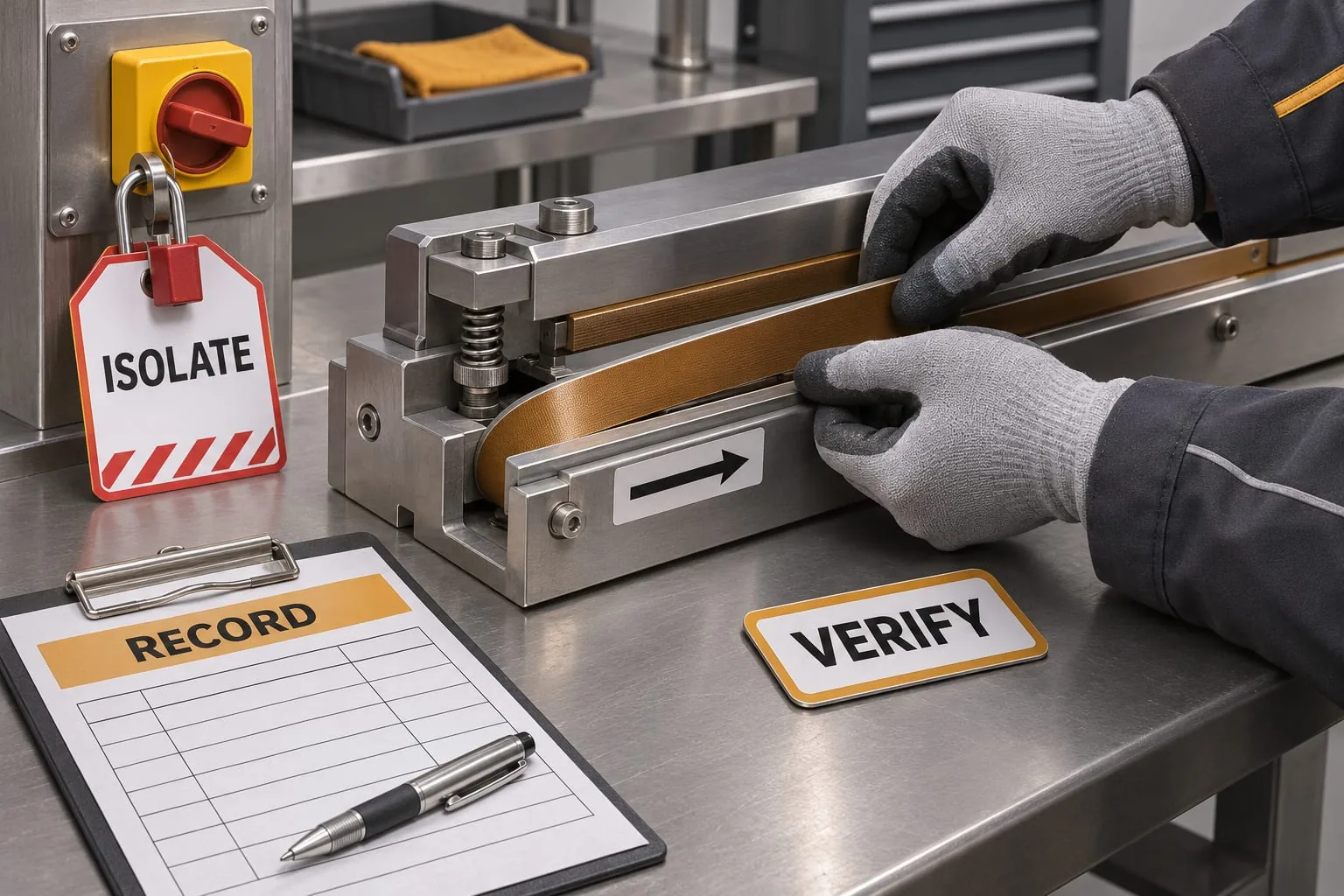
Record the old position before removal
Photograph the route, terminal or clamping arrangement, adjustment position, guide orientation and the condition of adjacent parts. Keep the removed band and any damaged cover material until the replacement has been checked. Record the machine manufacturer, model, station, orientation and the part’s measured length, width, thickness and construction where those measurements are available.
Follow the equipment manufacturer’s changeover instructions. HSE maintenance guidance says work equipment should be made safe before maintenance, with relevant power sources isolated and stored energy considered. Heated parts can remain hot after a cycle has stopped, and tensioned parts can move when released. The person doing the work must be competent for the task.
Verify tracking, tension and seal quality
After fitting, check that the band sits correctly in its route, moves freely where the design requires movement, and does not rub an edge or catch at the joint. Restore adjustments carefully and run the manufacturer’s recommended checks before returning to normal production.
HSE inspection guidance says inspection should be based on the risks, installation conditions, deterioration and manufacturer recommendations. It also states that inspection may be needed after installation, reassembly or exceptional circumstances. Record the post-fit check and the first acceptable production sample instead of relying on the fact that the machine starts.
What to send with a replacement enquiry
A useful replacement request should include:
- Machine manufacturer, model and station
- Horizontal or vertical sealing orientation
- The reason for replacement and the observed symptoms
- Photographs of the band, joint, edge, surface, guide, roller and opposing jaw or bar
- Measured loop length, width and thickness where available
- Band construction, coating or cover requirement if known
- Adjustment position, tension method and route description
- Material being sealed and relevant operating information
If you cannot identify whether the failed part is a band, element, tape, jaw or bar, say so clearly. A component review based on photographs and measurements is safer than guessing from a machine name. Heat Seal Components can review the relevant component route through its Heat Seal Services and you can contact Heat Seal Components with the machine details and evidence.
The decision to replace should be traceable: condition observed, symptom recorded, adjacent parts checked, safe changeover completed and post-fit result confirmed. That record gives production and procurement teams a stronger basis for ordering a compatible component and for reviewing the next inspection interval.