
Introduction
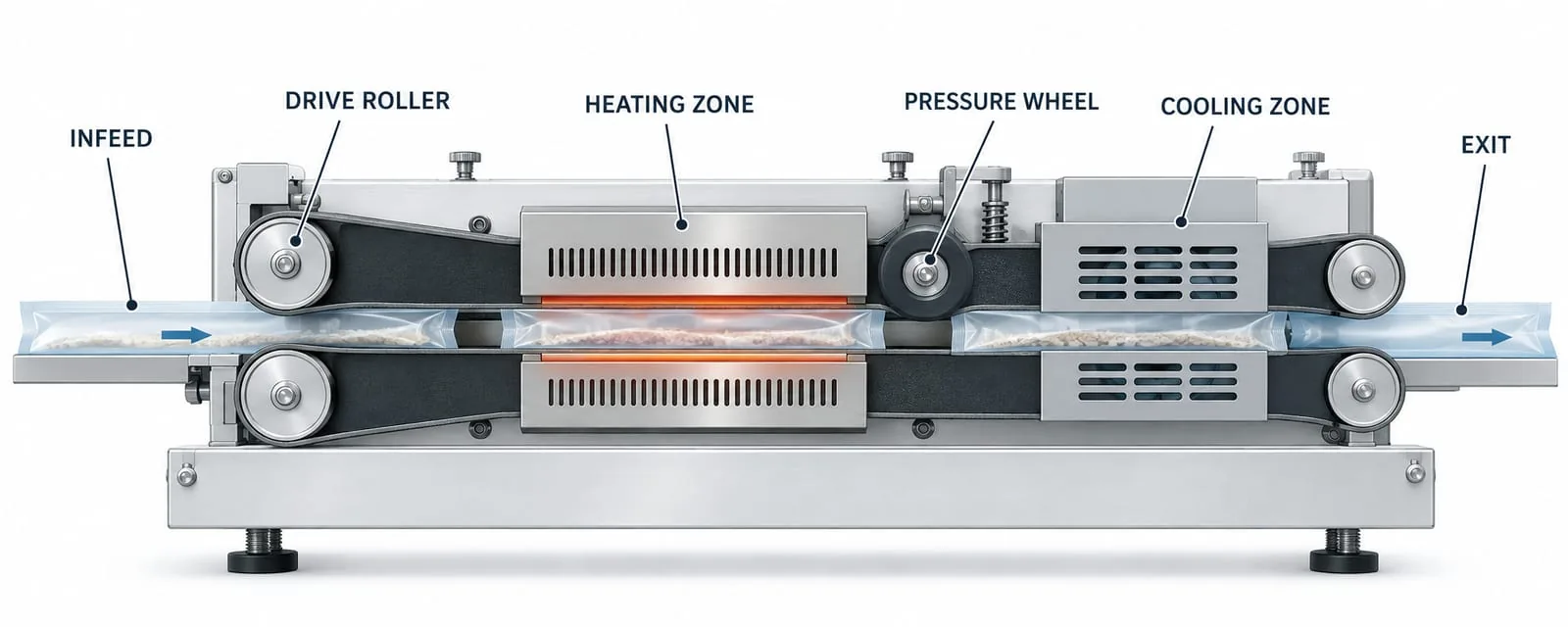
A band sealer machine belt is often described as a replacement belt, Teflon belt or endless heat-seal band. Those terms can refer to different parts, so the first job is to confirm where the loop sits and what it does. A continuous band sealer moves packaging through a heated sealing area using a driving belt, and machines may be arranged horizontally or vertically. Sealersales explains the basic continuous band-sealer arrangement.
Heat Seal Components supplies replacement endless heat-seal bands and PTFE-coated custom belting for compatible packaging equipment. The correct replacement depends on the loop dimensions, construction, coating, route and machine application. A machine model alone is not enough evidence for a safe order.
What Is a Band Sealer Machine Belt?
A band sealer machine belt is an endless loop that carries the package through a continuous sealing path. It may pass around rollers and guides while supporting the material through heated and cooling sections. In this article, belt means the sealing loop unless the machine documentation confirms that the requested part is a separate drive or support conveyor.
The loop is not the same as the heating element. The band moves with the package, while a separate element or heated surface supplies the heat. Heat Seal Components explains this distinction in its guide to endless heat-seal bands and band components.
The belt is part of a wider sealing path
The belt works with the rollers, guides, heating section, pressure section and cooling section. If one part is misaligned or contaminated, a new loop may still track poorly or produce uneven contact. Treat the belt as one component in the complete sealing path, not as an isolated consumable.
What to Check Before Ordering a Replacement Belt
Start with the installed part and the machine layout. Record what you can without stretching, cutting or reshaping the loop. If the machine is unsafe to access, photograph the assembly and ask for a compatibility review instead of guessing.
Record the loop and cross-section
Capture these details in millimetres where possible:
- Endless loop length or the measured path length.
- Band width and thickness, measured without flattening or deforming the part.
- Base construction, such as plain, coated or profiled, if this is known.
- Joint or weld details, edge shape and surface condition.
- Horizontal or vertical orientation and the route through rollers, guides and supports.
The dimensions must describe the band itself, not the nearby guide, conveyor or jaw. If you cannot remove the loop, record the installed route and include clear photographs from both sides.
Confirm the machine application
Record the machine manufacturer, model, station and sealing application. Note whether the loop is the sealing band, a drive belt or a support conveyor. Also record the package material, the known process conditions and any symptoms such as sticking, edge drift, seal variation or repeated breakage.
For a belt that runs on a VFFS or another continuous packaging assembly, the surrounding jaw or guide arrangement matters as much as the loop size. Heat Seal Components’ heat-seal bands service is the relevant starting point for a replacement band enquiry.
Photograph the complete route
Take one wide photograph of the machine section and closer photographs of the belt surface, edges, joint, rollers and guides. Include the machine plate or model marking where it can be read. These images help separate a belt problem from a damaged support, worn guide, contaminated surface or unrelated heating fault.
How to Inspect Fit, Tracking and Wear
Inspect only under your site’s safe system of work. Packaging machinery can expose workers to in-running nips, trapping points and moving parts. HSE guidance describes guarding and formal safe work arrangements for conveyor and packaging-machine hazards. For intrusive maintenance, plan the required isolation and verify that the machine is safe to handle before removing a belt.
Look for these warning signs
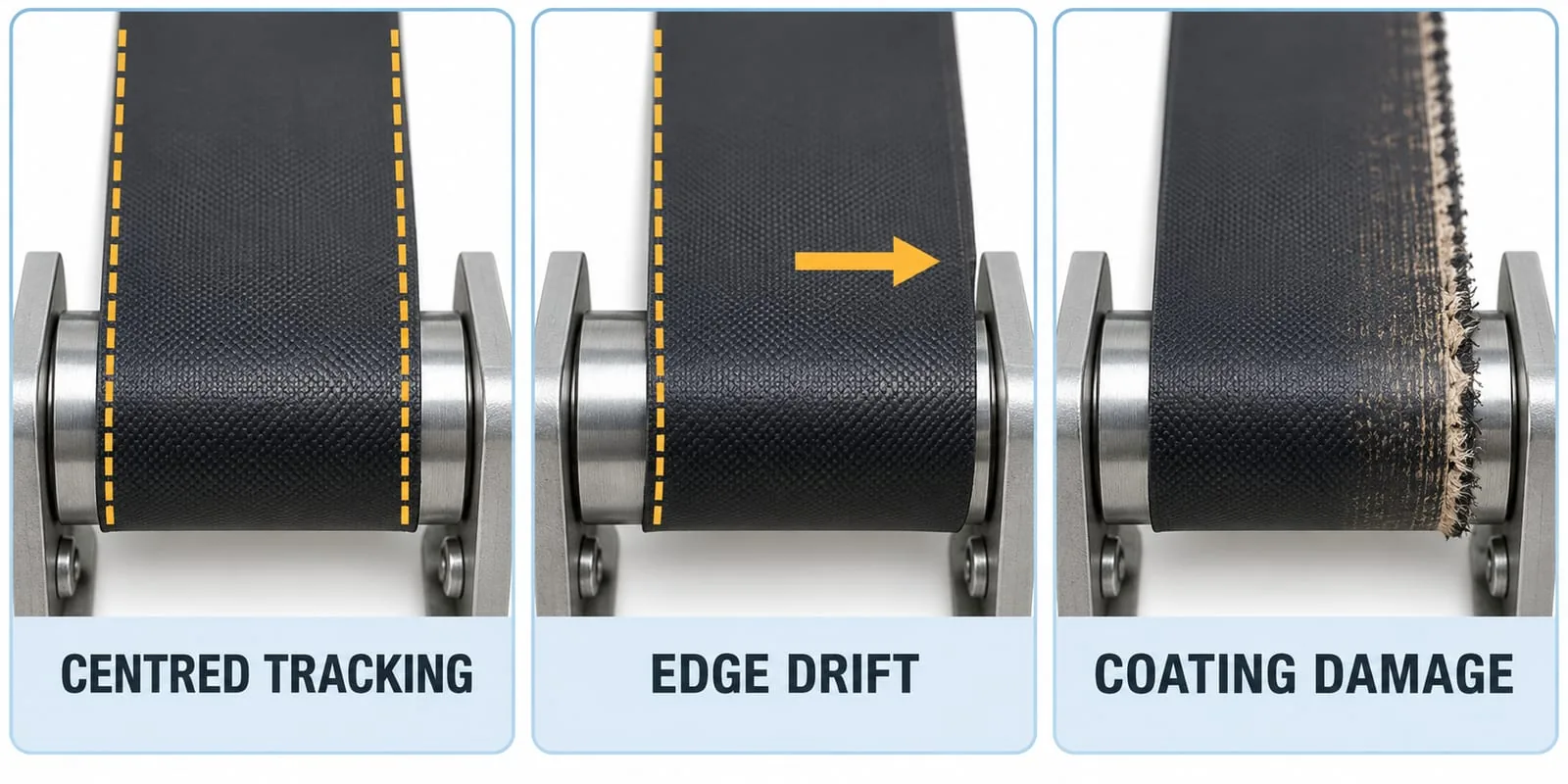
- The band walks towards one edge of a roller or guide.
- The edge is frayed, cut, lifted or visibly thinner than the rest of the band.
- The coating is flaking, scored, contaminated or sticking to the package.
- Contact marks or seal quality change across the pack width.
- The loop needs repeated tension or tracking adjustments to stay in position.
A warning sign does not prove that the band is the only failed part. Check the rollers, guides, support surfaces, pressure arrangement and the heating assembly before ordering a replacement on symptoms alone.
Track and tension with the machine procedure
Use the instructions for the exact machine and belt assembly. Do not copy a tension value from another model.
Run any post-fit check at the lowest risk permitted by the machine procedure. Watch the loop through the full route and stop if it rubs, climbs an edge, catches on a guide or shows a new defect. A correct belt still needs the machine’s adjustment method and guarding to be followed.
Separate belt faults from other component faults
The band is only one part of the sealing system. A band that tracks correctly may still be paired with a worn cover, damaged jaw, faulty heater or poor pressure setting. Heat Seal Components also supplies custom impulse elements and makes parts for sealing jaws and bars, so describe the complete assembly when requesting a review.
Maintenance and Replacement Workflow
Before removing the old belt
- Follow the site isolation and permit process for the machine.
- Allow heated parts to cool before reaching into the sealing section.
- Photograph the belt route, roller positions, guides and adjustment points.
- Record the old loop dimensions and surface condition.
- Keep the old part until the replacement has been checked and accepted.
Do not force an unknown belt into place. A belt that is too short, too wide, too thick or incorrectly routed can create drag, poor tracking or contact with a neighbouring part.
After fitting the replacement
- Confirm that the loop is seated on every roller and guide.
- Check that the band is clear of unintended edges and fasteners.
- Follow the machine maker’s tracking and tension sequence.
- Run the approved no-load or low-risk check before introducing product.
- Inspect representative seals and record any change in tracking or surface condition.
The HSE packaging-machinery guidance is a useful reminder that guards and safe systems of work remain part of maintenance. The site risk assessment and machine instructions still control the task.
What to Send for a Compatibility Review
Send the machine make and model, orientation, loop dimensions, band construction, coating requirement, route photographs, package material and the reason for replacement. Add close-ups of the joint, edges, rollers and guides. If the machine has been modified, say so.
Use the Heat Seal Components services page if you need to identify the wider component family. The team can review the replacement band requirement and confirm whether related elements, covers, jaws or bars also need attention. This is a compatibility review and quotation, not a guarantee based on a model name alone.
Request a Quote for a Band Sealer Machine Belt
For a replacement band sealer machine belt, send the machine details, measured loop information and photographs to Heat Seal Components. Ask for the requirement to be checked against the full belt route before ordering. This gives the team enough evidence to confirm the correct endless heat-seal band or explain what additional information is needed.