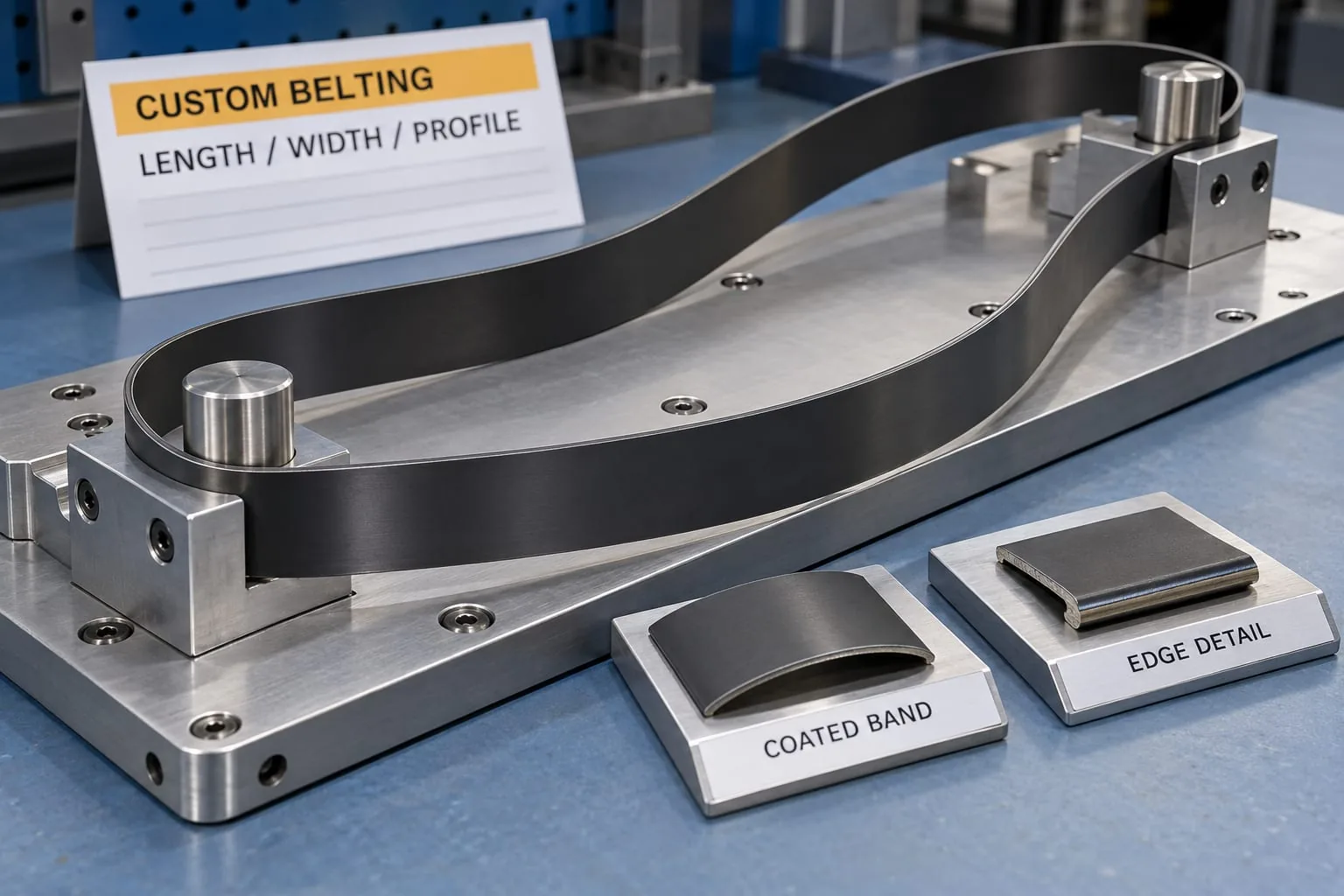
PTFE Teflon custom belting is only a reliable replacement when the complete belt construction and machine route match the installed part. The word PTFE describes the surface material, not the whole belt. Loop length, width, thickness, base construction, joint and tracking details all need checking before a quotation is requested.
This guide sets out a practical specification check for packaging engineers, maintenance technicians, production managers and procurement teams working with continuous heat-sealing equipment.
PTFE and Teflon: describe the surface, then confirm the construction
PTFE is a fluoropolymer. Teflon is a brand name commonly used when people describe PTFE-coated components, but it should not be treated as a complete belt specification. A supplier’s PTFE coating service may cover a stated range of substrates, coating thicknesses and operating conditions, while a replacement endless belt may have a different base material, edge treatment or joint.
For that reason, record the coating as one part of the specification. Confirm the metal or fabric base, the finished thickness, the joint design and the route through the sealing assembly before treating two belts as interchangeable.
What custom belting needs to match
Confirm the belt format
Start with the part in front of you. Establish whether the installed component is an endless loop, a joined belt or another band format. Measure the endless loop length, width and thickness without stretching or compressing it. Photograph the surface, edge, joint, weld or tracking feature, together with any label or part number.
These records give a supplier something verifiable to compare. They are more useful than a machine name alone because the same equipment family can have different sealing layouts, belt widths or replacement histories.
The minimum quotation pack should include:
- loop length or the measured route
- finished width and thickness
- base construction and PTFE or other coating description
- edge profile, tracking stud, guide slot or other locating feature
- joint, weld or seam details
- machine make and model, sealing orientation and clear photographs
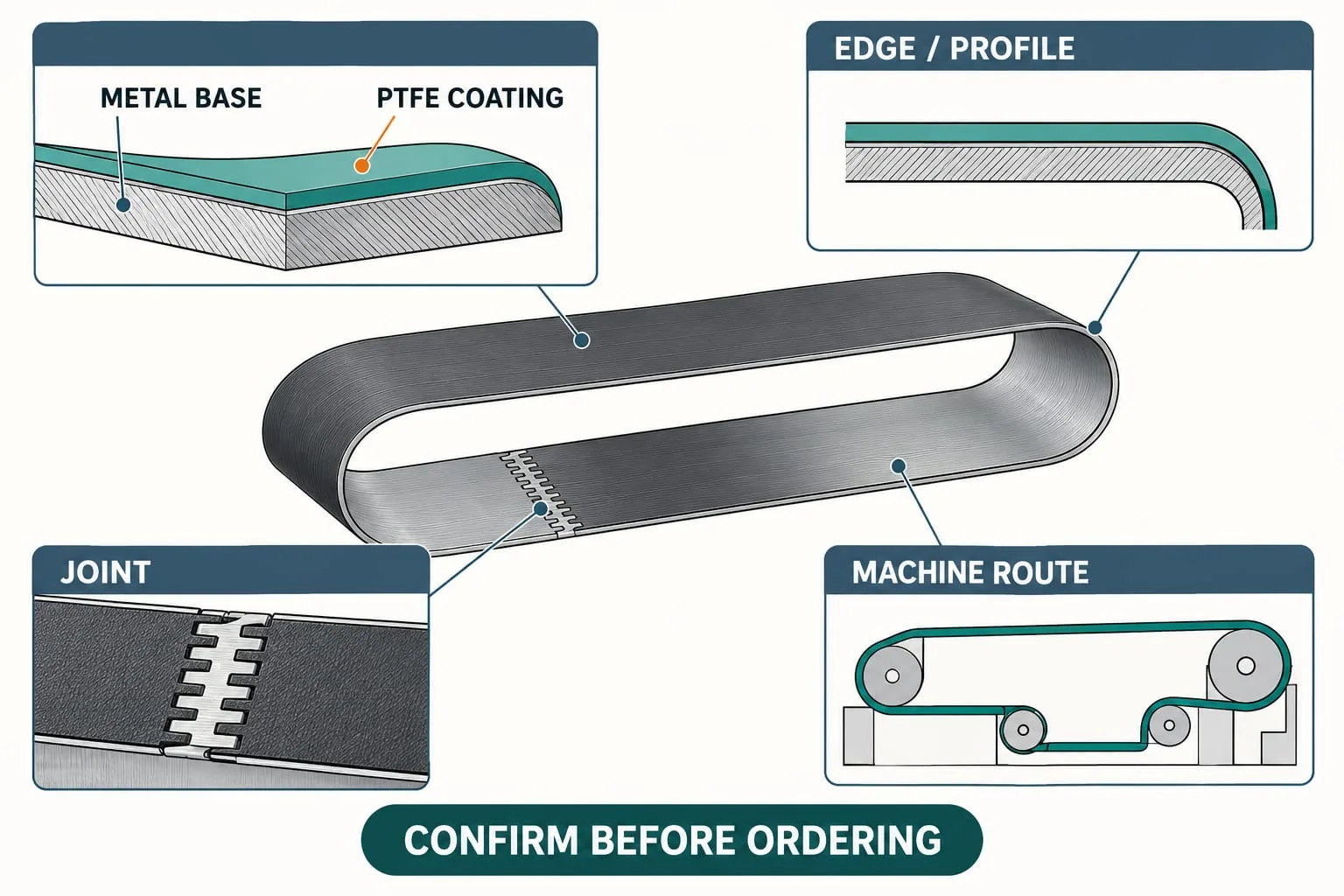
Match the route and tracking features
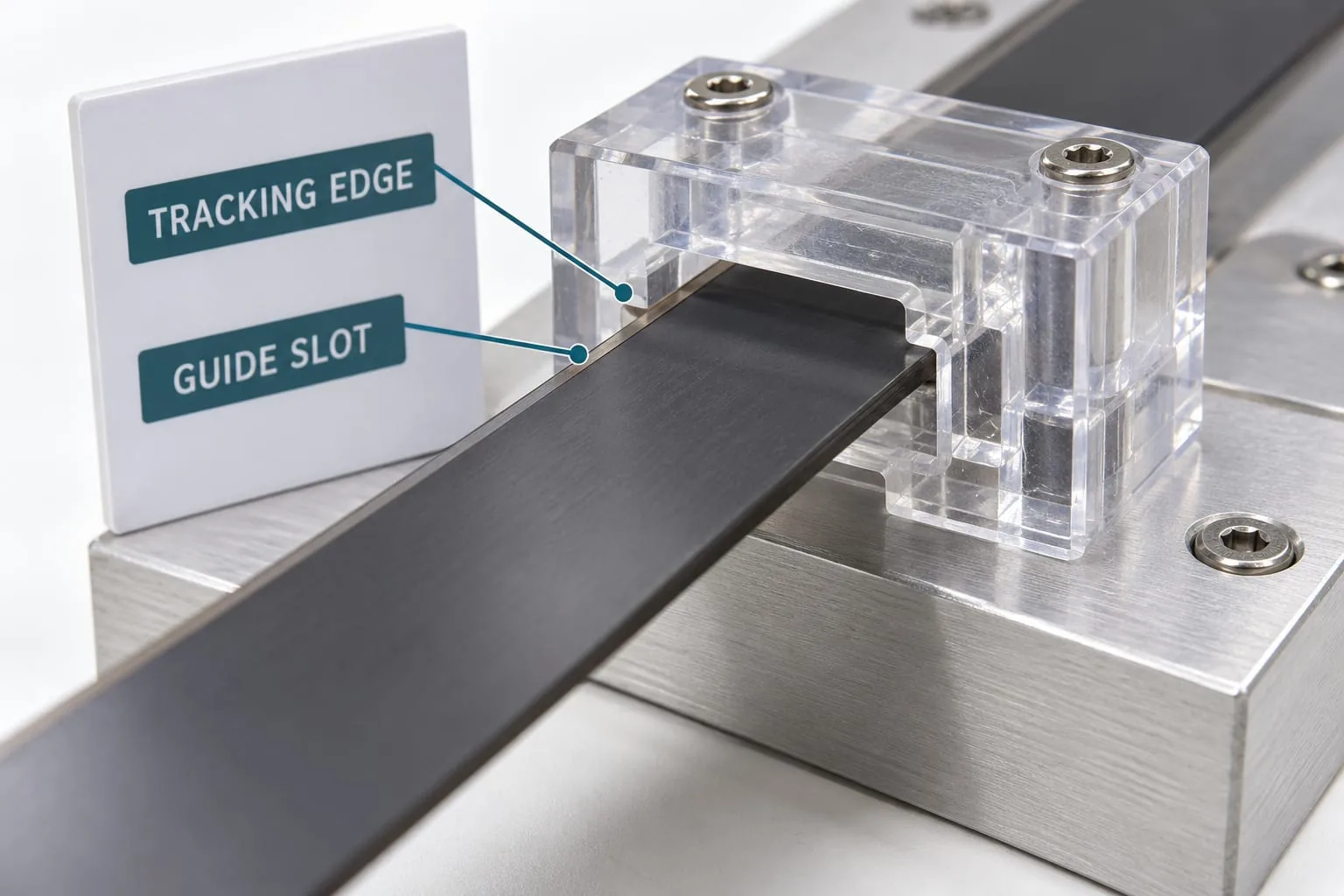
An endless belt has to travel through the same guides, rollers and heated sealing path as the installed component. A tracking feature that locates in a roller groove, for example, is part of the compatibility check rather than a cosmetic detail. Compare the edge, guide clearance, direction of travel and joint position before ordering.
Use the endless heat-seal bands guide to organise the measurements, then compare the finished details with the heat-seal bands service before requesting a compatibility review.
Choose the coating and construction from the application
PTFE-coated stainless-steel or high-carbon-steel bands are one type of endless heat-sealing component. Other suppliers describe PTFE-coated glass-cloth belt constructions. The word PTFE therefore does not prove that the base, edge or joint is correct for a particular machine.
Ask for the construction and any stated operating limits for the actual component being quoted. A temperature figure from one supplier’s belt or coating service must not be copied onto a different belt without checking the product data and the machine conditions. The PTFE sealer belt data sheet illustrates why tracking and belt construction should be checked together. Food-contact suitability also depends on the complete system and should be confirmed for the application.
The useful checks are:
- base material and finished construction
- coating type, thickness and coverage
- endless length, width and finished thickness
- joint or weld design and its finished profile
- edge, stud, groove or other tracking detail
- sealing temperature, speed and product contact conditions where known
- machine route, orientation and the surrounding guides or rollers
Inspect before replacement and after fitting
Isolate the equipment under the site’s safe working procedure before removing a belt or entering the sealing area. Let heated parts cool, and do not bypass guards or interlocks. Packaging machinery can create trapping and in-running-nip hazards, so cleaning and inspection should follow the HSE’s packaging machinery guidance, the machine risk assessment and manufacturer instructions.
Before removal, look for localised wear, sticking or residue, edge drift, a damaged joint and uneven seal results. Check the guides and rollers as well as the belt. A new belt cannot correct a damaged guide or a route that is not aligned.
After fitting, check that the belt sits in its intended path, the joint passes through the assembly as expected and the tracking feature is correctly located. Run the machine only under the site’s approved commissioning procedure, then record any change in seal quality, drift, noise or residue for the next maintenance decision.
A practical quotation pack
Send the measured belt details, machine make and model, sealing orientation, photographs of the route and joint, and any available part label. Add the known product or film conditions and the reason for replacement, such as wear, tracking or seal variation. If the dimensions cannot be confirmed safely, say which measurements are estimates so the compatibility review can account for the uncertainty.
For related components such as sealing jaws and bars, keep the same discipline: identify the installed geometry and application before assuming a standard part will fit. When the information pack is ready, use the Heat Seal Components contact page to request a review and quotation.
Need a custom PTFE belt matched to your line?
Share the belt measurements, construction details, machine route and clear photographs with Heat Seal Components. The team can review the available component information and advise on the next specification check before a custom PTFE-coated endless band is quoted.