E
Buying by the search term alone is risky. A PTFE belt, often called a Teflon belt, is an endless component in a continuous sealing system. Its width, thickness, construction, joint, coating and route all need to match the machine.
Heat Seal Components supplies component-level parts rather than complete sealing machines. Its range includes endless heat-seal bands and band components, custom impulse elements, PTFE coating and sealing components. This guide explains what to confirm before requesting a replacement belt.
What Is a PTFE Belt in a Sealing Machine?
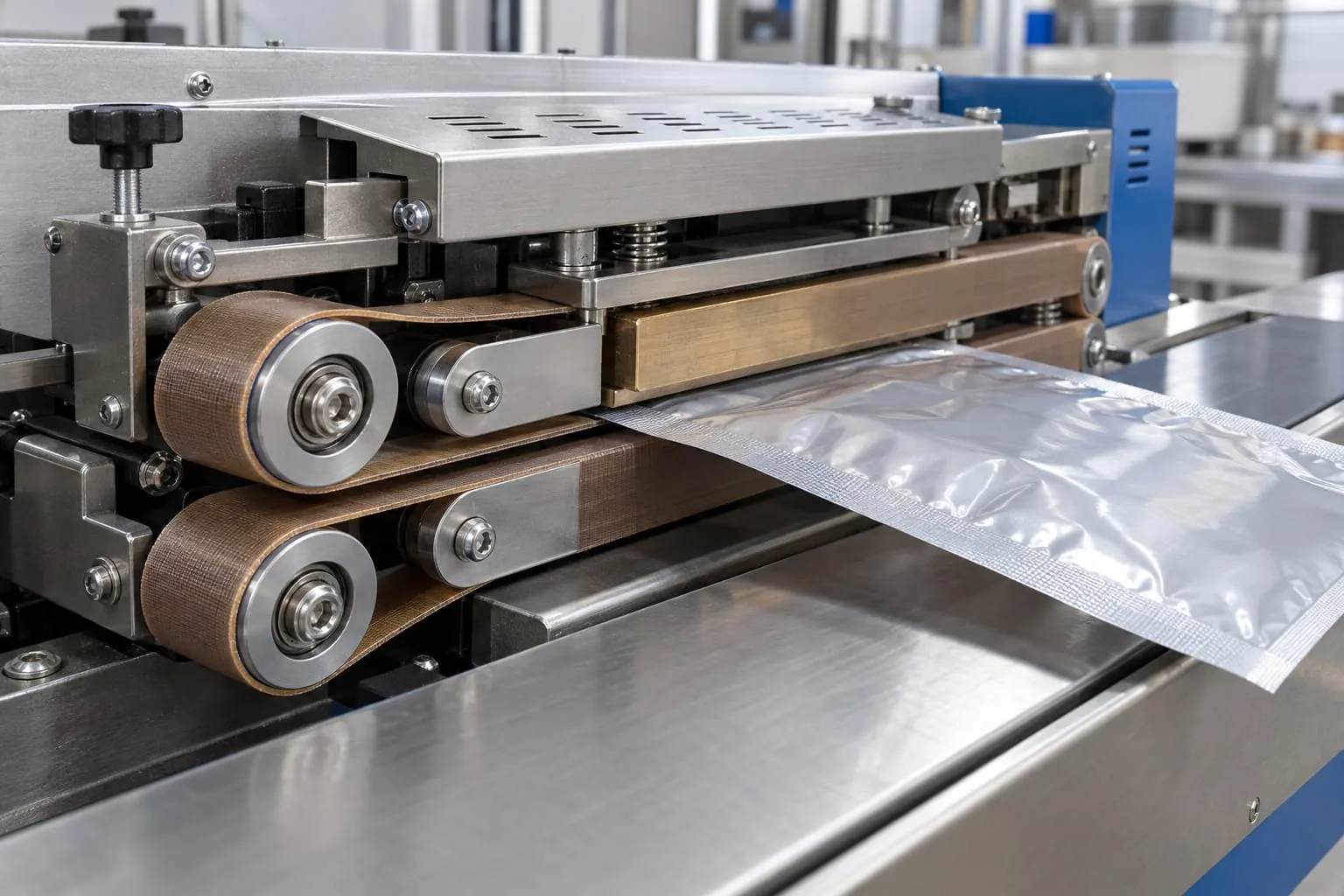
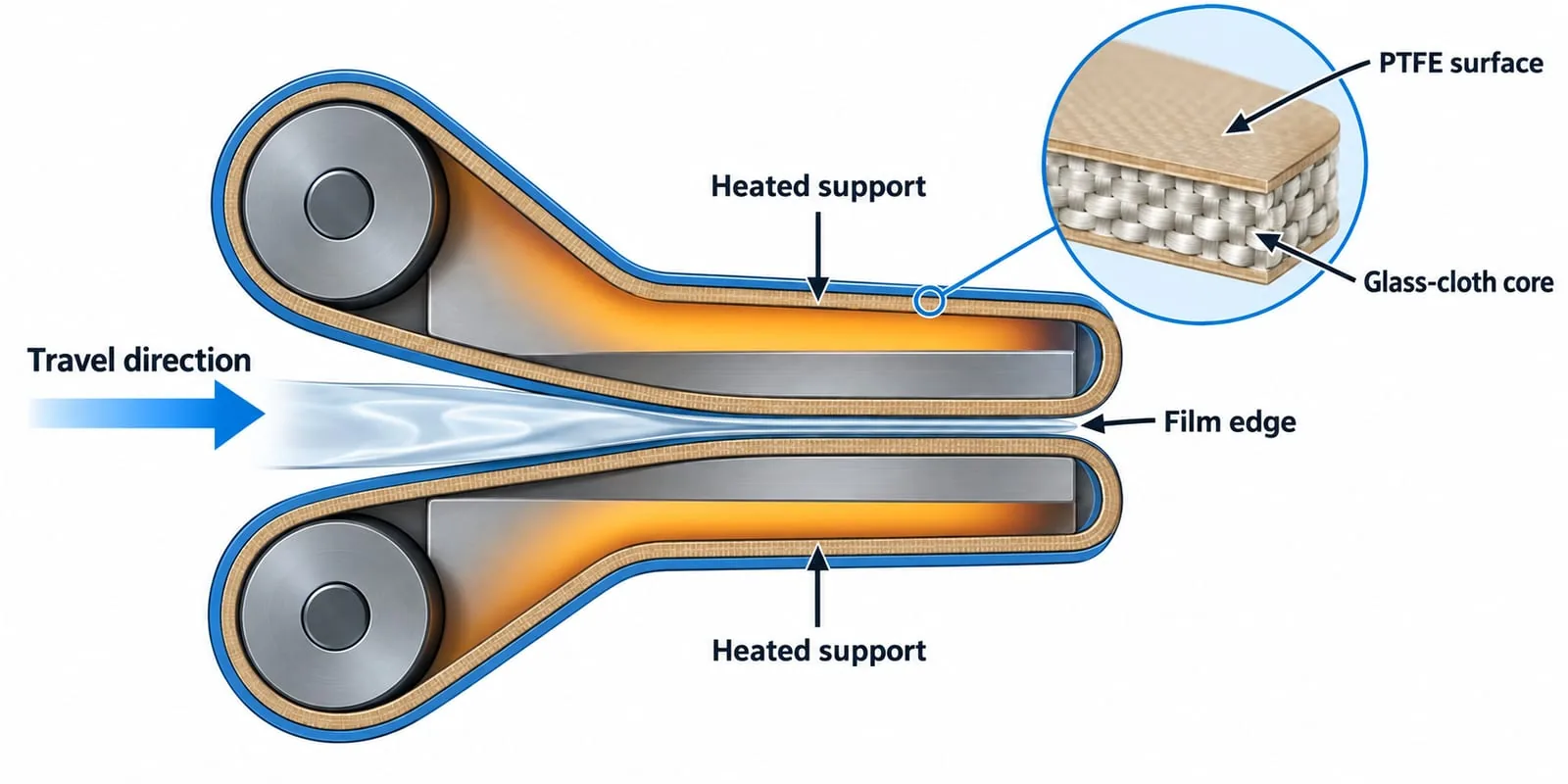
In some continuous bag-sealing arrangements, two belts run in tandem and carry the film edge through a heated sealing zone. Heat and pressure pass through the belt surfaces to the film while the non-stick face helps the sealed material release. The exact arrangement depends on the machine, package and sealing method.
The belt surface and the sealing interface
The exposed PTFE surface is the release face. A fabric belt may use a woven glass-cloth core beneath that surface, but belt construction is not universal. The base material, number of layers, thickness and joint finish must be confirmed against the existing part or machine specification.
 E
The belt is part of a working interface, not an isolated strip. The belt route, support, rollers, guides and heated surfaces all affect how the film edge is carried. A belt that looks similar can still be wrong if its dimensions or joint do not suit the route.
The belt is not the complete sealing assembly
Do not treat the belt as the heating element, roller, guide or sealing jaw. Those are separate components unless a quotation specifically groups them together. Heat Seal Components explains the distinction on its page about sealing jaws and bars, including the bands, elements and PTFE faces that sit on or in the assembly.
How to Match the Belt to the Machine
Start with the installed route. The safest replacement is the one supported by the machine layout, measured part and photographs, not just a keyword or a supplier catalogue image.
Record the machine route and orientation
Record whether the sealing path is horizontal or vertical, whether the belts run as a pair, and where the belt enters and leaves the sealing zone. Photograph the full route before removing the old belt. Include the rollers, guides, supports, drive arrangement and any visible joint.
The machine model still matters, but it is identification evidence rather than a complete specification. Modifications, replacement assemblies and model variants can change the belt route. Note the direction of travel and the belt’s orientation relative to the package.
Check dimensions, construction and joint
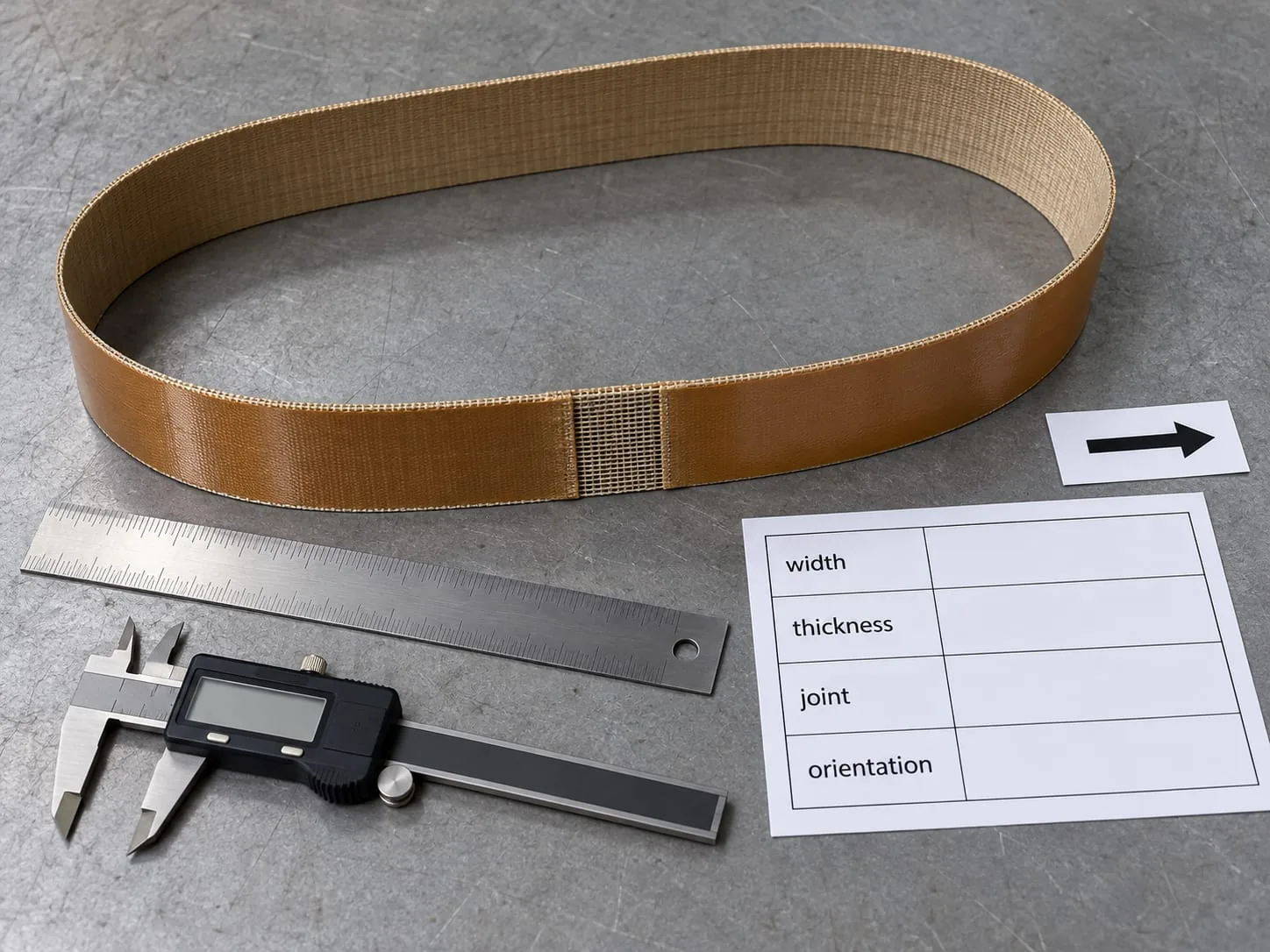
Measure the old part carefully and record how each measurement was taken. Useful information includes:
- belt width and thickness;
- loop length or the dimensions needed to confirm the endless loop;
- base material or fabric construction, where known;
- PTFE coating or surface requirement;
- joint type, position and finish; and
- any profile, edge treatment or orientation feature.
 E
The heat-seal bands service is intended for made-to-fit band requirements. Send the measurements with photographs of the complete assembly so the part can be checked against the machine interface.
What to Inspect Before Replacing a Teflon Belt
A worn belt may be the visible symptom rather than the only cause of a sealing problem. Inspect the part and the surrounding path before finalising the replacement specification.
Look for surface and edge damage
Look for cuts, exposed weave, frayed edges, lifted coating, a damaged joint, deposits or a change in the belt’s surface. Record where the damage appears and whether it repeats at the same point in the loop. A photograph beside a ruler can help relate the defect to the belt width and joint position.
Also note whether the film is sticking, marking or drifting at the sealing zone. These observations help distinguish a surface problem from a route, support or process issue. Do not infer a material change or a temperature limit from colour alone.
Inspect the rollers, guides and support
Check the rollers and guides for contamination, damage, free movement and obvious misalignment, following the machine manufacturer’s procedure. Look at the support under the sealing zone and at the points where the belt turns. A replacement belt should not be used to mask a damaged or incorrectly set interface.
HSE says inspection should identify deterioration before it creates a health and safety risk, with the interval based on risk and the manufacturer’s recommendations. Use its inspection guidance to support the site’s own equipment checks and records.
Safe Replacement and Commissioning Checks
Replacement work involves moving parts and hot surfaces. Use the machine manual and the site’s safe system of work. HSE maintenance guidance says equipment should be made safe before maintenance, with power isolated and locked off where necessary, stored energy released and hot components allowed to cool. Its maintenance guidance should be read alongside the machine-specific procedure.
- Confirm that the correct belt, route and joint orientation have been identified.
- Isolate the machine and release stored energy in line with the approved procedure.
- Remove guards and the old belt only as instructed by the manufacturer or a competent person.
- Compare the replacement with the old part, including width, thickness, joint and direction of travel.
- Check that the belt sits correctly on every roller, guide and support before closing the guards.
- Run the approved commissioning check and inspect tracking, contact and seal quality using the site’s normal controls.
HSE highlights in-running and trapping points around conveyors and packaging machinery. Its packaging machinery guidance supports the need for guarding and a formal safe system for cleaning, clearing and maintenance.
When a Custom PTFE Belt Is the Better Route
A made-to-fit belt is worth considering when the machine has a modified route, an unusual loop, a non-standard joint, a documented history of tracking problems or no reliable part number. The supplier needs enough evidence to confirm the construction and interface rather than guessing from a product name.
If a metal sealing component also needs a non-stick surface, keep that request separate from the endless belt specification. Heat Seal Components offers an in-house PTFE coating service for compatible components, subject to review of the part and the coating requirement.
How to Prepare a Useful Enquiry
Send one complete evidence pack where possible:
- machine make, model and application;
- photographs of the installed route and removed belt;
- measured belt width, thickness and loop information;
- joint details and orientation marks;
- package or film description and the sealing issue observed; and
- the required quantity and delivery context.
The machine model, old belt and photographs should agree. If they do not, flag the discrepancy instead of selecting a part from the model name alone. The Heat Seal Components services page shows the component categories available for compatibility review.
Frequently Asked Questions
Is a Teflon belt the same as a heat-seal band?
The terms can overlap in searches, but they do not prove the same construction. Confirm the PTFE surface, base material, dimensions, joint and machine route. Heat Seal Components’ guide to endless bands explains why those details are needed before ordering.
Can I order by machine model alone?
Usually, no. The model helps identify the application, but variants and modified assemblies can change the belt path. Provide the model with measurements, photographs and joint information for a compatibility check.
Does the belt include rollers or heating elements?
Not by default. The belt, rollers, guides, heating elements and sealing bars are separate parts. Ask for each required component to be listed clearly in the quotation.
Should I replace the belt or investigate the machine first?
Inspect the belt and its route together. If the belt is damaged, record the failure and check the rollers, guides, support and contamination before installing the replacement. This gives the maintenance team a better chance of correcting the underlying issue.
Request a Replacement Belt Quote
Send the machine make and model, route photographs, old belt or measurements, joint details and the issue seen at the sealing zone to Heat Seal Components. The team can review the evidence and confirm whether an endless PTFE-coated band, another sealing component or a coating service is the appropriate next step.